IIF Certified Assessment
Start IQ Test
IIF Certified Assessment
 Classic
 Emergency stop
 Brain lights
 Classic
 Snapshot
 Two players
 Flash
 Forward
 Backward
 Sequencing
 Classic
 Perfect run
 Scramble
 Classic
 Reverse
 Arrows
 Daily
 Practice
 Learn
 Grid
 Tones
 Backward
 Classic
 Daily code
 Numbers
Brain Games
Short, honest tests of speed, memory, attention and logic. Most take 2 to 5 minutes, and none needs a signup.
 Reaction Time Test Play
 Memory Game Play
 Digit Span Test Play
 Tower of Hanoi Play
 Stroop Test Play
 Logic Puzzles Play
 Sequence Memory Test Play
 Code Breaker Play
It fills in as you play, and it is saved only in this browser.
The full picture
Each game looks at one skill. The IQ test brings them together in one score, with your percentile and a certificate.
In short
Brain games are short puzzles and tests that each work one mental skill: speed, memory, attention, planning or logic. You can play all 8 brain games online, in your browser, with no signup, and see your score the moment you finish. Most rounds take 2 to 5 minutes. Your past scores stay in this browser, so you can watch them change. To see all of these skills together in one score, take our IQ test.
Below: brain games by goal, the skill table, brain games against an IQ test, a quick brain test, daily puzzles, games to play with friends, brain teasers with answers, the research and a short history.
By goal
Not sure where to start? Pick the skill you want to work on. Each card lists the games that train it hardest, from memory games for adults to quick logic games and puzzle games.
Hold more in mind: cards, digits and paths of light.
React the moment something changes, without guessing early.
Stay on the task while something tries to pull you away.
Think ahead, test your ideas and find the one answer.
Skill by skill
Each game works one skill hardest. The table lists what it measures, the closest of the five areas a modern IQ test reports, and how long a round takes. Pick a game for the skill you want to practise, or play one of each.
| Game | Skill | What it measures | Closest IQ area | Time |
|---|---|---|---|---|
| Reaction Time Test | Speed | How fast you respond to a signal | Processing speed | About 2 min |
| Stroop Test | Attention | Naming the ink colour while you ignore the word | Processing speed | 1 to 2 min |
| Memory Game | Memory | Where each card was before it turned back | Working memory | About 3 min |
| Digit Span Test | Memory | How many digits you can hold in order | Working memory | About 3 min |
| Sequence Memory Test | Memory | How long a path of squares you can repeat | Working memory | 2 to 5 min |
| Tower of Hanoi | Planning | Thinking several moves ahead | Fluid reasoning | 2 to 5 min |
| Logic Puzzles | Logic | Deduction from clues to the one answer | Fluid reasoning | 5 to 15 min |
| Code Breaker | Logic | Testing guesses against feedback | Fluid reasoning | 3 to 8 min |
The five areas are the index scores of the WISC-V and WAIS-5: verbal comprehension, visual spatial, fluid reasoning, working memory and processing speed. A game is practice for one skill. It is not a measure of that index.
IQ games
Many people search for IQ games, or games that test IQ. A brain game shows how one skill is doing today. An IQ test puts several skills side by side and turns them into one score, so the two answer different questions.
IQ puzzles sit between the two. Number sequence puzzles and matrices look like games, but an IQ test scores them against other people.
Brain test
Looking for a quick brain test? Play one game for each skill, and the Brain Profile near the top of this page fills in, skill by skill. It is a snapshot of how you did today, not a medical test. For one score across reasoning, memory and speed, take our IQ test.
Every day
Three of our games are daily brain games: they change every day, and everyone gets the same puzzle, so you can compare with friends. Logic Puzzles and the Tower of Hanoi also keep the last 30 days open, and the tower counts your streak.
Logic Puzzles
An easy, a medium and a hard grid, each with exactly one answer.
Play today’s puzzles
Code Breaker
One hidden code a day, the same for everyone. A game in progress carries on after a reload.
Crack today’s code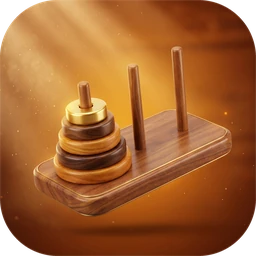
Tower of Hanoi
A new scrambled tower every day, and a streak for each day you solve it.
Solve today’s towerWith friends
The best brain games to play with friends give you someone to beat. Play the Memory Game with two players on one screen, or send any score to a friend with a link. They play the same test, or the very same board, and see who wins.

In the Memory Game’s two-player mode you take turns. Find a pair and you go again; miss and the turn passes. More pairs wins.
Every result has a Challenge a friend bar. Your friend gets your score, plays the same test and sees who won.
The daily puzzles are the same for all players, so you can compare today’s scores at home or at work.
The research
Do brain games make you smarter? They make you better at the games you practise, but the proof that they raise IQ or everyday thinking is weak. A 2016 review of the brain-training studies found strong evidence of gains on the trained tasks, less on similar tasks and little in daily life (Simons and colleagues).
The game itself, almost always. Practise digit span and your span grows, partly because you find better ways to hold the digits, such as grouping them in threes.
General reasoning. A 2019 summary of the meta-analyses found a minimal effect on general thinking skills after cognitive training (Sala and Gobet).
In 2014 more than 70 scientists signed a letter saying brain games do not improve thinking. Months later, 133 scientists and practitioners replied that they do. The 2016 review weighed both sides.
In the ACTIVE study, older adults who did speed training with booster sessions were diagnosed with dementia less often over 20 years: 40% against 49% of the untrained group. Memory and reasoning training showed no such gap. Read more on whether brain training apps work.
IQ
Can you increase your IQ by playing games? Not by much. Practising a test’s own puzzles can lift a retest score, but that comes from knowing the puzzles, not from a smarter brain. The best-supported way to raise IQ is more school: about 1 to 5 IQ points for each extra year, in a review of over 600,000 people (Ritchie and Tucker-Drob, 2018). Our guide asks can you improve your IQ in more depth.
The most studied memory game for IQ. Meta-analyses find roughly 0 to 4 IQ-style points, and the smallest gains where the control group also trains. See what the dual n-back replications show.
Puzzle fans score higher on average, but no study shows that Sudoku raises IQ. No chart can turn a solving time into an IQ either: does Sudoku increase IQ?
Action games bring real gains in attention and spatial skills (Bediou and colleagues, 2018). The effect on general reasoning all but disappears. More in are video games good for your brain?
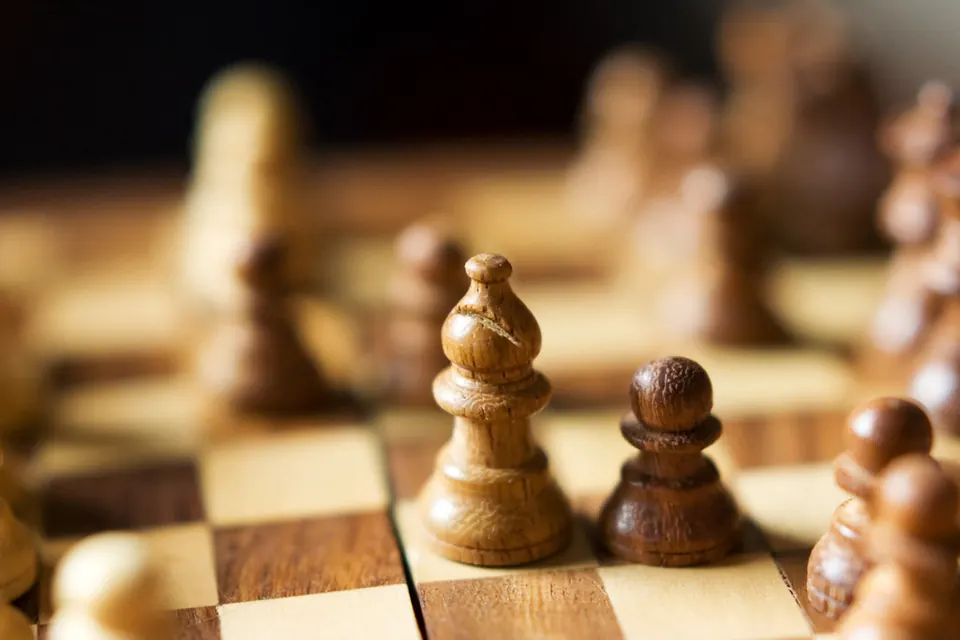
Real gains at chess, modest ones for a few related skills and close to zero for IQ. The research is in does chess raise your IQ?
For adults
There is no special set of brain games for adults or brain games for seniors here: every game works at any age, at your own pace and with no account. With memory games for adults, a short habit is easier to keep than a long session. Compare yourself with your own past rounds. Reaction time slows with age for everyone, as our page on average reaction time by age shows.

The Digit Span Test for short-term memory, the Memory Game for visual memory and the Sequence Memory Test for memory of positions.
Logic Puzzles and the Tower of Hanoi have no time limit, so you can take as long as you need. Both give hints when you are stuck.
History
Puzzles that test the mind are much older than apps. These milestones lie behind the games on this page.
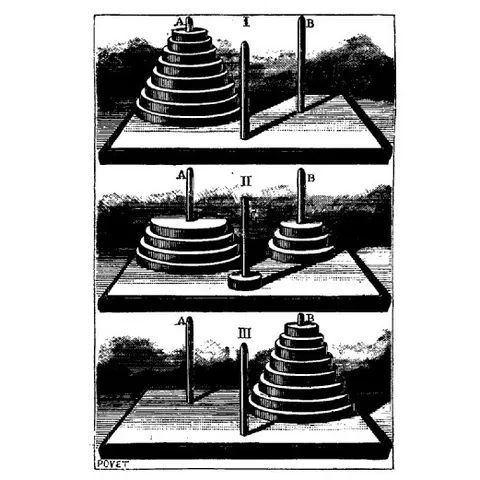
French mathematician Édouard Lucas sells his tower puzzle under the playful name N. Claus (de Siam). Psychologists still use tower puzzles to study planning.
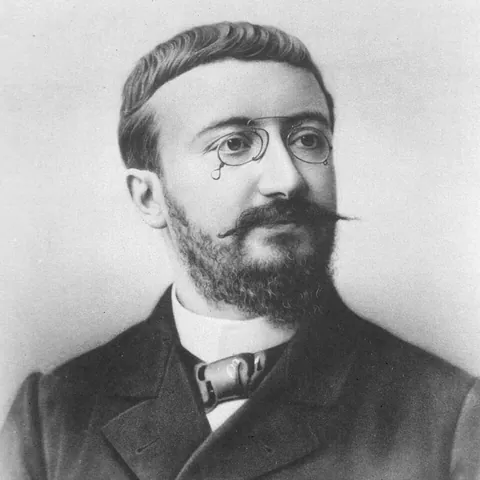
Alfred Binet and Théodore Simon publish a test to find French schoolchildren who need extra help. Modern IQ tests grew out of their work.
J. Ridley Stroop shows that naming the ink colour of a colour word is slow when the word names another colour: 110.3 seconds against 63.3 for plain colour patches, about 74% longer.

Mordecai Meirowitz invents the code-breaking board game, and Invicta Plastics brings it to shops in 1971 and 1972. In 1976 Donald Knuth shows that any code can be cracked in five guesses or fewer.
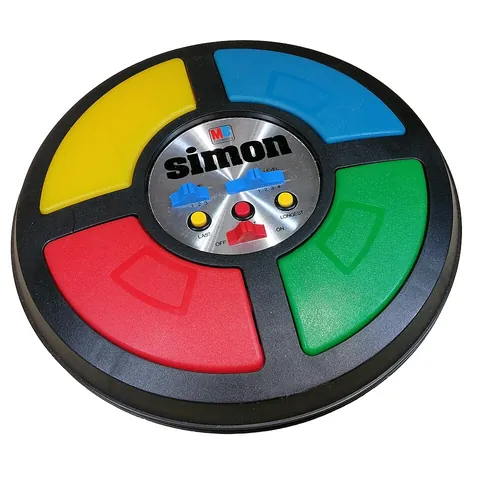
Milton Bradley launches Simon, the electronic game of repeating light and sound sequences, designed by Ralph Baer and Howard Morrison. Our Sequence Memory Test builds on the same idea.
Nintendo’s Brain Age, inspired by the neuroscientist Ryuta Kawashima, makes daily brain training popular on a handheld console.
Lumosity’s maker agrees to pay $2 million to settle US Federal Trade Commission charges that its brain-game claims were unfounded. The same year, a large review finds little proof that brain training helps everyday life.
FAQ
Yes. All 8 brain games are free to play. There is no signup, and your scores stay in your browser.
No. You start playing straight away. Your scores, history and Brain Profile are kept in this browser on this device, and they are not sent to our server.
No. A game shows one skill on the day you play. An IQ test combines several skills into one score and compares it with other adults. Use the games for practice and fun, and our IQ test for the full picture.
For short-term memory, try the Digit Span Test: digit span is a classic part of real IQ tests. For visual memory, try the Memory Game. For memory of positions, try the Sequence Memory Test.
All of them, at any age. Logic Puzzles and the Tower of Hanoi have no time limit, so they suit anyone who likes to think without a clock. Compare scores with your own past rounds rather than with younger players.
Mix one memory game, one speed game and one logic game. The Memory Game, the Reaction Time Test and Logic Puzzles are a good start, and each takes a few minutes.
They are good practice at slowing down and checking your first answer. Like other brain games, they make you better at teasers, and there is little proof that they raise IQ.
Yes. Logic Puzzles has three new grids a day, Code Breaker has a daily code and the Tower of Hanoi has a daily scramble. Everyone gets the same puzzle.
Yes. Every game works on phones, tablets and computers. Touch screens add a little delay to reaction times, so compare speed scores on the same device.
Sleep, focus, the time of day and your device all move a score a little. That is why the history bars show your last rounds, not just one number.
As often as you enjoy it. A few short rounds a week are enough to see a trend in your history. There is no target to hit.
Sources
The full picture
Each game looks at one skill. The IQ test brings speed, reasoning and memory together in one score, with your percentile and a certificate.