



What was Pyotr Tchaikovsky’s IQ?
A civil servant at 19 and a conservatory student at 22: the record is documented, and no IQ score has ever been published.
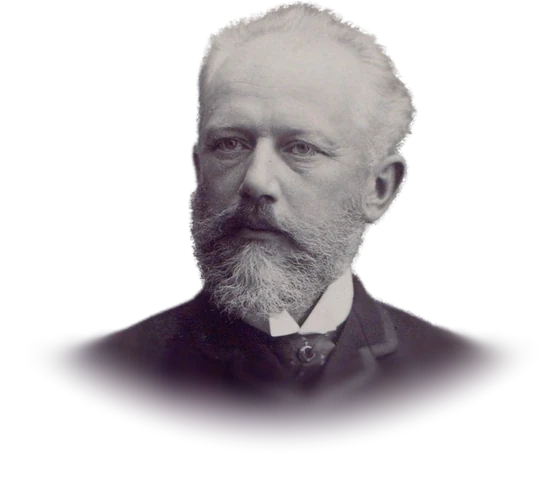
Pyotr Tchaikovsky has no published IQ score, and he is not among the composers in Catharine Cox’s 1926 study. What is documented is piano lessons from about age five, nine years at a law school and a conservatory diploma. Our Tchaikovsky IQ estimate is 135–150, drawn from that record, not from a test.
Pyotr Tchaikovsky’s estimated IQ
- Piano lessons from about age five with Mariya Palchikova; Wikipedia says that within three years he read music as well as his teacher (Tchaikovsky Research dates the first lessons to the end of 1845).
- Nine years as a boarding student at the Imperial School of Jurisprudence, 1850–1859, then about four years as a clerk in the Ministry of Justice (Tchaikovsky Research).
- He was among the first students of the Saint Petersburg Conservatory, which opened on September 20, 1862, and studied harmony and form with Nikolay Zaremba and composition with Anton Rubinstein (Tchaikovsky Research).
- He graduated in 1865 and received the silver medal, then the highest award offered because no gold medal was being given; his diploma is dated 1870. In January 1866 he moved to Moscow to teach harmony (Tchaikovsky Research; Wikipedia).
Musical and academic records are not an IQ score. His conservatory grades, excellent in theory and instrumentation, show training, not general ability. The range is a judgment from the record, not a measurement.
- Born
- May 7, 1840 (April 25, Old Style), Votkinsk, Russia
- Schooling
- Imperial School of Jurisprudence, 1850–1859
- First job
- Clerk, Ministry of Justice, from 1859
- Conservatory
- Saint Petersburg, among its first students (1862); graduated 1865 with the silver medal
- Teaching
- Harmony, Moscow, from January 1866
- Died
- November 6, 1893, Saint Petersburg, aged 53
- In Cox’s 1926 study
- No
- Circulating IQ figure
- None found
- Documented IQ test
- None published
What an IQ of 135–150 actually means
Set the claim aside for a moment. If someone genuinely scored in this range, here is what that would represent.
| Score range | Classification | Share of people | What it indicates |
|---|---|---|---|
| 85 – 114 | Average | ~68% | The range most people fall into. |
| 115 – 129 | Above average | ~13.6% | Roughly one person in seven. |
| 130 – 144 | Gifted | ~2% | The threshold most high-IQ societies use. |
| Above 144 | Highly gifted | ~0.1% | Figures above this range are extrapolated from the curve rather than measured. |
Percentages are approximate and describe a normal distribution. The same number means different things on tests with different standard deviations.
Thirty questions gives you a measured position on this exact scale — your score, your percentile and the ability breakdown behind it.
Find out in 30 minutes →Who Pyotr Tchaikovsky was
Who was Pyotr Tchaikovsky? He was born on May 7, 1840 (April 25 in the Russian calendar of the time) in Votkinsk, in the Ural region, the second son of a mining engineer. He died in Saint Petersburg on November 6, 1893, aged 53. Wikipedia calls him the first Russian composer whose music made a lasting impression internationally.
Why did a composer study law? Music was not an established career in Russia then, and there was no institution to teach it, so his parents prepared him for the civil service. He spent 1850 to 1859 at the Imperial School of Jurisprudence and then worked as a clerk in the Ministry of Justice. In April 1863 he asked for leave to devote his life to music.
What did he write? His best-known works include the First Piano Concerto, the Violin Concerto, the opera Eugene Onegin, and the ballets Swan Lake, The Sleeping Beauty and The Nutcracker (Wikipedia). He taught harmony at the Moscow Conservatory from 1866. Compare other composers in our musicians category.
 By Elora Mercer, Celebrity Research WriterFigures checked by Leon Falkner, Data & Research Analyst
Reviewed by Aarav Vardhan, Editor-in-Chief · Last reviewed November 2026

Pyotr Tchaikovsky: the documented record
The estimate above rests on this record. Every entry here is a matter of public fact, which is more than can be said for the number itself.
- 1840Born on May 7 in Votkinsk.
- 1845Begins piano lessons at about five, with Mariya Palchikova.
- 1850Enters the Imperial School of Jurisprudence in Saint Petersburg.
- 1859Graduates on May 25 and begins work as a clerk in the Ministry of Justice.
- 1862Enrolls in the first class of the Saint Petersburg Conservatory, which opens on September 20.
- 1863Asks for leave from the ministry to devote his life to music.
- 1865Graduates from the Conservatory with the silver medal.
- 1866Moves to Moscow on January 17 to teach harmony.
- 1893Dies in Saint Petersburg on November 6.
Why no figure circulates
Following a claim back to its first appearance is the part almost nobody does — and it is what most people are actually asking.
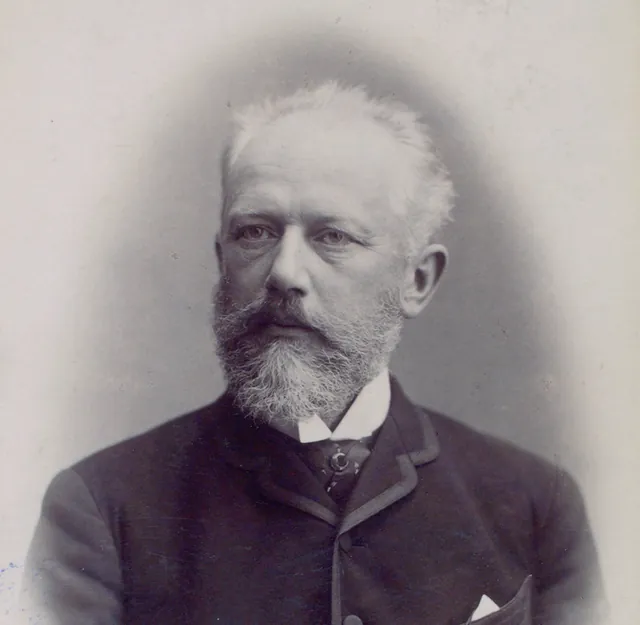
What is Tchaikovsky’s IQ? No score is published, and he is not one of the composers in Catharine Cox’s 1926 study, so even the old historiometric numbers are missing. Our estimate of 135–150 rests on his schooling and career. For why celebrity numbers drift between pages, see where celebrity IQ numbers come from.
Was Tchaikovsky a prodigy? Musically precocious, yes, but not a documented child performer like Wolfgang Amadeus Mozart. He began piano at about five and read music well by eight, according to Wikipedia, yet his family sent him to law school. He turned to music as a profession at 22, which is a record of ability and persistence rather than early fame.
Does classical music raise IQ? That is a separate question from whether composers had high IQs. Our guide to music lessons and IQ and our article on the Mozart effect cover what researchers have tested. On this site Sergei Rachmaninoff is 135–150 and Frédéric Chopin 140–155.
How we read a number →Born April 25/May 7, 1840 at Votkinsk, the second son of a mining engineer; piano lessons from the end of 1845; nine years (1850–1859) as a boarding student at the School of Jurisprudence; a clerk at the Ministry of Justice from June 1859 for four years; the Conservatory opening on September 8/20, 1862; his leave request of April 1863; graduation, the silver medal and a diploma dated 1870; the move to Moscow on January 5/17, 1866. It gives no IQ.
Piano lessons from age five and reading music as well as his teacher within three years; musically precocious but educated for the civil service because no music education system existed; graduation from the Conservatory in 1865 with a silver medal for a cantata on Schiller’s Ode to Joy; death on November 6, 1893. It contains no IQ.
Read in the archive.org scan. The case studies and Table 12A do not include Tchaikovsky, so Cox’s method gives no figure for him.
Confirms Q7315 is the Russian composer (1840–1893), not a namesake.
None in Tchaikovsky Research, Wikipedia or Cox’s volume. We use no rumor or anecdote about his private life.
On this site Rachmaninoff is 135–150, Chopin 140–155 and Mozart 150–165.
The sources behind our estimate
The figures that circulate for Pyotr Tchaikovsky, what we were able to confirm, and where the two diverge.
People type “tchaikovsky iq”, “was tchaikovsky a genius” and “tchaikovsky prodigy”. We found no page that gives him an IQ score, and none that names a test.
No IQ score for Tchaikovsky appears in any source we opened. Tchaikovsky Research, whose long biography covers his schooling, work and career in detail, gives no score, and neither does Wikipedia. Catharine Cox’s 1926 volume of case studies does not include him, so there is no historiometric figure to borrow either.
No circulating figure exists to compare, so the range stands alone. We placed him level with Sergei Rachmaninoff (135–150), another Russian composer who trained at a conservatory, and just below Frédéric Chopin (140–155).
Want a number that does hold up? Every figure on this page is somebody’s claim. Take the 30-question test and get a percentile you can check rather than a figure you have to trust.
Pyotr Tchaikovsky — frequently asked
What is Tchaikovsky’s IQ?
No IQ score for Tchaikovsky has been published, and he is not in Catharine Cox’s 1926 study of geniuses either. Our Tchaikovsky IQ estimate, built from his education and career, is 135–150.
Was Tchaikovsky a genius?
His record shows exceptional musical skill and a late, deliberate start: law school first, then the Saint Petersburg Conservatory at 22. “Genius” is not an IQ category, and our range for him is 135–150.
Was Tchaikovsky a child prodigy?
He was musically precocious. He began piano lessons at about five, and Wikipedia says that within three years he read music as well as his teacher. He was still educated for the civil service, so he is not documented as a performing prodigy.
Why did Tchaikovsky study law?
Music was not an established career in Russia at the time, and there was no music education system, so his parents prepared him for the civil service. He graduated from the School of Jurisprudence in 1859 and worked in the Ministry of Justice for about four years.
Is Tchaikovsky in Cox’s study of 301 geniuses?
No. Cox’s 1926 volume does not include him, so there is no Cox rating for Tchaikovsky. Mozart and Beethoven are in it; he is not.
Does classical music raise IQ?
That is a different question from whether composers had high IQs. Our guide to music lessons and IQ and the article on the Mozart effect cover what researchers have tested. To see where a score lands, take our IQ test.
How does my IQ compare with Pyotr Tchaikovsky?
You can find out in about fifteen minutes. The IQ Metrics assessment is 30 questions, scored on the same 100-mean scale used throughout this page, so your result and the estimate above are at least expressed in the same units — one measured, one inferred. Once you have a number, the leaderboard shows where it would sit, and how we score and norm it explains the benchmarking.
Where does this estimate come from?
From the documented record rather than a test — the method is named above and set out in full under how we read a number. Compare it against the other musicians profiles, starting with Brian May.
- Take the 30-question IQ test — get a measured score and percentile of your own
- Average IQ by country — how the scale behaves across populations
- How IQ Metrics scores its assessment — the method behind our own number
- More on how IQ testing works — reliability, error and what a score can and cannot say
- More musicians profiles — same field, same method
More musicians
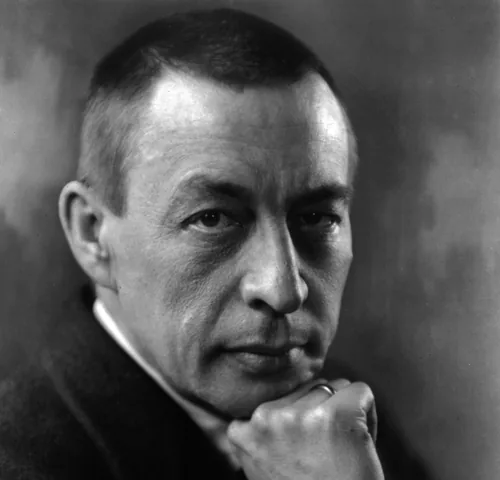
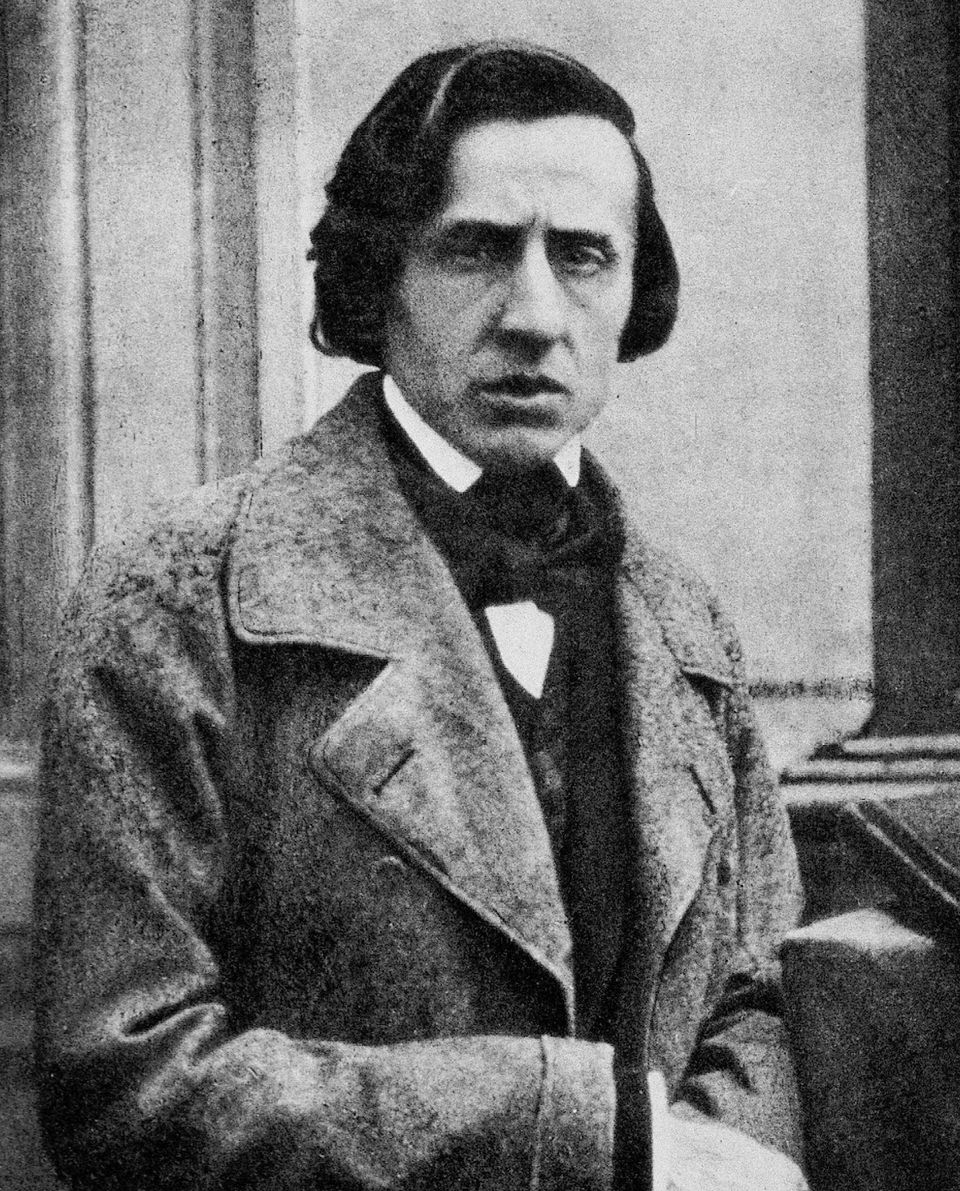
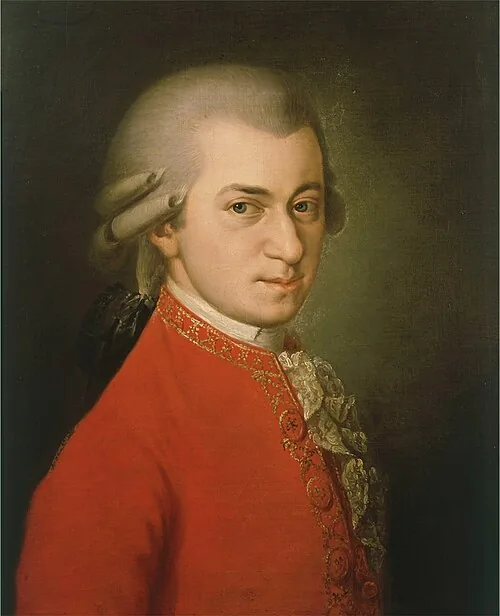
Photograph of Sergei Rachmaninoff by Kubey-Rembrandt Studios (Library of Congress, Philadelphia, 1921), public domain. Cropped and with background removed for the portrait above. · Daguerreotype by Louis-Auguste Bisson (1849), public domain. Background removed for the portrait above. · Portrait by Barbara Krafft (1819), public domain. Background removed for the portrait above.


An estimate is an inference.
Yours can be measured.
Thirty questions, scored against general-population benchmarks. Your score, your percentile, your ability breakdown and a printable IIF certificate.
Find your IQ score now! →