



What was Frédéric Chopin’s IQ?
Fryderyk Chopin left a paper trail from the age of seven. The IQ numbers attached to his name leave none.
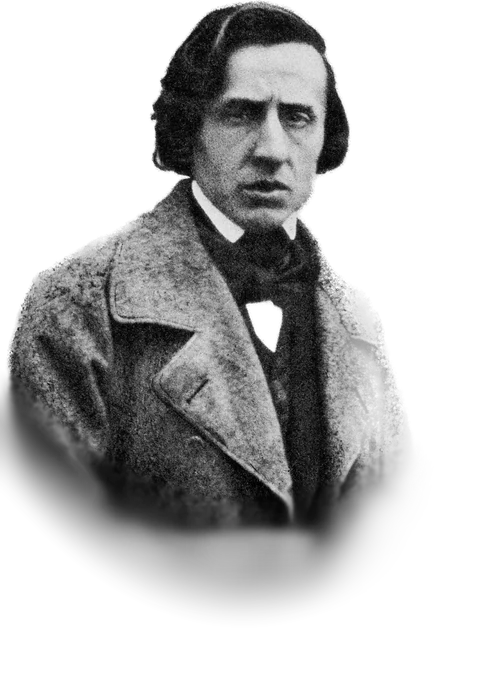
Chopin’s IQ has no test behind it: Frédéric Chopin died in 1849, more than fifty years before the first intelligence scale, and he is not among the 301 subjects of Catharine Cox’s 1926 study, so the 150+ and 165 that circulate show no working. His documented record, from a polonaise printed at seven to a conservatory report calling him a musical genius at nineteen, supports an estimated IQ of 140–155.
Frédéric Chopin’s estimated IQ
- A Polonaise in G minor, written in 1817 and printed in Warsaw that December, when he was seven. The title page billed him as a musician “aged eight”, and it is the earliest of his works to appear in print.
- A first public appearance at a charity concert in Warsaw’s Radziwiłł Palace on February 24, 1818, playing a concerto by Adalbert Gyrowetz. He was seven or eight, depending on whether the family’s March 1 birth date or the parish register’s February 22 is used.
- The Warsaw Lyceum from September 1823 to 1826, then a three-year course under Józef Elsner at the Warsaw Conservatory from fall 1826. Elsner’s July 1829 report on him reads, in the National Chopin Institute’s wording, “extraordinary aptitude, a musical genius”.
- By twenty he had given two concerts in Vienna (1829) and premiered his Piano Concerto in F minor, Op. 21, in Warsaw on March 17, 1830.
- A catalog that runs from the Rondo, Op. 1 (performed in June 1825 and his first commercially published work) through the Études, Op. 10 (composed 1829–1832) and Op. 25 (1832–1836) to the Preludes, Op. 28, completed on Mallorca in January 1839.
This is a record of extraordinary precocity and mastery inside one field, and almost nothing in it measures anything else: none of the sources checked reports a school mark, an entrance examination or a test score. The range is a judgment about the scale of that achievement, and it sits below the 150–165 this site gives Mozart and Beethoven, whose ranges rest on Cox’s 1926 ratings; Chopin has no rating to borrow.
- Born
- March 1, 1810 by the family’s date (the parish register says February 22), Żelazowa Wola, Duchy of Warsaw
- Died
- October 17, 1849, Paris, aged 39
- Field
- Composition and piano
- Education
- Warsaw Lyceum (1823–1826); Warsaw Conservatory under Józef Elsner (1826–1829)
- First printed work
- Polonaise in G minor, Warsaw, December 1817
- First public concert
- February 24, 1818, Radziwiłł Palace, Warsaw
- Circulating figures
- 150+ (LifeScore); 165 (Geniuses.club)
- Cox 1926 status
- Not among the 301 subjects
What an IQ of 140–155 actually means
Set the claim aside for a moment. If someone genuinely scored in this range, here is what that would represent.
Average is 100 by construction, and about two-thirds of people fall between 85 and 115. Take the test to place your own score on this scale.
| Score range | Classification | Share of people | What it indicates |
|---|---|---|---|
| 85 – 114 | Average | ~68% | The range most people fall into. |
| 115 – 129 | Above average | ~13.6% | Roughly one person in seven. |
| 130 – 144 | Gifted | ~2% | The threshold most high-IQ societies use. |
| Above 144 | Highly gifted | ~0.1% | Figures above this range are extrapolated from the curve rather than measured. |
Percentages are approximate and describe a normal distribution. The same number means different things on tests with different standard deviations.
Thirty questions gives you a measured position on this exact scale — your score, your percentile and the ability breakdown behind it.
Find out in 30 minutes →Who Frédéric Chopin was
Frédéric Chopin, Fryderyk Franciszek Chopin in Polish, was born at Żelazowa Wola, 46 kilometers (29 miles) west of Warsaw, in what was then the Duchy of Warsaw. His family celebrated his birthday on March 1, 1810; the parish baptismal record, dated April 23, 1810, gives February 22. His father Nicolas, a Frenchman from Lorraine who had emigrated to Poland in 1787 at sixteen, taught French at the Warsaw Lyceum, and his mother Justyna Krzyżanowska played the piano and gave lessons to the boys who boarded with the family. Wojciech Żywny, a Czech-born pianist, was his first professional teacher, from 1816 to 1821.
The childhood record is unusually concrete for a man born in 1810. His Polonaise in G minor, dedicated to Countess Wiktoria Skarbek, was printed in Warsaw in December 1817. On February 24, 1818 he played a piano concerto by Adalbert Gyrowetz at a charity concert in the Radziwiłł Palace organized by the Warsaw Charitable Society. His earliest surviving manuscript is a polonaise in A♭ major of 1821, dedicated to Żywny. In 1824 and 1825 he was a guest at Szafarnia, and the letters he sent home from there, titled The Szafarnia Courier, spoofed the Warsaw newspapers in lively Polish and are cited as evidence of literary talent.
He attended the Warsaw Lyceum from September 1823 to 1826 and in the fall of 1826 began a three-year course under Józef Elsner at the Warsaw Conservatory, studying music theory, figured bass and composition. Elsner’s final report, in July 1829, called him a musical genius. Before that, on June 10, 1825, he had performed his Rondo, Op. 1, the first of his works to be commercially published, and the Leipzig Allgemeine Musikalische Zeitung praised his “wealth of musical ideas”. He gave two concerts in Vienna in 1829, premiered his F minor piano concerto, Op. 21, in Warsaw on March 17, 1830, and left Poland that November.
Chopin arrived in Paris on October 5, 1831 and gave his debut concert there on February 26, 1832 in the salons of Pleyel at 9 rue Cadet. The Études, Op. 10, were composed between 1829 and 1832 and the second set, Op. 25, between 1832 and 1836; he completed the Preludes, Op. 28, on Mallorca in January 1839 and wrote the Piano Sonata No. 3, Op. 58, in 1844–45. He died in Paris on October 17, 1849, a few minutes before 2 a.m., at 12 Place Vendôme. He was 39, and he is buried in the Père Lachaise cemetery.
 By Elora Mercer, Celebrity Research WriterFigures checked by Leon Falkner, Data & Research Analyst
Reviewed by Aarav Vardhan, Editor-in-Chief · Last reviewed August 2026

Frédéric Chopin: the documented record
The estimate above rests on this record. Every entry here is a matter of public fact, which is more than can be said for the number itself.
- 1810Born at Żelazowa Wola, west of Warsaw (March 1 by the family’s date).
- 1817Polonaise in G minor is printed in Warsaw in December, when he is seven.
- 1818First public appearance: a charity concert at the Radziwiłł Palace, February 24.
- 1823Enters the Warsaw Lyceum in September.
- 1826Begins Józef Elsner’s three-year course at the Warsaw Conservatory.
- 1829Graduates with a report calling him a musical genius; gives two concerts in Vienna.
- 1830Premieres his Piano Concerto in F minor, Op. 21, in Warsaw on March 17; leaves Poland in November.
- 1831Arrives in Paris on October 5.
- 1849Dies in Paris on October 17, aged 39.
- 1926Cox’s study of 301 geniuses is published; Chopin is not among its subjects.
Where the 150–165 figure came from
Following a claim back to its first appearance is the part almost nobody does — and it is what most people are actually asking.
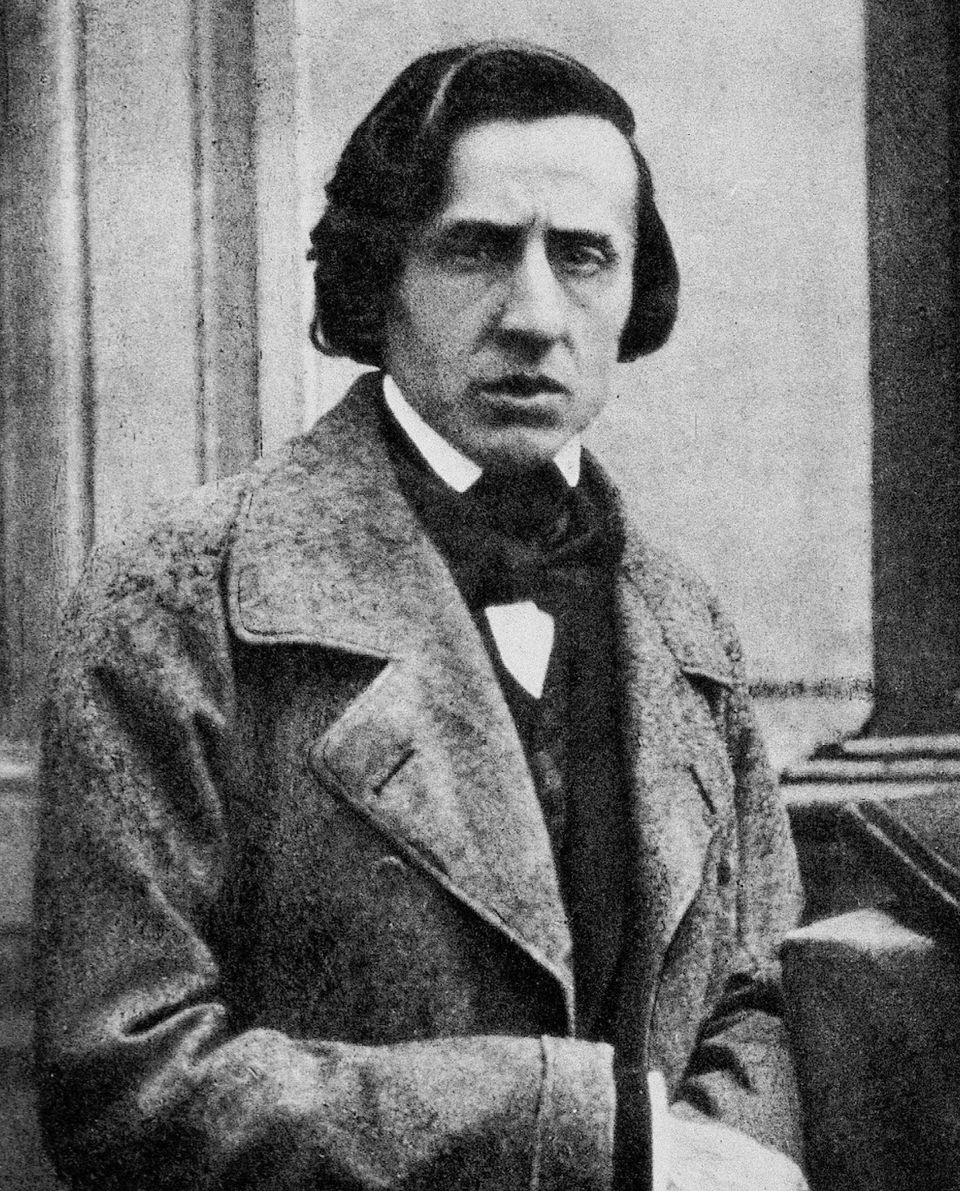
Chopin’s IQ score turns up in two places that carry a number and one that only looks as if it does. LifeScore prints “150+” on a page headed “Frédéric Chopin’s Estimated IQ”, adds a working range of 135–160 and says no standardized test was ever reported. Geniuses.club shows an “Estimated IQ” of 165 on its Chopin–Karl Marx comparison, beside a line calling such figures reconstructions rather than test results. Neither names the evidence or the arithmetic, and even the Geniuses.club “best known for” line is slightly off: it credits him with publishing two polonaises by the age of seven, when the record shows two composed in 1817 and only the G minor printed that year. The BRGHT page belongs to a quiz-taker named Chopin, and Answers.com’s AnswerBot concedes that no definitive record exists. For the general picture, see our note on where celebrity IQ numbers come from; this one fits it: a round figure, a confident label, no test.
The usual assumption behind a composer’s IQ page is that the number comes from Catharine Cox’s 1926 study, The Early Mental Traits of Three Hundred Geniuses, and for two of his fellow composers there is a real Cox rating behind the figures: Mozart and Beethoven are both among her subjects. Chopin is not, and neither are Schubert, Schumann, Liszt or Verdi. The book’s contents list 301 case studies, and the only composers among them are Palestrina, Gluck, Haydn, Rossini, Bach, Beethoven, Wagner, Weber, Handel, Mendelssohn and Mozart. Cox started from Cattell’s list of the thousand most eminent people in history and reduced it by rules of her own; whatever those rules removed, the result contains no case study of Chopin, so any page that quotes a Cox figure for him is not quoting Cox.
Fryderyk Chopin’s IQ is a modern question asked about a man who died before the instrument existed. The Binet–Simon scale appeared in 1905, William Stern’s 1912 book advocated the German term Intelligenzquotient, the source of “IQ”, and Terman’s Stanford–Binet followed in 1916 (background in our history of intelligence testing). Every Chopin IQ estimate is therefore a projection: someone reads what he achieved and converts it into a number on a scale he never sat. That conversion is only as broad as the record beneath it. Chopin’s record is deep in one field, and a range read from it says more about the size of that achievement than about the rest of the mind. Whether the 140s earn the word genius depends on where a source draws its line; see what counts as a genius IQ level.
The range on this page, 140–155, is therefore a judgment about a documented record and nothing more. It sits below the 150–165 this site gives Mozart and Beethoven, overlapping theirs only between 150 and 155, and the reason is evidence rather than talent: their ranges rest on Cox’s ratings of their early lives, while Chopin has no rating at all, so we do not borrow their band. The error runs in the usual direction: the sourced record supports less than the round number that circulates, here a top end ten points under 165. For the low end of the range, see what an IQ of 140 means; for the wider question of how creative achievement relates to test scores, see IQ and creativity.
How we read a number →Contents pages opened in two independent scans. They list 301 case studies in rating bands (282 in Group A, 19 in Group B) and Chopin is not one of them, nor are Schubert, Schumann, Liszt or Verdi; the composers who are: Palestrina, Gluck, Haydn, Rossini, Bach, Beethoven, Wagner, Weber, Handel, Mendelssohn, Mozart. The introduction says Cox began from Cattell’s list of the thousand most eminent people in history.
Confirms birth on March 1, 1810 at Żelazowa Wola, the Lyceum from 1823, the Main School of Music from 1826 and its graduation assessment (“extraordinary aptitude, a musical genius”), the Polonaise in G minor published in December 1817, the first public appearance in February 1818 at the Radziwiłł Palace (Warsaw Charitable Society), and death on October 17, 1849.
Family and teachers, the disputed birth date (February 22 in the baptismal record, March 1 used by the family), Lyceum and Conservatory years, the July 1829 report, the Szafarnia letters, Op. 1 in 1825, the 1830 concerto premiere, arrival in Paris on October 5, 1831 and death at 39.
Source for the exact date of the first public concert (February 24, 1818), the Gyrowetz concerto and the 1817 title page describing him as aged eight. The two Wikipedia editions give different days for leaving Warsaw (2 and November 5, 1830), so this page says only November.
Composition years for the Études Op. 10 and Op. 25, the Preludes Op. 28 and Sonata Op. 58; lists the B-flat major polonaise among posthumously published works. IMSLP confirms 1817 and the dedication to Countess Wiktoria Skarbek.
Dates for the Binet–Simon scale (1905), Stern’s advocacy of the term “IQ” (1912 book) and the Stanford–Binet (1916). All fall after Chopin’s death.
Shows an “Estimated IQ” of 165 for Chopin and says historical IQ figures are reconstructions, not test results. Names no test or study and shows no working for Chopin; its only stated basis is a general line about biographical evidence, productivity and problem difficulty.
Prints 150+ with a working range of 135–160 and says his IQ was never verified by a standardized test. Lists Cox (1926) and Simonton (2009) as general references without tying either to a Chopin figure.
Not the composer: a quiz result for a user of that name on BRGHT’s own 33-question test.
Looked for a test, study or archive record in the Cox contents pages, the National Chopin Institute biography and the two sites that print a figure. None reports one; LifeScore says outright that none exists, and Answers.com’s AnswerBot says no definitive record exists.
The sources behind our estimate
The figures that circulate for Frédéric Chopin, what we were able to confirm, and where the two diverge.
Two websites print a Chopin IQ score. LifeScore gives “150+”, with a working range of 135–160; Geniuses.club gives an “Estimated IQ” of 165. A BRGHT page headed “Chopin has an IQ of 137” looks like a third figure but is a quiz result for a user of that name, not the composer.
No published IQ test result exists for Chopin, and Cox’s 1926 study, which did rate Mozart and Beethoven, never rated him. LifeScore says his IQ was never verified by a standardized test, then lists Cox (1926) and Simonton (2009) among its general references; Cox’s contents pages list 301 subjects and Chopin is not one of them. Geniuses.club says its historical figures are reconstructions, not test results, resting on biographical evidence, productivity and problem difficulty in general terms; it shows no working for Chopin. Its 165 is also the number that circulates for Mozart and Beethoven, both of whom Cox did rate; nothing in her book supports it for Chopin.
The range on this page, 140–155, contains LifeScore’s 150+ and stops ten points below Geniuses.club’s 165. The two websites’ figures are 15 points apart, the width of the whole range, and neither shows its working.
Want a number that does hold up? Every figure on this page is somebody’s claim. Take the 30-question test and get a percentile you can check rather than a figure you have to trust.
Frédéric Chopin — frequently asked
What is Frédéric Chopin’s IQ?
Chopin has no measured IQ; this site’s estimated range is 140–155, inferred from his documented record. He died in 1849, before intelligence testing existed, and the 150+ and 165 printed on some websites are retrospective estimates that cite no test and show no working.
What is Fryderyk Chopin’s IQ score, and where does the number come from?
No IQ test score exists for Fryderyk Chopin (Frédéric is the French form of his name). LifeScore prints “150+” and Geniuses.club shows an “Estimated IQ” of 165, but neither cites a test or study or shows its working, and both describe the figure as an estimate or reconstruction rather than a result.
Is Chopin in Catharine Cox’s 1926 study of geniuses?
No. Cox’s 1926 book The Early Mental Traits of Three Hundred Geniuses lists 301 case studies, including the composers Bach, Handel, Haydn, Mozart, Beethoven, Mendelssohn and Wagner, but not Chopin. Any “Cox estimate” quoted for him is therefore not hers.
Did Chopin ever take an IQ test?
No. The Binet–Simon scale appeared in 1905, William Stern’s 1912 book advocated the term IQ, and Chopin died in 1849, so no intelligence test of any kind could have been given to him. Every Chopin IQ level quoted today is inferred from what he achieved.
Was Chopin a child prodigy?
By the documented record, yes. His Polonaise in G minor was printed in Warsaw in December 1817, when he was seven, and on February 24, 1818 he played a concerto by Gyrowetz at a charity concert in the Radziwiłł Palace. Both facts show musical precocity; neither measures IQ.
How does Chopin’s estimated IQ compare with Mozart’s and Beethoven’s?
This site’s range for Chopin, 140–155, sits below its 150–165 ranges for Mozart and Beethoven and overlaps them only between 150 and 155. The gap reflects evidence, not talent: both were rated in Cox’s 1926 study, while Chopin was not, so we do not borrow their band.
Was Chopin a genius?
His teacher Józef Elsner reported in July 1829 that he had extraordinary aptitude and was a musical genius, and Robert Schumann greeted his early work with “Hats off, gentlemen, a genius”. Those are judgments of his music, not IQ scores; our estimated range for his IQ is 140–155.
How does my IQ compare with Frédéric Chopin?
You can find out in about fifteen minutes. The IQ Metrics assessment is 30 questions, scored on the same 100-mean scale used throughout this page, so your result and the estimate above are at least expressed in the same units — one measured, one inferred. Once you have a number, the leaderboard shows where it would sit, and how we score and norm it explains the benchmarking.
Where does this estimate come from?
From the documented record rather than a test — the method is named above and set out in full under how we read a number. Compare it against the other musicians profiles, starting with Brian May.
- Take the 30-question IQ test — get a measured score and percentile of your own
- Average IQ by country — how the scale behaves across populations
- How IQ Metrics scores its assessment — the method behind our own number
- More on how IQ testing works — reliability, error and what a score can and cannot say
- More musicians profiles — same field, same method
More musicians



Photograph by Carlos M. Vazquez II, CC BY 2.0. Background removed for the portrait above. · Photograph by The Come Up Show (July 2016), CC BY 2.0. Background removed for the portrait above. · Photograph by Diego Serrano (WrestleMania XL, April 2024), CC BY 2.0. Background removed for the portrait above.
.jpg)

_(cropped).jpg)
An estimate is an inference.
Yours can be measured.
Thirty questions, scored against general-population benchmarks. Your score, your percentile, your ability breakdown and a printable IIF certificate.
Find your IQ score now! →