



What is Frank Morris’ IQ?
A reported 133, first printed two days after the June 1962 escape, with no test, tester or score sheet shown.

Frank Morris’s IQ is reported as 133, a figure the San Francisco Chronicle printed on June 13, 1962, two days after the Alcatraz escape, with no test, examiner or date named. No score sheet is public, so this site’s estimated IQ level for him is 120–140, an inference built around a reported number, not a measurement.
Frank Morris’ estimated IQ
- A reported IQ of 133: the San Francisco Chronicle of June 13, 1962 calls him “a man of superior intelligence, with an IQ of 133,” and two Chronicle pieces of June 17, 1962 repeat the number; none names a test, an examiner or a date.
- On the usual scale (mean 100, standard deviation 15) a 133 is about the 98.6th percentile; on a scale with a standard deviation of 16 it is about the 98th, which fits the “top 2%” wording in Wikipedia’s sentence (our arithmetic).
- Nothing else measures him: the FBI’s Alcatraz escape file, the Bureau of Prisons’ Alcatraz page and the U.S. Marshals Service profile contain no IQ figure, and no second test result is on record.
- The Bureau of Prisons’ timeline says inmate classification was standard practice by 1940, so an intake test in a federal prison is plausible; no page names the test, its version or its norms.
- His documented schooling is thin: the FBI’s summary records a juvenile commitment to the National Training School for Boys in Washington on November 13, 1940, and no grade completed or school-test score is recorded.
One reported score with no test name, version, date or examiner carries the usual measurement error of several points, may have been set against older norms, and a single high score tends to drift toward the average on retest. The range sits a little under the reported 133 for those reasons; it is a reading of a reported number, not a measured IQ.
- Born
- September 1, 1926, District of Columbia (U.S. Marshals Service); the FBI file lists other years and places
- Alcatraz number
- 1441 (FBI file; National Archives register)
- Arrived at Alcatraz
- January 1960 from Atlanta; sources differ on the day
- Escape
- Night of June 11, 1962; found missing at 7:15 a.m. on June 12 (FBI file)
- Official listing
- Missing and presumed drowned (Bureau of Prisons); the Marshals’ profile still lists him as wanted, as of October 2026
- Reported IQ
- 133 (San Francisco Chronicle, June 13, 1962); no test named
- In film
- Played by Clint Eastwood in Escape from Alcatraz (1979, directed by Don Siegel)
What an IQ of 120–140 actually means
Set the claim aside for a moment. If someone genuinely scored in this range, here is what that would represent.
Average is 100 by construction, and about two-thirds of people fall between 85 and 115. Take the test to place your own score on this scale.
| Score range | Classification | Share of people | What it indicates |
|---|---|---|---|
| 85 – 114 | Average | ~68% | The range most people fall into. |
| 115 – 129 | Above average | ~13.6% | Roughly one person in seven. |
| 130 – 144 | Gifted | ~2% | The threshold most high-IQ societies use. |
| Above 144 | Highly gifted | ~0.1% | Figures above this range are extrapolated from the curve rather than measured. |
Percentages are approximate and describe a normal distribution. The same number means different things on tests with different standard deviations.
Thirty questions gives you a measured position on this exact scale — your score, your percentile and the ability breakdown behind it.
Find out in 30 minutes →Who Frank Morris is
Frank Lee Morris was born on September 1, 1926 in the District of Columbia, according to the U.S. Marshals Service profile. The FBI’s case file says his birth was “variously listed” with the years 1922, 1925, 1926 and 1928 and with four different places, so the Marshals’ date is the one this page uses. This page covers only the IQ figure attached to his name and the record around it. In one clause, at the time of the escape he was serving a 14-year federal sentence imposed on September 19, 1956 for a bank burglary in Slidell, Louisiana (U.S. Marshals Service). On schooling, the record is thin: the FBI’s summary says he was committed to the National Training School for Boys in Washington by the District of Columbia Juvenile Court on November 13, 1940, and Ghosts of DC says he was taught to repair shoes there; no grade completed, school record or school-test score is recorded.
He is Alcatraz inmate No. 1441: the FBI’s summary gives that number alongside John Anglin’s 1476 and Clarence Anglin’s 1485, and the National Archives at San Francisco’s list of former Alcatraz inmates carries “Register Number 1441” for Morris, Frank Lee. He was transferred to Alcatraz from the federal penitentiary in Atlanta in January 1960. Wikipedia gives January 18, 1960 and Ghosts of DC gives January 3, 1960. The Bureau of Prisons’ Alcatraz page gives the escape date and says nothing about testing.
Morris and the brothers John and Clarence Anglin were discovered missing at 7:15 a.m. on June 12, 1962, according to the FBI file; the Bureau of Prisons dates the escape June 11, 1962 and says the three left through vent holes in the rear wall of their cells. A fourth inmate, Allen West, was still in his cell. The Bureau of Prisons lists the three as missing and presumed drowned. The FBI file records that on 12/31/79 its San Francisco case was transferred to the U.S. Marshal in San Francisco, and the U.S. Marshals Service profile still lists Morris as wanted for the escape as of October 2026, without saying whether the case is open. This page does not say whether he survived.
The film Escape from Alcatraz (Paramount, released June 22, 1979, directed by Don Siegel) starred Clint Eastwood as Frank Lee Morris and, per Wikipedia, was based on J. Campbell Bruce’s 1963 book of the same title. It is a creative work. This page rates only the documented record: a single reported score from 1962 reporting, no named test and no school or academic record.
 By Elora Mercer, Celebrity Research WriterFigures checked by Leon Falkner, Data & Research Analyst
Reviewed by Aarav Vardhan, Editor-in-Chief · Last reviewed October 2026

Frank Morris: the documented record
The estimate above rests on this record. Every entry here is a matter of public fact, which is more than can be said for the number itself.
- September 1, 1926Born in the District of Columbia, per the U.S. Marshals Service; the FBI file lists other birth years and places.
- September 19, 1956Sentenced to 14 years for a bank burglary in Slidell, Louisiana (U.S. Marshals Service; the FBI file gives the same date).
- January 1960Transferred to Alcatraz from the Atlanta penitentiary as inmate No. 1441; sources differ on the day.
- June 11, 1962Night of the escape; the three men are discovered missing at 7:15 a.m. on June 12.
- June 13, 1962The San Francisco Chronicle calls him “a man of superior intelligence, with an IQ of 133,” the earliest page found with the figure.
- June 17, 1962The Chronicle repeats the 133 in two pieces, one bylined J. Campbell Bruce; neither names a test.
- July 26, 1962An FBI memo records a UPI reporter asking for the men’s “IQ rating”; the FBI declines to give background on a pending case.
- June 22, 1979Escape from Alcatraz, directed by Don Siegel, is released with Clint Eastwood as Morris.
- December 31, 1979FBI file: the San Francisco case is transferred to the U.S. Marshal in San Francisco.
Where the 133 figure came from
Following a claim back to its first appearance is the part almost nobody does — and it is what most people are actually asking.
What was Frank Morris’s IQ? The number that circulates is 133, and it is a newspaper number first. The San Francisco Chronicle of June 13, 1962 says the break-out was apparently engineered by Morris, “a man of superior intelligence, with an IQ of 133,” and does not say who measured it. On June 17, 1962 the Chronicle repeats the figure twice: an article bylined J. Campbell Bruce says Morris “had an IQ of 133 and presumably engineered the escape,” and a second piece gives “I.Q. of 133.” Wikipedia’s film article names a 1963 book by J. Campbell Bruce, Escape from Alcatraz, as the source of the 1979 film. This is how celebrity IQ numbers travel: a figure printed once, in a hurry, is repeated until it looks like a record.
Did Frank Morris take an IQ test? Probably some form of intake testing, but no page shows it. Wikipedia’s article on the escape says he “reportedly ranked in the top 2%” and cites a New York Times article by Robert D. McFadden of June 9, 2012. Ghosts of DC (September 10, 2012, updated April 27, 2026) says he “was said to have an I.Q. of 133” without a source. The Bureau of Prisons’ timeline says inmate classification was standard practice by 1940, but it does not mention intelligence tests, and the readable text of the FBI’s case file has no IQ for him. The only IQ mention there is a July 26, 1962 memo in which a UPI reporter asked for the men’s “IQ rating” and was told the FBI could not supply background on a pending case.
Frank Morris’s IQ level of 133 means different things on different scales. On the usual scale (mean 100, standard deviation 15) it is about 2.2 standard deviations above average, roughly the 98.6th percentile or 1 person in 70; on a scale with a standard deviation of 16 it is about the 98th percentile, which matches the “top 2%” in Wikipedia’s sentence (our arithmetic). That puts it in the territory of an IQ of 135. Any single score carries a margin of error, a test normed decades earlier can read higher than a current one (why IQ norms expire), and a score from a 1960s ratio-style test would not be directly comparable (ratio versus deviation IQ). We do not know which kind this was, and a high score reported once tends to move toward the average on retest (regression to the mean).
Was Frank Morris a genius? Not on anything documented. A reported 133 is high, but no degree, publication or rating stands beside it, and whether an IQ of 130 is genius depends on the definition. Beside the profiles here, a range of 120–140 overlaps Charles Darwin (125–140), its 130–140 upper half matches Napoleon (130–140) and it sits below Thomas Edison (140–160). The closest like-for-like is Ted Kaczynski, whose page has a Full Scale 136 on the WAIS-R from a court document, with a test name and date (estimate 135–150). Morris’s 133 sits within three points of it but has no such paper trail, which is why his range is wider and a little lower. Frank Lampard’s page (115–130) has the other version of the problem: a reported squad test, no named test or score sheet.
How we read a number →Part 2 summary: Alcatraz Nos. 1441 (Morris), 1476 and 1485 (the Anglins); found missing 7:15 a.m. June 12, 1962; Morris’s birth “variously listed” as 1922, 1925, 1926 and 1928; 14-year sentence of September 19, 1956; National Training School for Boys, November 13, 1940; a line printing his Alcatraz receipt as January 18, 1961 from Atlanta; John Anglin received October 24, 1960. Part 6: July 26, 1962 airtel, a UPI reporter asks for “IQ rating” and is refused. Part 15: on 12/31/79 the case is transferred to the U.S. Marshal, San Francisco. No IQ figure for Morris appears in the file’s readable text.
The transcriptions give “superior intelligence, with an IQ of 133” (June 13), “who had an IQ of 133” (June 17) and “I.Q. of 133” (June 17), with no source, test or date. Cited pages: June 13, pages 1 and 9; June 17, pages 1 and 20 (Bruce) and pages 3 and 4 (This World, “Big Rock Getaway”).
Date of birth September 01, 1926, District of Columbia; wanted for the June 11, 1962 escape; sentenced September 19, 1956 to 14 years for a bank burglary in Slidell, Louisiana. No IQ, education or case-status wording on the page.
Alcatraz page: Morris and John and Clarence Anglin vanished June 11, 1962 through vent holes in the rear wall of their cell; Allen West stayed; the three are officially listed as missing and presumed drowned; no IQ or testing mentioned. Timeline: classification standard practice by 1940; in the late 1950s the classification system was used to “diagnose” an inmate; no mention of intelligence, psychological or test.
Register Number 1441: Morris, Frank Lee. The list says the Archives hold comprehensive inmate case files, identification photographs and warden’s notebook pages for most listed inmates; it gives no dates and no test data.
Label “Frank Morris,” description “American criminal and prison escapee,” date of birth 1926-09-01, English Wikipedia sitelink “Frank Morris (prisoner)”: the entity is the Alcatraz inmate, not a namesake. Wikidata also stores a date of death of 1962-06-11, which this page does not use because no official source states one.
IQ sentence: “reportedly ranked in the top 2% of the general population in intelligence, as measured by IQ testing (133),” cited to Robert D. McFadden, “Anniversary of a Mystery at Alcatraz,” New York Times, June 9, 2012; sent to Alcatraz January 18, 1960 as AZ1441; January 18, 1960 is cited to Bruce, pp. 142–143; the FBI closed its file December 31, 1979 and in 1979 concluded the three likely drowned. Film: released June 22, 1979 by Paramount, directed by Don Siegel, Clint Eastwood as Frank Lee Morris, based on J. Campbell Bruce’s 1963 book.
Ghosts of DC: “said to have an I.Q. of 133,” arrival at Alcatraz January 3, 1960, AZ1441, taught to repair shoes at the National Training School for Boys; cites FBI files for his history but not for the IQ.
Checked: the Chronicle’s 1962 transcriptions, the Bureau of Prisons and U.S. Marshals Service pages, the National Archives list, the FBI Vault file parts 1–16 (readable text) and the pages above. No online copy of the Bureau of Prisons inmate file held by the National Archives is available.
The sources behind our estimate
The figures that circulate for Frank Morris, what we were able to confirm, and where the two diverge.
133 is the figure that circulates for Frank Morris’s IQ. Wikipedia says he “reportedly ranked in the top 2%” of the general population and cites a New York Times article of June 9, 2012; Ghosts of DC (September 10, 2012) says he “was said to have an I.Q. of 133”. The earliest page located is the San Francisco Chronicle of June 13, 1962.
The 133 is a newspaper figure from two days after the escape, and no page traces it to a test. The San Francisco Chronicle of June 13, 1962 (“Out of Alcatraz (By A Spoon)”) calls Morris “a man of superior intelligence, with an IQ of 133”; a June 17, 1962 article bylined J. Campbell Bruce says he “had an IQ of 133,” and a second June 17 piece gives “I.Q. of 133”; none names a source, a test or a date. The Bureau of Prisons’ Alcatraz page and the U.S. Marshals Service profile give no IQ. The FBI’s Alcatraz escape file in the Vault (parts 1–16) has no IQ figure for Morris; its only mention is a July 26, 1962 memo in which a news-service reporter asked for the men’s “IQ rating” and the FBI declined to give background on a pending case.
The circulating 133 sits inside the range, 13 points above the low end and 7 below the top. On the usual scale it is about 2.2 standard deviations above average. The 20-point width is deliberate: the test, its norms and its date are all unknown, so a narrow range would claim a precision the record does not have.
Want a number that does hold up? Every figure on this page is somebody’s claim. Take the 30-question test and get a percentile you can check rather than a figure you have to trust.
Frank Morris — frequently asked
What is Frank Morris’s IQ?
Frank Morris’s IQ is reported as 133, but no test record, test name or examiner has been published. The figure first appears in the San Francisco Chronicle on June 13, 1962, two days after the Alcatraz escape. This site’s estimated IQ for him is 120–140, an inference around that reported number, not a measurement.
What was Frank Morris’s IQ level at Alcatraz?
The Frank Morris Alcatraz IQ of 133 is about the 98.6th percentile on a scale with a standard deviation of 15 (our arithmetic). The 1962 Chronicle articles state it without a source, and no page shows who tested him, when, or on which scale, so 133 is a reported figure, not a verified test result.
Did Frank Morris take an IQ test?
A Frank Morris IQ test is reported but not documented. Pages report the 133 as a test score, yet none names the test, the date or the examiner, and the FBI’s Alcatraz escape file carries no score for him. An intake test in a federal prison is plausible, since classification was standard by 1940, but no result sheet is public.
Where does the Frank Morris IQ of 133 come from?
The earliest page found is the San Francisco Chronicle of June 13, 1962, which calls him a man of superior intelligence with an IQ of 133 and names no source; a June 17 article bylined J. Campbell Bruce repeats it. Wikipedia cites a 2012 New York Times article for the figure.
Was Frank Morris a genius?
Not on anything documented. A reported 133 is high, about the top 2 percent, but no degree, publication or rating stands beside it, and a single reported prison score is weak evidence either way. This site’s 120–140 describes a high-scoring person, not a documented genius.
How does Frank Morris’s estimated IQ compare with Ted Kaczynski’s?
Lower, and less certain. This site’s range for Frank Morris is 120–140, against Ted Kaczynski’s 135–150. Kaczynski’s rests on a Full Scale 136 on the WAIS-R with a test name and date plus a mathematics Ph.D.; Morris’s rests on a reported 133 with no test name, date or examiner.
Does the FBI or the Bureau of Prisons state Frank Morris’s IQ?
No. The Bureau of Prisons’ Alcatraz page and the U.S. Marshals Service profile carry no IQ, and the readable text of the FBI’s Alcatraz escape file has none; its only IQ mention is a July 26, 1962 request from a news reporter for the men’s “IQ rating,” which the FBI declined.
Is a Frank Morris IQ of 133 the same as a modern IQ score?
Not necessarily. The test, its norms and its standard deviation are unknown; older norms can read higher than current ones, and a score on a 16-point scale means something different from one on a 15-point scale. One score also carries a margin of error of several points, which is why this site gives a 20-point range.
How does my IQ compare with Frank Morris?
You can find out in about fifteen minutes. The IQ Metrics assessment is 30 questions, scored on the same 100-mean scale used throughout this page, so your result and the estimate above are at least expressed in the same units — one measured, one inferred. Once you have a number, the leaderboard shows where it would sit, and how we score and norm it explains the benchmarking.
Where does this estimate come from?
From the documented record rather than a test — the method is named above and set out in full under how we read a number. Compare it against the other historical profiles, starting with Isaac Newton.
- Take the 30-question IQ test — get a measured score and percentile of your own
- Average IQ by country — how the scale behaves across populations
- How IQ Metrics scores its assessment — the method behind our own number
- More on how IQ testing works — reliability, error and what a score can and cannot say
- More historical profiles — same field, same method
More historical
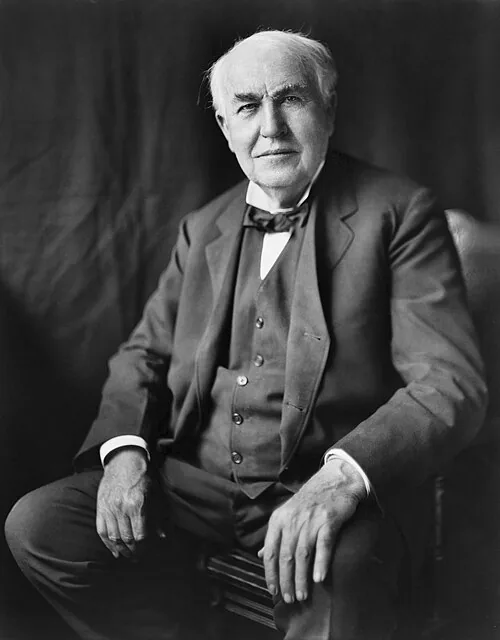


Photograph by Louis Bachrach, Bachrach Studios, restored by Michel Vuijlsteke, public domain. Background removed for the portrait above. · Portrait by Jacques-Louis David (1812), via Wikimedia Commons, public domain. · Yuan-dynasty court portrait of Taizu (Genghis Khan), artist unknown, 14th century, in the collection of the National Palace Museum, Taipei; the painting is in the public domain (digitized copy via Shuge).


An estimate is an inference.
Yours can be measured.
Thirty questions, scored against general-population benchmarks. Your score, your percentile, your ability breakdown and a printable IIF certificate.
Find your IQ score now! →