



What was William Shockley’s IQ?
Too low for a gifted-children study, then a Nobel Prize in Physics at 46.
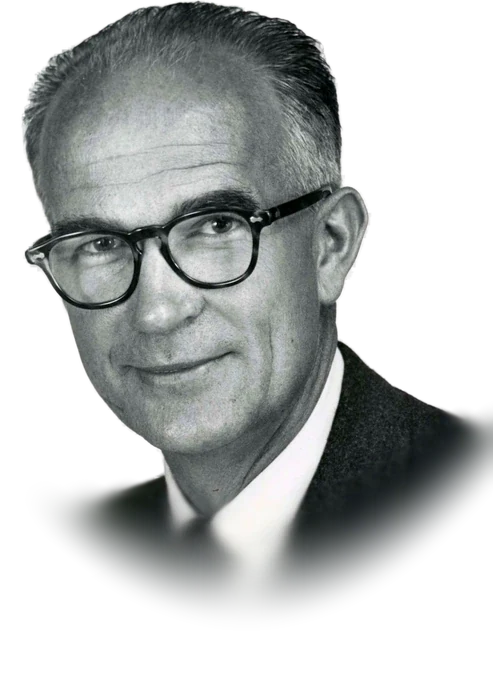
William Shockley’s IQ was tested in childhood: his biography reports scores of 129, then 125, both below the 140 cutoff for Lewis Terman’s gifted-children study. Those scores and a 1956 Nobel Prize in Physics support an estimated IQ of about 125–145.
William Shockley’s estimated IQ
- Two childhood intelligence-test scores are reported in Joel Shurkin’s 2006 biography Broken Genius: 129 the first time and 125 the second, as cited by Warne, Larsen and Clark (Intelligence, 2020). Both fall below the 140 that Terman’s study generally required.
- A third result, taken as an adult, is reported at the 90th percentile, which the same paper converts to an IQ of 119. The test is not named.
- A B.S. from Caltech in 1932 and a Ph.D. from MIT in 1936, with a thesis on the electronic band structure of sodium chloride.
- The 1956 Nobel Prize in Physics, shared with John Bardeen and Walter Brattain “for their researches on semiconductors and their discovery of the transistor effect.”
- Warne, Larsen and Clark judge that the lowest IQ a Nobel Prize winner is likely to have is about 1.3 to 1.6 standard deviations above the mean, roughly 120 to 124, so scores in the 120s do not rule out the prize.
The scores rest on one biography and on Shockley’s own account, and the sources give no test names, dates or examiners. Childhood ratio IQs from that period do not map exactly onto modern scores, and the top of the range comes from his career, not from any test.
- Born
- February 13, 1910, London, to American parents
- Died
- August 12, 1989, Stanford, California
- Field
- Solid-state physics; semiconductor devices
- Education
- B.S., California Institute of Technology (1932); Ph.D., Massachusetts Institute of Technology (1936)
- Known for
- The junction transistor; the 1956 Nobel Prize in Physics, shared with John Bardeen and Walter Brattain
- Career
- Bell Telephone Laboratories (from 1936); Shockley Semiconductor Laboratory (1956); Stanford professor (1963–1975)
- Childhood IQ scores
- 129, then 125, reported in Joel Shurkin’s 2006 biography
- Terman study
- Screened, not selected (usual cutoff: IQ 140)
What an IQ of 125–145 actually means
Set the claim aside for a moment. If someone genuinely scored in this range, here is what that would represent.
Average is 100 by construction, and about two-thirds of people fall between 85 and 115. Take the test to place your own score on this scale.
| Score range | Classification | Share of people | What it indicates |
|---|---|---|---|
| 85 – 114 | Average | ~68% | The range most people fall into. |
| 115 – 129 | Above average | ~13.6% | Roughly one person in seven. |
| 130 – 144 | Gifted | ~2% | The threshold most high-IQ societies use. |
| Above 144 | Highly gifted | ~0.1% | Figures above this range are extrapolated from the curve rather than measured. |
Percentages are approximate and describe a normal distribution. The same number means different things on tests with different standard deviations.
Thirty questions gives you a measured position on this exact scale — your score, your percentile and the ability breakdown behind it.
Find out in 30 minutes →Who William Shockley was
William Bradford Shockley was born on February 13, 1910, in London to American parents. He grew up in Palo Alto, California, from age three. He was taught at home until age eight, spent two years at Palo Alto Military Academy and graduated from Hollywood High School in 1927. He took a B.S. at the California Institute of Technology in 1932 and a Ph.D. at the Massachusetts Institute of Technology in 1936, with a thesis on the electronic band structure of sodium chloride.
Shockley joined Bell Telephone Laboratories in 1936. In May 1942 he took leave to direct research at Columbia University’s Anti-Submarine Warfare Operations Group, and he received the Medal for Merit in 1946. After the war he returned to Bell Labs. In 1947 John Bardeen and Walter Brattain built a germanium amplifier with two closely spaced gold contacts, and about two months later Shockley proposed a better design. The junction transistor he developed was announced in 1951. The three men shared the 1956 Nobel Prize in Physics “for their researches on semiconductors and their discovery of the transistor effect.”
In 1956 Shockley founded Shockley Semiconductor Laboratory in Mountain View, California. In September 1957 eight of his researchers, among them Gordon Moore and Robert Noyce, resigned and formed Fairchild Semiconductor. From 1963 until his retirement in 1975 he was the Alexander M. Poniatoff Professor of Engineering and Applied Science at Stanford. Later in life he became known for promoting discredited views on race and intelligence that were widely condemned, and this page does not repeat them. He died on August 12, 1989.
 By Elora Mercer, Celebrity Research WriterFigures checked by Leon Falkner, Data & Research Analyst
Reviewed by Aarav Vardhan, Editor-in-Chief · Last reviewed October 2026

William Shockley: the documented record
The estimate above rests on this record. Every entry here is a matter of public fact, which is more than can be said for the number itself.
- 1910Born February 13 in London to American parents.
- ChildhoodTakes intelligence tests twice: 129 the first time, 125 the second (reported).
- 1921Lewis Terman begins selecting children for his study of the gifted at Stanford.
- 1932Earns a B.S. at Caltech.
- 1936Earns a Ph.D. at MIT and joins Bell Telephone Laboratories.
- 1951The junction transistor he developed is announced.
- 1956Shares the Nobel Prize in Physics; founds Shockley Semiconductor Laboratory in Mountain View.
- 1957Eight researchers resign on September 18 and form Fairchild Semiconductor.
- 1963Named Alexander M. Poniatoff Professor at Stanford; holds the chair until 1975.
- 1989Dies on August 12.
Where the 125–129 figure came from
Following a claim back to its first appearance is the part almost nobody does — and it is what most people are actually asking.
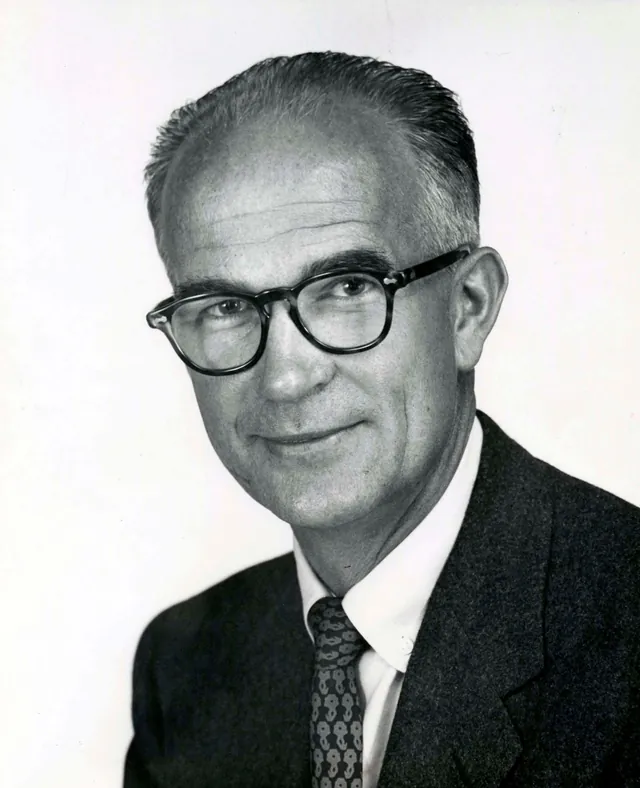
The William Shockley IQ test record traces to one biography. In Broken Genius (2006), Joel Shurkin reports that Shockley took intelligence tests twice as a child, scoring 129 the first time and 125 the second, and once as an adult, scoring at the 90th percentile. Warne, Larsen and Clark (Intelligence, 2020) cite pages 13 and 216 and convert the adult result to an IQ of 119. The sources name no test form, date or examiner. An IQ of 125 is clearly above average, yet well short of what people expect from a Nobel laureate.
The Shockley Terman study link is why these scores are known at all. Lewis Terman began selecting children in 1921. By his own estimate his team screened about 168,000 pupils, and 1,528 entered the sample. The usual minimum was an IQ of 140, or 135 for siblings and special cases. The Terman study of the gifted screened Shockley and the physicist Luis Alvarez and selected neither; Alvarez’s score is not public. Warne, Larsen and Clark say the claim first appeared in print in a 1980 interview with Shockley himself, and that Shurkin repeated it in Terman’s Kids (1992) after interviewing both men. See gifted cutoff scores for how such lines are drawn.
The story spread because it is so easy to retell. Malcolm Gladwell used it in Outliers (2008), and Dean Keith Simonton in Nautilus (2018) called Shockley the second Terman reject to win the Nobel Prize in Physics, after Alvarez in 1968. The direction of the error matters here. Readers expect a laureate to have scored far above 140 as a child. The record points the other way, with two scores in the 120s. Where celebrity IQ numbers come from explains how an unsourced figure travels.
Do 125 and 129 prove he was an average-plus thinker? No. Warne, Larsen and Clark simulated Terman’s selection and put the chance of picking both Shockley and Alvarez at between 0.6 and 7.3 percent, because a Nobel Prize is rare and a cutoff of 140 is high. They add that Root-Bernstein (2015) reported an IQ in the 120s for Richard Feynman. A measured score below what a career suggests says little about the career. It says that one childhood test is a rough guide. That is why his estimated IQ of 125–145 sits below ranges built from records alone, such as J. Robert Oppenheimer’s 155–175 and Enrico Fermi’s 160–180: those two have no test score to hold the low end down. For the wider picture, see the IQ of Nobel Prize winners: what was measured and what was guessed.
How we read a number →The key source. Reports Shurkin (2006, pp. 13, 216): two childhood tests, 129 then 125, and an adult result at the 90th percentile (IQ 119). Gives Terman’s cutoff (generally 140, 135 for siblings and special cases), the 168,000 screened, the 1,528 selected, and the 1980 interview in which Shockley first told the story in print. Accepted manuscript on OSF.
Calls Shockley the second Terman reject to win the Nobel Prize in Physics, after Luis Alvarez (1968). Describes a sub-genius score on Terman’s test, gives no number, and confirms the Caltech B.S. and MIT Ph.D.
Says Shockley was excluded as a child from a long-term study of genius because his IQ score was not high enough, and that Terman defined genius as an IQ greater than 140. No score is given.
Birth February 13, 1910 in London; Palo Alto upbringing and schooling; B.S. Caltech 1932; Ph.D. MIT 1936; Anti-Submarine Warfare Operations Group (1942); the Nobel citation; Shockley Semiconductor Laboratory (1956); Poniatoff professorship 1963–1975; death on August 12, 1989.
Caltech B.S. in 1932; Ph.D. and Bell Labs in 1936; junction transistor announced in 1951; Medal for Merit (1946), Comstock Award (1954), Holley Medal (1963); the Poniatoff chair at Stanford.
Bardeen and Brattain’s 1947 germanium amplifier with two gold point contacts; Shockley’s improved design two months later; Shockley at Bell Labs since 1936.
Names the eight researchers who resigned from Shockley’s laboratory on September 18, 1957 and formed Fairchild Semiconductor.
None of the sources cites a test sheet, school file or archive record for the 129 and 125. They rest on Shurkin’s 2006 biography, and the Terman rejection was first printed in a 1980 interview with Shockley. Luis Alvarez’s score is described as not public.
The sources behind our estimate
The figures that circulate for William Shockley, what we were able to confirm, and where the two diverge.
The numbers that circulate are his childhood test scores: 129 and 125, retold in books, magazines and a 2020 paper in the journal Intelligence as the reason Lewis Terman’s gifted study passed him over.
Warne, Larsen and Clark (Intelligence, September 2020) trace the scores to pages 13 and 216 of Shurkin’s 2006 biography. Discover (October 1, 2008) and Nautilus (October 2, 2018) say Shockley was screened by Terman’s team and excluded for a score that was too low, but give no number. None of these pages gives the age at which he was tested or the name of the test.
The two numbers with a test behind them sit at the bottom of the spread, and 145 is the top of the range inferred from his career. Unusually for this section, the measured scores are lower than the reputation, not higher.
Want a number that does hold up? Every figure on this page is somebody’s claim. Take the 30-question test and get a percentile you can check rather than a figure you have to trust.
William Shockley — frequently asked
What is William Shockley’s IQ?
William Shockley’s reported childhood IQ scores are 129 and then 125, according to Joel Shurkin’s 2006 biography, and he scored at the 90th percentile on an adult test, about 119. His career, including the 1956 Nobel Prize in Physics, supports an estimated IQ of about 125–145.
Did William Shockley take an IQ test?
Yes. His biographer reports two childhood intelligence tests, 129 the first time and 125 the second, plus one adult test at the 90th percentile. The test names, dates and examiners are not given. The Terman rejection was first mentioned in print in a 1980 interview with Shockley; the scores come from the 2006 biography.
Was William Shockley in the Terman study?
No. He was screened but not selected. Lewis Terman’s study of gifted children generally required an IQ of 140, or 135 for siblings and special cases, and Shockley’s reported scores were 129 and 125. The physicist Luis Alvarez, a 1968 Nobel winner, was also screened and not selected.
Was William Shockley a genius?
Genius is a reputation, not a test result. Shockley shared the 1956 Nobel Prize in Physics for the transistor and held a Caltech degree and an MIT doctorate, which many would call genius-level work. His reported scores of 129 and 125 show how little one childhood test predicts.
How does William Shockley’s estimated IQ compare with Richard Feynman’s?
Both won the Nobel Prize in Physics and both have school-age scores in the 120s on record. Feynman’s range on this site is 125–150 and Shockley’s is 125–145. Feynman’s upper end is higher because of his Putnam competition and Princeton entrance results; no comparable result is on record for Shockley.
Where did William Shockley study?
Shockley took a B.S. at the California Institute of Technology in 1932 and a Ph.D. at the Massachusetts Institute of Technology in 1936, with a thesis on the electronic band structure of sodium chloride. He joined Bell Telephone Laboratories the same year and was a Stanford professor from 1963 to 1975.
How does my IQ compare with William Shockley?
You can find out in about fifteen minutes. The IQ Metrics assessment is 30 questions, scored on the same 100-mean scale used throughout this page, so your result and the estimate above are at least expressed in the same units — one measured, one inferred. Once you have a number, the leaderboard shows where it would sit, and how we score and norm it explains the benchmarking.
Where does this estimate come from?
From the documented record rather than a test — the method is named above and set out in full under how we read a number. Compare it against the other scientists profiles, starting with Albert Einstein.
- Take the 30-question IQ test — get a measured score and percentile of your own
- Average IQ by country — how the scale behaves across populations
- How IQ Metrics scores its assessment — the method behind our own number
- More on how IQ testing works — reliability, error and what a score can and cannot say
- More scientists profiles — same field, same method
More scientists

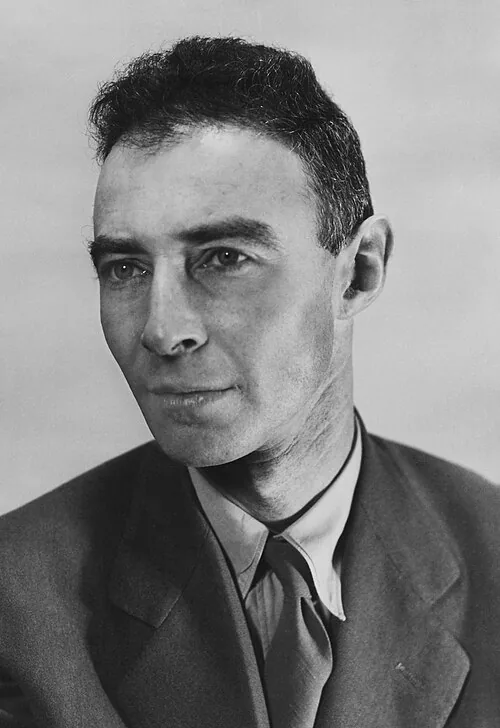
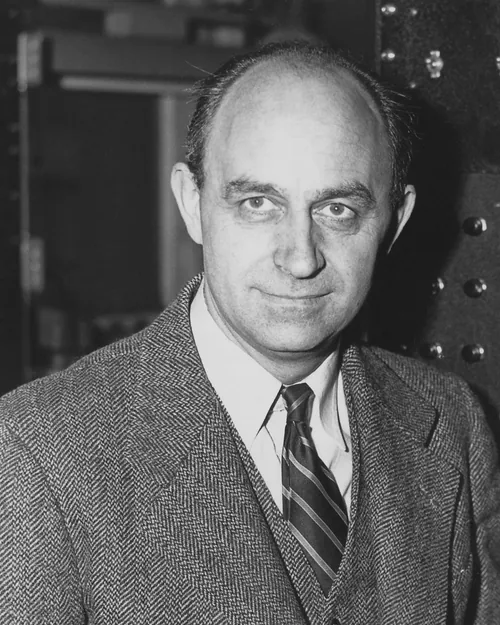
Los Alamos National Laboratory badge photograph, via Wikimedia Commons, CC0. Background removed for the portrait above. · Photograph from the US National Archives (catalog 558579), public domain. · Photograph by the U.S. Department of Energy, Office of Public Affairs (1943–1949), restored by Yann (Commons file), public domain (U.S. federal government work), cropped from a larger picture. Background removed for the portrait above.


An estimate is an inference.
Yours can be measured.
Thirty questions, scored against general-population benchmarks. Your score, your percentile, your ability breakdown and a printable IIF certificate.
Find your IQ score now! →