



What is Malcolm Gladwell’s IQ?
The IQ numbers in Outliers, 195 and a threshold near 120, are about other people and an idea, not Gladwell.

No IQ test result for Malcolm Gladwell has been published, and a 2008 newsletter transcript has Comedy Central’s Stephen Colbert asking, “What’s your IQ?” and Gladwell answering, “I have no idea.” What is documented — a 1984 history degree from Trinity College, Toronto, a New Yorker staff post since 1996, nine books and the Order of Canada — supports an estimated IQ of 125–145: an inference, not a measurement.
Malcolm Gladwell’s estimated IQ
- Graduated with a bachelor’s degree in history from Trinity College at the University of Toronto in 1984 (Wikipedia; The Canadian Encyclopedia).
- Covered business and science for The Washington Post from 1987 to 1996, then became a staff writer at The New Yorker in 1996, a post Pushkin Industries’ biography still lists as of October 2026.
- Published eight books from The Tipping Point (2000) to Revenge of the Tipping Point (2024); his publisher lists a ninth, The American Way of Killing, as on sale September 29, 2026.
- Named a Member of the Order of Canada in 2011 and given honorary degrees by the University of Waterloo (2007) and the University of Toronto (2011).
- Co-founded the audio company Pushkin Industries (2018) and hosts the podcast Revisionist History, which began in 2016.
Malcolm Gladwell’s estimated IQ is an inference from a bachelor’s degree and a writing career, not a measurement. Journalism and bestselling books reflect curiosity, craft and readers as much as reasoning, and a bachelor’s degree is a weaker filter than the doctorates behind several other writers’ ranges here, which is why the floor sits below Yuval Noah Harari’s. With no test on file, the true figure could fall outside 125–145 in either direction.
- Born
- September 3, 1963, Fareham, Hampshire, England
- Raised
- Elmira, Ontario, Canada (family moved in 1969)
- Education
- Bachelor’s degree in history, Trinity College, University of Toronto, 1984
- Career
- The Washington Post (1987–1996); staff writer, The New Yorker (since 1996)
- Best-known books
- The Tipping Point (2000); Blink (2005); Outliers (2008); David and Goliath (2013); Talking to Strangers (2019); The Bomber Mafia (2021); Revenge of the Tipping Point (2024)
- Audio
- Revisionist History (from 2016); co-founder, Pushkin Industries (2018)
- Honors
- Member of the Order of Canada (2011); honorary degrees, Waterloo (2007) and Toronto (2011)
- Published IQ test result
- None found
What an IQ of 125–145 actually means
Set the claim aside for a moment. If someone genuinely scored in this range, here is what that would represent.
| Score range | Classification | Share of people | What it indicates |
|---|---|---|---|
| 85 – 114 | Average | ~68% | The range most people fall into. |
| 115 – 129 | Above average | ~13.6% | Roughly one person in seven. |
| 130 – 144 | Gifted | ~2% | The threshold most high-IQ societies use. |
| Above 144 | Highly gifted | ~0.1% | Figures above this range are extrapolated from the curve rather than measured. |
Percentages are approximate and describe a normal distribution. The same number means different things on tests with different standard deviations.
Thirty questions gives you a measured position on this exact scale — your score, your percentile and the ability breakdown behind it.
Find out in 30 minutes →Who Malcolm Gladwell is
Malcolm Gladwell was born on September 3, 1963, in Fareham, Hampshire, England, and moved with his family to Elmira, Ontario, Canada, in 1969, according to Wikipedia and The Canadian Encyclopedia. He graduated with a bachelor’s degree in history from Trinity College at the University of Toronto in 1984. From 1987 to 1996 he covered business and science for The Washington Post, and he has been a staff writer for The New Yorker since 1996, a post Pushkin Industries’ biography still lists as of October 2026. Two 1996 New Yorker articles, “The Tipping Point” and “The Coolhunt,” are the pieces Wikipedia says his first book grew from.
His books are The Tipping Point (2000), Blink (2005), Outliers (2008), What the Dog Saw (2009), David and Goliath (2013), Talking to Strangers (2019), The Bomber Mafia (April 2021) and Revenge of the Tipping Point (October 2024); his publisher, Little, Brown, lists The American Way of Killing as on sale September 29, 2026. The podcast Revisionist History began in 2016, and in September 2018 he announced the co-founding of the audio company Pushkin Industries with Jacob Weisberg; Pushkin’s own pages list him as co-founder and say the company produces the show.
The Governor General of Canada’s honors database lists him as a Member of the Order of Canada, awarded in 2011, with a citation that calls him “an internationally renowned journalist, author and public intellectual.” The Canadian Encyclopedia adds honorary degrees from the University of Waterloo (2007) and the University of Toronto (2011, when he also gave the commencement address), and Wikipedia records his place on Time’s 2005 list of the 100 most influential people. Pages dated 2026 show him active as of October 2026: his publisher lists the new book for September 29, 2026, and Vanderbilt University announced on July 17, 2026 a talk by him on October 20.
Read together, the record anchors a range rather than a number: an estimated IQ of 125–145, whose floor is the territory of an IQ of 125. That range matches Stephen King (125–145), another bestselling author placed on a bachelor’s degree and a body of work, and overlaps Yuval Noah Harari (130–145), whose range rests on a completed Oxford doctorate. It sits below Nassim Nicholas Taleb (145–160) and well below Langan (160–175), whose page is anchored to a test score. Whether Gladwell reaches what is usually called a genius IQ level is a question only a test could answer, and a bestselling reputation is not one.
 By Elora Mercer, Celebrity Research WriterFigures checked by Leon Falkner, Data & Research Analyst
Reviewed by Aarav Vardhan, Editor-in-Chief · Last reviewed August 2026

Malcolm Gladwell: the documented record
The estimate above rests on this record. Every entry here is a matter of public fact, which is more than can be said for the number itself.
- 1963Born on September 3 in Fareham, Hampshire, England.
- 1984Graduates with a bachelor’s degree in history from Trinity College, University of Toronto.
- 1987Begins covering business and science for The Washington Post, where he works until 1996.
- 1996Becomes a staff writer at The New Yorker; writes the articles “The Tipping Point” and “The Coolhunt.”
- 2000Publishes The Tipping Point; Blink follows in 2005.
- 2008Little, Brown publishes Outliers: The Story of Success on November 18.
- 2011Named a Member of the Order of Canada; receives an honorary degree from the University of Toronto.
- 2016Revisionist History begins; in September 2018 he announces the co-founding of Pushkin Industries.
- 2024Publishes Revenge of the Tipping Point in October.
- 2026His publisher lists The American Way of Killing as on sale September 29.
Why no figure circulates
Following a claim back to its first appearance is the part almost nobody does — and it is what most people are actually asking.
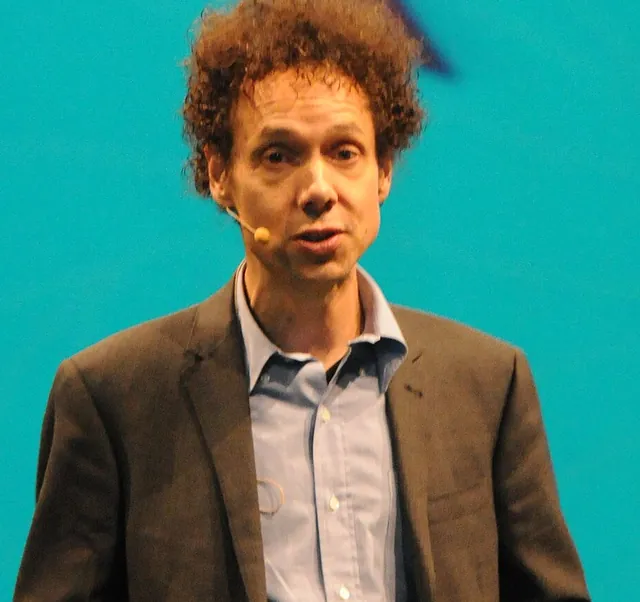
Malcolm Gladwell’s IQ score does not exist in any record we found: no published test, no examiner, no date. The pages we read — Wikipedia and Wikidata, gladwell.com, Pushkin Industries’ biography, his publisher’s author page, The Canadian Encyclopedia and the Governor General’s Order of Canada record — list degrees, books and honors, and none mentions an IQ. Searches for “Malcolm Gladwell IQ,” “Malcolm Gladwell IQ score” and “Malcolm Gladwell estimated IQ” turned up pages on what his books say about IQ, not a number for him. The one first-person remark is a Comedy Central interview that a Wrightslaw newsletter reported on January 29, 2008: Stephen Colbert asked, “What’s your IQ?” and Gladwell answered, “I have no idea.” For how numbers usually get attached to famous names, see where celebrity IQ numbers come from.
The Malcolm Gladwell Outliers IQ material is where the numbers near his name come from. In Outliers: The Story of Success (Little, Brown, November 18, 2008), the two-part chapter “The Trouble with Geniuses” takes up Lewis Terman, the Stanford psychologist whose Genetic Studies of Genius began in 1921 and whose high-IQ children became known as the “Termites.” Gladwell writes that once someone reaches an IQ of “somewhere around 120,” extra points do not seem to bring any measurable real-world advantage, a passage reproduced on Eric Barker’s Barking Up the Wrong Tree site and summarized in the GradeSaver study guide. This page describes the argument as far as those pages show it. The 120 is a threshold in the book’s argument, not a score for anyone.
Two men carry the argument. Christopher Langan opens it: Outliers gives his IQ as 195 and asks why that reputation for intelligence did not lead to greater conventional success; for the test behind that number, see his profile here. Beside him the book sets J. Robert Oppenheimer, who earned a doctorate in physics at Göttingen in 1927, and Gladwell puts the difference in their fates down to what he calls practical intelligence, the social savvy that, as Wikipedia summarizes the argument, Oppenheimer’s wealthy, cosmopolitan upbringing helped him gain. The same book uses Bill Gates’s access to a high-school computer in 1968 and the Beatles’ engagements in Hamburg from 1960 to argue about opportunity and practice rather than IQ; both have audited pages here, Bill Gates and John Lennon. None of these is a test result for Gladwell.
What would settle the question is a documented result: a named test, an examiner and a date, published by Gladwell or a source close to him. The usual error on this site runs upward, with sourced records supporting a lower range than the circulating figure; here nothing circulates for his own score, so there is nothing to mark down, and the risk is a number appearing later with no test behind it. Anyone curious about their own reasoning can take a timed test such as the IQ Metrics test, but a figure for someone else has to come from a record, and the records for Gladwell contain none.
How we read a number →The biography calls him co-founder of Pushkin Industries and host of Revisionist History, says he has been a staff writer for The New Yorker since 1996 and lists the books Tipping Point, Outliers, David and Goliath, Talking to Strangers and The Bomber Mafia. The About page says Pushkin was co-founded by Jacob Weisberg and Gladwell in 2018. Neither mentions IQ.
Lists six bestsellers (The Tipping Point to The Bomber Mafia, no years), says he has been included in the TIME 100 Most Influential People list, and names Revisionist History among Pushkin’s podcasts. It does not mention IQ, a birth year, a university or the Order of Canada.
The publisher lists the book as on sale September 29, 2026, calls him the author of eight New York Times bestsellers, names the same eight titles, and says he was born in England, raised in Canada and lives outside New York. The Pushkin item, dated February 5, 2026, says the book is out September 29, 2026. Neither mentions IQ.
Lists the grade as Member of the Order of Canada, awarded 2011, with a citation calling him “an internationally renowned journalist, author and public intellectual.” The invested-on date is not on the page. No mention of IQ.
Announces a talk by Gladwell on Tuesday, October 20 (2026), and describes him as the author of eight New York Times bestsellers and co-founder of Pushkin Industries, which produces Revisionist History. It treats him as active; no mention of IQ.
Born September 3, 1963 in Fareham; family moved to Elmira, Ontario, in 1969; graduated from Trinity College at the University of Toronto in 1984; at the Washington Post 1987 until 1996; New Yorker staff writer since 1996; eight books from The Tipping Point (2000) to Revenge of the Tipping Point (2024); Member of the Order of Canada in 2011; honorary degrees from Waterloo (2007) and Toronto (2011). No mention of IQ.
Wikidata confirms Q318429 is the Canadian journalist and science writer born September 3, 1963 in Fareham. Wikipedia supplies the career dates, the 2005 Time 100 and honorary-degree dates, Outliers’ November 18, 2008 publication by Little, Brown and its Bill Gates and Beatles examples, Langan’s 195 and the Oppenheimer contrast, Terman’s Genetic Studies of Genius (begun 1921, Stanford) and Oppenheimer’s 1927 Göttingen doctorate. None of the Gladwell pages mentions IQ.
Summaries, not the book: they give the IQ-120 threshold (“additional IQ points beyond 120 do not translate to any meaningful real-world advantage”), Terman and the “Termites,” Langan’s IQ of 195, the Langan–Oppenheimer contrast resting on “practical intelligence,” Bill Gates’s early computer access and the Beatles’ 1960 Hamburg engagements (John Lennon named).
Reproduces the Outliers sentence that once someone has reached an IQ of somewhere around 120, additional IQ points do not seem to translate into any measurable real-world advantage. The page shows no page number for it and no post date (the URL suggests November 2011); only this one sentence is used.
Prints the exchange from a Comedy Central interview: “COLBERT: What’s your IQ?” “GLADWELL: I have no idea.” The page gives no air date and calls the program “the Colbert Show.” It is a newsletter’s transcription, not the broadcast.
No test, score or self-reported IQ appears on the Pushkin, gladwell.com, Little, Brown, Governor General, Vanderbilt, Canadian Encyclopedia, Wikipedia or Wikidata pages. Searches for “Malcolm Gladwell IQ,” “IQ score,” “estimated IQ” and “famous people IQ list” turned up pages about his writing on IQ and no figure for him.
The sources behind our estimate
The figures that circulate for Malcolm Gladwell, what we were able to confirm, and where the two diverge.
No IQ figure for Malcolm Gladwell himself appeared on any page we opened. The IQ numbers connected with his name in the pages we read come from his 2008 book Outliers: 195, which the book gives as Chris Langan’s IQ, and a threshold of “somewhere around 120” beyond which, Gladwell writes, extra points bring no measurable real-world advantage.
No IQ test result and no self-reported score appears on any page we read — Wikipedia and Wikidata, gladwell.com, Pushkin Industries’ biography, his publisher’s author page, The Canadian Encyclopedia or the Governor General’s honors record. The only first-person remark we found is a Comedy Central interview reported in a Wrightslaw newsletter dated January 29, 2008, in which Stephen Colbert asked, “What’s your IQ?” and Gladwell answered, “I have no idea.” Searches for his IQ, IQ score and estimated IQ returned pages about his writing on IQ, not a score for him.
With no circulating figure for Gladwell’s own score, the spread is only the width of our range: read the 20 points as uncertainty, not as two scores. The 195 and the “around 120” in Outliers belong to Chris Langan and to a general idea, so they are not marks on this scale.
Want a number that does hold up? Every figure on this page is somebody’s claim. Take the 30-question test and get a percentile you can check rather than a figure you have to trust.
Malcolm Gladwell — frequently asked
What is Malcolm Gladwell’s IQ?
No IQ test result for Malcolm Gladwell has been published, so his IQ has no measured value, and no figure circulates for it. In a 2008 newsletter’s transcript of a Comedy Central interview, asked “What’s your IQ?”, he answers, “I have no idea.” IQ Metrics estimates 125–145 from his history degree, New Yorker career, nine books and Order of Canada: an inference, not a score.
Did Malcolm Gladwell ever take an IQ test?
There is no public record of one. Wikipedia, gladwell.com, his Pushkin Industries biography, his publisher’s author page and the Governor General’s Order of Canada record describe his degrees, work and honors, and none mentions an IQ test or score. The only first-person remark we found is “I have no idea,” his answer to Stephen Colbert on Comedy Central.
What does Malcolm Gladwell’s Outliers say about IQ?
In Outliers (2008), Gladwell writes that once someone reaches an IQ of somewhere around 120, additional points do not seem to bring any measurable real-world advantage. The chapter builds on Lewis Terman’s “Termites” and on two case studies, Chris Langan, whose IQ the book gives as 195, and J. Robert Oppenheimer. It describes an idea about success, not Gladwell’s own score.
Is Malcolm Gladwell smart?
No IQ test has labeled him one, and “smart” is not a documented status. What is documented is a 1984 history degree from Trinity College, Toronto, a Washington Post reporting career from 1987 to 1996, a New Yorker staff post since 1996, nine books and the Order of Canada (2011). Those support an estimated IQ of 125–145, high but not certified.
How does Malcolm Gladwell’s estimated IQ compare with Christopher Langan’s or J. Robert Oppenheimer’s?
Gladwell’s estimated range, 125–145, sits below Christopher Langan’s 160–175 and J. Robert Oppenheimer’s 155–175, the two men Outliers sets side by side. The ranges rest on different evidence — a Mega Test score for Langan, a completed physics doctorate for Oppenheimer, a bachelor’s degree and a writing career for Gladwell — so the gap is not a measured difference between people.
Who are the “Termites” in Malcolm Gladwell’s Outliers?
They are the high-IQ children in Lewis Terman’s Genetic Studies of Genius, which the Stanford psychologist began in 1921; the group became known as the “Termites.” Outliers discusses them in its two-part chapter “The Trouble with Geniuses,” alongside Chris Langan and J. Robert Oppenheimer.
Where did Malcolm Gladwell study, and what has he written?
Born on September 3, 1963, in Fareham, England, and raised in Elmira, Ontario, he earned a bachelor’s degree in history at Trinity College, University of Toronto, in 1984. His books are The Tipping Point (2000), Blink (2005), Outliers (2008), What the Dog Saw (2009), David and Goliath (2013), Talking to Strangers (2019), The Bomber Mafia (2021) and Revenge of the Tipping Point (2024).
How does my IQ compare with Malcolm Gladwell?
You can find out in about fifteen minutes. The IQ Metrics assessment is 30 questions, scored on the same 100-mean scale used throughout this page, so your result and the estimate above are at least expressed in the same units — one measured, one inferred. Once you have a number, the leaderboard shows where it would sit, and how we score and norm it explains the benchmarking.
Where does this estimate come from?
From the documented record rather than a test — the method is named above and set out in full under how we read a number. Compare it against the other writers profiles, starting with Voltaire.
- Take the 30-question IQ test — get a measured score and percentile of your own
- Average IQ by country — how the scale behaves across populations
- How IQ Metrics scores its assessment — the method behind our own number
- More on how IQ testing works — reliability, error and what a score can and cannot say
- More writers profiles — same field, same method
More writers

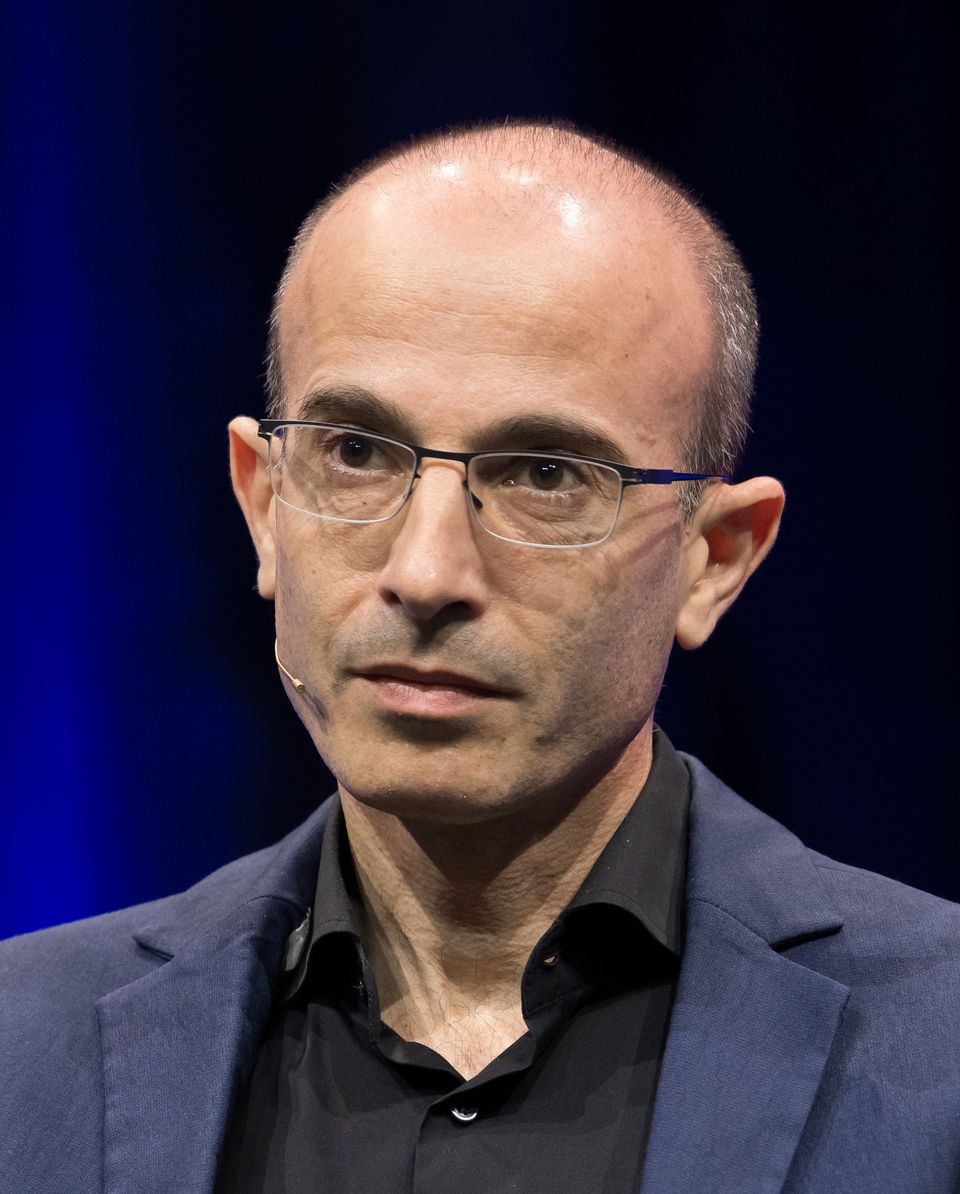
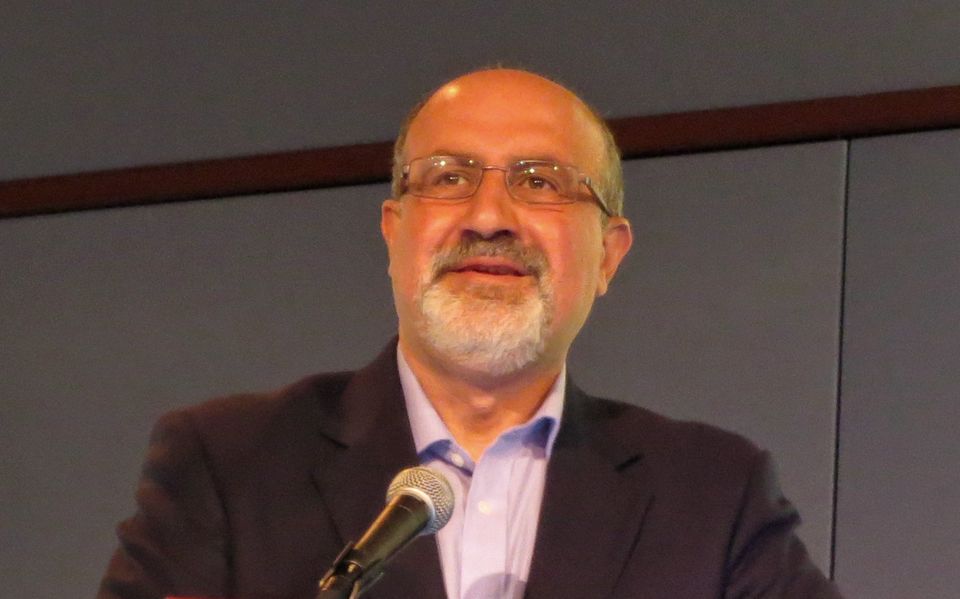
Photograph by Gtl12345, CC BY-SA 4.0. Cropped and with background removed for the portrait above. · Photograph by Martin Kraft (Frankfurt Book Fair, October 2024), CC BY-SA 4.0. Background removed for the portrait above. · Photograph by Joe Loong (Tech@State: Moneyball Diplomacy, June 2013), CC BY-SA 2.0. Background removed for the portrait above.

.jpg)

An estimate is an inference.
Yours can be measured.
Thirty questions, scored against general-population benchmarks. Your score, your percentile, your ability breakdown and a printable IIF certificate.
Find your IQ score now! →