How far can human memory go? Memory world records, 1993-2026
Memory athletes now learn a deck of cards in under 13 seconds and thousands of digits in an hour. We rebuilt every world record since the first championship scores and set them against sport’s records and a normal memory span.

By Leon Falkner, Data & Research Analyst · Reviewed by Aarav Vardhan, Editor-in-Chief · Published 30 October 2026 · 9 min read
About this study
- Report type
- Data study from the official record lists
- Data
- 356 memory world records (IAM, WMSC, Memory League) and 22 pi records, 1973-2026
- Compared with
- World Athletics records (100 m, 1500 m, marathon, long jump) and a normal digit span
- Years
- 1993 (first published championship scores) to October 2026
- Licence
- CC BY 4.0 (our dataset and charts)
- Version
- 2026.10
- Sources
- 18
Memory world records have improved far more than sports records. Since 1993, the first World Memory Championship with published scores, the six main records improved by 154% to 841%; athletics records by 0% to 9%. A deck of cards now takes 12.74 seconds, against 120 in 1993. The best competitors memorize 4,620 digits in an hour, 685 times a normal span, with methods anyone can learn. IQ Metrics Research, October 2026.
01 Key findings
- Memory records improved 154% to 841% since 1993, against 0% to 9% for athletics world records over the same years (100 m, 1500 m, marathon, long jump).IAM; World Athletics; IQ Metrics calculation
- One deck of cards in 12.74 seconds: the speed-cards record fell from 120 seconds in 1993 to 12.74 in 2018, 9.4 times faster. The 100 m record is 2.9% faster than in 1993.IAM; World Athletics
- 4,620 digits in an hour, 685 times a normal span. A typical adult repeats about 6.74 digits back; the hour-numbers record (2019) is 4,620 digits.Woods et al. 2011; Guinness; IQ Metrics calculation
- The records have stalled. 12 of 17 IAM world records were last broken before 2020, and 4 of the 6 main records did not move at all from 2020 to 2026.IAM; IQ Metrics calculation
- Italy and Mongolia lead. Of the 36 current records we could confirm, Italy holds 7 and Mongolia 5; on the IAM list alone Italy has 6 and Mongolia 5.IAM; WMSC; Memory League
- It is trained, not born. Adults with typical memory went from 26 to 62 words of 72 after 40 days of practice; memory champions show no higher intelligence and no unusual brain structure.Dresler et al. 2017; Maguire et al. 2003
02 Statistics to quote
Improvement of the speed-cards record since 1993 (as speed): the biggest of the six main memory records.
IQ Metrics, from IAMFastest time to memorise a shuffled deck of 52 cards (IAM world record, 2018).
IAMRandom digits memorised in one hour (WMSC world record, 2019).
Guinness; WMSCThat record as a multiple of a normal adult digit span (6.74 digits).
IQ Metrics calculationIAM world records last broken before 2020.
IQ Metrics, from IAMDigits of pi recited from memory: the Guinness record (2015), unbroken since.
Guinness03 How far can human memory go?
How many numbers can the average person remember? About 7. A typical adult can hear a list of digits once and repeat about 6.74 of them [9], the “seven, plus or minus two” that Miller wrote about in 1956 [10]; without tricks, working memory holds about four chunks at once [11]. Memory athletes, using trained methods, recall 660 digits heard once at one a second (2024) and 4,620 digits studied for an hour (2019) [4] [5].
Each digit record as a multiple of a normal memory span
The best verified record in each digit event, divided by 6.74 digits: the average forward digit span of adults aged 20-29 on the Wechsler memory scale. Spoken numbers is the closest match to a span test (digits heard once, one a second); in the timed events the competitor studies a printed sheet.
Source: Span: Woods et al. 2011 [9]; records: IAM [1], WMC 2024 [4], Guinness [5]; IQ Metrics calculation
Data table
| label | value |
|---|---|
| A typical adult's digit span | 1 |
| 5-minute numbers | 93 |
| Spoken numbers (1 digit a second, heard once) | 98 |
| 15-minute numbers | 193 |
| 30-minute numbers | 316 |
| Hour numbers | 685 |
Embed this chart
Paste this HTML into your page: it carries the numbers and the credit link to this figure.
The spoken-numbers record of 660 also filled the whole trial, so the format, not the competitor, set the limit [4]. For the measure behind the baseline, see our digit span test guide and why working memory and reasoning are not the same.
04 Have memory records improved more than sports records?
Yes, by far. From 1993 to 2026 the six main memory records improved by 154% to 841%. Over the same years the athletics world records improved by 0% to 9%: the women’s 100 m and both long jumps have not moved, and the biggest gain is the women’s marathon [17] [18].
Memory records vs athletics records, 1993 to 2026
Each line is one world record, set to 100 in 1993 (the first World Memory Championship with published scores). Memory: the IAM list; speed cards as speed (one deck in 120 s in 1993, 12.74 s now). Athletics: the record in force on 1 January 1993 and today, ratified by World Athletics; grey lines, all between 100 and 109.
Source: Memory: IAM [2] [1]; athletics: [17] [18]; index by IQ Metrics
Data table
| record | 1993 | 2026 |
|---|---|---|
| Speed cards | 100 | 941.9 |
| Hour cards | 100 | 439.7 |
| Hour numbers | 100 | 379.1 |
| 5-min numbers | 100 | 477.3 |
| Binary | 100 | 625.7 |
| Words | 100 | 254.4 |
| Men's 100 m | 100 | 102.9 |
| Women's 100 m | 100 | 100 |
| Men's 1500 m | 100 | 101.4 |
| Women's 1500 m | 100 | 101.7 |
| Men's marathon | 100 | 106.1 |
| Women's marathon | 100 | 108.6 |
| Men's long jump | 100 | 100 |
| Women's long jump | 100 | 100 |
Embed this chart
Paste this HTML into your page: it carries the numbers and the credit link to this figure.
One likely reason: memory is a skill of method, and in a young sport methods spread fast. In 1993 the world champion needed 120 seconds for one deck; by 2018 the record was 12.74 [2]. A sprinter cannot learn a better method for running the way a memory athlete can for remembering.
How much each world record improved since 1993
Percent better than the record in force in 1993 (for times: how much faster). Memory: IAM list; athletics: World Athletics.
Source: IAM [2]; [17] [18]; IQ Metrics calculation
Data table
| label | value |
|---|---|
| Speed cards (one deck, seconds) | 841.9 |
| 30-minute binary (digits) | 525.7 |
| 5-minute numbers (digits) | 377.3 |
| Hour cards (cards in order) | 339.7 |
| Hour numbers (digits) | 279.1 |
| 15-minute random words | 154.4 |
| Women's marathon (athletics) | 8.6 |
| Men's marathon (athletics) | 6.1 |
| Men's 100 m (athletics) | 2.9 |
| Women's 1500 m (athletics) | 1.7 |
| Men's 1500 m (athletics) | 1.4 |
| Women's 100 m (athletics) | 0 |
| Men's long jump (athletics) | 0 |
| Women's long jump (athletics) | 0 |
Embed this chart
Paste this HTML into your page: it carries the numbers and the credit link to this figure.
05 What is the fastest time to memorize a deck of cards?
12.74 seconds, by Shijir-Erdene Bat-Enkh of Mongolia in 2018, on the IAM list [1]. The record has been broken 15 times since 1993; British competitors set 9 of those, all by 2009 [2].
Every speed-cards world record: seconds to memorise one shuffled deck
The IAM list, one column per new record, 1993 to 2018. The record went from 120 seconds to 12.74, and has not fallen since 2018. (The WMSC list has a 13.96-second record from 2017 that we could not confirm against a published result.)
Source: IAM history of world records [2]; WMSC [3]
Data table
| label | value |
|---|---|
| Aug 1993 | 120 |
| Aug 1994 | 58.8 |
| Aug 1995 | 45 |
| Aug 1996 | 41.4 |
| Aug 1998 | 34 |
| Aug 2004 | 32.9 |
| Jul 2005 | 32.1 |
| Aug 2006 | 31.2 |
| Jul 2007 | 26.3 |
| Jul 2009 | 25 |
| Jun 2010 | 21.9 |
| Sep 2011 | 21.2 |
| Jul 2016 | 19.4 |
| Dec 2016 | 17 |
| Dec 2017 | 15.6 |
| Aug 2018 | 12.7 |
Embed this chart
Paste this HTML into your page: it carries the numbers and the credit link to this figure.
06 Are memory records still being broken?
Rarely now. 12 of the 17 records on the IAM list were last broken before 2020, and in 4 of the six main events the record did not move at all between 2020 and 2026 [2]. The biggest jumps came in the 1990s, when the methods were new. The sport also split in 2016 into two record lists (IAM and the World Memory Sports Council), and the pandemic stopped most in-person contests in 2020 and 2021.
Where the gains came from: improvement in each period
Percent improvement of each IAM world record within the period (the record at the end vs the record at the start). Darker = bigger gain. The last column, 2020 to 2026, is mostly zero: these records have not been broken.
Source: IAM history of world records [2]; IQ Metrics calculation
Data table
| discipline | 1993-2000 | 2000-2010 | 2010-2020 | 2020-2026 |
|---|---|---|---|---|
| Speed cards (one deck, seconds) | 252.6 | 55.4 | 71.9 | 0 |
| Hour cards (cards in order) | 181.2 | 24.4 | 25.6 | 0 |
| Hour numbers (digits) | 102.2 | 25.3 | 42 | 5.4 |
| 5-minute numbers (digits) | 139.4 | 51.9 | 19.2 | 10.1 |
| 30-minute binary (digits) | 138 | 73.6 | 51.4 | 0 |
| 15-minute random words | 39.2 | 72.4 | 6 | 0 |
Embed this chart
Paste this HTML into your page: it carries the numbers and the credit link to this figure.
07 Who holds the memory world records?
Competitors from 10 countries. Of the 36 current records we could confirm across the three lists, Italy holds 7, Mongolia 5, and India and the United States 5 each [1] [3] [6].
Who holds the memory world records today, by country
One square per current world record we could confirm (36 across the IAM, WMSC and Memory League lists; WMSC records last seen before 2020 are left out). Hover a square for the event, the list and the year.
36 recordsone square = one record
Source: IAM [1]; WMSC [3] [4] [5]; Memory League [6]
Data table
| record | group | label | detail |
|---|---|---|---|
| IAM-binary_30min | Mongolia | 30-minute binary digits · 6270 digits | IAM · Munkhshur Narmandakh · Mongolia · 2017 |
| IAM-binary_5min | Mongolia | 5-minute binary digits · 1467 digits | IAM · Munkhshur Narmandakh · Mongolia · 2019 |
| IAM-cards_10min | Italy | 10-minute cards · 550 cards | IAM · Andrea Muzii · Italy · 2019 |
| IAM-cards_30min | Italy | 30-minute cards · 1270 cards | IAM · Enrico Marraffa · Italy · 2026 |
| IAM-cards_hour | Italy | Hour cards · 1829 cards | IAM · Andrea Muzii · Italy · 2019 |
| IAM-dates_5min | India | 5-minute historic dates · 148 dates | IAM · a junior competitor · India · 2019 |
| IAM-images_5min | Italy | 5-minute images · 802 points | IAM · Enrico Marraffa · Italy · 2026 |
| IAM-names_faces_15min | United Kingdom | 15-minute names and faces · 224 points | IAM · Katie Kermode · United Kingdom · 2018 |
| IAM-names_faces_5min | United Kingdom | 5-minute names and faces · 105 points | IAM · Katie Kermode · United Kingdom · 2017 |
| IAM-numbers_15min | Mongolia | 15-minute numbers · 1300 digits | IAM · Munkhshur Narmandakh · Mongolia · 2019 |
| IAM-numbers_30min | Italy | 30-minute numbers · 2132 digits | IAM · Enrico Marraffa · Italy · 2026 |
| IAM-numbers_5min | Italy | 5-minute numbers · 630 digits | IAM · Andrea Muzii · Italy · 2021 |
| IAM-numbers_hour | Azerbaijan | Hour numbers · 3412 digits | IAM · Orkhan Ibadov · Azerbaijan · 2023 |
| IAM-speed_cards | Mongolia | Speed cards · 12.74 seconds | IAM · Shijir-Erdene Bat-Enkh · Mongolia · 2018 |
| IAM-spoken_numbers | United States | Spoken numbers · 456 digits | IAM · Lance Tschirhart · United States · 2015 |
| IAM-words_15min | United Kingdom | 15-minute random words · 318 words | IAM · Katie Kermode · United Kingdom · 2016 |
| IAM-words_5min | Mongolia | 5-minute random words · 145 words | IAM · Yanjaa Wintersoul · Mongolia · 2018 |
| Memory League-ml_cards_live | United States | Memory League: cards (live) · 16.86 seconds | Memory League · Alex Mullen · United States · 2016 |
| Memory League-ml_cards_online | United States | Memory League: cards (online) · 12.25 seconds | Memory League · Alex Mullen · United States · 2025 |
| Memory League-ml_images_live | United States | Memory League: images (live) · 13.91 seconds | Memory League · Lance Tschirhart · United States · 2016 |
| Memory League-ml_images_online | India | Memory League: images (online) · 7.69 seconds | Memory League · Vishvaa Rajakumar · India · 2025 |
| Memory League-ml_international_names_online | India | Memory League: international names (online) · 55.92 seconds | Memory League · Vishvaa Rajakumar · India · 2025 |
| Memory League-ml_names_live | Germany | Memory League: names (live) · 45.09 seconds | Memory League · Jan-Hendrik Büscher · Germany · 2018 |
| Memory League-ml_names_online | Italy | Memory League: names (online) · 20.73 seconds | Memory League · Matteo Cillo · Italy · 2026 |
| Memory League-ml_numbers_live | Germany | Memory League: numbers (live) · 16.85 seconds | Memory League · Simon Reinhard · Germany · 2018 |
| Memory League-ml_numbers_online | United States | Memory League: numbers (online) · 11.45 seconds | Memory League · Alex Mullen · United States · 2024 |
| Memory League-ml_words_live | United Kingdom | Memory League: words (live) · 51.31 seconds | Memory League · Katie Kermode · United Kingdom · 2016 |
| Memory League-ml_words_online | Canada | Memory League: words (online) · 32.41 seconds | Memory League · Don Michael Vickers · Canada · 2024 |
| WMSC-abstract_images_15min | China | 15-minute abstract images · 1048 points | WMSC · Huang Jinyao · China · 2022 |
| WMSC-binary_30min | North Korea | 30-minute binary digits · 7485 digits | WMSC · Ryu Song I · North Korea · 2019 |
| WMSC-cards_hour | North Korea | Hour cards · 2530 cards | WMSC · Kim Su Rim · North Korea · 2019 |
| WMSC-dates_5min | India | 5-minute historic dates · 154 dates | WMSC · a junior competitor · India · 2019 |
| WMSC-numbers_5min | China | 5-minute numbers · 642 digits | WMSC · a junior competitor · China · 2024 |
| WMSC-numbers_hour | North Korea | Hour numbers · 4620 digits | WMSC · Ryu Song I · North Korea · 2019 |
| WMSC-spoken_numbers | China | Spoken numbers · 660 digits | WMSC · Hu Xueyan · China · 2024 |
| WMSC-words_15min | India | 15-minute random words · 335 words | WMSC · a junior competitor · India · 2019 |
Embed this chart
Paste this HTML into your page: it carries the numbers and the credit link to this figure.
08 What is the most digits of pi memorized?
70,000 digits is the Guinness record (Rajveer Meena, India, 2015) [7]; the Pi World Ranking List also verifies 70,030 by Suresh Kumar Sharma later that year [8]. The record grew from 956 digits in 1973, and has not been beaten since 2015. Claims of 100,000 and more have never been verified. Chao Lu, who recited 67,890 digits in 2005, had a normal digit span when psychologists tested him [13].
Digits of pi recited from memory: every new world record
Verified records on the Pi World Ranking List, 1973 to 2015. Guinness lists 70,000 digits (Rajveer Meena, 2015). Claims of up to 111,700 digits by Akira Haraguchi were never verified and are not shown.
Source: Pi World Ranking List [8]; Guinness World Records [7]
Data table
| label | value |
|---|---|
| 1973 | 956 |
| 1973 | 1111 |
| 1973 | 1210 |
| 1974 | 1505 |
| 1975 | 4096 |
| 1977 | 5050 |
| 1978 | 6190 |
| 1978 | 9744 |
| 1978 | 10000 |
| 1979 | 10625 |
| 1980 | 20013 |
| 1981 | 31811 |
| 1987 | 40000 |
| 1995 | 42195 |
| 2005 | 67890 |
| 2015 | 70000 |
| 2015 | 70030 |
Embed this chart
Paste this HTML into your page: it carries the numbers and the credit link to this figure.
09 Can you train your memory to remember like a champion?
Yes, to a large degree. In a 2017 study, adults with typical memory practised the method of loci (placing items along a route you know) for 30 minutes a day for 40 days, and went from 26 to 62 words remembered of 72 [15] [14]. Champions themselves show no higher intelligence and no unusual brain structure; they use the same spatial method [16]. One student in 1980 trained his span from 7 to 79 digits [12].
Can you train it? Words remembered from a list of 72
Dresler et al. 2017: adults with typical memory, before and after 40 days of 30-minute method-of-loci training, and the memory athletes the study compared them with (same 72-word test).
Source: Dresler et al. 2017 [14]; press release [15]
Data table
| label | value |
|---|---|
| Typical adults, before training | 26 |
| The same adults after 40 days of training | 62 |
| Memory athletes | 70.8 |
Embed this chart
Paste this HTML into your page: it carries the numbers and the credit link to this figure.
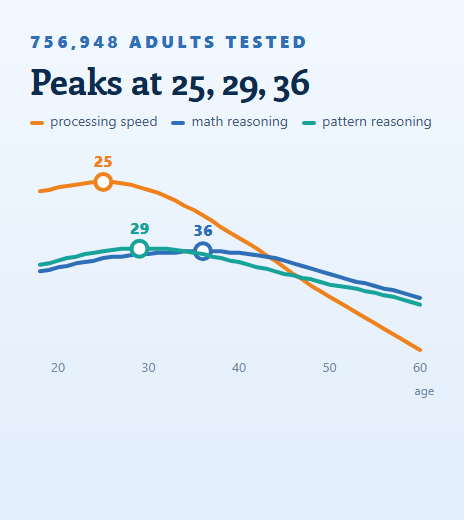
A great memory is not the same as a high IQ. Trained recall of lists says little about reasoning: see does a great memory mean you are smart?, what the research says about photographic memory and whether brain-training apps work. How memory and speed change with age is in At what age is your brain sharpest?.
Measure your reasoning, not just your recall
Our IQ test times your reasoning and places your result against adults, with a percentile.
Take the IQ test10 Every current memory world record
Every current memory world record we could confirm
Three lists that do not mix: IAM, the World Memory Sports Council (WMSC) and Memory League (short online and live formats). "x span" = digits divided by a normal adult span of 6.74.
| 30-minute binary digits | IAM | 6270 digits | Munkhshur Narmandakh | Mongolia | 2017 | |
| 5-minute binary digits | IAM | 1467 digits | Munkhshur Narmandakh | Mongolia | 2019 | |
| 10-minute cards | IAM | 550 cards | Andrea Muzii | Italy | 2019 | |
| 30-minute cards | IAM | 1270 cards | Enrico Marraffa | Italy | 2026 | |
| Hour cards | IAM | 1829 cards | Andrea Muzii | Italy | 2019 | |
| 5-minute historic dates | IAM | 148 dates | a junior competitor | India | 2019 | |
| 5-minute images | IAM | 802 points | Enrico Marraffa | Italy | 2026 | |
| 15-minute names and faces | IAM | 224 points | Katie Kermode | United Kingdom | 2018 | |
| 5-minute names and faces | IAM | 105 points | Katie Kermode | United Kingdom | 2017 | |
| 15-minute numbers | IAM | 1300 digits | Munkhshur Narmandakh | Mongolia | 2019 | 193x |
| 30-minute numbers | IAM | 2132 digits | Enrico Marraffa | Italy | 2026 | 316x |
| 5-minute numbers | IAM | 630 digits | Andrea Muzii | Italy | 2021 | 93x |
| Hour numbers | IAM | 3412 digits | Orkhan Ibadov | Azerbaijan | 2023 | 506x |
| Speed cards | IAM | 12.74 seconds | Shijir-Erdene Bat-Enkh | Mongolia | 2018 | |
| Spoken numbers | IAM | 456 digits | Lance Tschirhart | United States | 2015 | 68x |
| 15-minute random words | IAM | 318 words | Katie Kermode | United Kingdom | 2016 | |
| 5-minute random words | IAM | 145 words | Yanjaa Wintersoul | Mongolia | 2018 | |
| Memory League: cards (live) | Memory League | 16.86 seconds | Alex Mullen | United States | 2016 | |
| Memory League: cards (online) | Memory League | 12.25 seconds | Alex Mullen | United States | 2025 | |
| Memory League: images (live) | Memory League | 13.91 seconds | Lance Tschirhart | United States | 2016 | |
| Memory League: images (online) | Memory League | 7.69 seconds | Vishvaa Rajakumar | India | 2025 | |
| Memory League: international names (online) | Memory League | 55.92 seconds | Vishvaa Rajakumar | India | 2025 | |
| Memory League: names (live) | Memory League | 45.09 seconds | Jan-Hendrik Büscher | Germany | 2018 | |
| Memory League: names (online) | Memory League | 20.73 seconds | Matteo Cillo | Italy | 2026 | |
| Memory League: numbers (live) | Memory League | 16.85 seconds | Simon Reinhard | Germany | 2018 | |
| Memory League: numbers (online) | Memory League | 11.45 seconds | Alex Mullen | United States | 2024 | |
| Memory League: words (live) | Memory League | 51.31 seconds | Katie Kermode | United Kingdom | 2016 | |
| Memory League: words (online) | Memory League | 32.41 seconds | Don Michael Vickers | Canada | 2024 | |
| 15-minute abstract images | WMSC | 1048 points | Huang Jinyao | China | 2022 | |
| 30-minute binary digits | WMSC | 7485 digits | Ryu Song I | North Korea | 2019 | |
| Hour cards | WMSC | 2530 cards | Kim Su Rim | North Korea | 2019 | |
| 5-minute historic dates | WMSC | 154 dates | a junior competitor | India | 2019 | |
| 5-minute numbers | WMSC | 642 digits | a junior competitor | China | 2024 | 95x |
| Hour numbers | WMSC | 4620 digits | Ryu Song I | North Korea | 2019 | 685x |
| Spoken numbers | WMSC | 660 digits | Hu Xueyan | China | 2024 | 98x |
| 15-minute random words | WMSC | 335 words | a junior competitor | India | 2019 |
11 How we built the dataset
- 01
- 02
- 03
Keep the lists apart
IAM, WMSC and Memory League use different rules, so no series mixes them. Digital and old-scoring events are kept separate.
- 04
Compare like with like
1993 is the base year for memory and athletics. Times are turned into speed (the 1993 time divided by today’s), so every gain reads the same way.
- 05
Set the baseline
A normal span is 6.74 digits forward, the Wechsler memory norm for adults aged 20-29 [9].
Read every number with these in mind
- No scores from the first championship (1991) survive online, so 1993 is the base year.
- The WMSC list could only be rebuilt from archived copies; a record set and broken between two copies is missed. 11 WMSC records last seen before 2020 may have been beaten since and are not in the counts.
- IAM and WMSC records for the same event differ (hour numbers 3,412 vs 4,620) because the rules differ.
- A span test and a memory-sport event are different tasks; the multiples show scale, not the same test.
- Athletics records come from World Athletics’ ratified lists; the women’s marathon uses the mixed-race record.
Sources
- IAM. World records, all disciplines (current list). 2026. iam-stats.org/records.phpFacts cited
- IAM. History of world records, one page per discipline (e.g. speed cards); includes the World Memory Championships 1993-2015. 2026. iam-stats.org/discipline-record-history.php?id=SPDCARDSFacts cited
- WMSC, via the Internet Archive. World Memory Statistics, disciplines and records (archived copies 2012-2019; the live tables are empty since 2020). 2019. web.archive.org/web/2019/http://www.world-memory-statistics.com/disciplines.phpFacts cited
- World Memory Championships. 33rd World Memory Championship, Istanbul 2024: results and new world records. 2024. www.worldmemorychampionships.com/?p=12101Facts cited
- Guinness World Records. Most decimal digits memorized in one hour. 2019. www.guinnessworldrecords.com/world-records/385445-most-decimal-digits-memorized-in-one-hourFacts cited
- IAM / Memory League. IAM mirror of Memory League world records (live and online formats). 2026. iam-stats.org/records_ml.phpFacts cited
- Guinness World Records. Most Pi places memorised. 2015. www.guinnessworldrecords.com/world-records/most-pi-places-memorisedFacts cited
- Pi World Ranking List. Pi, sorted by digits, with world-record notes 1973-2015. 2026. www.pi-world-ranking-list.com/index.php?page=lists&category=pi&sort=digitsFacts cited
- J Clin Exp Neuropsychol. Woods, D. L. et al. Improving digit span assessment of short-term verbal memory. Journal of Clinical and Experimental Neuropsychology 33(1), 101-111 (WMS-III norm, ages 20-29: 6.74 digits forward). 2011. pmc.ncbi.nlm.nih.gov/articles/PMC2978794Facts cited
- Psychological Review. Miller, G. A. The magical number seven, plus or minus two. Psychological Review 63(2), 81-97. 1956. http://psychclassics.yorku.ca/MillerFacts and a short quote cited
- Behavioral and Brain Sciences. Cowan, N. The magical number 4 in short-term memory. Behavioral and Brain Sciences 24(1), 87-114. 2001. pubmed.ncbi.nlm.nih.gov/11515286Facts cited
- Science. Ericsson, K. A., Chase, W. G. & Faloon, S. Acquisition of a memory skill. Science 208, 1181-1182. 1980. pubmed.ncbi.nlm.nih.gov/7375930Facts cited
- J Exp Psychol Learn Mem Cogn. Hu, Y., Ericsson, K. A., Yang, D. & Lu, C. Superior self-paced memorization of digits in spite of a normal digit span: the structure of a memorist's skill. J Exp Psychol Learn Mem Cogn 35(6), 1426-1442. 2009. pubmed.ncbi.nlm.nih.gov/19857014Facts cited
- Neuron. Dresler, M. et al. Mnemonic training reshapes brain networks to support superior memory. Neuron 93(5), 1227-1235. 2017. pmc.ncbi.nlm.nih.gov/articles/PMC5439266Facts cited
- ScienceDaily. Train your brain to remember anything you want (press release on Dresler et al. 2017), via ScienceDaily. 2017. www.sciencedaily.com/releases/2017/03/170308131236.htmFacts cited
- Nature Neuroscience. Maguire, E. A. et al. Routes to remembering: the brains behind superior memory. Nature Neuroscience 6(1), 90-95. 2003. pubmed.ncbi.nlm.nih.gov/12483214Facts cited
- Wikipedia, citing World Athletics. World-record progressions for the 100 m, 1500 m, marathon and long jump (Wikipedia tables of the records ratified by World Athletics / IAAF). 2026. en.wikipedia.org/wiki/Marathon_world_record_progressionFacts cited
- Citizen Digital. Sawe's record-breaking 1:59:30 marathon officially ratified (London, 26 April 2026). 2026. citizen.digital/article/sawes-record-breaking-15930-marathon-officially-ratified-n386979Facts cited
Version history
- 2026.1030 October 2026First release.
Leon Falkner, Data & Research Analyst. Leon owns the arithmetic on IQ Metrics: the percentile tables, the score converter and the figures in everyone else's drafts. On the research desk Leon pulls the data, builds each index and writes the method. More about Leon.
Questions
What is the fastest time to memorize a deck of cards?
12.74 seconds, the IAM world record set in 2018. In 1993 the fastest deck took 120 seconds.
What is the world record for memorizing numbers?
4,620 random digits in one hour (WMSC, 2019), and 630 digits in five minutes (IAM, 2021). A typical adult can repeat about 7 digits back.
What is the most digits of pi memorized?
70,000 digits is the Guinness record, set in 2015. The Pi World Ranking List also verifies 70,030 digits recited later in 2015. Larger claims have not been verified.
How many numbers can the average person remember?
About 7 digits heard once: 6.74 on average for adults aged 20-29 on the Wechsler memory scale. Without grouping, working memory holds about 4 chunks.
Do memory champions have a higher IQ?
No sign of it. A 2003 study of World Memory Championship competitors found no higher intelligence and no unusual brain structure; they used a trained spatial method, which ordinary adults can learn.
Share it, cite it, download it
You may reuse everything on this page under CC BY 4.0: in articles, reports, lessons and posts. The one condition is credit to IQ Metrics with a link to this page.
Cite this study
Version 2026.10. Citing the version lets readers find the exact numbers.
Archived copy with a DOI: 10.5281/zenodo.23909526 (report PDF and data on Zenodo).
Falkner, L. (2026). How far can human memory go? Memory world records, 1993-2026 (Version 2026.10) [Data set]. IQ Metrics Research. https://iqmetrics.org/research/memory-world-records/ (DOI: 10.5281/zenodo.23909526)
Falkner, Leon. "How far can human memory go? Memory world records, 1993-2026." IQ Metrics Research, 30 Oct. 2026, iqmetrics.org/research/memory-world-records/. DOI: 10.5281/zenodo.23909526.
Falkner, Leon. "How far can human memory go? Memory world records, 1993-2026." IQ Metrics Research. October 30, 2026. https://iqmetrics.org/research/memory-world-records/. DOI: 10.5281/zenodo.23909526.
@misc{iqmetrics2026memoryworldrecords, author = {Falkner, Leon}, title = {How far can human memory go? Memory world records, 1993-2026}, institution = {IQ Metrics}, year = {2026}, version = {2026.10}, doi = {10.5281/zenodo.23909526}, url = {https://iqmetrics.org/research/memory-world-records/} }
Source: Leon Falkner, "How far can human memory go? Memory world records, 1993-2026." IQ Metrics Research, version 2026.10, https://iqmetrics.org/research/memory-world-records/ (DOI 10.5281/zenodo.23909526)
Embed the key numbers
Paste this into an article or post. It lists the main numbers and credits the source.
Get the data
One row per world record set (379 rows): the event, the list (IAM, WMSC, Memory League, Pi World Ranking List or Guinness), the rules, the date, the value, the holder and country, the competition, whether it still stands, the multiple of a normal 6.74-digit span for digit events, and the source link.
| Column | What it holds |
|---|---|
discipline, record_body, format_note | The event, the list it belongs to, and its rules |
date, value, unit | When the record was set and what it was |
holder, holder_country, competition | Who set it, where they compete from, and where |
is_current | yes = still the record; no = beaten; unverified = last seen before 2020 (WMSC) |
times_normal_span | Digit events only: the value divided by 6.74 |
source_url | Where the record was read (official list, archived copy or Guinness) |
For journalists, researchers and teachers
Everything on this page may be quoted, charted and republished with credit. No embargo, no permission needed, no sign-up. If you need a number that is not here, ask.
Summary you can paste
Plain news style. Edit freely; keep the credit.
IQ Metrics Research rebuilt the history of every memory world record from the first World Memory Championship with published scores (1993) to October 2026, from the IAM and WMSC lists, Memory League and Guinness. The six main records improved by 154% to 841%; over the same years athletics world records improved by 0% to 9%. The fastest deck of cards went from 120 to 12.74 seconds. 4,620 digits memorised in an hour is 685 times the normal adult span of 6.74 digits. 12 of 17 IAM records were last broken before 2020. Source: IQ Metrics Research, https://iqmetrics.org/research/memory-world-records/
Angles for a story
- Memory records improved up to 841%, athletics under 10% (Figure 2).
- A deck of cards in 12.74 seconds (Figure 4).
- The stall: 12 of 17 records unbroken since before 2020 (Figure 5).
- Italy and Mongolia, the memory superpowers (Figure 6).
- Ordinary adults more than doubled their recall in 40 days (Figure 8).
Quotes you can use
Attributable as written, with the name and title. For a different angle or a quote on a specific figure, ask through the contact page.
A sprinter cannot learn a better way to run 100 metres. A memory athlete can learn a better way to remember, which is why these records moved a hundred times faster than sport’s.
Leon Falkner, Data & Research Analyst, IQ Metrics ResearchThe people who memorise thousands of digits started with an ordinary memory span of about seven. The difference is method and practice.
Leon Falkner, Data & Research Analyst, IQ Metrics ResearchAfter 30 years of huge jumps, memory sport has hit a wall: most records have not moved since 2020.
Leon Falkner, Data & Research Analyst, IQ Metrics Research
Files
- CSV of every record, with list, date, value, holder, country and source (CC BY 4.0)
- Every figure as a print-ready PNG: use the Image button under each figure
- Embed code and data table under every figure
- Share images for social media in three sizes, with the credit line built in
- Citations in APA, MLA, Chicago, BibTeX and plain text
Terms, contact and corrections
Credit: “IQ Metrics Research, Memory World Records (2026)” with a link to this page. On air or in print, “IQ Metrics” and the page address are enough.
What it covers: world records on the IAM, WMSC and Memory League lists and the Pi World Ranking List, 1973-2026, rebuilt from their own pages and archived copies.
Contact: the research team, through the contact page. Corrections are made on this page with a dated note in the version history.