Since its inception, intelligence testing has piqued the curiosity of psychologists and other mental health professionals. In the late 19th century, Alfred Binet did groundbreaking work that laid the groundwork for the field of intelligence testing. The Binet-Simon Scale, created by the French psychologist Binet, is considered the grandfather of contemporary intelligence testing.
Where Intelligence Quotient Scales Came From: Alfred Binet and the Binet-Simon
In the beginning of the twentieth century, a battery of intelligence tests known as the Binet-Simon Scale was created by Alfred Binet and his collaborator Theodore Simon. Their main goal was to identify pupils who needed classroom aid. Several tests assessed a child’s verbal reasoning, memory, and problem-solving skills. Modern intelligence testing began with Binet’s work.

Lewis Terman’s Contribution to the Stanford-Binet Test
An American psychologist named Lewis Terman created the Stanford-Binet Intelligence Scale in 1916 by modifying and expanding upon Binet’s initial test. Terman added normative standards and changes to broaden the test’s age range. The Stanford-Binet IQ test became popular quickly in the US.
William Stern’s Concept of IQ: An Introduction
The idea of Intelligence Quotient (IQ) was first proposed in 1912 by German psychologist William Stern. The intelligence quotient (IQ) measures a person’s level of intellect in comparison to others their age. A consistent criterion for assessing individuals’ cognitive capacities was provided by Stern, who revolutionized the way intelligence was measured.
The Stanford-Binet Test and Its Influence on IQ Evaluation
The Stanford-Binet examination has been subjected to a variety of improvements and revisions during the course of its existence. Because of the wealth of information it provides regarding the intellectual capacity of individuals, it continues to be utilized in a variety of educational and therapeutic settings. Because of its dependability and adaptability, the test comes at a pivotal point in the history of intelligence testing.
Wechsler’s Intelligence Scales represent a revolutionary innovation.
The Wechsler-Bellevue Intelligence Scale was an innovative technique to evaluating cognitive ability that was established by neuropsychologist David Wechsler in the 1930s. Visual reasoning, processing speed, working memory, and verbal comprehension were some of the more broad cognitive talents that Wechsler evaluated. They were also included in the list. A more nuanced and comprehensive picture of an individual’s cognitive capabilities and limitations was created by these comprehensive tests.
Understating the significance of the Wechsler Adult Intelligence Scale
Wechsler created a revolutionary tool for assessing adult intellect with the Wechsler Adult intellect Scale (WAIS). The Work Involved in the Assessment of Skills (WAIS) measures a wide range of cognitive abilities, including visual organization, processing speed, working memory, and verbal understanding. Its widespread use, which initially shocked experts, eventually made it the go-to tool for adult IQ testing.
Here we’ll look at how the IQ test came to be and how it has impacted the field of educational psychology.
Educational psychologists swiftly came to recognize IQ testing as a reliable tool for gauging pupils’ general and domain-specific cognitive capacities. Using IQ tests, we could find out which students were really bright and which ones needed more help in the classroom. However, there have been debates regarding the limitations and potential biases of conventional intelligence tests when it comes to determining an individual’s IQ.
The Role of Psychometrics in the Evolution of IQ Exams
The development of intelligence tests was a direct result of psychometrics, which is the study of mental behaviors. In order to more accurately measure intellectual capabilities, psychometricians have improved the accuracy, precision, and fairness of intelligence tests. Their efforts contributed to the development and upkeep of IQ testing.
Recent Disputes and Rebuttals Regarding IQ Testing
There have been many arguments and critiques of IQ testing, despite its broad use. The possibility of cultural bias in IQ tests is a point of contention among critics. Some people believe that IQ tests only measure cognitive talents, and they want a broader definition of intelligence that takes emotional and social intelligence into account. The future of IQ tests is still being determined by these arguments.
In summary: Maintaining Importance and Looking Ahead to IQ Testing
Since its beginnings, IQ testing has undergone significant evolution, providing a standardized measure of intellect with far-reaching ramifications in domains such as education, psychology, and employment, among others. A vital tool for evaluating human cognitive capacities, IQ testing continues to be debated for all its flaws. Progress in psychology suggests that intelligence quotient (IQ) tests will change and develop over time to reflect a fuller picture of human intellect.
The validity of intelligence testing as indicators of future success in school has been debated for quite some time. There is a lot more going on with these exams than what you may see at first glance, though. Learn how IQ tests can open doors to success in life and work by delving into their hidden benefits in this article.
What are IQ tests?
A person’s cognitive talents and intellectual potential can be measured by standardized evaluations known as intelligence quotient tests, or IQ tests. Common abilities tested on these exams include the ability to reason logically, solve problems, understand spoken language, and navigate spatial relationships. Their primary function is to measure cognitive capacity relative to that of the general population.
A look back at how intelligence tests have evolved
The idea of IQ tests has been around since the turn of the twentieth century. The first IQ test, the Binet-Simon Scale, was created in 1905 by Alfred Binet and Theodore Simon. The original intent of this test was to help determine which students would benefit most from supplementary educational materials. Theoretically and methodologically, intelligence tests have progressed and become more complex over the years.
Comprehending the results and meaning of intelligence tests
The intelligence quotient (IQ) is a numerical representation of test results for intelligence. This number is arrived at by comparing a person’s test results to those of a statistically valid cross-section of the population. With a score of 100 as the norm, those with above-average intellect are those with below-average intelligence, and vice versa.
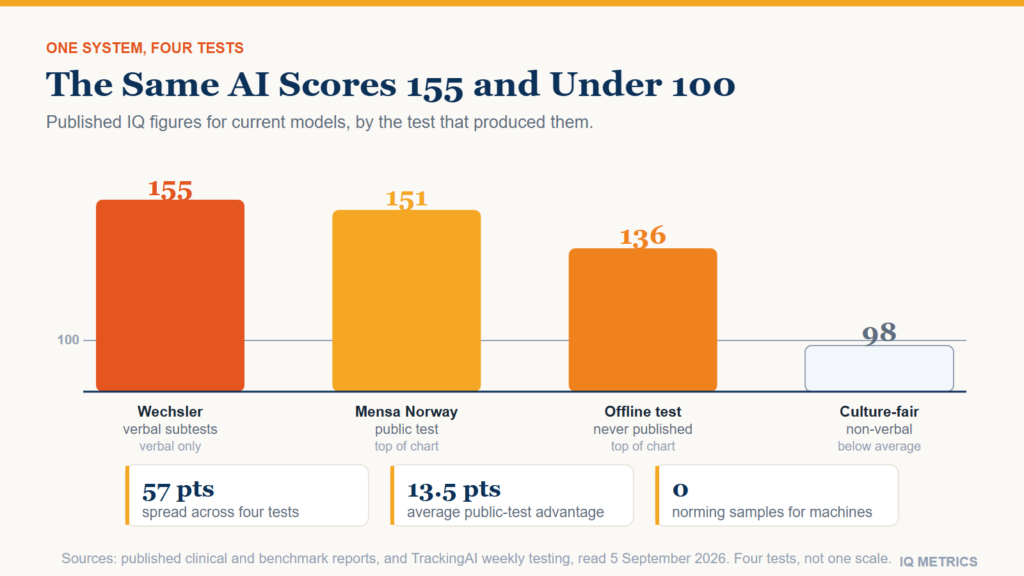
Remember that intelligence quotient (IQ) values are more of a relative assessment than an absolute one. A person’s cognitive ability can be captured in a single image via these tests. Since many IQ tests assess different dimensions of intellect, results may vary slightly across tests.
A contentious discussion on intelligence testing
Despite the fact that they are widely used and generally accepted, intelligence tests have been the subject of a great deal of criticism and debate. In the opinion of some opponents, individuals who come from specific backgrounds or who have specific degrees of education may be given an unfair edge on intelligence or intelligence tests. Because intelligence is a complex and multi-faceted concept, there are those who say that there is no one test that can accurately measure someone’s level of intelligence.
Some individuals are of the opinion that intelligence tests do not adequately reflect the whole scope of human intelligence, which encompasses aspects such as the capacity to think creatively, emotionally, and practically when confronted with specific challenges. Their point of view is that placing an excessive amount of importance on IQ scores can result in the neglect of other talents and capabilities that are equally as significant.
Several advantages of conducting IQ tests
We must acknowledge the benefits of IQ tests despite their disputes. These exams reveal a person’s cognitive strengths and weaknesses. A good understanding of our cognitive abilities helps us make better work, academic, and personal growth decisions.
IQ testing can help with introspection and progress. They can help identify strengths and weaknesses. Understanding one’s skills and flaws may free everyone.
There are several concrete and intangible ways in which people can profit from IQ testing.
A large range of life outcomes have been linked to high IQ scores, according to research. Higher IQ scores are associated with better health, more favorable job opportunities, and higher levels of financial success. In general, their health is often better as well. If this link is to be believed, IQ tests can serve as indicators of future success in certain fields.
Individuals with higher IQs are more likely to get what they want out of relationships since they are more adept at communicating and solving problems. In most companies, those with high IQs are given more opportunities to rise through the ranks and into leadership positions.
Is there anything we can glean about academic and professional achievement from IQ tests?
For quite some time, schools have relied on IQ testing to determine which students are extremely bright and to provide them with the appropriate support. The results of these evaluations can help educators better adapt their classes to the needs of their students by revealing where their students excel and where they need improvement.
A person’s intellectual talents can be better understood by taking an intelligence test as part of their professional development process, which can help them choose a career route. These are useful for finding out people’s strengths and the types of jobs they would enjoy doing the most. Besides as part of the employment process, many organizations administer intelligence tests to new staff members.
How to Prepare Yourself for the Intelligence Tests
You must be mentally ready and in the appropriate mindset before taking an intelligence exam. To provide your best, consider these tips:
1. Learn the test’s format—many IQ tests use timed tasks, riddles, and multiple-choice questions. You should study the format to prepare for the test.
2. Review sample questions: Many online resources offer IQ test practice tests and questions. Answering these questions regularly with practice can improve your speed.
Finally, improving your problem-solving skills, coupled with critical thinking and creativity, is often used to assess intelligence. Learn several problem-solving methods and experience using them in different situations.
Make sure you’re healthy before taking an IQ test by getting adequate rest, eating well, and managing stress. To perform well, stay cool and obtain adequate sleep.
Future IQ testing may impact society in numerous ways.
Tools and methods to measure intelligence will evolve as we learn more about intelligence. The current intelligence tests may soon include emotional intelligence and creative exams. Tailor-made assessments may be popular since they address each student’s strengths and limitations.
IQ tests can transform civilization. Intelligence testing helps uncover and develop gifted brains in the hard sciences, arts, and humanities. They can also reduce the gap between degree holders and job holders by identifying individuals who need more help.
In summary: Recognizing the value of intelligence testing
However IQ tests are usually misunderstood and criticized, they possess some hidden advantages. Intelligence quotient (IQ) tests are helpful devices for making decisions in our personal and professional life since they offer useful insights into our mental talents and capabilities.
Although IQ tests have flaws they play a role in supporting individuals in self-awareness, perhaps resulting in improved educational prospects and progress in their careers. We could improve our intellectual capacity by accepting the accuracy of IQ tests and integrating them into a full intelligence setup.