
IIF Certified Assessment
Start IQ Test
IIF Certified Assessment
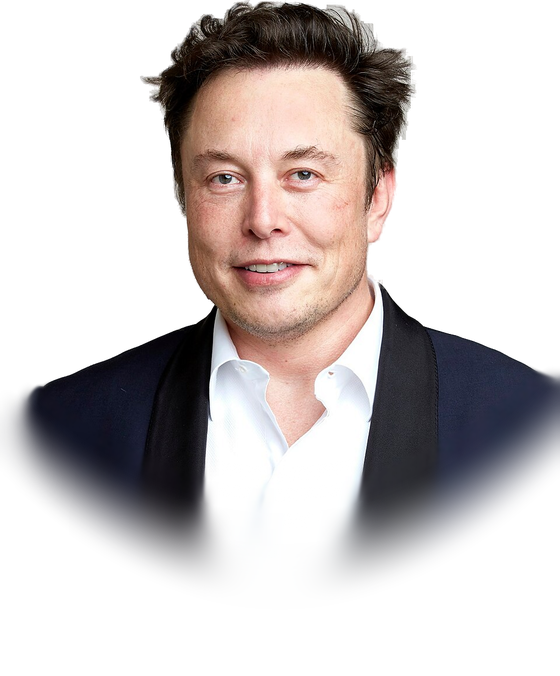
A figure of 155 follows his name across the internet without a source attached. What the record does contain is two degrees from Penn, a disputed graduation date, and no test result at all.
This is an estimate inferred from a documented record, not a test result. Historiometric estimates carry wide error margins and cannot be treated as equivalent to an administered assessment.
Set the claim aside for a moment. If someone genuinely scored in this range, here is what that would represent.
Average is 100 by construction, and about two-thirds of people fall between 85 and 115. Take the test to place your own score on this scale.
| Score range | Classification | Share of people | What it indicates |
|---|---|---|---|
| 85 – 114 | Average | ~68% | The range most people fall into. |
| 115 – 129 | Above average | ~13.6% | Roughly one person in seven. |
| 130 – 144 | Gifted | ~2% | The threshold most high-IQ societies use. |
| Above 144 | Highly gifted | ~0.1% | Figures above this range are extrapolated from the curve rather than measured. |
Percentages are approximate and describe a normal distribution. The same number means different things on tests with different standard deviations.
Thirty questions gives you a measured position on this exact scale — your score, your percentile and the ability breakdown behind it.
Find out in 30 minutes →Elon Musk finished coursework at the University of Pennsylvania in 1995 and was formally awarded a BA in physics and a BSc in economics in 1997. He went on to found or co-found Zip2, X.com, SpaceX, Tesla and Neuralink, working across software, launch vehicles and vehicle manufacturing.
That breadth is what generates the speculation: a single number is an appealing shorthand for someone operating in several technical fields at once. But the shorthand is doing the work of an explanation it never earned — the figure was attached after the achievements, not before them.
The estimate above rests on this record. Every entry here is a matter of public fact, which is more than can be said for the number itself.
Following a claim back to its first appearance is the part almost nobody does — and it is what most people are actually asking.

The 155 figure appears across “smartest billionaires” listicles, each presenting it as settled. None cites an origin. We could not find a first publication, an administering body, or a method attached to it anywhere.
A separate claim — that Musk holds a physics degree at all — was disputed publicly in December 2022. It turned out to be true: Penn confirmed both degrees, and a 2019 university email included in court filings states the physics degree explicitly. We mention it because it shows the value of checking a claim rather than repeating or dismissing it.
The one genuine discrepancy in the record is the date. Musk has said 1995; Penn says the degrees were conferred in 1997, after coursework finished in 1995. Both statements have an innocent explanation, and neither has anything to do with an IQ score.
How we read a number →Two bachelor’s degrees, physics and economics. A 2019 university email confirming the physics degree was entered into court filings during later litigation.
Fact-check of the December 2022 claim that the physics degree did not exist. Rated true that he holds it. Cited for the provenance of the dispute, not for any figure.
Source URLs and first-appearance date pending audit.
Identifying the earliest published instance is the open task for this profile.
No IQ test result for Musk appears in any primary or contemporary source we could locate. Recorded as a documented absence.
The figures that circulate for Elon Musk, what we were able to confirm, and where the two diverge.
The figure repeated most often across IQ listicles and aggregator sites. In every instance we checked it appears without attribution — restated, never sourced.
We haven’t found a record of Elon Musk sitting an IQ test. No score appears in his public statements or in the reporting on him. What is documented is the Penn coursework and the two degrees — which is a record of academic completion, not a measurement of reasoning.
Unusually for this section, one figure dominates rather than several competing ones. That does not make it better sourced — a single number repeated at volume is still a single number nobody has traced.
Want a number that does hold up? Every figure on this page is somebody’s claim. Take the 30-question test and get a percentile you can check rather than a figure you have to trust.
No verified score exists. Our estimate of 140–150 is inferred from his documented record, not from a test. The 155 that circulates online has no published source behind it.
There is no public record of one. No score appears in his own public statements, in company filings, or in the reporting on him.
It appears across IQ listicles and aggregator sites without attribution. We have not found an origin for it, and none of the sites publishing it name one.
Physics and economics. He holds a BA in physics from Penn’s College of Arts and Sciences and a BSc in economics from Wharton.
Penn’s records say 1997. Musk has on occasion said 1995, which is when he finished coursework. The discrepancy is documented, and it is a useful reminder that even dated facts need checking.
You can find out in about fifteen minutes. The IQ Metrics assessment is 30 questions, scored on the same 100-mean scale used throughout this page, so your result and the estimate above are at least expressed in the same units — one measured, one inferred. Once you have a number, the leaderboard shows where it would sit, and how we score and norm it explains the benchmarking.
From the documented record rather than a test — the method is named above and set out in full under how we read a number. Compare it against the other business & tech profiles, starting with Steve Jobs.


Portrait © Matthew Yohe, CC BY-SA 3.0. The background-removed portrait above is a derivative work and is likewise offered under the same licence. · Portrait by Christopher Smith, U.S. Department of Health and Human Services — a work of the U.S. federal government, public domain. Background removed for the portrait above. · Portrait by Los Angeles Air Force Base, Space and Missile Systems Center — a work of the U.S. federal government, public domain. Background removed for the portrait above.
Thirty questions, scored against general-population benchmarks. Your score, your percentile, your ability breakdown and a printable IIF certificate.
Find your IQ score now! →The assessment costs nothing and you always get a real result. Upgrades add precision, analysis and a certificate — never access to the test itself.
Whatever you paid comes off the next tier for 30 days. Start small without losing the money.
Not what you expected? Full refund, no questions, no form to hunt for.
Prices adjust to your country automatically, so the certificate is reachable outside high-income markets.
Coming later: an annual membership (~$89/year) for unlimited retests, practice sets and progress tracking. Monthly billing is deliberately not offered — a once-a-year assessment does not justify a monthly charge, and it would churn.


.jpg)


_(cropped).jpg)