



What is Bill Gates’ IQ?
The one score that was actually measured.

Almost every figure in this section is an inference from achievement. This one is different: there is a real, documented number behind it — just not an IQ score.
Bill Gates’ estimated IQ
- Scored 1590 out of 1600 on the SAT before the 1995 recentring — the single strongest documented input on this site.
- Frey and Detterman (2004) established that SAT scores correlate strongly with general cognitive ability, which is what makes a conversion arguable at all.
- Admitted to Harvard in 1973; left in 1975 without completing the degree to co-found Microsoft.
A converted SAT score is still not an IQ test. Concordances are derived from population samples and carry wide individual error, and a near-ceiling score compresses the top of the scale — 1590 sets a floor far better than it sets a point estimate.
- Born
- 28 October 1955, Seattle
- Field
- Software, global health philanthropy
- Education
- Lakeside School; Harvard College, 1973–75, left without a degree
- SAT
- 1590 of 1600 (pre-1995 scale)
- Known for
- Microsoft, Gates Foundation
- Nationality
- American
What an IQ of 150–160 actually means
Set the claim aside for a moment. If someone genuinely scored in this range, here is what that would represent.
Average is 100 by construction, and about two-thirds of people fall between 85 and 115. Take the test to place your own score on this scale.
| Score range | Classification | Share of people | What it indicates |
|---|---|---|---|
| 85 – 114 | Average | ~68% | The range most people fall into. |
| 115 – 129 | Above average | ~13.6% | Roughly one person in seven. |
| 130 – 144 | Gifted | ~2% | The threshold most high-IQ societies use. |
| Above 144 | Highly gifted | ~0.1% | Figures above this range are extrapolated from the curve rather than measured. |
Percentages are approximate and describe a normal distribution. The same number means different things on tests with different standard deviations.
Thirty questions gives you a measured position on this exact scale — your score, your percentile and the ability breakdown behind it.
Find out in 30 minutes →Who Bill Gates is
Bill Gates began programming at Lakeside School in the late 1960s, scored 1590 of 1600 on the SAT, entered Harvard in 1973 and left in 1975 to co-found Microsoft with Paul Allen. He stepped back from the company in stages from 2000 and has since worked primarily through the Gates Foundation.
His profile is the useful counter-example for this whole section. A real documented number exists — and even with it, the responsible output is a band with stated error, not the single confident figure the listicles print.
 By Elora Mercer, Celebrity Research WriterFigures checked by Leon Falkner, Data & Research Analyst
Reviewed by Aarav Vardhan, Editor-in-Chief · Last reviewed August 2026

Bill Gates: the documented record
The estimate above rests on this record. Every entry here is a matter of public fact, which is more than can be said for the number itself.
- 1968Begins programming on a teletype at Lakeside School.
- 1973Graduates Lakeside; enters Harvard.
- 1975Leaves Harvard; co-founds Microsoft with Paul Allen.
- 1980Licenses an operating system to IBM.
- 1986Microsoft goes public.
- 1995Windows 95 ships.
- 2000Steps down as CEO; the Gates Foundation is established.
- 2008Leaves day-to-day work at Microsoft for the foundation.
- 2020Leaves the Microsoft board.
Where the 160 figure came from
Following a claim back to its first appearance is the part almost nobody does — and it is what most people are actually asking.

This is the only profile in the section where the trail leads somewhere. The 160 in circulation is, in most versions, a converted SAT score rather than an invented figure — which makes it better founded than almost anything else on this site, and still not a measurement of intelligence.
The conversion has a genuine literature behind it. Frey and Detterman (2004), in Psychological Science, found the SAT correlates strongly with general cognitive ability. That is a population-level finding. Applying it to one person yields a wide band, not a sharp number, and a 1590 sits close enough to the ceiling that the scale compresses.
So the honest statement is narrow: a documented near-perfect score on a test taken before 1995, which supports a high estimate and cannot produce a precise one. The sites publishing “160” as a plain fact have skipped every one of those qualifications.
How we read a number →The standard citation for the SAT–ability relationship, and the basis on which any SAT-to-IQ conversion is arguable at all. Cited for the method, not for a figure about Gates.
Reported consistently across mainstream biographical sources. Strong for the score itself; none is a primary transcript, so it is recorded as well-attested rather than primary.
No IQ test result for Gates appears in any source we could locate. The SAT score is a proxy, and is presented here as one.
The sources behind our estimate
The figures that circulate for Bill Gates, what we were able to confirm, and where the two diverge.
The figure repeated most often across IQ listicles. Unusually, it is not baseless — most versions are working backwards from the SAT score — but the sites publishing it rarely say so.
A documented test score, on a test that is not an IQ test. Gates scored 1590 of a possible 1600 before the 1995 recentring. Frey and Detterman (2004) showed SAT performance tracks general cognitive ability closely enough to make a conversion arguable — so this is the one profile here where a number has a measured input rather than a rhetorical one.
A flat 160 and an SAT-derived band circulate side by side. The band is the more honest of the two, because it admits the conversion is a range rather than a reading.
Want a number that does hold up? Every figure on this page is somebody’s claim. Take the 30-question test and get a percentile you can check rather than a figure you have to trust.
Bill Gates — frequently asked
What is Bill Gates’s IQ?
No IQ test result has ever been published for him. Our range of 150–160 is derived from a documented SAT score of 1590, not from an IQ test, and a converted score carries far wider error than a measured one.
Did Bill Gates score 1590 on the SAT?
That is the score reported consistently across biographical accounts, on the pre-1995 scale where 1600 was the maximum. It is the best-documented input to any estimate in this section.
Does a high SAT score prove a high IQ?
It supports an inference, not a conclusion. Frey and Detterman (2004) found SAT performance correlates strongly with general cognitive ability — a real relationship with real error bars, and not the same thing as an administered IQ test.
Where does the figure of 160 come from?
Most often from working backwards from the SAT score, which at least has a documented input behind it. Sites that publish 160 as a flat fact rarely say that is what they have done.
Did Bill Gates finish his degree?
No. He entered Harvard in 1973 and left in 1975 to co-found Microsoft. Harvard awarded him an honorary degree in 2007.
How does my IQ compare with Bill Gates?
You can find out in about fifteen minutes. The IQ Metrics assessment is 30 questions, scored on the same 100-mean scale used throughout this page, so your result and the estimate above are at least expressed in the same units — one measured, one inferred. Once you have a number, the leaderboard shows where it would sit, and how we score and norm it explains the benchmarking.
Where does this estimate come from?
From the documented record rather than a test — the method is named above and set out in full under how we read a number. Compare it against the other business & tech profiles, starting with Steve Jobs.
- Take the 30-question IQ test — get a measured score and percentile of your own
- Average IQ by country — how the scale behaves across populations
- How IQ Metrics scores its assessment — the method behind our own number
- More on how IQ testing works — reliability, error and what a score can and cannot say
- More business & tech profiles — same field, same method
More business & tech

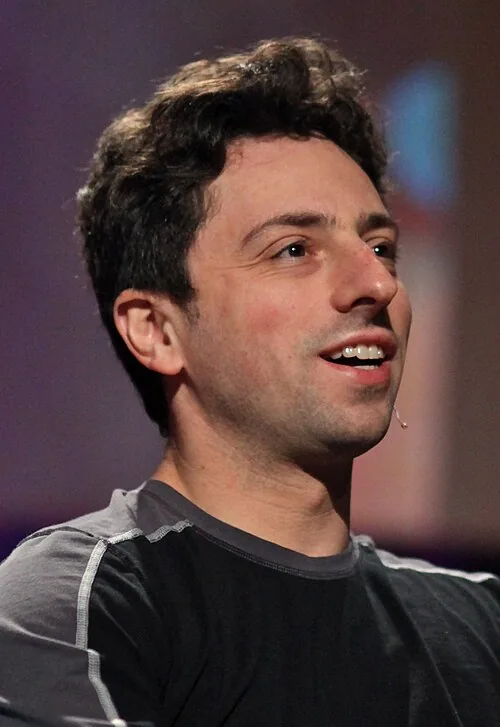

Photograph by Stansfield PL, CC BY-SA 3.0. Background removed for the portrait above. · Photograph by Steve Jurvetson, CC BY 2.0. Background removed for the portrait above. · Photograph by Village Global, CC BY 2.0. Background removed for the portrait above.
.jpg)
.jpg)

An estimate is an inference.
Yours can be measured.
Thirty questions, scored against general-population benchmarks. Your score, your percentile, your ability breakdown and a printable IIF certificate.
Find your IQ score now! →