
IIF Certified Assessment
Start IQ Test
IIF Certified Assessment
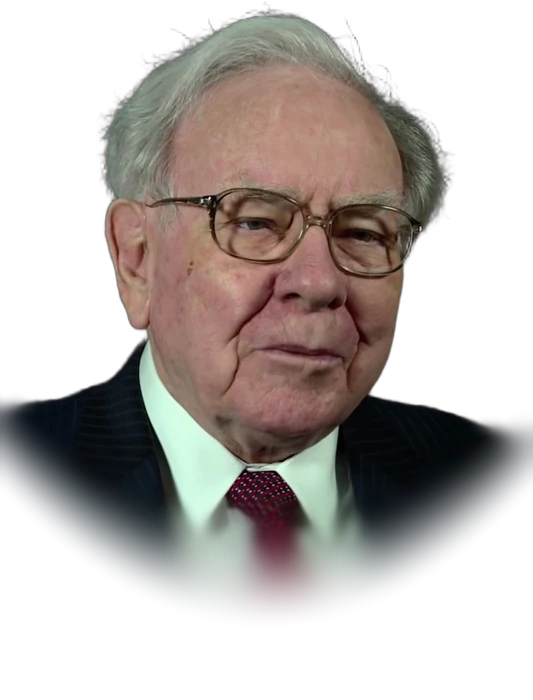
Buffett is the rare case where the subject has publicly argued against his own number — repeatedly, and using the exact figure the internet assigns him.
This range rests entirely on schooling and investment results. No test result has ever been published, and investment returns are a poor proxy for a test score: they reward temperament, capital access and time horizon at least as much as reasoning speed. Buffett has made this argument himself, which is unusual enough to be worth taking seriously.
Set the claim aside for a moment. If someone genuinely scored in this range, here is what that would represent.
Average is 100 by construction, and about two-thirds of people fall between 85 and 115. Take the test to place your own score on this scale.
| Score range | Classification | Share of people | What it indicates |
|---|---|---|---|
| 85 – 114 | Average | ~68% | The range most people fall into. |
| 115 – 129 | Above average | ~13.6% | Roughly one person in seven. |
| 130 – 144 | Gifted | ~2% | The threshold most high-IQ societies use. |
| Above 144 | Highly gifted | ~0.1% | Figures above this range are extrapolated from the curve rather than measured. |
Percentages are approximate and describe a normal distribution. The same number means different things on tests with different standard deviations.
Thirty questions gives you a measured position on this exact scale — your score, your percentile and the ability breakdown behind it.
Find out in 30 minutes →Warren Buffett was born in Omaha in 1930 and filed his first tax return at 14, on earnings from a paper route. He was turned down by Harvard Business School, which he has called one of the more fortunate rejections of his life, and went to Columbia instead specifically because Benjamin Graham taught there.
He took control of Berkshire Hathaway, then a failing textile business, in 1965, and converted it into a holding company. The annual letters he has written since are the most-read documents in the industry and are unusual for publishing the mistakes alongside the results.
He signed the Giving Pledge in 2006, committing the large majority of his fortune to philanthropy. The commitment is a matter of public record; the IQ figure is not.
The estimate above rests on this record. Every entry here is a matter of public fact, which is more than can be said for the number itself.
Following a claim back to its first appearance is the part almost nobody does — and it is what most people are actually asking.

Buffett’s number follows the pattern the rest of this category follows: a plausible-looking figure appears on a list, gets copied, and hardens. What makes his page different is that the subject keeps contradicting it in public, and has done so for forty years.
His stated view is that investing rewards temperament over horsepower — that the constraint is emotional, not cognitive, and that past a fairly ordinary threshold extra points buy nothing. He has described the required intelligence as adequate rather than exceptional. That is not modesty dressed up; it is a specific claim about which trait does the work, and it is testable against the record of very clever people who have lost money quickly.
The documented academic record is genuinely strong — Wharton at 16, a completed master’s at Columbia, and a teacher who by Buffett’s own account had never given a grade that high. That record is what our 145–160 rests on. It is worth noting that the top of our range and the circulating figure agree. The difference is that one of them is anchored to something.
How we read a number →Publicly archived. The primary record of the results the IQ figure is usually offered to explain.
Authorised biography and the standard source for the Columbia years and the Graham A+.
Exact citations and first-appearance dates pending audit.
Made in several forms across interviews, shareholder meetings and letters. The substance is consistent and well attested; we have not yet pinned each wording to a dated source.
No school, university, military or press record of a test result has surfaced. Buffett has never claimed one.
Source URLs and first-appearance date pending audit.
No original could be located. The figure circulates on list pages without attribution.
The figures that circulate for Warren Buffett, what we were able to confirm, and where the two diverge.
160 is the figure aggregator sites give him, usually with no source. Some lists go to 150, a few to 180.
Buffett has spent decades telling people the number does not matter — and has used 160 as his example of what you do not need. In talks and shareholder settings he has said that investing is not a game where the person with a 160 IQ beats the person with 130, and that anyone in the business with an IQ of 150 should sell 30 points to somebody else. Whatever his score is, he is on record arguing it is not the reason for the results.
A thirty-point spread with no source behind any of the three is the ordinary signature of a figure assembled from other lists rather than from a record.
Want a number that does hold up? Every figure on this page is somebody’s claim. Take the 30-question test and get a percentile you can check rather than a figure you have to trust.
No measured score has ever been published. The 160 that circulates has no source. Our 145–160 range is inferred from his academic record and investment results, not from a test.
He has said so repeatedly, in several forms — including that investing is not a game where a 160 IQ beats a 130 IQ, and that anyone in the business with 150 should sell 30 points to someone else.
Yes. He was turned down by Harvard Business School and went to Columbia instead, where he studied under Benjamin Graham. He has described the rejection as fortunate.
It is reported by Buffett’s biographers and repeated by Buffett himself. It rests on those accounts rather than on a surviving transcript, so we treat it as well-attested but not primary.
His documented academic record is stronger than most in the category — a completed master’s at 20 — which is why his range sits near the top of it. See Bill Gates and Jeff Bezos for the same method applied to different records.
There is no good evidence that it does above a fairly ordinary threshold. Returns depend heavily on temperament, time horizon and access to capital, none of which an IQ test measures.
You can find out in about fifteen minutes. The IQ Metrics assessment is 30 questions, scored on the same 100-mean scale used throughout this page, so your result and the estimate above are at least expressed in the same units — one measured, one inferred. Once you have a number, the leaderboard shows where it would sit, and how we score and norm it explains the benchmarking.
From the documented record rather than a test — the method is named above and set out in full under how we read a number. Compare it against the other business & tech profiles, starting with Steve Jobs.


Portrait © Matthew Yohe, CC BY-SA 3.0. The background-removed portrait above is a derivative work and is likewise offered under the same licence. · Portrait © Debbie Rowe / The Royal Society, CC BY-SA 3.0. The background-removed portrait above is a derivative work and is likewise offered under the same licence. · Portrait by Christopher Smith, U.S. Department of Health and Human Services — a work of the U.S. federal government, public domain. Background removed for the portrait above.
Thirty questions, scored against general-population benchmarks. Your score, your percentile, your ability breakdown and a printable IIF certificate.
Find your IQ score now! →The assessment costs nothing and you always get a real result. Upgrades add precision, analysis and a certificate — never access to the test itself.
Whatever you paid comes off the next tier for 30 days. Start small without losing the money.
Not what you expected? Full refund, no questions, no form to hunt for.
Prices adjust to your country automatically, so the certificate is reachable outside high-income markets.
Coming later: an annual membership (~$89/year) for unlimited retests, practice sets and progress tracking. Monthly billing is deliberately not offered — a once-a-year assessment does not justify a monthly charge, and it would churn.



.jpg)

.jpg)
