
IIF Certified Assessment
Start IQ Test
IIF Certified Assessment
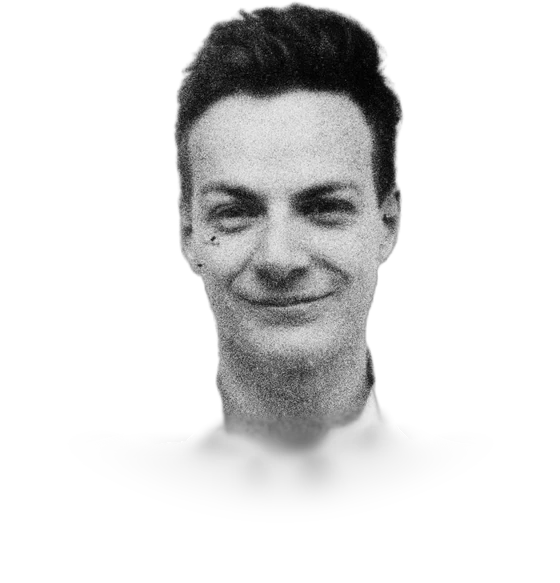
Feynman’s school IQ was recorded as 125. He then won a Nobel Prize in Physics. Almost every other page on this site is an argument about a number that was never measured; this one is an argument about a number that was.
The lower bound is a real administered result and the upper bound is not. We widen the range upward because the Putnam and Princeton results are themselves test data, and they point much higher than 125 in the specific domain Feynman worked in. A reader who thinks the honest answer is simply “125, and the test was measuring something else” is not obviously wrong.
Set the claim aside for a moment. If someone genuinely scored in this range, here is what that would represent.
Average is 100 by construction, and about two-thirds of people fall between 85 and 115. Take the test to place your own score on this scale.
| Score range | Classification | Share of people | What it indicates |
|---|---|---|---|
| 85 – 114 | Average | ~68% | The range most people fall into. |
| 115 – 129 | Above average | ~13.6% | Roughly one person in seven. |
| 130 – 144 | Gifted | ~2% | The threshold most high-IQ societies use. |
| Above 144 | Highly gifted | ~0.1% | Figures above this range are extrapolated from the curve rather than measured. |
Percentages are approximate and describe a normal distribution. The same number means different things on tests with different standard deviations.
Thirty questions gives you a measured position on this exact scale — your score, your percentile and the ability breakdown behind it.
Find out in 30 minutes →Richard Feynman was born in New York in 1918 and grew up in Far Rockaway, taught largely by a father who asked him what things meant rather than what they were called. He took his undergraduate degree at MIT and his doctorate at Princeton in 1942.
He worked at Los Alamos on the Manhattan Project in his twenties — the badge photograph above is from that period — and afterwards held chairs at Cornell and Caltech. His reformulation of quantum electrodynamics, and the diagrams that carry his name, are now standard equipment in particle physics.
He was also a famously good teacher, a safecracker, a bongo player and, in 1986, the member of the Rogers Commission who demonstrated on television why the Challenger’s O-rings had failed, using a glass of iced water. None of that is what a 125 predicts, and that is the point.
The estimate above rests on this record. Every entry here is a matter of public fact, which is more than can be said for the number itself.
Following a claim back to its first appearance is the part almost nobody does — and it is what most people are actually asking.

The 125 comes from Feynman’s school records and reached general circulation through James Gleick’s 1992 biography Genius. Feynman did not hide it. By several accounts he enjoyed it, and he used it to needle people who took the measure seriously.
The story usually told alongside it is that he was invited to join Mensa and declined on the grounds that his IQ was too low. We could not locate a primary source for that anecdote and list it below as unverified, which is a shame, because it is a good story and it is entirely in character.
What makes this page matter is the direction of the error. Everywhere else in this section, a documented record sits below an inflated claim, and we spend the page explaining why the claim is unsupported. Here the documented record is public, uncontested, and people inflate it anyway — because 125 does not match what they believe a Nobel Prize requires. The belief is the thing that is wrong, not the score. A test built to predict school performance in the 1930s predicted school performance. It was never designed to find the person who would rebuild a field, and it did not.
How we read a number →The standard biography and the source through which the 125 reached general circulation.
Published competition result. The strongest contemporaneous evidence of mathematical ability, and it points far above 125.
Nobel Foundation record, publicly archived.
First-person and deliberately unreliable in places — Feynman was a storyteller — but the source of his own account of the Princeton entrance results.
Primary source pending; not located.
Widely repeated in the form that he declined membership because his IQ was too low. We have found no original document and do not treat it as established.
The figures that circulate for Richard Feynman, what we were able to confirm, and where the two diverge.
Two opposite claims circulate. One repeats the 125 as a curiosity. The other inflates him to 180 or 190 on the reasoning that a Nobel laureate must score there.
The 125 is the documented figure, and the inflated ones are invented. This is the reverse of nearly every other entry on this site, and it is the most useful fact the section contains. A school test administered to a boy in Far Rockaway returned 125 — comfortably above average, nowhere near the range people associate with genius — and that boy went on to reformulate quantum electrodynamics. The test was not broken. It was measuring a narrower thing than its reputation suggests.
Here the lowest number is the true one. When a documented score disappoints, the internet does not correct the belief; it replaces the score.
Want a number that does hold up? Every figure on this page is somebody’s claim. Take the 30-question test and get a percentile you can check rather than a figure you have to trust.
125, recorded on a school test — and unlike almost every figure on this site, that one is documented. He won a Nobel Prize in Physics twenty-six years later.
Because IQ tests measure a narrower band of ability than their reputation suggests. A 1930s school test predicted school performance; it was not built to identify the person who would reformulate quantum electrodynamics, and it did not.
It is the only administered result on record, reported in James Gleick’s biography. Figures of 180 or 190 that appear on aggregator sites are invented — they exist because 125 does not match what people expect of a Nobel Prize.
The story is widely repeated in the form that he declined because his IQ was too low. We have not found a primary source for it and do not treat it as established.
Perfect marks in physics and mathematics, and poor marks in history and English at the same sitting — a useful illustration that a single number averages away a very uneven profile.
Einstein has no test on record at all, so his range is inferred from his published work. Feynman is the opposite case: a real score that is lower than his achievements would lead anyone to guess.
You can find out in about fifteen minutes. The IQ Metrics assessment is 30 questions, scored on the same 100-mean scale used throughout this page, so your result and the estimate above are at least expressed in the same units — one measured, one inferred. Once you have a number, the leaderboard shows where it would sit, and how we score and norm it explains the benchmarking.
From the documented record rather than a test — the method is named above and set out in full under how we read a number. Compare it against the other scientists profiles, starting with Albert Einstein.


Portrait © Matthew Yohe, CC BY-SA 3.0. The background-removed portrait above is a derivative work and is likewise offered under the same licence. · Portrait © Debbie Rowe / The Royal Society, CC BY-SA 3.0. The background-removed portrait above is a derivative work and is likewise offered under the same licence. · Portrait by Christopher Smith, U.S. Department of Health and Human Services — a work of the U.S. federal government, public domain. Background removed for the portrait above.
Thirty questions, scored against general-population benchmarks. Your score, your percentile, your ability breakdown and a printable IIF certificate.
Find your IQ score now! →The assessment costs nothing and you always get a real result. Upgrades add precision, analysis and a certificate — never access to the test itself.
Whatever you paid comes off the next tier for 30 days. Start small without losing the money.
Not what you expected? Full refund, no questions, no form to hunt for.
Prices adjust to your country automatically, so the certificate is reachable outside high-income markets.
Coming later: an annual membership (~$89/year) for unlimited retests, practice sets and progress tracking. Monthly billing is deliberately not offered — a once-a-year assessment does not justify a monthly charge, and it would churn.





.jpg)
