



What was Werner Heisenberg’s IQ?
One examiner tried to fail him. Two years later, he created quantum mechanics.
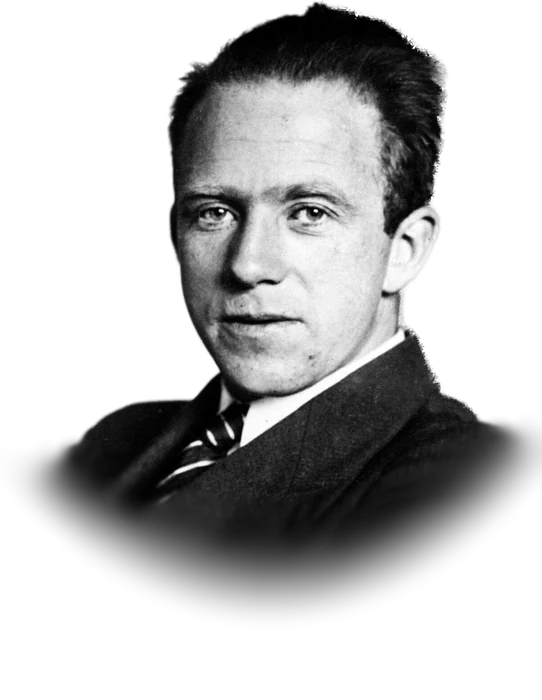
Heisenberg formulated matrix mechanics at twenty-three, became Germany’s youngest full professor at twenty-five, and won a solo Nobel Prize at thirty-one “for the creation of quantum mechanics.” The IQ figures attached to his name online — 155 on one physics blog, 180 on an auto-generated comparison site — cite neither that record nor any test.
Werner Heisenberg’s estimated IQ
- Doctorate from the University of Munich in 1923, age 21, under Arnold Sommerfeld, followed by a 1924 habilitation at Göttingen under Max Born on the anomalous Zeeman effect.
- Formulated matrix mechanics in 1925 — the first internally consistent mathematical framework for quantum theory — largely alone at twenty-three, then developed it into full form with Max Born and Pascual Jordan.
- Appointed full professor of theoretical physics at Leipzig in 1927, aged twenty-five, the youngest full professor in Germany at the time.
- Sole winner of the 1932 Nobel Prize in Physics, announced in November 1933, “for the creation of quantum mechanics.”
No IQ test result for Heisenberg has ever been published. The one dated, documented instance of him being formally examined — his 1923 doctoral oral — went badly enough in experimental physics that one examiner wanted him failed outright; he passed only on Sommerfeld’s advocacy, with the weakest grade the degree carried. This range reflects an exceptional and specific record in theoretical physics, not a measured general aptitude, and is held to that record rather than to the reputation built on top of it.
- Born
- 5 December 1901, Würzburg, Germany
- Died
- 1 February 1976, Munich, West Germany
- Doctorate
- University of Munich, 1923, age 21, under Arnold Sommerfeld
- Professorship
- University of Leipzig, 1927, age 25 — Germany’s youngest full professor
- Nobel Prize in Physics
- 1932 (announced 1933), “for the creation of quantum mechanics”
- Documented IQ test
- None on record — circulating figures (155, 180) trace to a ranking blog and an auto-generated comparison site
What an IQ of 165–185 actually means
Set the claim aside for a moment. If someone genuinely scored in this range, here is what that would represent.
Average is 100 by construction, and about two-thirds of people fall between 85 and 115. Take the test to place your own score on this scale.
| Score range | Classification | Share of people | What it indicates |
|---|---|---|---|
| 85 – 114 | Average | ~68% | The range most people fall into. |
| 115 – 129 | Above average | ~13.6% | Roughly one person in seven. |
| 130 – 144 | Gifted | ~2% | The threshold most high-IQ societies use. |
| Above 144 | Highly gifted | ~0.1% | Figures above this range are extrapolated from the curve rather than measured. |
Percentages are approximate and describe a normal distribution. The same number means different things on tests with different standard deviations.
Thirty questions gives you a measured position on this exact scale — your score, your percentile and the ability breakdown behind it.
Find out in 30 minutes →Who Werner Heisenberg was
Werner Heisenberg was born in Würzburg, Germany, on 5 December 1901. He entered the University of Munich in 1920 to study under Arnold Sommerfeld, taking his doctorate in 1923 with a dissertation on fluid turbulence. He then worked as an assistant to Max Born at Göttingen, habilitating there in 1924 on the anomalous Zeeman effect, before moving to Niels Bohr’s Institute for Theoretical Physics in Copenhagen, where Bohr became as central to his thinking as Sommerfeld and Born had been.
At twenty-three, working largely alone during a stay on the island of Helgoland in June 1925, Heisenberg produced the first internally consistent mathematical formulation of quantum mechanics; back at Göttingen, he, Born and Pascual Jordan worked it into full form as matrix mechanics within the year. In early 1927, back in Copenhagen, he derived the uncertainty principle — that a particle’s position and momentum cannot both be fixed to unlimited precision — first setting it out in a February letter to Wolfgang Pauli. That October, aged twenty-five, he took up a chair as full professor of theoretical physics at Leipzig, the youngest in Germany. The 1932 Nobel Prize in Physics, announced together with the 1933 prize the following November, was his alone, “for the creation of quantum mechanics.” Albert Einstein, unpersuaded by what the principle implied about chance and determinism, pressed Bohr on it directly at the 1927 Solvay Conference in Brussels, which Heisenberg also attended.
From 1939 Heisenberg was one of the physicists drafted into the Uranverein, Nazi Germany’s nuclear fission research effort, and from 1942 he led its theoretical work, centered at the Kaiser Wilhelm Institute for Physics in Berlin — on the opposite side of the war’s nuclear race from the Manhattan Project, eventually directed by J. Robert Oppenheimer, who completed his own doctorate at Göttingen under Heisenberg’s former supervisor, Max Born, three years after Heisenberg’s habilitation there. In June 1942 Heisenberg told armaments minister Albert Speer that a bomb was achievable in principle but not within the war’s likely span, given how far Germany was from large-scale uranium enrichment; the project’s priority was cut back afterward. What he himself intended by that assessment — an honest technical ceiling, a deliberate lack of urgency, or some mixture of both — is still disputed among historians, a dispute sharpened by a September 1941 meeting with Bohr in occupied Copenhagen that the two men later described in irreconcilable terms. Interned with nine other German physicists at Farm Hall in England after the war, Heisenberg was recorded, unknowingly, reacting to news of Hiroshima with disbelief before working through the bomb physics correctly within about two weeks — transcripts not declassified until 1992. He went on to direct the re-established Max Planck Institute for Physics, at Göttingen and then, from 1958, in Munich, until his retirement in 1970, and died in Munich on 1 February 1976.
 By Elora Mercer, Celebrity Research WriterFigures checked by Leon Falkner, Data & Research Analyst
Reviewed by Aarav Vardhan, Editor-in-Chief · Last reviewed August 2026
.jpg)
Where the 180 figure came from
Following a claim back to its first appearance is the part almost nobody does — and it is what most people are actually asking.

Two different numbers circulate for Heisenberg, and neither traces to a test. geniuses.club’s auto-generated comparison pages — “Werner Heisenberg vs. Ernest Hemingway,” “Werner Heisenberg vs. Baruch Spinoza” — both list an “Estimated IQ” of 180, with a disclaimer built into the template itself: these are “reconstructions, not test results… treat the number as a directional signal, not a verdict.” The same site assigns an identical, equally unsourced 180 to Bertrand Russell, profiled elsewhere on this site — which suggests 180 is less a reading of Heisenberg specifically than a default the generator reaches for whenever “physicist” meets “genius.” A separate outlet, the blog Wonders of Physics, ranks him sixth on a “Which Physicist Had The Highest IQ?” list at “around 155” — twenty-five points lower, and no better sourced.
There is exactly one dated, documented event in Heisenberg’s life that resembles an aptitude test, and it cuts the other way. At his doctoral oral on 23 July 1923 in Munich, the experimentalist Wilhelm Wien pressed him on how a storage battery works and how to derive the resolving power of a telescope and a microscope — and Heisenberg could not answer. Arnold Sommerfeld, who had rated him outstanding in theory and mathematics, argued him through; Wien wanted him failed outright. The compromise, a grade of III on Munich’s five-point scale, made his doctorate a bare cum laude — the weakest passing mark the degree carried. Neither number in circulation engages with the one specific, sourced data point that actually exists about Heisenberg under examination.
How we read a number →Account of the 23 July 1923 oral exam: Wien’s near-failing mark, Sommerfeld’s advocacy, and the compromise grade of III.
“For the creation of quantum mechanics, the application of which has, inter alia, led to the discovery of the allotropic forms of hydrogen.” Sole recipient; announced November 1933 alongside the 1933 prize.
Source of the circulating 180 figure. Both carry the same templated disclaimer that the numbers are reconstructions, not test results; the same site lists an identical 180 for Bertrand Russell.
Ranks Heisenberg sixth among physicists at “around 155,” with no citation given for the figure.
No school, university, military or postwar record of a test result was found, including in the declassified Farm Hall transcripts, which document his wartime internment in unusual detail.
The sources behind our estimate
The figures that circulate for Werner Heisenberg, what we were able to confirm, and where the two diverge.
Figures for Heisenberg vary by source: an auto-generated “genius comparison” site puts him at 180; a physics blog ranks him sixth among physicists at “around 155.”
Neither figure cites a test, a scale, or a date. The 180 comes from geniuses.club’s templated comparison pages, which carry their own disclaimer that the numbers are “reconstructions, not test results.” The 155 comes from a single ranked blog post with no citation for the number itself. Neither engages with the one real, dated record of Heisenberg under examination: a doctoral oral he came close to failing.
A twenty-five-point gap between the only two name-specific figures we could find isn’t measurement noise — it’s what happens when two different writers each guess at the same reputation.
Want a number that does hold up? Every figure on this page is somebody’s claim. Take the 30-question test and get a percentile you can check rather than a figure you have to trust.
Werner Heisenberg — frequently asked
What was Werner Heisenberg’s IQ?
No verified score exists — he was never tested. A physics blog ranks him sixth among physicists at “around 155”; an auto-generated comparison site lists 180. Neither cites a test. What is documented is a run of achievement: matrix mechanics at twenty-three, a Leipzig professorship at twenty-five, and a solo 1932 Nobel Prize “for the creation of quantum mechanics.”
Did Heisenberg really almost fail his own doctorate?
Yes. At his oral exam on 23 July 1923, the experimentalist Wilhelm Wien pressed him on how a storage battery works and how to derive the resolving power of a telescope and a microscope, and Heisenberg could not answer. Arnold Sommerfeld argued him through; the compromise grade, a bare cum laude, was the lowest passing mark the degree carried.
What is Heisenberg actually known for?
Two results, both foundational to quantum mechanics. Matrix mechanics (1925) was the first internally consistent mathematical formulation of the theory, worked out largely alone at twenty-three. The uncertainty principle (1927) showed that a particle’s position and momentum cannot both be known to unlimited precision — developed in Copenhagen, where he was a lecturer at Niels Bohr’s institute.
How old was Heisenberg when he won the Nobel Prize?
Thirty-one. He was the sole winner of the 1932 Nobel Prize in Physics, “for the creation of quantum mechanics,” announced in November 1933 alongside the separately awarded 1933 prize, shared by Erwin Schrödinger and Paul Dirac.
What was Heisenberg’s role in Nazi Germany’s nuclear research program?
From 1939 he was one of the physicists in the Uranverein, and from 1942 he led its theoretical work. In June 1942 he told armaments minister Albert Speer that a bomb was achievable in principle but not within the war’s likely span. Whether that reflected a genuine technical ceiling or a deliberate lack of urgency is still disputed by historians — a question sharpened, not settled, by a September 1941 meeting with Bohr that the two men later described in irreconcilable terms.
Was Heisenberg a member of the Nazi Party?
No — he never joined the NSDAP, though he continued working within the regime’s institutions throughout the war. In 1937 the SS newspaper Das Schwarze Korps branded him a “white Jew” for teaching Einstein’s relativity; an eight-month SS investigation followed before Heinrich Himmler personally cleared him in writing in 1938.
How does my IQ compare with Werner Heisenberg?
You can find out in about fifteen minutes. The IQ Metrics assessment is 30 questions, scored on the same 100-mean scale used throughout this page, so your result and the estimate above are at least expressed in the same units — one measured, one inferred. Once you have a number, the leaderboard shows where it would sit, and how we score and norm it explains the benchmarking.
Where does this estimate come from?
From the documented record rather than a test — the method is named above and set out in full under how we read a number. Compare it against the other scientists profiles, starting with Albert Einstein.
- Take the 30-question IQ test — get a measured score and percentile of your own
- Average IQ by country — how the scale behaves across populations
- How IQ Metrics scores its assessment — the method behind our own number
- More on how IQ testing works — reliability, error and what a score can and cannot say
- More scientists profiles — same field, same method
More scientists

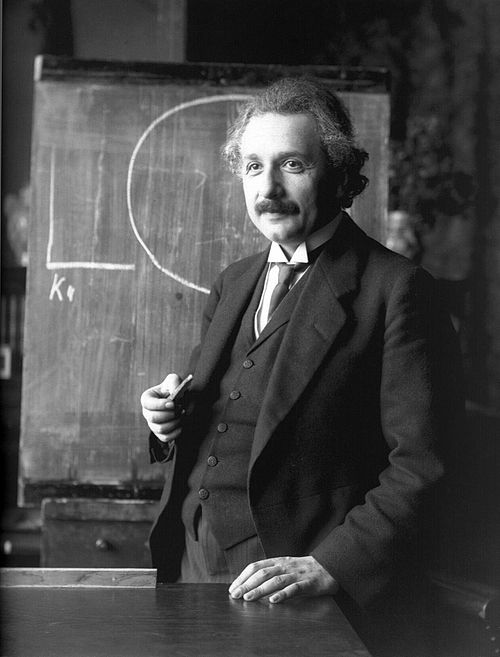
Photograph by Montclair Film Festival (photo by Neil Grabowsky, May 2017), CC BY 2.0. Background removed for the portrait above. · Photograph by Newhcrossaint (2025), CC BY-SA 4.0. Background removed for the portrait above. · Portrait by Ferdinand Schmutzer (1921), public domain. Background removed for the portrait above.


An estimate is an inference.
Yours can be measured.
Thirty questions, scored against general-population benchmarks. Your score, your percentile, your ability breakdown and a printable IIF certificate.
Find your IQ score now! →