



What was Christopher Hitchens’ IQ?
The Christopher Hitchens IQ quote is a quip about IQ scores, not a score. The record: a third-class Balliol degree.
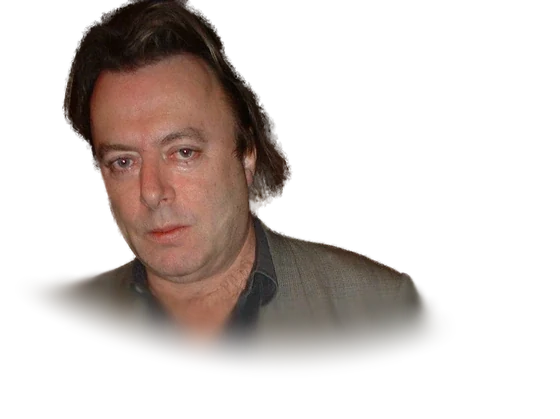
No Christopher Hitchens IQ test result has been published, and the 155 that circulates comes from one aggregator page that cites no test. What is documented is Balliol College, Oxford (PPE, a third-class degree in 1970), a Lannan Literary Award (1991) and a National Magazine Award (2007), which support an estimated IQ of 130–150: an inference from a career, not a measurement.
Christopher Hitchens’ estimated IQ
- Admission to Balliol College, Oxford, in 1967 to read philosophy, politics and economics, and a graduation in 1970 with a third-class degree (Cherwell, December 20, 2011; The Guardian’s obituary).
- A biweekly column in The Nation from 1982 to 2002 (the magazine’s own author page) and a contributing editorship at Vanity Fair from 1992 (Wikipedia), alongside regular work for The Atlantic, Slate and the New York Review of Books (UCLA Burkle Center biography).
- A Lannan Literary Award for Nonfiction in 1991 (Wikipedia and Wikidata), a National Magazine Award in 2007 (UCLA Burkle Center biography) and the PEN/Diamonstein-Spielvogel Award for the Art of the Essay, listed for Arguably in 2012 (Wikipedia).
- God Is Not Great named a finalist for the 2007 National Book Awards in nonfiction (National Book Foundation page).
- Fifth place in the 2005 Prospect/Foreign Policy readers’ vote for top public intellectuals, a popularity measure rather than a test of ability (Foreign Policy, October 15, 2005).
No IQ test, Mensa listing or self-reported score is on record, so Christopher Hitchens’s estimated IQ of 130–150 is an inference from public achievement. The one graded academic result, a third-class degree in 1970, argues against the top of a literary-genius band, while prizes, a long column career and a readers’ poll reward fluency, output and popularity more than test-measured reasoning; the real value could lie outside the range in either direction.
- Born
- April 13, 1949, Portsmouth, England
- Died
- December 15, 2011, Houston, Texas
- Schools
- Mount House School, Tavistock, Devon; The Leys School, Cambridge (1962–66 per Wikipedia’s alumni list)
- University
- Balliol College, Oxford, 1967–1970; philosophy, politics and economics; third-class degree (Cherwell; The Guardian obituary)
- Journalism
- New Statesman from 1973; The Nation column 1982–2002; Vanity Fair contributing editor from 1992
- Books
- For the Sake of Argument (1993); Letters to a Young Contrarian (2001); Hitch-22 (2010); Arguably (2011)
- Recognition
- Lannan Literary Award for Nonfiction (1991); National Magazine Award (2007); National Book Awards nonfiction finalist (2007); PEN/Diamonstein-Spielvogel Award for the Art of the Essay (2012, for Arguably); fifth in the 2005 Prospect/Foreign Policy readers’ vote
- Circulating IQ figure
- 155 on celebrityiq.info, with no test cited. No IQ test, Mensa listing or self-reported score found
What an IQ of 130–150 actually means
Set the claim aside for a moment. If someone genuinely scored in this range, here is what that would represent.
Average is 100 by construction, and about two-thirds of people fall between 85 and 115. Take the test to place your own score on this scale.
| Score range | Classification | Share of people | What it indicates |
|---|---|---|---|
| 85 – 114 | Average | ~68% | The range most people fall into. |
| 115 – 129 | Above average | ~13.6% | Roughly one person in seven. |
| 130 – 144 | Gifted | ~2% | The threshold most high-IQ societies use. |
| Above 144 | Highly gifted | ~0.1% | Figures above this range are extrapolated from the curve rather than measured. |
Percentages are approximate and describe a normal distribution. The same number means different things on tests with different standard deviations.
Thirty questions gives you a measured position on this exact scale — your score, your percentile and the ability breakdown behind it.
Find out in 30 minutes →Who Christopher Hitchens was
Christopher Hitchens was born on April 13, 1949, in Portsmouth, England, and died on December 15, 2011, in Houston, Texas; Wikipedia and Wikidata item Q49081 agree on both dates and both places. Wikipedia says he attended Mount House School in Tavistock, Devon, from the age of eight and then The Leys School in Cambridge, where its alumni list gives his years as 1962–66. He entered Balliol College, Oxford, in 1967 to read philosophy, politics and economics. Cherwell’s tribute of December 20, 2011 says he matriculated in 1967 and graduated in 1970 with a third-class degree in PPE, and The Guardian’s obituary, as reproduced on 3 Quarks Daily, also gives a third-class degree and adds that he did not bother much with studying.
Journalism followed. The Guardian obituary has him finding a berth at the New Statesman partly through an Oxford friend, and Wikipedia dates that start to 1973, adding a foreign-correspondent post at the Daily Express in 1977, a return to the New Statesman in 1978 as assistant editor and then foreign editor, and a move to the United States in 1981 in an editor exchange with The Nation. The magazine’s own author page says he wrote a biweekly column there from 1982 to 2002. Wikipedia says he became a contributing editor of Vanity Fair in 1992, and a UCLA Burkle Center page for a March 2010 lecture says he contributed regularly to The Atlantic, Slate, Vanity Fair and the New York Review of Books and had corresponded from more than 60 countries.
The same sources point to a long bibliography: the UCLA page says more than a dozen books, and Wikipedia’s list runs longer. Titles, with years from Wikipedia and confirmed against Open Library, include Blood, Class and Nostalgia: Anglo-American Ironies (1990), For the Sake of Argument (1993), Letters to a Young Contrarian (2001), Orwell’s Victory (2002; published in the United States as Why Orwell Matters), Love, Poverty, and War (2004), God Is Not Great (2007), the memoir Hitch-22 (2010) and the essay collection Arguably (2011). Titles are listed here as works only; they are not evidence of a score.
Recognition is documented in more than one place. Wikipedia’s list of Lannan Literary Award winners shows him under nonfiction for 1991, and Wikidata dates a Lannan Literary Awards statement to 1991. The UCLA page says he received a National Magazine Award in 2007 (Wikipedia gives the category as Columns and Commentary) and was a finalist for a 2007 National Book Award, and the National Book Foundation’s own page lists God Is Not Great as a 2007 finalist in nonfiction. Wikipedia’s list of winners of the PEN/Diamonstein-Spielvogel Award for the Art of the Essay, given for a book of original collected essays, shows him for Arguably in 2012, and Wikidata also records the award. In 2005, readers of Prospect and Foreign Policy placed him fifth in a vote in which each chose five public intellectuals from a list of 100; the results page is dated October 15, 2005. A readers’ vote measures reputation, and the prizes measure writing, so none of these is a stand-in for a test result.
 By Elora Mercer, Celebrity Research WriterFigures checked by Leon Falkner, Data & Research Analyst
Reviewed by Aarav Vardhan, Editor-in-Chief · Last reviewed August 2026

Christopher Hitchens: the documented record
The estimate above rests on this record. Every entry here is a matter of public fact, which is more than can be said for the number itself.
- April 13, 1949Born in Portsmouth, England.
- 1967Enters Balliol College, Oxford, to read philosophy, politics and economics.
- 1970Graduates with a third-class degree (Cherwell; The Guardian obituary).
- 1973Joins the New Statesman, according to Wikipedia.
- 1982Begins a biweekly column in The Nation that runs until 2002 (the magazine’s author page).
- 1991Receives a Lannan Literary Award for Nonfiction.
- 1992Becomes a contributing editor of Vanity Fair, according to Wikipedia.
- October 15, 2005Placed fifth in the Prospect/Foreign Policy readers’ vote for top public intellectuals.
- 2007Receives a National Magazine Award; God Is Not Great is a National Book Awards finalist in nonfiction.
- December 15, 2011Dies in Houston, Texas; Arguably is published that year.
Where the 155 figure came from
Following a claim back to its first appearance is the part almost nobody does — and it is what most people are actually asking.
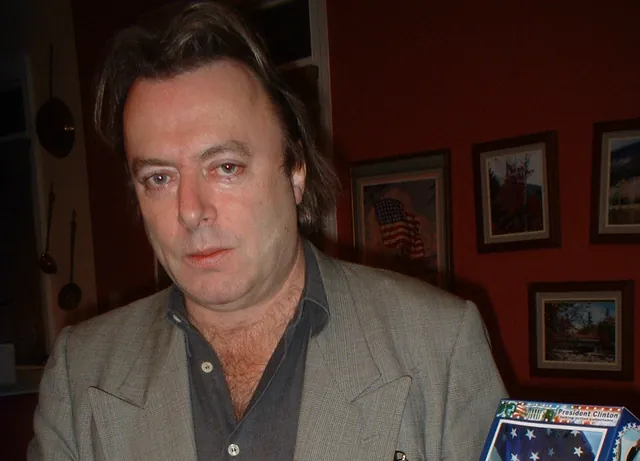
Christopher Hitchens’s IQ score has never been published, and the only figure we found is 155 on celebrityiq.info. That page lists it as an estimated IQ, puts it at the 99.988th percentile and places it in a “Genius range”, but names no test, examiner or date: it rests on general traits, and its footer says the scores are estimates compiled from public sources and are not verified test results unless otherwise noted. So the honest answer to “what was Christopher Hitchens’s IQ” is that no one published a measurement. For how numbers like this get attached to famous names, see where celebrity IQ numbers come from.
The Christopher Hitchens IQ quote is a different thing, because it is about IQ scores rather than his own. A line credited to him says, in effect, that the more a person is impressed by the measurement of IQ, the less intelligent that person tends to be. Goodreads lists it as a user-added entry from The Quotable Hitchens from Alcohol to Zionism (Da Capo Press, 2011; Goodreads says it does not verify such entries), and an UnHerd essay by Tomiwa Owolade (December 2021) repeats it and calls it an epigram. The attribution rests on the Goodreads and UnHerd credits, and none of the pages we opened presents the line as an interview answer. It is a quip, not a finding, and it says nothing about his own score.
Christopher Hitchens’s estimated IQ of 130–150 starts from what the record can bear. On the usual 15-point scale, 155 is 3.7 standard deviations above the mean, a rarity the celebrityiq.info page puts at the top 0.012% (see how rare a high IQ score is), while the top of this range, an IQ of 150, is 3.3. The pattern is the usual one on this site: the sourced record supports a lower range than the circulating figure. The range puts him level with George Orwell (135–150) at the top, a little below Oscar Wilde (140–155) and well below Bertrand Russell (160–175), each placed by a documented career rather than a test.
Was Christopher Hitchens a genius? The word is not a documented status, and no IQ test has applied it to him (see what counts as a genius IQ level). Is Christopher Hitchens smart? The documented record shows a high-achieving writer and journalist, and it also shows a third-class Oxford degree, a graded result that is an achievement measure rather than an IQ (see achievement tests vs IQ tests). Anyone curious about their own reasoning can take a timed test such as the IQ Metrics test, but a score for someone else has to come from a record, and the records for Christopher Hitchens contain none.
How we read a number →The only page we found that prints a figure: an estimated IQ of about 155 (99.988th percentile, top 0.012%, “Genius range”). Basis given is general traits; footer says scores are estimates compiled from public sources and not verified test results unless otherwise noted. No test, examiner or date.
Looked for in Wikipedia’s full article (the only “Intelligence Squared” hit is a 2009 debate evening), the Wikiquote page, the UCLA Burkle Center page, The Nation’s author page, Cherwell’s tribute and the 3 Quarks Daily obituary text; none mentions an IQ test, Mensa or a self-reported score. Web searches for a Hitchens IQ score returned no page stating one besides celebrityiq.info.
UnHerd attributes to Hitchens a line about the link between stupidity and being impressed by the measurement of IQ, calls it an epigram; it gives no source for the line. Goodreads attributes the same line to Hitchens in The Quotable Hitchens from Alcohol to Zionism and says user-added quotes are not verified. The Archive record dates that book to 2011 (Da Capo Press). Neither page presents the line as an interview answer.
Says he matriculated at Balliol College in 1967 and graduated in 1970 with a third-class degree in PPE. No mention of an IQ test.
Says he read PPE at Balliol, left university with a third-class degree (too busy to bother much with studying) and found a berth at the New Statesman partly through James Fenton. No mention of IQ.
Wikipedia: born April 13, 1949, Portsmouth; died December 15, 2011, Houston; Mount House School and The Leys School; career dates (New Statesman 1973, Daily Express 1977, move to the US 1981, Vanity Fair 1992); bibliography; a 2007 National Magazine Award; the Leys alumni entry (1962–66); the 1991 Lannan Literary Award for Nonfiction; the PEN/Diamonstein-Spielvogel Award page lists “2012 Christopher Hitchens Arguably Winner.” Wikidata: item is Christopher Hitchens (1949–2011) with the same two dates, place of birth Portsmouth (Q72259), place of death Houston (Q16555), a Lannan Literary Awards statement dated 1991 and a PEN/Diamonstein-Spielvogel Award statement with no date. Open Library: years for the eight book titles named here. No IQ or Mensa mention in the article.
National Book Foundation: “Finalist, National Book Awards 2007 for Nonfiction.” UCLA: he received a National Magazine Award in 2007 and was a finalist for a 2007 National Book Award; contributed regularly to The Atlantic, Slate, Vanity Fair and the New York Review of Books; more than a dozen books; corresponded from more than 60 countries.
Readers voted for their top five public intellectuals from a list of 100; Hitchens is ranked fifth in the top 20. A readers’ poll, not a test.
The magazine’s own bio: he wrote a wide-ranging, biweekly column there from 1982 to 2002. No mention of IQ.
The sources behind our estimate
The figures that circulate for Christopher Hitchens, what we were able to confirm, and where the two diverge.
The only figure we found is 155: celebrityiq.info prints an estimated IQ of about 155 for Christopher Hitchens, at the 99.988th percentile and in what it calls the Genius range. A widely shared line about IQ is also credited to him, but it is a remark about IQ measurement, not a claim about his own score.
No IQ test, Mensa listing or self-reported IQ appears on any page we read — Wikipedia’s full article on Christopher Hitchens (its one “Intelligence Squared” hit is a 2009 debate evening, not a test), the Wikiquote page, the UCLA Burkle Center biography, The Nation’s author page, Cherwell’s Oxford tribute and the obituary text reproduced on 3 Quarks Daily. The one page that prints a number, celebrityiq.info, gives general traits as its basis (a following built on intellectual credibility, an ability to explain complex ideas to broad audiences), and its footer says the scores are estimates, not verified test results unless otherwise noted. No second page printing a figure was found.
The 155 sits 5 points above the top of this range, the usual direction on this site, where sourced records tend to support less than the circulating number. It is also unsupported: a figure built from general traits adds nothing beyond the traits, and the one graded result on record, a third-class degree, does not by itself point to the far tail.
Want a number that does hold up? Every figure on this page is somebody’s claim. Take the 30-question test and get a percentile you can check rather than a figure you have to trust.
Christopher Hitchens — frequently asked
What is Christopher Hitchens’s IQ?
No IQ test result for Christopher Hitchens has been published, so his IQ has no measured value. celebrityiq.info lists about 155 without naming a test. IQ Metrics estimates a range of 130–150, inferred from his Balliol College degree (third-class, 1970), a Lannan Literary Award (1991), a National Magazine Award (2007) and a long column career. It is an inference, not a score.
Did Christopher Hitchens ever take an IQ test or join Mensa?
There is no public record of either. Wikipedia’s full article, the UCLA Burkle Center biography, Cherwell’s Oxford tribute and The Nation’s author page do not mention an IQ test, a Mensa listing or a self-reported score. Intelligence Squared, which appears once in his biography, is a debate series, not an intelligence test. Whether he took a private test is unknown.
What is the Christopher Hitchens IQ quote?
The line credited to Hitchens is a quip about IQ scores, not about his own: it says the more a person is impressed by the measurement of IQ, the less intelligent that person tends to be. Goodreads lists it under The Quotable Hitchens (2011). It is not an IQ result.
Where does Christopher Hitchens’s IQ of 155 come from?
The only page we found that prints a figure is celebrityiq.info, which lists an estimated IQ of about 155 at the 99.988th percentile. It names no test, examiner or date, bases the number on general traits and says its scores are estimates, not verified test results unless noted. It is not a measurement, and IQ Metrics places the record lower, at 130–150.
Was Christopher Hitchens a genius?
“Genius” is not a documented status, and no IQ test has labeled him one. What is documented is a Balliol College degree (third-class, 1970), a Lannan Literary Award (1991), a National Magazine Award (2007) and a 2007 National Book Awards finalist listing, which support an estimated IQ of 130–150: high, but not certified. A genius label would need a named, proctored test.
Is Christopher Hitchens smart?
The record documents a high-achieving writer: admission to Balliol College, Oxford, a column at The Nation from 1982 to 2002, a Vanity Fair contributing editorship from 1992 and several prizes. It also documents a third-class degree, so the evidence points to strong written output rather than top academic marks. Being smart is not an IQ score, and none was published.
What degree did Christopher Hitchens get at Oxford?
Christopher Hitchens entered Balliol College, Oxford, in 1967 and read philosophy, politics and economics (PPE). Cherwell says he graduated in 1970 with a third-class degree, and The Guardian’s obituary also gives a third-class degree. Before Oxford he attended The Leys School in Cambridge, after Mount House School in Tavistock, Devon.
How does Christopher Hitchens’s estimated IQ compare with George Orwell’s?
IQ Metrics places Christopher Hitchens’s estimated IQ at 130–150, level with George Orwell’s 135–150 at the top and below Oscar Wilde’s 140–155. All three ranges come from documented careers rather than test scores, so the gaps sit inside the method’s margin of error. None is a measurement.
How does my IQ compare with Christopher Hitchens?
You can find out in about fifteen minutes. The IQ Metrics assessment is 30 questions, scored on the same 100-mean scale used throughout this page, so your result and the estimate above are at least expressed in the same units — one measured, one inferred. Once you have a number, the leaderboard shows where it would sit, and how we score and norm it explains the benchmarking.
Where does this estimate come from?
From the documented record rather than a test — the method is named above and set out in full under how we read a number. Compare it against the other writers profiles, starting with Voltaire.
- Take the 30-question IQ test — get a measured score and percentile of your own
- Average IQ by country — how the scale behaves across populations
- How IQ Metrics scores its assessment — the method behind our own number
- More on how IQ testing works — reliability, error and what a score can and cannot say
- More writers profiles — same field, same method
More writers
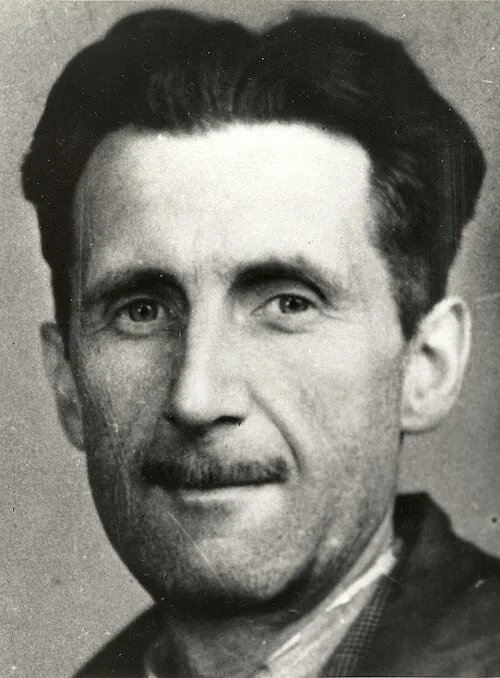
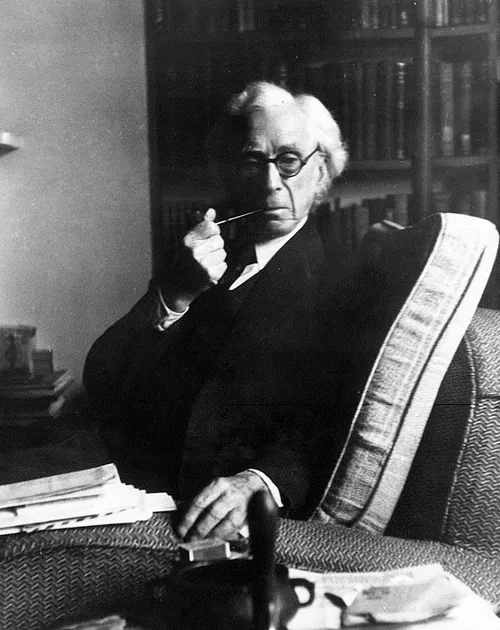
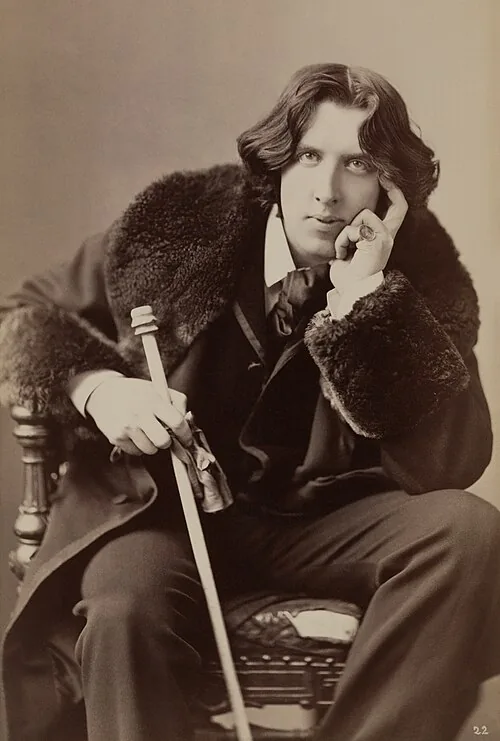
Press photograph by the Branch of the National Union of Journalists (1943), public domain. Background removed for the portrait above. · Photograph, 1954, via Wikimedia Commons, public domain. · Photograph by Napoleon Sarony (1882), Library of Congress, public domain.


An estimate is an inference.
Yours can be measured.
Thirty questions, scored against general-population benchmarks. Your score, your percentile, your ability breakdown and a printable IIF certificate.
Find your IQ score now! →