



What was George Orwell’s IQ?
Won the scholarship, then admits he coasted on it.

Orwell won a competitive scholarship to Eton, then by his own account did almost no academic work once he arrived, left without attending university at all, and spent five years as a colonial police officer before he published a word under the name most readers know him by.
George Orwell’s estimated IQ
- Won a King’s Scholarship to Eton College in 1917, admission decided by a national competitive examination against other scholarship candidates.
- By his own account and his biographers’, did little academic work at Eton, coasting on the scholarship rather than building on it, and left in 1921 without proceeding to university.
- Passed the Indian Imperial Police entrance examinations in 1922 and served five years in Burma before resigning in 1927, disillusioned with imperial rule — the experience behind Burmese Days and the essay “Shooting an Elephant.”
- Wrote Nineteen Eighty-Four and Animal Farm, works whose vocabulary — “Orwellian,” “Big Brother,” “doublethink” — entered standard English usage.
This is a historiometric estimate built from a real, competitive academic result (the Eton scholarship), not a test score — Orwell was never tested for IQ. His own account of coasting at Eton and never attending university argues for a more moderate range than his adult literary reputation alone might suggest.
- Born
- 25 June 1903, Motihari, British India
- Died
- 21 January 1950, London
- Field
- Literature, journalism, political writing
- Education
- Eton College (King’s Scholar, 1917–1921); no university
- Known for
- Animal Farm (1945); Nineteen Eighty-Four (1949)
What an IQ of 135–150 actually means
Set the claim aside for a moment. If someone genuinely scored in this range, here is what that would represent.
Average is 100 by construction, and about two-thirds of people fall between 85 and 115. Take the test to place your own score on this scale.
| Score range | Classification | Share of people | What it indicates |
|---|---|---|---|
| 85 – 114 | Average | ~68% | The range most people fall into. |
| 115 – 129 | Above average | ~13.6% | Roughly one person in seven. |
| 130 – 144 | Gifted | ~2% | The threshold most high-IQ societies use. |
| Above 144 | Highly gifted | ~0.1% | Figures above this range are extrapolated from the curve rather than measured. |
Percentages are approximate and describe a normal distribution. The same number means different things on tests with different standard deviations.
Thirty questions gives you a measured position on this exact scale — your score, your percentile and the ability breakdown behind it.
Find out in 30 minutes →Who George Orwell was
George Orwell was born Eric Arthur Blair in 1903 in Motihari, British India. He won a King’s Scholarship to Eton College in 1917 and left in 1921 without proceeding to university, instead passing the entrance examinations for the Indian Imperial Police and serving in Burma from 1922 to 1927.
Resigning from the police out of opposition to British imperialism, he returned to England to write, adopting the pen name George Orwell in 1933. His novels Animal Farm (1945) and Nineteen Eighty-Four (1949) became two of the most widely read political novels of the twentieth century; he died of tuberculosis in London in 1950.
 By Elora Mercer, Celebrity Research WriterFigures checked by Leon Falkner, Data & Research Analyst
Reviewed by Aarav Vardhan, Editor-in-Chief · Last reviewed August 2026

George Orwell: the documented record
The estimate above rests on this record. Every entry here is a matter of public fact, which is more than can be said for the number itself.
- 1903Born Eric Arthur Blair in Motihari, British India.
- 1917Wins a King’s Scholarship to Eton College.
- 1921Leaves Eton without proceeding to university.
- 1922Passes the Indian Imperial Police entrance examinations; posted to Burma.
- 1927Resigns from the police, disillusioned with British imperial rule.
- 1933Adopts the pen name George Orwell for Down and Out in Paris and London.
- 1945Publishes Animal Farm.
- 1949Publishes Nineteen Eighty-Four.
- 1950Dies of tuberculosis in London.
Where the 170 figure came from
Following a claim back to its first appearance is the part almost nobody does — and it is what most people are actually asking.
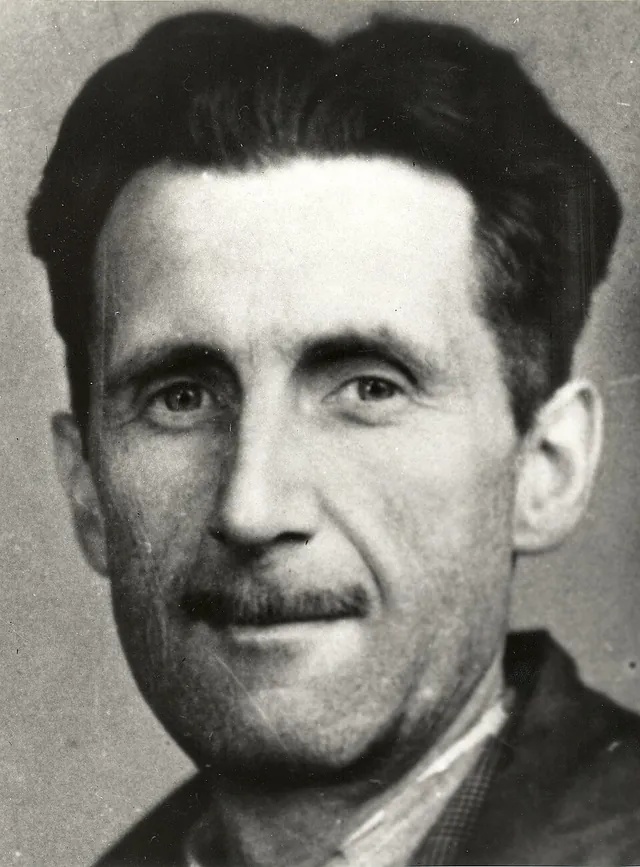
Orwell’s page is a milder version of the Darwin pattern elsewhere on this site: a real, competitively earned academic credential, followed by the subject’s own account of not building on it, followed decades later by a literary achievement large enough that aggregator sites read a much higher number backward into the earlier record.
“Orwellian” is one of the few adjectives in English derived from a twentieth-century writer’s name, a genuinely unusual and checkable measure of cultural reach. It says something about the influence of Nineteen Eighty-Four and Animal Farm. It says nothing about a number nobody measured while Orwell was alive.
How we read a number →Institutional record of competitive scholarship entry.
Orwell’s own account of his schooling and academic effort, referenced for St Cyprian’s and by extension his account of Eton.
Standard biographical source on Orwell’s time at Eton and his decision not to attend university.
Orwell died in 1950; no test score exists in the biographical record.
The sources behind our estimate
The figures that circulate for George Orwell, what we were able to confirm, and where the two diverge.
Figures around 170 appear on “smartest writers” and “historical geniuses” listicles, generally justified by Nineteen Eighty-Four’s cultural reach rather than by any documented record.
The Eton King’s Scholarship is genuinely competitive and genuinely documented — decided by national examination, not legacy admission. What gets left out of most “genius” framings is that Orwell described himself, in essays including “Such, Such Were the Joys,” as having done little serious academic work once he was there, and he never attended university at all, joining the Indian Imperial Police instead. The 170 figure appears to read Nineteen Eighty-Four’s influence backward into a specific number the record does not itself supply.
The lower two numbers track the documented scholarship record and Orwell’s own account of his schooling. The 170 is closer to where this site places Voltaire or Shakespeare — writers with a different kind of documented record behind them.
Want a number that does hold up? Every figure on this page is somebody’s claim. Take the 30-question test and get a percentile you can check rather than a figure you have to trust.
George Orwell — frequently asked
What was George Orwell’s IQ?
No test result exists — Orwell died in 1950, before IQ testing was in general use for adults of his generation. A figure around 170 circulates on “smartest writers” lists, but his own competitively won Eton scholarship supports a more moderate estimate of roughly 135–150.
Did George Orwell go to university?
No. He left Eton in 1921 and joined the Indian Imperial Police in Burma rather than attending university.
Was George Orwell a good student at Eton?
By his own account and his biographers’, he did little serious academic work once he arrived, despite having won the scholarship that got him admitted.
What did George Orwell do in Burma?
He served five years as an officer in the Indian Imperial Police, from 1922 to 1927, an experience that shaped Burmese Days and the essay “Shooting an Elephant.”
Why is George Orwell considered a genius by some rankings?
Largely because of the cultural reach of Nineteen Eighty-Four and Animal Farm — “Orwellian” is one of relatively few adjectives in English derived from a twentieth-century writer’s name.
How does Orwell’s case compare to other writers on this site?
Similar to Charles Darwin in the historical category: a real, competitively earned early credential, followed by the subject’s own account of coasting on it, overshadowed decades later by an achievement large enough that aggregator sites read a higher number backward into the record.
How does my IQ compare with George Orwell?
You can find out in about fifteen minutes. The IQ Metrics assessment is 30 questions, scored on the same 100-mean scale used throughout this page, so your result and the estimate above are at least expressed in the same units — one measured, one inferred. Once you have a number, the leaderboard shows where it would sit, and how we score and norm it explains the benchmarking.
Where does this estimate come from?
From the documented record rather than a test — the method is named above and set out in full under how we read a number. Compare it against the other writers profiles, starting with Voltaire.
- Take the 30-question IQ test — get a measured score and percentile of your own
- Average IQ by country — how the scale behaves across populations
- How IQ Metrics scores its assessment — the method behind our own number
- More on how IQ testing works — reliability, error and what a score can and cannot say
- More writers profiles — same field, same method
More writers
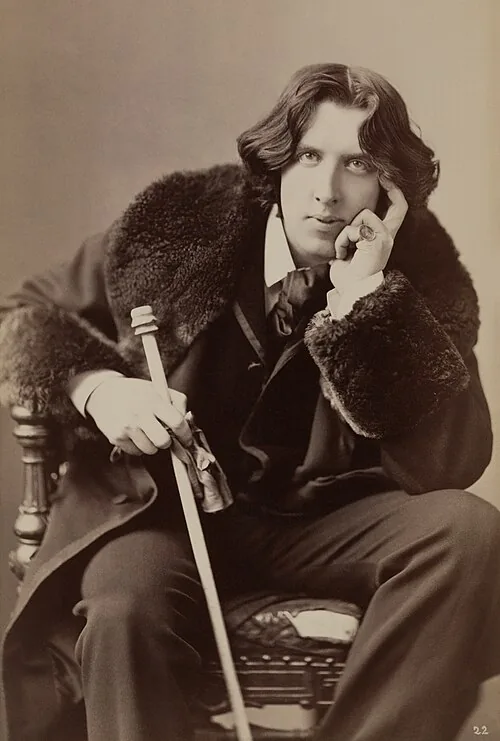
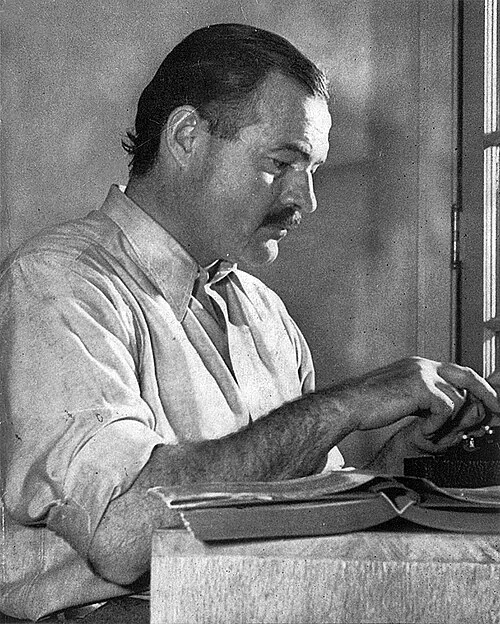
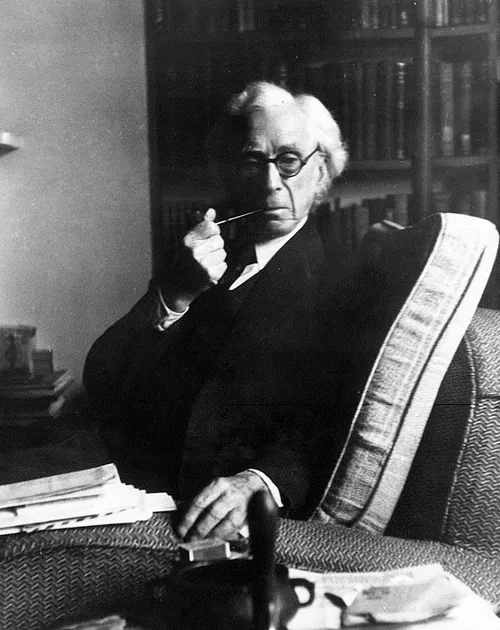
Photograph by Napoleon Sarony (1882), Library of Congress, public domain. · Photograph by Lloyd Arnold, public domain. Background removed for the portrait above. · Photograph, 1954, via Wikimedia Commons, public domain.

An estimate is an inference.
Yours can be measured.
Thirty questions, scored against general-population benchmarks. Your score, your percentile, your ability breakdown and a printable IIF certificate.
Find your IQ score now! →