



What was Oscar Wilde’s IQ?
Even the anecdotes are embellished.
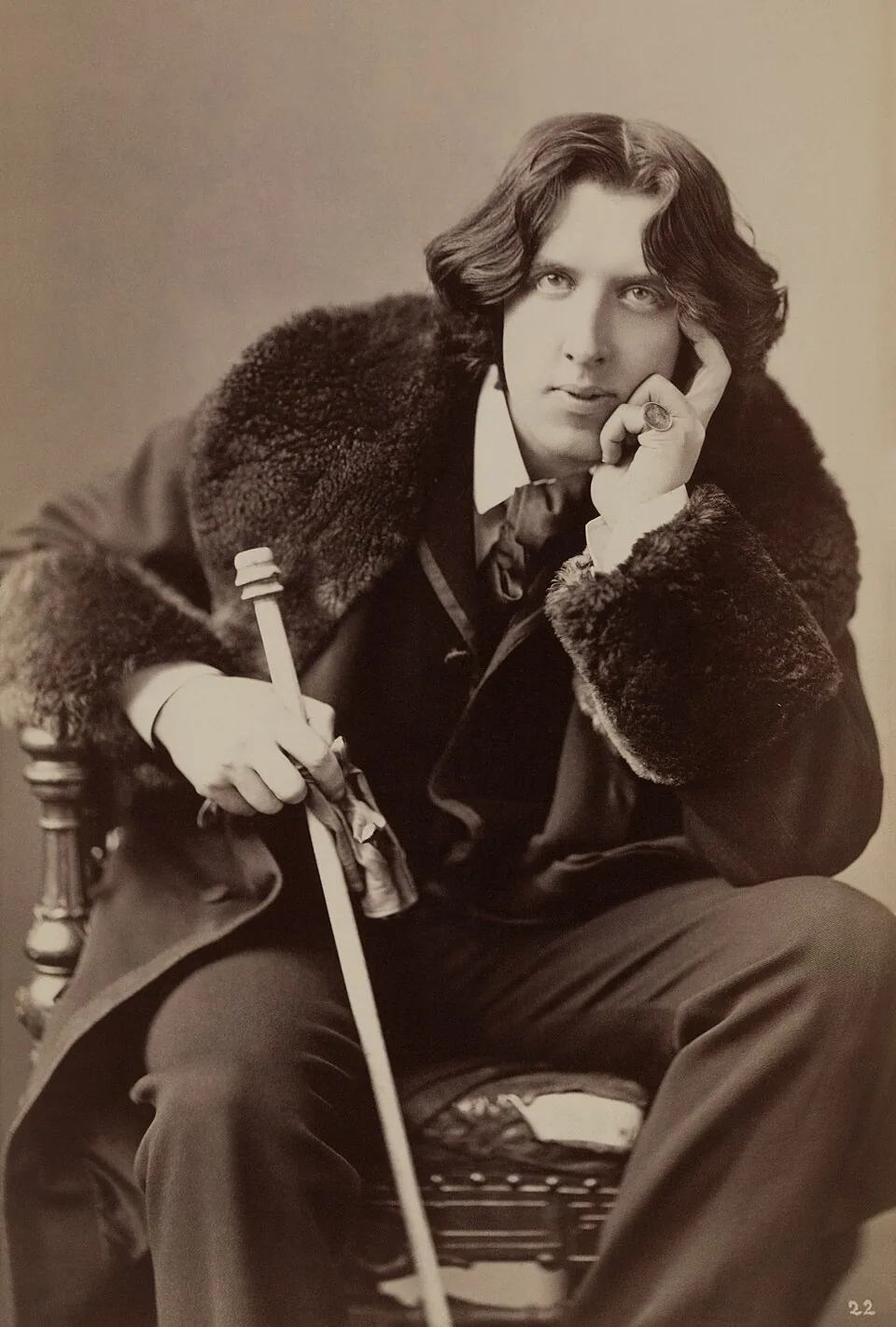
No IQ figure circulates for Wilde. What circulates instead is a famous anecdote that is almost certainly not genuine — the same pattern of embellishment this site tracks in numbers, showing up here in a quote instead.
Oscar Wilde’s estimated IQ
- Berkeley Gold Medal, Trinity College Dublin’s top prize for Greek, 1874, after winning the college’s Foundation Scholarship in his first year.
- A “double first” at Magdalen College, Oxford — First Class honours in both stages of the Classics course, Moderations (1876) and Greats (1878).
- The Newdigate Prize for poetry in 1878, and a body of work — The Picture of Dorian Gray, The Importance of Being Earnest — that remains widely read and performed.
Classical scholarship prizes measure a specific, narrow kind of ability under nineteenth-century Oxford conditions. They are real, dated, checkable achievements, not a general intelligence test, and the range reflects the strength of that record rather than a score.
- Born
- 16 October 1854, Dublin
- Died
- 30 November 1900, Paris
- Field
- Literature
- Education
- Trinity College Dublin; Magdalen College, Oxford (double first, 1876–1878)
- Known for
- The Picture of Dorian Gray, The Importance of Being Earnest
- Canonical IQ
- No figure circulates
What an IQ of 140–155 actually means
Set the claim aside for a moment. If someone genuinely scored in this range, here is what that would represent.
Average is 100 by construction, and about two-thirds of people fall between 85 and 115. Take the test to place your own score on this scale.
| Score range | Classification | Share of people | What it indicates |
|---|---|---|---|
| 85 – 114 | Average | ~68% | The range most people fall into. |
| 115 – 129 | Above average | ~13.6% | Roughly one person in seven. |
| 130 – 144 | Gifted | ~2% | The threshold most high-IQ societies use. |
| Above 144 | Highly gifted | ~0.1% | Figures above this range are extrapolated from the curve rather than measured. |
Percentages are approximate and describe a normal distribution. The same number means different things on tests with different standard deviations.
Thirty questions gives you a measured position on this exact scale — your score, your percentile and the ability breakdown behind it.
Find out in 30 minutes →Who Oscar Wilde was
Oscar Wilde was born in Dublin in 1854 and educated at Portora Royal School before entering Trinity College Dublin in 1871 on a scholarship. He won the college’s Foundation Scholarship in his first year and the Berkeley Gold Medal for Greek in 1874, then took up a further scholarship to Magdalen College, Oxford.
At Oxford he earned First Class honours in both stages of the Classics course — Moderations in 1876 and Greats in 1878, a “double first” — and won the Newdigate Prize for his poem “Ravenna.” He went on to write The Picture of Dorian Gray (1890) and The Importance of Being Earnest, which premiered in London in February 1895.
Weeks after that premiere, a libel suit he brought against the Marquess of Queensberry collapsed, leading to his own prosecution and conviction for gross indecency in May 1895, and two years’ hard labour. He was released in 1897 and died in Paris in 1900.
 By Elora Mercer, Celebrity Research WriterFigures checked by Leon Falkner, Data & Research Analyst
Reviewed by Aarav Vardhan, Editor-in-Chief · Last reviewed August 2026
Oscar Wilde: the documented record
The estimate above rests on this record. Every entry here is a matter of public fact, which is more than can be said for the number itself.
- 1864Enters Portora Royal School, Enniskillen.
- 1871Enters Trinity College Dublin on scholarship.
- 1874Wins the Berkeley Gold Medal for Greek; wins a scholarship to Magdalen College, Oxford.
- 1876First Class honours in Classical Moderations.
- 1878Wins the Newdigate Prize; First Class honours in Greats — a “double first.”
- 1884Marries Constance Lloyd.
- 1890The Picture of Dorian Gray published.
- 1895The Importance of Being Earnest premieres; convicted of gross indecency in May.
- 1900Dies in Paris.
Where the 140–155 figure came from
Following a claim back to its first appearance is the part almost nobody does — and it is what most people are actually asking.
Wilde has no IQ figure attached to him online, which sets him apart from most of this site. What he has instead is a single, wildly overrepeated anecdote standing in for the same phenomenon.
The customs-house line — “I have nothing to declare except my genius,” allegedly said on arriving in New York in January 1882 — has no contemporaneous source. Careful citation-tracing finds its first appearance in print in 1910, twenty-eight years after the supposed event and a decade after Wilde’s death, in a compiled Wilde calendar. No 1882 newspaper account records it. It was most likely supplied later by his literary executor as a witticism Wilde might plausibly have made, not one that was documented at the time.
A better-sourced Wilde quote exists, if a less quotable one: his sworn 1895 courtroom testimony describing “the love that dare not speak its name” as “such a great affection of an elder for a younger man as there was between David and Jonathan… It is beautiful, it is fine, it is the noblest form of affection,” preserved in trial transcript material. It drew applause in the courtroom and is on the historical record in a way the customs line is not. Compare Mark Twain, another figure here whose reputation for wit has attracted more misattributed quotations than verified ones.
How we read a number →Confirm the Berkeley Gold Medal (1874), Foundation Scholarship, and First Class results in Moderations (1876) and Greats (1878).
Citation-tracing investigation; earliest print source located is 1910, with no contemporaneous 1882 account found.
Source of his sworn courtroom testimony on “the love that dare not speak its name.”
Searched directly; unlike most entries on this site, no number of any kind is attached to Wilde online.
Oscar Wilde — frequently asked
What was Oscar Wilde’s IQ?
No figure circulates for him at all. His documented record is a “double first” at Oxford and the Berkeley Gold Medal for Greek at Trinity College Dublin.
Did Oscar Wilde really say “I have nothing to declare except my genius”?
Almost certainly not as usually told. The line’s earliest print appearance is 1910, twenty-eight years after the alleged 1882 event, with no contemporaneous newspaper account.
What does “double first” mean for Wilde’s Oxford degree?
Oxford’s classics course had two staged examinations, Moderations and Greats. Wilde earned First Class honours in both — in 1876 and 1878 — hence “double first.”
What did Oscar Wilde win at Trinity College Dublin?
The Foundation Scholarship in his first year and the Berkeley Gold Medal, the college’s top prize for Greek, in 1874.
Is there a well-documented Oscar Wilde quote?
Yes — his sworn 1895 courtroom testimony describing “the love that dare not speak its name,” preserved in trial transcripts, is on firmer historical ground than most of his popularly quoted lines.
How does Wilde compare to other writers on this site?
Closest to Mark Twain — both built reputations for wit that later attracted more misattributed or embellished quotations than verified ones.
How does my IQ compare with Oscar Wilde?
You can find out in about fifteen minutes. The IQ Metrics assessment is 30 questions, scored on the same 100-mean scale used throughout this page, so your result and the estimate above are at least expressed in the same units — one measured, one inferred. Once you have a number, the leaderboard shows where it would sit, and how we score and norm it explains the benchmarking.
Where does this estimate come from?
From the documented record rather than a test — the method is named above and set out in full under how we read a number. Compare it against the other writers profiles, starting with Voltaire.
- Take the 30-question IQ test — get a measured score and percentile of your own
- Average IQ by country — how the scale behaves across populations
- How IQ Metrics scores its assessment — the method behind our own number
- More on how IQ testing works — reliability, error and what a score can and cannot say
- More writers profiles — same field, same method
More writers

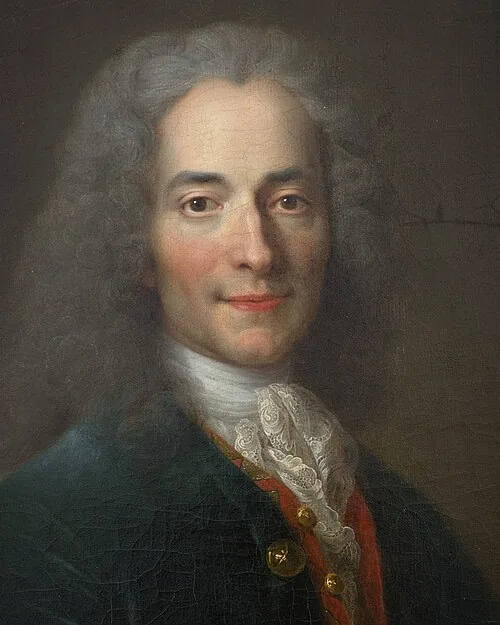
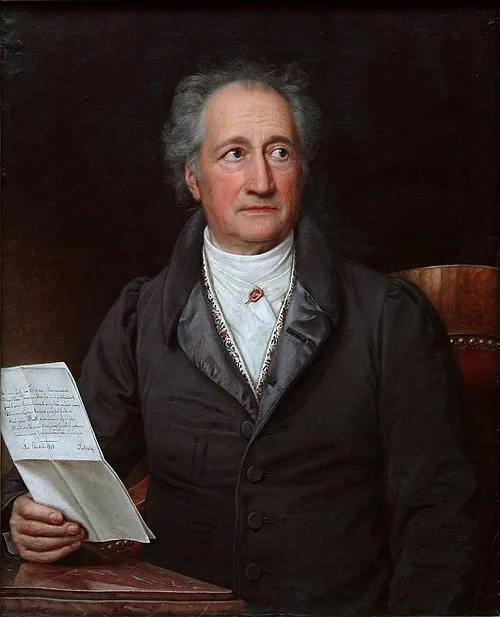
Photograph by Kevin Payravi (Toronto International Film Festival, September 6, 2024), CC BY-SA 4.0. Cropped and with background removed for the portrait above. · Portrait from the workshop of Nicolas de Largillière, public domain. · Portrait by Joseph Karl Stieler (1828), public domain. Background removed for the portrait above.
.jpg)
_-002.jpg)
.jpg)
An estimate is an inference.
Yours can be measured.
Thirty questions, scored against general-population benchmarks. Your score, your percentile, your ability breakdown and a printable IIF certificate.
Find your IQ score now! →