



What was Cleopatra’s IQ?
Plutarch names seven peoples she answered without an interpreter, never a total of nine languages.
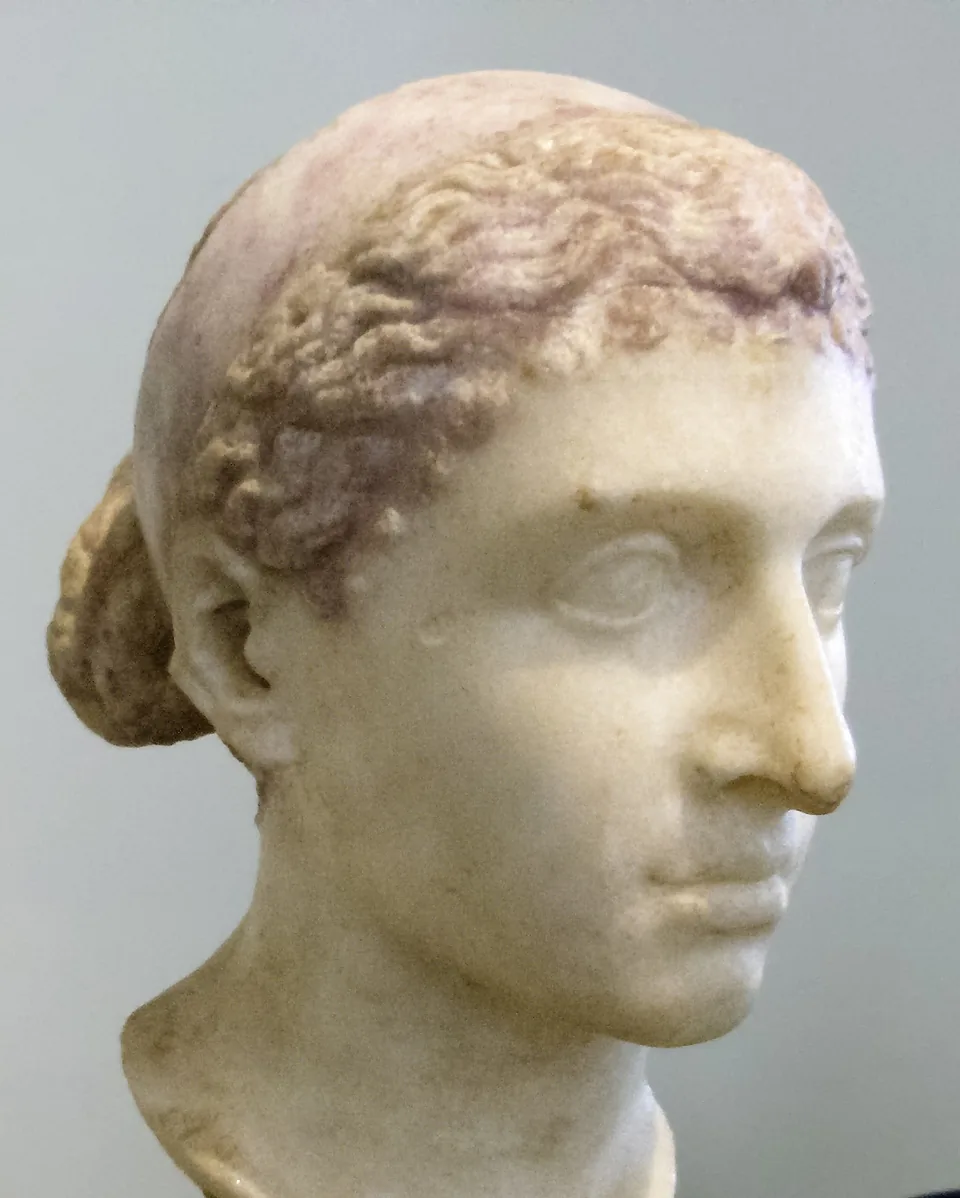
No IQ test result exists for Cleopatra VII, who died in 30 BCE, some 1,900 years before the Binet–Simon test of 1905, and the Cleopatra IQ of about 180 that circulates comes from an online list that names no test. What is documented is two decades on the Ptolemaic throne (51–30 BCE), coins in her own name and ancient reports of her cleverness. This page’s estimated IQ for Cleopatra, from that record, is 130–150.
Cleopatra’s estimated IQ
- Two decades on the Ptolemaic throne, 51 to 30 BCE: co-ruler with her brother Ptolemy XIII from the start, she outlasted a civil war with him and won the backing of Julius Caesar in 48 BCE and then of Mark Antony, who came to rely on her for funds and military aid (World History Encyclopedia, Wikipedia).
- Plutarch (Life of Antony 27) says she very seldom needed an interpreter with foreigners, answering seven named peoples herself and knowing the speech of many others; he wrote over a century later, and modern scholars doubt the list (Strootman, 2024).
- Two ancient judgments of her mind, both in Plutarch: in 41 BCE Antony’s envoy Dellius noticed her “subtlety and cleverness in conversation” (Antony 25), and in 32 BCE Canidius, whom she had bribed according to Plutarch, argued she was not “inferior in intelligence to anyone of the princes” on the expedition (Antony 56).
- Coins in her name survive from every regnal year (Wikipedia); a silver tetradrachm of 37–33 BCE in the Art Institute of Chicago carries her Greek title Thea Neotera, “younger goddess”.
- An ordinance received on February 23, 33 BCE (Papyrus Bingen 45, Berlin) ends with the Greek word ginesthoi, “so be it”, which some papyrologists read as her own hand and others dispute.
Nearly every ancient account of her comes from writers under Roman rule, most of them hostile and writing long after her death, so this estimated IQ range is a modern judgment of a thin record, not a recovered score. It sits five points under Julius Caesar’s and Alexander the Great’s 135–155 at both ends because no book of hers survives and some scholars read Plutarch’s language list as court ceremony, not proof of ability.
- Born
- c. 69 BCE, Alexandria (Wikipedia gives 70 or 69 BCE; Big Think 68 BCE)
- Died
- August 10 or 12, 30 BCE, Alexandria
- Reign
- 51–30 BCE; co-rulers Ptolemy XIII, then Ptolemy XIV and, from 44 BCE, her son Ptolemy XV Caesarion
- Titles
- Thea Philopator (“goddess who loves her father”); Thea Neotera (“younger goddess”) on coins; Queen of Kings from 34 BCE
- Languages (Plutarch)
- Seven peoples named, plus “many other peoples”; no total given
- Own words
- No book of hers survives; Papyrus Bingen 45 (33 BCE) ends with one word, ginesthoi, possibly her hand (disputed)
- Cattell 1903 rank
- 725th of the 1,000 most eminent; one of 32 women on the list
- Cox 1926 status
- Not a subject: Cox covers people who lived 1450–1850 and omitted the hereditary nobility
What an IQ of 130–150 actually means
Set the claim aside for a moment. If someone genuinely scored in this range, here is what that would represent.
Average is 100 by construction, and about two-thirds of people fall between 85 and 115. Take the test to place your own score on this scale.
| Score range | Classification | Share of people | What it indicates |
|---|---|---|---|
| 85 – 114 | Average | ~68% | The range most people fall into. |
| 115 – 129 | Above average | ~13.6% | Roughly one person in seven. |
| 130 – 144 | Gifted | ~2% | The threshold most high-IQ societies use. |
| Above 144 | Highly gifted | ~0.1% | Figures above this range are extrapolated from the curve rather than measured. |
Percentages are approximate and describe a normal distribution. The same number means different things on tests with different standard deviations.
Thirty questions gives you a measured position on this exact scale — your score, your percentile and the ability breakdown behind it.
Find out in 30 minutes →Who Cleopatra is
Cleopatra VII Philopator was queen of the Ptolemaic Kingdom of Egypt from 51 to 30 BCE. She was born in Alexandria around 69 BCE (Wikipedia gives 70 or 69, Big Think 68); the will of her father, Ptolemy XII Auletes, named her and her brother Ptolemy XIII joint heirs. An inscription at the Temple of Hathor at Dendera records her as regent beside him from May 31, 52 BCE, and her first recorded act as queen, on March 22, 51 BCE, was to begin a voyage to Hermonthis to install a new sacred Buchis bull. Wikipedia’s account of her early life says little is known of it, and Plutarch’s Life of Antony names tutors for her children but none for her.
Alexandria, founded by Alexander the Great, was the capital she ruled from, and its learning is often credited for her mind. The Mouseion, the research institution that included the Library of Alexandria, took shape under the first Ptolemies, and its best-known scholars worked there in the third and second centuries BCE, among them Eratosthenes, who calculated the Earth’s circumference. Archimedes addressed his Method of Mechanical Theorems to Eratosthenes in Alexandria, and the word mouseion came to describe sites of learning such as Plato’s Academy and Aristotle’s Lyceum. By Cleopatra’s day that peak was past: intellectuals were purged from the city in 145 BCE, later Ptolemies gave the Library less attention, and Wikipedia says how much of it Julius Caesar’s fire of 48 BCE destroyed is unclear. Strabo, writing within a generation of her death, still describes the Museum as part of the royal palaces, with a public walk, a seated exedra and a large mess-hall for its men of learning (Geography 17.1.8). Wikipedia says she “presumably” studied there; none of the sources opened for this page documents it.
Her dealings with Rome were political. In 48 BCE Julius Caesar reached Alexandria in pursuit of Pompey, who had died in Egypt before he arrived; a siege of the palace followed and lasted into 47 BCE, Ptolemy XIII died in the Battle of the Nile, and Caesar declared Cleopatra and her brother Ptolemy XIV joint rulers. She visited Rome in late 46 BCE and again in 44 BCE, and after Caesar’s death on March 15, 44 BCE she named her son Caesarion co-ruler as Ptolemy XV. In 41 BCE Mark Antony summoned her to Tarsus. The Art Institute of Chicago says she hoped, by allying first with Caesar and then with Antony, to protect Egypt’s independence and her own authority. At the Donations of Alexandria in 34 BCE she took the title Queen of Kings and Caesarion became King of Kings.
Her coinage survives from every regnal year, 51 to 30 BCE. A silver tetradrachm in the Art Institute of Chicago, struck in 37–33 BCE and possibly at Antioch, bears the Greek legend Queen Cleopatra, Thea Neotera (“younger goddess”), on one side and Antony’s name and titles on the other. Papyrus Bingen 45, now in Berlin, is an ordinance received on February 23, 33 BCE that exempts a Roman from taxes on 10,000 artabas of wheat exported and 5,000 amphorae of wine imported each year; it ends with the single word ginesthoi, “so be it”, which Peter van Minnen and others read as the queen’s own hand and which Antonia Sarri and others doubt. Octavian’s forces entered Alexandria on August 1, 30 BCE, and Cleopatra died there on August 10 or 12, 30 BCE; Egypt then became a Roman province. For another ruling queen whose own letters and speeches survive, see Elizabeth I; for what a high estimate means in practice, see what a genius IQ level means.
 By Elora Mercer, Celebrity Research WriterFigures checked by Leon Falkner, Data & Research Analyst
Reviewed by Aarav Vardhan, Editor-in-Chief · Last reviewed August 2026

Cleopatra: the documented record
The estimate above rests on this record. Every entry here is a matter of public fact, which is more than can be said for the number itself.
- c. 69 BCEBorn in Alexandria (Wikipedia gives 70 or 69 BCE, Big Think 68).
- 52 BCEAn inscription at the Temple of Hathor at Dendera records her as regent beside her father from May 31.
- 51 BCEBecomes queen of Egypt on her father’s death, ruling with her brother Ptolemy XIII; a falling-out leads to civil war.
- 48–47 BCEJulius Caesar reaches Alexandria; the palace is besieged into 47; Ptolemy XIII dies and Caesar names Cleopatra and Ptolemy XIV joint rulers.
- 46–44 BCEVisits Rome in late 46 and in 44 BCE; after Caesar’s death on March 15, 44 BCE, names her son Caesarion co-ruler as Ptolemy XV.
- 41 BCEAntony summons her to Tarsus; the alliance that follows is political and financial.
- 37–33 BCESilver tetradrachm struck with her Greek title Thea Neotera, “younger goddess”, now in the Art Institute of Chicago.
- 34 BCEThe Donations of Alexandria: she takes the title Queen of Kings and Caesarion becomes King of Kings.
- 33 BCEPapyrus Bingen 45, an ordinance received on February 23, ends with ginesthoi, “so be it”, possibly in her own hand.
- 30 BCEOctavian’s forces enter Alexandria on August 1; Cleopatra dies there on August 10 or 12, and Egypt becomes a Roman province.
Where the 180 figure came from
Following a claim back to its first appearance is the part almost nobody does — and it is what most people are actually asking.
The Cleopatra IQ figure that circulates, about 180, traces to the one page opened for this profile that states it, Big Think’s “24 of the smartest people who ever lived” by Paul Ratner (published September 18, 2016, updated April 19, 2022), and that page names no test. Entry 20 says she was fluent in five languages and puts her IQ at around 180. The list’s introduction admits that intelligence can be measured in several ways and says only that later studies have estimated the IQs of geniuses of the past; it names no study, test, rater or date for her. Geniuses.club’s Cleopatra profile shows no IQ score. No test could stand behind any of it: Binet and Simon published the first practical intelligence test in 1905 (see the history of intelligence testing). For how figures like this get made and repeated, see where celebrity IQ numbers come from.
How many languages did Cleopatra speak? Plutarch never gives a number. In Life of Antony 27 he says she could turn her tongue to whatever language she pleased and that with foreigners she “very seldom had need of an interpreter”, then names the Ethiopians, Troglodytes, Hebrews, Arabians, Syrians, Medes and Parthians, adds that she is said to have known the speech of many other peoples, and notes that the kings of Egypt before her had not even made an effort to learn the native language. Adding Greek and Egyptian to his seven peoples makes nine, but Plutarch never adds it up, and the tallies online disagree: Big Think says five, and a San Francisco Opera article says nine “according to Plutarch” while listing Latin and Persian, neither of which is in his sentence. Rolf Strootman of Utrecht University, in ASOR’s The Ancient Near East Today (February 2024), reports that modern scholarship treats the list with skepticism and reads it as an outline of the lands the Ptolemies claimed, spoken in a public court ritual; Latin-speaking Romans are missing from it, and Greek was the diplomatic language. Whether many languages signal a high IQ is a separate question, covered in our article on the bilingual advantage and IQ.
Is Cleopatra smart by the evidence that survives? The writers who say so are Roman, or lived under Rome, and most are hostile. Plutarch’s Life of Antony, the fullest account, was written more than a century after her death; Cassius Dio’s Roman History dates from the early third century CE; Josephus leans on Herod’s memoirs; and Cicero, who knew her, left an unflattering portrait. Wikipedia counts almost 50 ancient works that mention her, often terse and shaped by the propaganda of Octavian’s side, and Plutarch himself says most of the charges Octavian’s companion Calvisius brought against Antony, among them a gift to her of the libraries of Pergamum, “were thought to be falsehoods” (Antony 58–59). He also cites first-hand informants such as Philotas of Amphissa, a physician studying in Alexandria at the time, so his account is not pure propaganda. What survives from her own side is thin: coins, a few papyri and temple reliefs, while the medical and cosmetic fragments once credited to “Cleopatra” are probably by a physician of the same name.
Catharine Cox’s 1926 study cannot supply a number for her. The Early Mental Traits of Three Hundred Geniuses rates 301 people who lived between 1450 and 1850 (p. 4), and Cox left out the hereditary aristocracy and the nobility as well as eminent men born before 1450 (pp. 31–32), so a Ptolemaic queen born around 69 BCE falls outside on two counts; the only appearance of the name in the book’s full text is the title of a tragedy, Cleopatra, by the dramatist Vittorio Alfieri. Cox drew her subjects from J. McKeen Cattell’s 1903 list of the thousand most eminent men, which includes 32 women and prints the names in order of eminence in groups of one hundred. Counting from the top, Cleopatra is 725th, against eighth for Julius Caesar and 17th for Alexander the Great; that ranks the space reference books gave each name around 1900, not ability. A figure of 180 lies more than five standard deviations above the mean of 100, territory this site’s IQ ceiling effect page treats as beyond what any existing test can support.
How we read a number →Checked directly: intelligence testing dates from the 1905 Binet–Simon scale, some 1,900 years after she died in 30 BCE. The one page found that states a figure (Big Think) cites no test, and none of the other sources below gives an IQ.
Source of the circulating figure. Entry 20, headed “Cleopatra (68-30 B.C.)”, says she ruled almost thirty years, was fluent in five languages and had an IQ of around 180. The introduction says later studies estimated the IQs of past geniuses and names none; no test, rater or method is given.
The profile shows no IQ score, and the biography post states no IQ. The opera article says she spoke nine languages according to Plutarch, including Latin and Persian, neither of which he names.
The fullest ancient account, written more than a century after her death. Source for Dellius’s remark on her subtlety and cleverness in conversation (25), the languages passage (27), the informant Philotas of Amphissa (28), the argument that she was not inferior in intelligence to the princes on the expedition (56), Calvisius’s charges, most of which “were thought to be falsehoods” (58–59), and tutors named for her children but none for her (72, 81).
Near-contemporary, written after her death: the Museum is part of the royal palaces, with a public walk, an exedra with seats and a large mess-hall for its men of learning, whose priest was formerly appointed by the kings.
Says modern scholarship treats Plutarch’s list with skepticism and reads it as an outline of Ptolemaic claims spoken in a public court ritual; notes that Latin-speaking Romans are absent and that Greek was the diplomatic language; dates the Donations of Alexandria to 34 BCE, when she adopted the title Queen of Kings.
Cox’s 301 subjects lived between 1450 and 1850; she omitted the hereditary aristocracy and nobility and eminent men born before 1450; the name Cleopatra appears once in the book, for a tragedy by Alfieri. Cattell prints 1,000 names in order of eminence in groups of one hundred, with 32 women; counted from the top, Cleopatra is 725th, Caesar eighth, Alexander 17th.
Silver, 37–33 BCE, eastern Mediterranean (possibly Antioch); obverse legend transcribed ΒΑΣΙΛΙΣΣΑ ΚΛΕΟΠΑΤΡΑ ΘΕΑ ΝΕΩ[ΤΕΡΑ] (the English gloss “younger goddess” is ours). The museum text gives her dates as 69–30 BCE and says she hoped, by allying first with Caesar and then Antony, to maintain Egypt’s independence and her own authority.
Cross-checks for the reign, the birth year (70 or 69 BCE in Wikipedia, 69 in the encyclopedia and Wikidata), the co-rule, the survey of ancient sources, coinage, the Bingen papyrus and its disputed subscription, and the Library’s decline. Wikidata Q635 is the queen, born and died in Alexandria, not a given-name item.
The site’s ranges for Julius Caesar and Alexander the Great (135–155 each), used for the comparison above.
The sources behind our estimate
The figures that circulate for Cleopatra, what we were able to confirm, and where the two diverge.
The Cleopatra IQ figure that circulates is about 180, in Big Think’s list “24 of the smartest people who ever lived” (Paul Ratner, September 18, 2016; updated April 19, 2022), which ranks her 20th and says she was fluent in five languages. It names no test, rater or study.
There is no published IQ test result or Cleopatra IQ score, and there could not be one: she died in 30 BCE, some 1,900 years before the Binet–Simon scale appeared in 1905. Checked in October 2026: Big Think’s entry 20, headed “Cleopatra (68-30 B.C.)”, gives five languages and an IQ of around 180 (and a reign of “almost thirty years”, against the 21 from 51 to 30 BCE); the list’s introduction says only that later studies estimated the IQs of past geniuses, naming none. Geniuses.club’s Cleopatra profile shows no IQ score, and the site’s biography post states no IQ. Cox’s 1926 study of three hundred geniuses does not include her.
The one figure that circulates, 180, sits 30 points above this page’s ceiling, the usual direction of error. On the standard scale (mean 100, SD 15) it is about 5.3 standard deviations out, roughly one person in 20 million, while this page’s range runs from about one person in 44 (130) to one in 2,300 (150).
Want a number that does hold up? Every figure on this page is somebody’s claim. Take the 30-question test and get a percentile you can check rather than a figure you have to trust.
Cleopatra — frequently asked
What is Cleopatra’s IQ?
Cleopatra VII’s IQ was never measured, and could not have been: she died in 30 BCE, some 1,900 years before the Binet–Simon intelligence test of 1905. The figure that circulates, about 180, comes from one online list that names no test. This site’s estimate of her IQ level, inferred from the documented record of her reign, is 130–150.
Was Cleopatra intelligent?
Ancient writers describe her as clever and multilingual: Plutarch reports that Antony’s envoy noticed her subtlety and cleverness in conversation, and that she very seldom needed an interpreter. But those writers lived under Rome, were mostly hostile and wrote long after her death, so they show reputation, not a measured score. Calling her a genius goes beyond the evidence.
How many languages did Cleopatra speak?
Plutarch gives no number. In Life of Antony 27 he names seven peoples she usually answered without an interpreter (Ethiopians, Troglodytes, Hebrews, Arabians, Syrians, Medes and Parthians), adds that she is said to have known many other peoples’ speech, and notes that earlier Egyptian kings had not tried to learn the native language. Counts of five or nine are modern tallies; some scholars read the list as ceremony.
Where does the Cleopatra IQ estimate of 180 come from?
It appears in Big Think’s list “24 of the smartest people who ever lived” (Paul Ratner, 2016, updated 2022), which ranks her 20th, fluent in five languages, with an IQ of around 180. The entry names no test or rater, and the list says only that unnamed later studies have estimated the IQs of past geniuses.
How does Cleopatra’s estimated IQ compare with Julius Caesar’s and Alexander the Great’s?
This site estimates Cleopatra at 130–150, Julius Caesar at 135–155 and Alexander the Great at 135–155. Caesar’s surviving prose and Alexander’s teacher Aristotle give those two a firmer base, while no book by Cleopatra survives. The ranges overlap heavily, so no test could separate them, and none of these figures says one outscored another.
Did Cleopatra study at the Library of Alexandria?
It is an assumption, not a documented fact. Wikipedia says only that she “presumably” studied at the Museum, Plutarch’s Life of Antony names no teacher for her, and the Library’s best years were centuries earlier. Strabo, writing within a generation of her death, does place the Museum inside the royal palaces.
Was Cleopatra included in Catharine Cox’s 1926 study of three hundred geniuses?
No. Cox’s The Early Mental Traits of Three Hundred Geniuses rates 301 people who lived between 1450 and 1850 and omits the hereditary nobility and men born before 1450, so a Ptolemaic queen born around 69 BCE is outside it. A page citing Cox 1926 for a Cleopatra IQ cites a study that does not include her.
How does my IQ compare with Cleopatra?
You can find out in about fifteen minutes. The IQ Metrics assessment is 30 questions, scored on the same 100-mean scale used throughout this page, so your result and the estimate above are at least expressed in the same units — one measured, one inferred. Once you have a number, the leaderboard shows where it would sit, and how we score and norm it explains the benchmarking.
Where does this estimate come from?
From the documented record rather than a test — the method is named above and set out in full under how we read a number. Compare it against the other historical profiles, starting with Isaac Newton.
- Take the 30-question IQ test — get a measured score and percentile of your own
- Average IQ by country — how the scale behaves across populations
- How IQ Metrics scores its assessment — the method behind our own number
- More on how IQ testing works — reliability, error and what a score can and cannot say
- More historical profiles — same field, same method
More historical
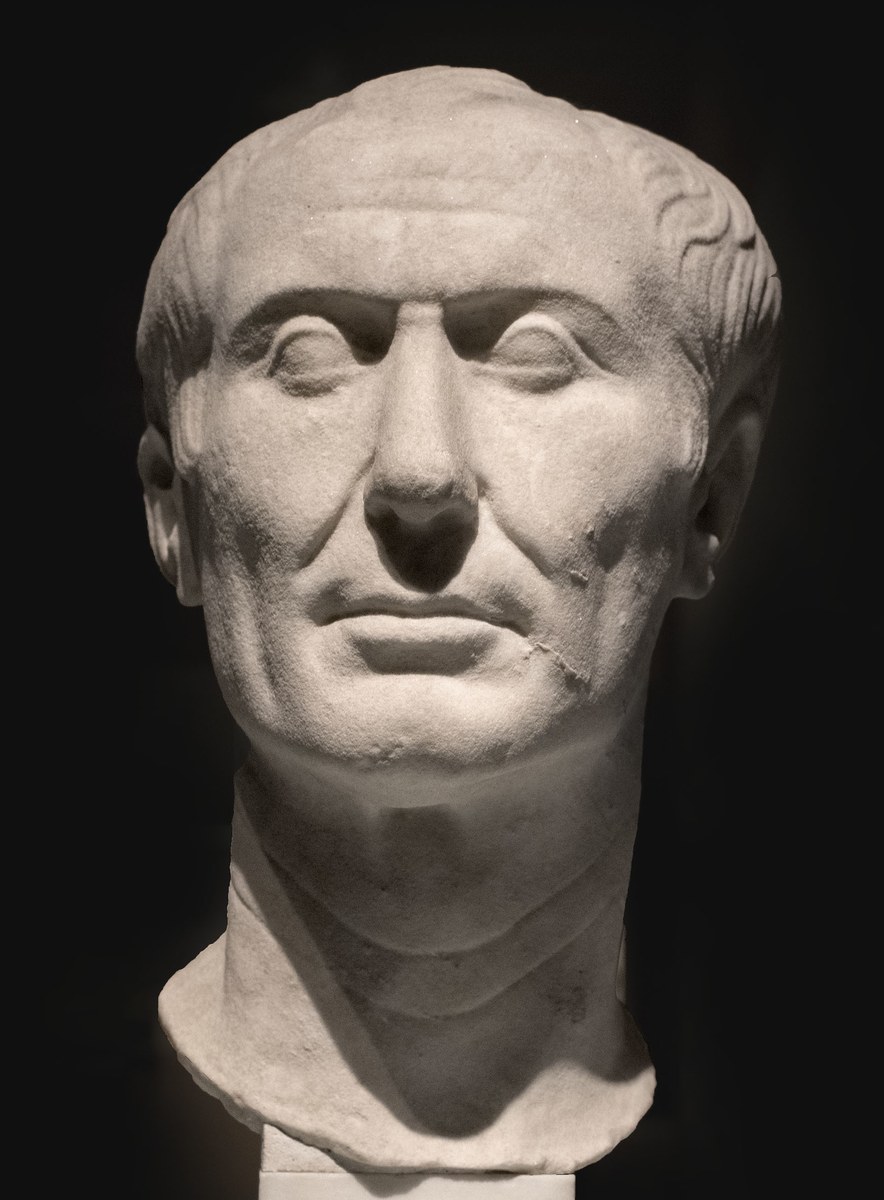
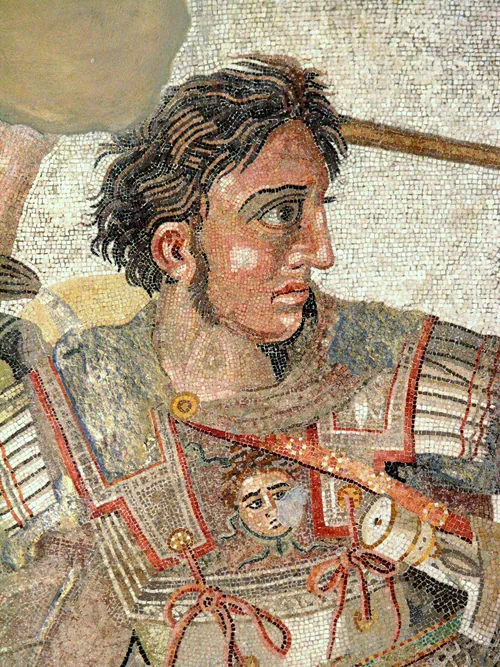

Photograph by Ángel M. Felicísimo, public domain. Background removed for the portrait above. · Detail of the Alexander Mosaic from the House of the Faun, Pompeii (c. 100 BCE; now in the National Archaeological Museum of Naples), via Wikimedia Commons, public domain. · Portrait by Domenico Fetti (circa 1620), via Wikimedia Commons, public domain.
_(cropped).jpg)
.jpg)

An estimate is an inference.
Yours can be measured.
Thirty questions, scored against general-population benchmarks. Your score, your percentile, your ability breakdown and a printable IIF certificate.
Find your IQ score now! →