



What was Queen Elizabeth I’s IQ?
Her tutor wrote in 1555 that she read Demosthenes in Greek and grasped it at first sight; the 175 online cites no test.
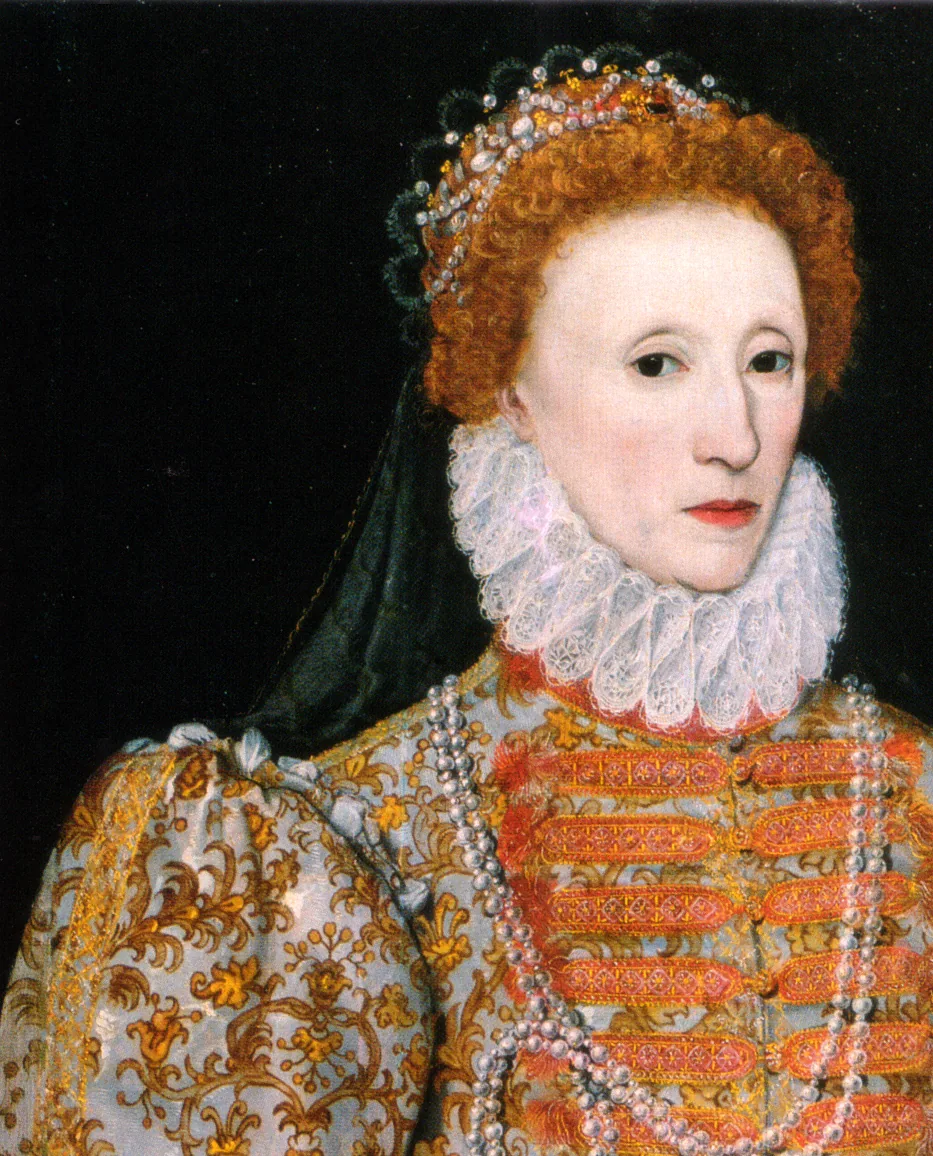
Queen Elizabeth I’s IQ was never measured: she died in 1603, about three centuries before the first intelligence test, and the 175 on geniuses.club names no test or method. The record that does exist is her tutor’s letters, translations in her own hand from age 11 and speeches across a 44-year reign, and from it this page estimates her IQ level at 140–160. She is Elizabeth I, not Elizabeth II.
Queen Elizabeth I’s estimated IQ
- Translations in her own hand from childhood: at 11, The Glass of the Sinful Soul, an English prose version of Marguerite de Navarre’s French poem, dated December 31, 1544; at 12, Katherine Parr’s Prayers or Meditations in Latin, French and Italian, dedicated to Henry VIII on December 30, 1545.
- Her teacher’s testimony: Roger Ascham wrote on September 14, 1555 that she excelled in Greek, Latin, Italian and French and that they read Aeschines and Demosthenes together in Greek; in The Scholemaster he added that she read more Greek each day than a Windsor prebendary read Latin in a week.
- Translation continued for more than fifty years: The National Archives holds her Boethius, Horace and Plutarch (SP 12/289, 1593–1598, many in her own hand), and a contemporary memorandum dates the Boethius to October 10 – November 5, 1593, when she was 60.
- Speeches from the first year of her reign to within two years of her death, including Tilbury (August 1588) and the Golden Speech (November 30, 1601), although advisers contributed to some and the exact nature of the Tilbury speech is disputed.
- J. McKeen Cattell’s 1903 list of the thousand most eminent persons puts “Elizabeth (England)” 116th, a measure of reputation (space in six biographical dictionaries), not of ability.
No test or Cox rating anchors this, so the range is a judgment from documents, not a recovered score. Ascham was her teacher and later her Latin secretary, the early manuscripts were presentation gifts (one with a dedication a tutor probably helped write), and advisers shaped some speeches, so the record shows schooling and output as much as raw ability.
- Born
- September 7, 1533, Palace of Placentia, Greenwich, England
- Died
- March 24, 1603, Richmond Palace
- Reign
- Queen of England and Ireland, November 17, 1558 – March 24, 1603; crowned January 15, 1559
- Tutors
- William Grindal (from 1544); Roger Ascham (1548–1550)
- Languages in the sources
- Greek, Latin, Italian and French (Ascham, 1555); Spanish added in The Scholemaster; the Royal Family website says five, unnamed
- Translations
- From age 11: Marguerite de Navarre (1544), Katherine Parr (1545); Boethius (1593); Plutarch and Horace (1598)
- Speeches
- Tilbury (August 1588); the Golden Speech (November 30, 1601)
- Cox 1926 and Cattell 1903
- Not among Cox’s 301 subjects; 116th on Cattell’s 1903 list of 1,000
What an IQ of 140–160 actually means
Set the claim aside for a moment. If someone genuinely scored in this range, here is what that would represent.
Average is 100 by construction, and about two-thirds of people fall between 85 and 115. Take the test to place your own score on this scale.
| Score range | Classification | Share of people | What it indicates |
|---|---|---|---|
| 85 – 114 | Average | ~68% | The range most people fall into. |
| 115 – 129 | Above average | ~13.6% | Roughly one person in seven. |
| 130 – 144 | Gifted | ~2% | The threshold most high-IQ societies use. |
| Above 144 | Highly gifted | ~0.1% | Figures above this range are extrapolated from the curve rather than measured. |
Percentages are approximate and describe a normal distribution. The same number means different things on tests with different standard deviations.
Thirty questions gives you a measured position on this exact scale — your score, your percentile and the ability breakdown behind it.
Find out in 30 minutes →Who Queen Elizabeth I was
Elizabeth I of England, not Elizabeth II, was born on September 7, 1533, at the Palace of Placentia in Greenwich. She became Queen of England and Ireland on November 17, 1558, was crowned at Westminster Abbey on January 15, 1559, and reigned until her death at Richmond Palace on March 24, 1603, a reign of more than 44 years that gave its name to the Elizabethan era, remembered for the flourishing of English drama. Queen Elizabeth II (1926–2022), who reigned from 1952, is a different person, and nothing on this page is a claim about her.
Her schooling is documented by name and date. William Grindal, a Cambridge scholar and a pupil of Roger Ascham, became her tutor in 1544; after his death in January 1548 Ascham was summoned to teach her Greek and Latin, a post he held until 1550. Two of Ascham’s own statements about her can be checked in print. In a letter to the Strasbourg schoolmaster Johann Sturm, dated Greenwich, September 14, 1555, he wrote that she excelled in Greek, Latin, Italian and French, and that when they read Aeschines and Demosthenes together in Greek she grasped them at first sight, from the idiom to the whole argument of the case. In The Scholemaster, begun in 1563 and published in 1570 after his death, he told the young gentlemen of England it was their shame “that one mayd should go beyond you all”, and added that besides her readiness in Latin, Italian, French and Spanish she read more Greek each day at Windsor than a prebendary of the church there read Latin in a week. Edward Grant’s 1576 oration on Ascham’s life lists what she read with him: almost all of Cicero, a great part of Livy, selected speeches of Isocrates, Sophocles’s tragedies, the Greek Testament and Melanchthon’s Loci communes.
Her own manuscripts survive from childhood. At Ashridge on December 31, 1544, aged 11, she dated a dedication to Queen Katherine Parr for The Glass of the Sinful Soul, an English prose translation of Marguerite de Navarre’s French poem Le Miroir de l’âme pécheresse that she also copied out and bound herself (Bodleian MS Cherry 36). A year later, aged 12, she dated a Latin dedication to Henry VIII for her translation of Parr’s Prayers or Meditations into Latin, French and Italian (British Library, Royal MS 7 D. X); the Perdita catalog notes that Grindal, newly her tutor, probably helped with that dedication. She kept translating almost throughout her reign: Seneca (c. 1567), Cicero (c. 1579) and an ode from Hercules Oetaeus (c. 1589) appear in the University of Chicago’s edition of her translations to 1589, and The National Archives holds her Boethius, Horace and Plutarch (SP 12/289, 1593–1598, many in her own hand). An anonymous contemporary memorandum in the British Library says she began the Boethius at Windsor on October 10, 1593 and finished it on November 5, and began the Plutarch treatise on November 3, 1598 and finished it on November 9. In 2019 John-Mark Philo attributed to her a translation of the first book of Tacitus’s Annals at Lambeth Palace Library, from handwriting, style and paper.
Speeches, verse and letters complete the record. Peter Beal’s introduction in the Catalogue of English Literary Manuscripts says her speeches run from the first year of her reign to within two years of her death. The best known are the address to the troops at Tilbury on August 9, 1588 (Old Style), during the Armada crisis, whose exact nature he calls controversial, and the Golden Speech of November 30, 1601, on the abuses of monopolies, which survives in many manuscript copies. He adds that advisers such as William Cecil contributed to some speeches and that about fifteen poems are attributed to her, a canon he calls uncertain; a Latin speech to Oxford University survives with her translation of Cicero’s Pro Marcello in Bodleian MS Bodl. 900. Her tomb in Westminster Abbey, put up by James I, calls her “skilled in many languages” in the Abbey’s translation of the Latin inscription. Cleopatra, profiled alongside this page, is the site’s other ruling queen.
 By Elora Mercer, Celebrity Research WriterFigures checked by Leon Falkner, Data & Research Analyst
Reviewed by Aarav Vardhan, Editor-in-Chief · Last reviewed August 2026

Queen Elizabeth I: the documented record
The estimate above rests on this record. Every entry here is a matter of public fact, which is more than can be said for the number itself.
- 1533Born on September 7 at the Palace of Placentia, Greenwich.
- 1544William Grindal becomes her tutor; on December 31, aged 11, she dates her English translation of Marguerite de Navarre’s Le Miroir de l’âme pécheresse for Katherine Parr.
- 1545On December 30, aged 12, she dates the Latin dedication to Henry VIII of her Latin, French and Italian translation of Katherine Parr’s Prayers or Meditations.
- 1548Grindal dies in January; Roger Ascham is summoned around February to teach her Greek and Latin, until 1550.
- 1555September 14: Ascham writes to Johann Sturm that she excels in Greek, Latin, Italian and French and reads Aeschines and Demosthenes with him in Greek.
- 1558November 17: becomes Queen of England and Ireland; crowned at Westminster Abbey on January 15, 1559.
- 1588August: addresses the troops at Tilbury during the Armada crisis (August 9, Old Style); historians still debate the speech’s exact nature.
- 1593Begins her translation of Boethius’s Consolation of Philosophy at Windsor on October 10 and finishes it on November 5, according to a contemporary memorandum.
- 1601November 30: delivers the Golden Speech to members of the House of Commons at Whitehall.
- 1603March 24: dies at Richmond Palace.
Where the 175 figure came from
Following a claim back to its first appearance is the part almost nobody does — and it is what most people are actually asking.
The Elizabeth I IQ figure we found online, 175, traces to a single page rather than a test. Geniuses.club’s profile “Elizabeth I IQ Estimate — Biography & Key Facts (2026)” shows an “IQ score” panel reading “≈ 175”, and its own FAQ says the site lists an estimated IQ of 175, adding that figures of this kind are “published estimates, not a measured, verified test score.” The page names no test, rater or method. The site’s separate biography post on Elizabeth I (August 2, 2026) reprints a short life summary and states no IQ at all. For how numbers like this get made and repeated, see where celebrity IQ numbers come from.
Nothing about the number can be a test result. Elizabeth I died on March 24, 1603; the first usable intelligence test, the Binet–Simon scale, appeared in 1905, a gap this site’s history of intelligence testing lays out. On the standard scale (mean 100, standard deviation 15), 175 is five standard deviations above the mean, about one person in 3.5 million, the territory this site’s IQ ceiling effect page treats as beyond what any existing test can support.
The usual route to a defensible historical estimate does not reach her. Catharine Cox’s 1926 The Early Mental Traits of Three Hundred Geniuses rated 301 people born between 1450 and 1850, a window that includes her birth year, 1533, but not her. Cox started from J. McKeen Cattell’s 1903 list of the thousand most eminent persons, worked down its first 510 names, and left out the hereditary aristocracy and the nobility, men born before 1450 and cases without enough childhood records. Her text does not say which rule, if any, applied to a queen who inherited her crown, and it has no case study or index entry for Elizabeth I. Cattell’s list, ranked by the space six biographical dictionaries gave each name, does place “Elizabeth (England)” 116th, a measure of fame rather than ability. Napoleon and Galileo, by contrast, are genuine Cox subjects with printed estimates.
What the record supports for Queen Elizabeth I’s IQ level is a range well below 175: 140–160, which spans what this site describes at an IQ of 140 and an IQ of 150. That overlaps the 135–155 this site gives Julius Caesar, another ruler whose own prose survives, and sits below the 160–180 it gives William Shakespeare, whose plays are the best-known writing of her era. The weakness is the one every historical estimate shares: an elite education supplies opportunity as well as evidence, and the main witnesses, her tutor Ascham and manuscripts made as gifts for royal readers, come from her own circle.
How we read a number →None found. She died on March 24, 1603, about three centuries before the 1905 Binet–Simon scale. Checked in October 2026: the geniuses.club pages, the full text of Cox’s 1926 study (she is not a subject) and web searches that turned up no other figure.
Source of the 175: the profile shows an “IQ score” panel reading “≈ 175”, and its FAQ calls figures of this kind “published estimates, not a measured, verified test score”. No test, rater or method is named. The biography post gives no IQ figure.
In Latin. The letter: she excels in Greek, Latin, Italian and French; he and she read Aeschines and Demosthenes in Greek, she understanding at first sight. Grant: her reading with Ascham (Cicero, Livy, Isocrates, Sophocles, the Greek Testament) and Ascham’s summons about February 1548. Both are partial witnesses.
“One mayd” who goes beyond the young gentlemen of England; “perfit readines” in Latin, Italian, French and Spanish; more Greek every day at Windsor than a prebendary reads Latin in a week. Written by her former tutor, by then also her Latin secretary.
Cherry 36: her prose translation of Marguerite de Navarre, dedicated to Katherine Parr from Ashridge on the last day of 1544; translator, scribe and binder, aged 11. Royal 7 D. X: Latin, French and Italian Parr translation, Latin dedication dated December 30, 1545; Grindal probably helped. Bodl. 900: a Latin speech to Oxford University and Pro Marcello.
“Translations of Boethius, Horace and Plutarch by Queen Elizabeth I, many in her own hand: not calendared”, dated 1593–1598.
Beal: speeches from the first year of the reign to within two years of her death; the Golden Speech (November 30, 1601); Tilbury (August 9, 1588), whose nature “remains controversial”; advisers contributed; about fifteen poems attributed; the British Library Lansdowne MS 253 memorandum (Boethius, October 10 – November 5, 1593; Plutarch, November 3–9, 1598). Chicago contents: Seneca c. 1567, Cicero c. 1579, a Hercules Oetaeus ode c. 1589.
Cox: 301 subjects, drawn from Cattell’s list by omitting the hereditary aristocracy and nobility, men born before 1450 and names beyond the 510th; searching the full text finds no case study or index entry for Elizabeth I. Cattell: names printed in order in groups of one hundred; “Elizabeth (England)” is the 16th of the second hundred, so 116th.
Abbey: born at Greenwich on September 7, 1533; crowned January 15, 1559; died at Richmond Palace on March 24, 1603; tomb inscription (Abbey’s translation) “skilled in many languages”. Royal Family site: fluent in five languages, unnamed.
Q7207 is Elizabeth I of England, not Elizabeth II (Q9682); it gives November 17, 1558 as the start of her reign. Wikipedia: Grindal tutor from 1544, Ascham 1548–1550, later Latin secretary. Reuters: Philo’s attribution of the Lambeth Tacitus.
The sources behind our estimate
The figures that circulate for Queen Elizabeth I, what we were able to confirm, and where the two diverge.
One Elizabeth I IQ figure turns up in the pages we checked: 175, on the geniuses.club profile “Elizabeth I IQ Estimate — Biography & Key Facts (2026)”.
No published IQ test result exists for Queen Elizabeth I, and none could: she died in 1603, three centuries before the Binet–Simon scale of 1905. The geniuses.club profile shows an “IQ score” panel reading “≈ 175” and, in its FAQ, says the site lists an estimated IQ of 175, adding that figures of this kind are “published estimates, not a measured, verified test score”; it names no test, rater or method. The same site’s biography post on Elizabeth I (August 2, 2026) gives no IQ figure. Checked in October 2026, we found no second page that gives her a number, and no rating for her in Catharine Cox’s 1926 study, which does not include her.
The one circulating figure sits 15 points above the top of this page’s range, the usual direction of error. On the standard scale (mean 100, SD 15), 175 is five standard deviations above the mean, about one person in 3.5 million.
Want a number that does hold up? Every figure on this page is somebody’s claim. Take the 30-question test and get a percentile you can check rather than a figure you have to trust.
Queen Elizabeth I — frequently asked
What is Queen Elizabeth I’s IQ?
Queen Elizabeth I’s IQ was never measured: she died in 1603, about three centuries before intelligence tests existed. This site’s estimate, inferred from her documented education, translations and speeches, is 140–160. The 175 on geniuses.club cites no test or method.
Where does the Elizabeth I IQ of 175 come from?
The only Elizabeth I IQ figure we found is 175, on a geniuses.club profile titled “Elizabeth I IQ Estimate”. The page names no test, rater or method, and itself calls such figures “published estimates, not a measured, verified test score.” It does not come from Catharine Cox’s 1926 study, which does not include her.
Did Queen Elizabeth I take an IQ test?
No. Intelligence testing began with the Binet–Simon scale in 1905, about three centuries after Elizabeth I died on March 24, 1603, so no IQ test result exists for her. Every number attached to her name is a retrospective estimate made by someone reading her biography.
Was Queen Elizabeth I intelligent?
The documentary record says yes. At 11 she completed an English translation of a French poem, at 12 a Latin, French and Italian translation of a devotional work, and her tutor Roger Ascham wrote in 1555 that she read Aeschines and Demosthenes in Greek and grasped them at first sight. That shows a trained, capable mind, not a score.
Was Elizabeth I smart, or just well taught?
Both, and the record cannot fully separate them. Roger Ascham was her teacher and later her Latin secretary, so his praise may be partial. But she kept translating long after her lessons ended: a contemporary memorandum says she began a Boethius translation on October 10, 1593, aged 60, and finished it on November 5. That points to ability and habit, not schooling alone.
What languages did Elizabeth I know?
Sources name different sets. Ascham’s 1555 letter says she excelled in Greek, Latin, Italian and French; his Scholemaster lists Latin, Italian, French and Spanish plus daily Greek reading. The Royal Family website says she was fluent in five languages without naming them, and her tomb inscription says “skilled in many languages.”
Is Elizabeth I in Catharine Cox’s 1926 study of 301 geniuses?
No. Cox rated 301 people born between 1450 and 1850, drawn from J. McKeen Cattell’s 1903 list of eminent persons and omitting the hereditary aristocracy and nobility. Elizabeth I, born in 1533 and 116th on Cattell’s list, has no case study or index entry, so there is no Cox-style historiometric rating for her.
How does Elizabeth I’s estimated IQ compare with William Shakespeare’s and Julius Caesar’s?
This site estimates Elizabeth I at 140–160, Julius Caesar at 135–155 and William Shakespeare at 160–180. Her range overlaps Caesar’s and sits below Shakespeare’s. All three are achievement-based estimates from surviving records and writing, not test scores, so the order is a judgment, not a measurement.
How does my IQ compare with Queen Elizabeth I?
You can find out in about fifteen minutes. The IQ Metrics assessment is 30 questions, scored on the same 100-mean scale used throughout this page, so your result and the estimate above are at least expressed in the same units — one measured, one inferred. Once you have a number, the leaderboard shows where it would sit, and how we score and norm it explains the benchmarking.
Where does this estimate come from?
From the documented record rather than a test — the method is named above and set out in full under how we read a number. Compare it against the other historical profiles, starting with Isaac Newton.
- Take the 30-question IQ test — get a measured score and percentile of your own
- Average IQ by country — how the scale behaves across populations
- How IQ Metrics scores its assessment — the method behind our own number
- More on how IQ testing works — reliability, error and what a score can and cannot say
- More historical profiles — same field, same method
More historical
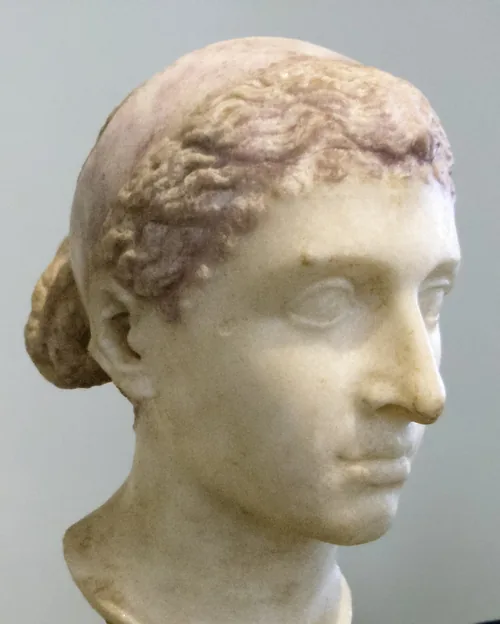
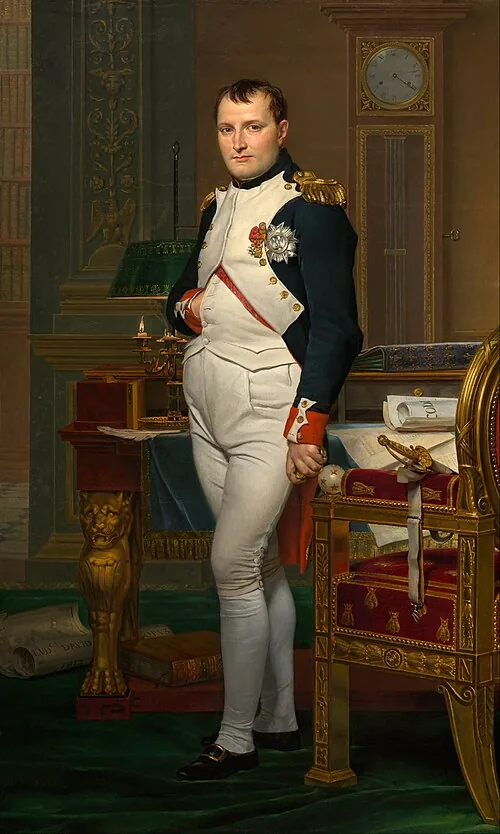
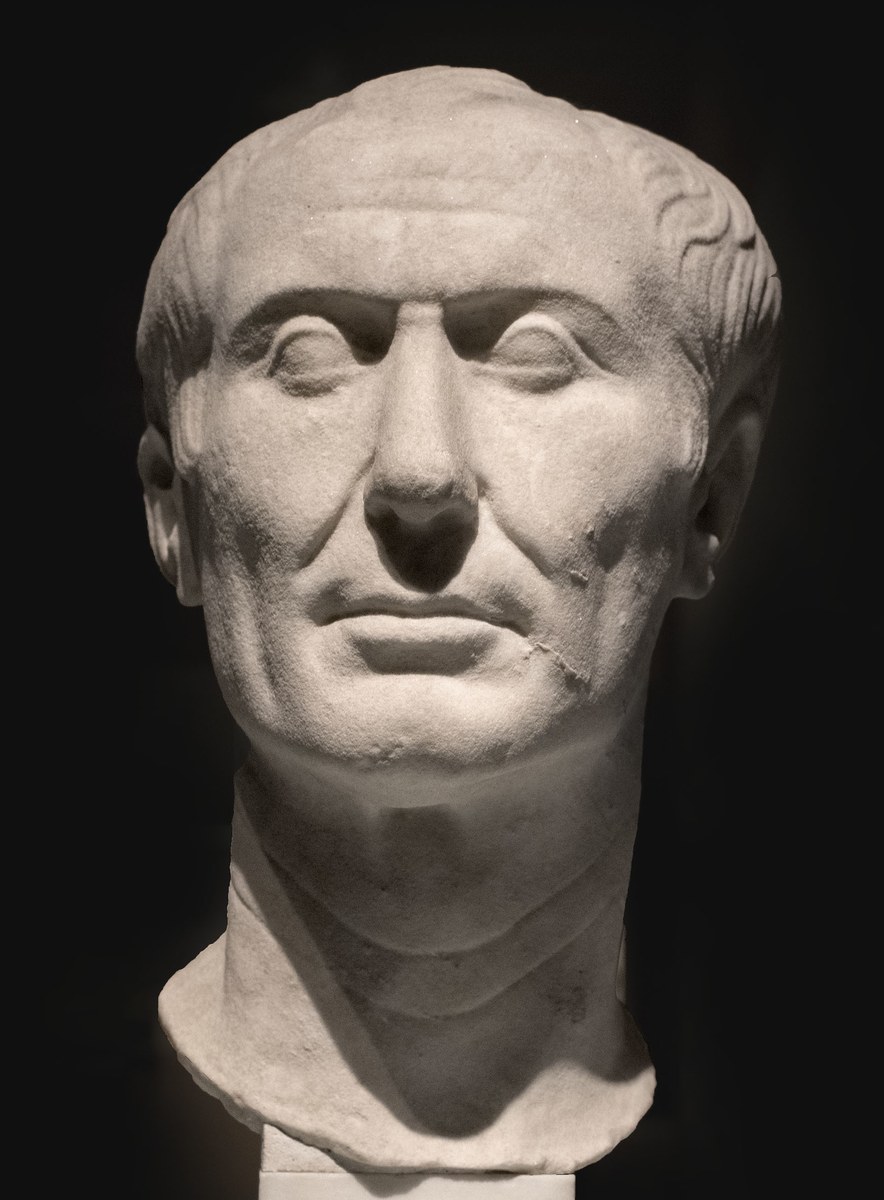
Photograph by Louis le Grand (Commons file) of an ancient Roman marble bust identified as Cleopatra VII (about 40–30 BCE; Altes Museum, Berlin), released into the public domain by the photographer, cropped. · Portrait by Jacques-Louis David (1812), via Wikimedia Commons, public domain. · Photograph by Ángel M. Felicísimo, public domain. Background removed for the portrait above.


_(cropped).jpg)
An estimate is an inference.
Yours can be measured.
Thirty questions, scored against general-population benchmarks. Your score, your percentile, your ability breakdown and a printable IIF certificate.
Find your IQ score now! →