



What is Sheldon Cooper’s IQ?
Said aloud over soup in 2008, Sheldon Cooper’s 187 is a script line that no real IQ test could score.

Sheldon Cooper’s IQ is 187 in canon: he says “I have an IQ of 187” to Penny in The Big Bang Theory, season 1, episode 11 (CBS, March 31, 2008). The show never shows a test, and on a real scale a 187 would be about 1 in 300 million. This site’s estimated IQ range for the character is 175–195.
Sheldon Cooper’s estimated IQ
- The show states the number itself: Sheldon tells Penny “I have an IQ of 187” in “The Pancake Batter Anomaly” (season 1, episode 11, March 31, 2008), and the range is built around that stated figure rather than replacing it.
- His schooling is written far ahead of age norms: he says he went to college at eleven (“The Hamburger Postulate”, season 1, episode 5), began graduate school at fourteen (“The Jerusalem Duality”, season 1, episode 12) and was graduating summa cum laude from college at fourteen (“The Pants Alternative”, season 3, episode 18).
- He claims a master’s and two PhDs in season 1 (“The Big Bran Hypothesis”) and calls himself a published theoretical physicist with two doctorates in season 2; as an adult he is a senior theoretical physicist at Caltech, according to Wikipedia’s character entry.
- In the story’s own terms he and Amy Farrah Fowler win the Nobel Prize in Physics for their super-asymmetry work: they learn of the win in “The Change Constant” and attend the ceremony in Sweden in “The Stockholm Syndrome”, both aired May 16, 2019.
- The writers also cap him: in “The Hawking Excitation” (season 5, episode 21, April 5, 2012) Stephen Hawking finds an arithmetic mistake in his paper, and in season 1 a fifteen-year-old prodigy, Dennis Kim, leaves him doubting his own work, so the range sits just under the one for Sherlock Holmes.
Fiction writes the plot, not a test: no scored result is ever shown, the 187 is a boast the writers repeat, and the same writers make him fallible when a story needs it. The range brackets the stated figure only because the work states it. It is an inference about how the writers rank the character, not a measurement, and an instrument such as the WAIS-IV, which reports up to 160, could not return it.
- Created by
- Chuck Lorre and Bill Prady, for The Big Bang Theory (CBS, 2007–2019); first appears in the pilot, September 24, 2007
- Played by
- Jim Parsons in The Big Bang Theory and as narrator of Young Sheldon (CBS, 2017–2024); Iain Armitage as the child in Young Sheldon
- Occupation in the show
- Senior theoretical physicist at the California Institute of Technology (Caltech)
- Stated IQ
- 187: “The Pancake Batter Anomaly”, season 1, episode 11 (March 31, 2008); Riot IQ reports it repeated in Young Sheldon, season 6, episode 14 (March 2, 2023)
- Schooling, as he tells it
- College at eleven, graduate school at fourteen, graduating summa cum laude at fourteen; by his own count a master’s and two PhDs
- Memory
- Says he has an eidetic memory (season 3, episodes 5 and 16)
- Nobel Prize
- Nobel Prize in Physics with Amy Farrah Fowler for super-asymmetry work: won in “The Change Constant”, ceremony in “The Stockholm Syndrome” (both May 16, 2019)
- Documented IQ test
- None shown on screen; he says in season 2 that normal tests cannot accurately measure his IQ
What an IQ of 175–195 actually means
Set the claim aside for a moment. If someone genuinely scored in this range, here is what that would represent.
Average is 100 by construction, and about two-thirds of people fall between 85 and 115. Take the test to place your own score on this scale.
| Score range | Classification | Share of people | What it indicates |
|---|---|---|---|
| 85 – 114 | Average | ~68% | The range most people fall into. |
| 115 – 129 | Above average | ~13.6% | Roughly one person in seven. |
| 130 – 144 | Gifted | ~2% | The threshold most high-IQ societies use. |
| Above 144 | Highly gifted | ~0.1% | Figures above this range are extrapolated from the curve rather than measured. |
Percentages are approximate and describe a normal distribution. The same number means different things on tests with different standard deviations.
Thirty questions gives you a measured position on this exact scale — your score, your percentile and the ability breakdown behind it.
Find out in 30 minutes →Who Sheldon Cooper is
Sheldon Cooper is the fictional theoretical physicist at the center of The Big Bang Theory, the CBS comedy created by Chuck Lorre and Bill Prady, which ran for 12 seasons and 279 episodes from September 24, 2007 to May 16, 2019. He first appears in the pilot and is played by Jim Parsons; Mayim Bialik plays Amy Farrah Fowler, his partner in the Nobel storyline. His roommate is Leonard Hofstadter (Johnny Galecki), and as an adult he is a senior theoretical physicist at the California Institute of Technology (Caltech), per Wikipedia’s character entry.
The school record is the show’s strongest evidence of ability, and it is told largely in Sheldon’s own words. He says he went to college at eleven (“The Hamburger Postulate”, October 22, 2007), began graduate school at fourteen and won a prestigious award at fourteen and a half as its youngest recipient, in an episode that also brings in Dennis Kim, a fifteen-year-old prodigy who leaves him doubting his own work (“The Jerusalem Duality”, April 14, 2008), and was graduating summa cum laude at fourteen (“The Pants Alternative”, March 22, 2010). In “The Big Bran Hypothesis” (October 1, 2007) he claims a master’s and two PhDs, and Wikipedia notes that his list of degrees grows over the run to BS, MS, MA, PhD and ScD. No episode we read gives his age at his first doctorate, so none is stated here.
Sheldon also says he has an eidetic memory: he corrects Leonard’s “photographic” in “The Creepy Candy Coating Corollary” (season 3, episode 5, October 19, 2009) with “Photographic is a misnomer. I have an eidetic memory”, and tells Penny the same in “The Excelsior Acquisition” (season 3, episode 16, March 1, 2010). It is his own claim, and whether such a memory goes with a high score is a separate question that the research on photographic memory and IQ examines. The writers also let him be wrong: in “The Hawking Excitation” (season 5, episode 21, April 5, 2012), Stephen Hawking, whom Sheldon idolizes, points out an arithmetic mistake that invalidates his Higgs boson paper, and Sheldon faints. Hawking returns as himself in several later episodes.
The Nobel storyline supplies the range’s upper end. Sheldon and Amy’s super-asymmetry theory is confirmed by two Chicago physicists in “The Confirmation Polarization” (January 17, 2019); in “The Change Constant” (season 12, episode 23) they learn they have won the Nobel Prize in Physics, and in “The Stockholm Syndrome” (episode 24) the group travels to Sweden for the ceremony, both episodes airing May 16, 2019. On this site’s fictional scale, 175–195 sits just under the 180–200 given to Sherlock Holmes and overlaps the 190–210 for Reed Richards, another fictional scientist. The show behind Rick Sanchez never states a number where Sheldon’s writers do, and Homer Simpson and Forrest Gump are two more characters whose works say an IQ aloud.
 By Elora Mercer, Celebrity Research WriterFigures checked by Leon Falkner, Data & Research Analyst
Reviewed by Aarav Vardhan, Editor-in-Chief · Last reviewed August 2026

Sheldon Cooper: the documented record
The estimate above rests on this record. Every entry here is a matter of public fact, which is more than can be said for the number itself.
- 2007The Big Bang Theory premieres on CBS on September 24; in the pilot Leonard says he and Sheldon have a combined IQ of 360.
- 2008In “The Pancake Batter Anomaly” (March 31), Sheldon tells Penny he has an IQ of 187.
- 2008In “The Jerusalem Duality” (April 14), Sheldon says he began graduate school at fourteen; fifteen-year-old prodigy Dennis Kim leaves him doubting his work.
- 2008In “The Codpiece Topology” (September 29), he says his IQ cannot be accurately measured by normal tests.
- 2009–2010Season 3: he insists his memory is eidetic, not photographic (October 19, 2009) and says he graduated summa cum laude at fourteen (March 22, 2010).
- 2012In “The Hawking Excitation” (April 5), Stephen Hawking finds an arithmetic mistake in Sheldon’s paper.
- 2017Young Sheldon premieres on CBS on September 25, with Iain Armitage as the child and Jim Parsons narrating.
- 2019On May 16 “The Change Constant” and “The Stockholm Syndrome” end the series: Sheldon and Amy win the Nobel Prize in Physics.
- 2023Riot IQ reports that Young Sheldon, season 6, episode 14 (March 2), has Sheldon repeat that his IQ is 187.
- 2024Young Sheldon ends on May 16 after seven seasons.
Where the 187 figure came from
Following a claim back to its first appearance is the part almost nobody does — and it is what most people are actually asking.
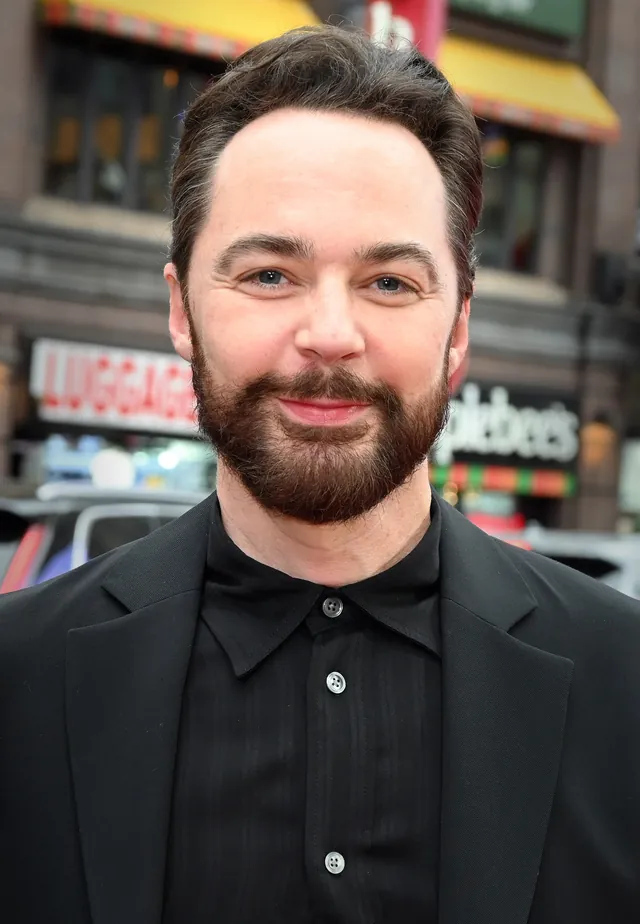
Sheldon Cooper’s IQ of 187 is a line of dialogue with a date on it. In “The Pancake Batter Anomaly”, season 1, episode 11 of The Big Bang Theory (first aired March 31, 2008), Sheldon, convinced he is ill, goes to the Cheesecake Factory where Penny works and tells her, “Penny, I have an IQ of 187”, then argues that with such an IQ he would have found a way to have soup at home if one existed; Penny answers that soup can be delivered. Wikipedia’s entry on the character cites this episode for the number, a fan transcript at bigbangtrans.wordpress.com carries the line, and Riot IQ’s article by Dr. Russell T. Warne gives the same episode while noting that the figure is sometimes credited to season 1, episode 4, “The Luminous Fish Effect”, which that article says contains no IQ line.
What is Sheldon Cooper’s IQ elsewhere in the show? The same 187 is the only individual figure the writers attach to him, and the surrounding lines dodge measurement. In “The Codpiece Topology” (season 2, episode 2, September 29, 2008) Sheldon describes himself to Leonard as a published theoretical physicist with two doctorates and an IQ that cannot be accurately measured by normal tests, a claim no test result could confirm. The other famous number is in the pilot (September 24, 2007), where Leonard, locked out of the building, says “we have a combined IQ of 360”. Subtract 187 and fans credit Leonard with 173, but as Riot IQ notes that figure is implied and never spoken on screen, and Looper’s write-up has Sheldon saying the 360 where the transcript gives the line to Leonard. All of these are script, and the actor, Jim Parsons, is not the one being rated here.
The Young Sheldon IQ is the same number. The prequel ran on CBS from September 25, 2017 to May 16, 2024, created by Chuck Lorre and Steven Molaro, with Jim Parsons narrating and Iain Armitage as the child. Riot IQ reports that in season 6, episode 14, “A Launch Party and a Whole Human Being” (March 2, 2023), Sheldon again says he has an IQ of 187, and we found no episode with a different figure or a scored test. Sheldon Cooper’s IQ as a kid is therefore the stated 187 attached to a character who, in Wikipedia’s account of the prequel, starts high school as a nine-year-old freshman at Medford High School in fall 1989 and graduates at eleven as valedictorian. Under the old ratio formula, mental age divided by chronological age times 100, a 187 at age nine would mean performing like a 16.8-year-old, and why the ratio formula was replaced by deviation scoring is the reason modern tests no longer report scores that way.
Sheldon Cooper’s IQ in real life depends on the ruler. Most modern IQ tests are scored with a mean of 100 and a standard deviation of 15, which puts 187 at 5.8 standard deviations above average, roughly 1 person in 300 million by the normal curve, the same figure Riot IQ gives. Older Stanford-Binet scoring used 16 points (the 1960 third edition, per Wikipedia), and on that scale the same 87 points above average is about 5.4 standard deviations, roughly 1 in 37 million by our arithmetic; the 15-point versus 16-point scale explains why one number can mean two rarities. Neither is a measured result: the WAIS-IV reports full-scale scores only from 40 to 160, and Wikipedia notes that reports of scores much above 160 are considered dubious. See the highest score a test can report, how rare a high IQ score is and what counts as a genius IQ level. A number for a real person has to come from a test that person sits, such as the IQ Metrics test; in the sitcom, 187 is shorthand for the smartest person in the room.
How we read a number →Source of the quoted lines: Sheldon’s “I have an IQ of 187” to Penny (episode 11), Leonard’s “combined IQ of 360” (pilot), the “IQ which can’t be accurately measured” line (S2E2), the eidetic-memory lines (S3E5, S3E16), and the college-at-eleven, graduate-school-at-fourteen and summa-cum-laude-at-14 lines. Fan-made transcripts, not re-watched; the 187 line also agrees with Wikipedia and Riot IQ.
Creators, run dates (September 24, 2007 to May 16, 2019; 12 seasons, 279 episodes), Sheldon as a senior theoretical physicist at Caltech, 187 cited to season 1, episode 11, degree list, Nobel Prize in Physics, Parsons and Bialik casting; Young Sheldon (Lorre and Molaro; September 25, 2017 to May 16, 2024; high school at nine, graduating at eleven). Wikidata Q629583 is described as the fictional character in The Big Bang Theory and Young Sheldon.
Air dates and episode numbers used on the page, including The Pancake Batter Anomaly (March 31, 2008), The Hawking Excitation (April 5, 2012), A Launch Party and a Whole Human Being (March 2, 2023) and, from season 12, the Nobel Prize in Physics for super-asymmetry work in The Change Constant and the ceremony in Sweden in The Stockholm Syndrome (both May 16, 2019).
Confirms the two-part finale, a Nobel Prize for physics for Sheldon and Amy’s super-asymmetry paper, and the ceremony in Stockholm.
Quotes the season 1, episode 11 line and the pilot’s 360, says 173 for Leonard is implied and never stated, reports the repeat in Young Sheldon season 6, episode 14, and works the scale arithmetic (5.8 standard deviations, about 1 in 300 million, WAIS-IV range 40 to 160).
Each prints 187 as Sheldon’s IQ and none gives a test. The List credits NPR. Looper credits the 360 line to Sheldon and says the sitcom later confirmed 187; the pilot transcript gives the 360 line to Leonard.
Modern scales use mean 100 and standard deviation 15; the WAIS-IV can generate a full-scale IQ from 40 to 160; reports much above 160 are considered dubious; the 1960 third-edition Stanford-Binet used a standard deviation of 16; IQ was originally mental age divided by chronological age times 100.
Both print 187 and cite no test. realiqtestonline.com names no episode and attributes the number to in-show remarks; sociosite.net credits NPR, labels the figure “not a measured test score” and estimates 187 at about once in 300 million on a modern test.
None found in the episodes read, the Wikipedia character entry or any article above. The show states a number and says normal tests cannot measure it; it never shows a result.
The sources behind our estimate
The figures that circulate for Sheldon Cooper, what we were able to confirm, and where the two diverge.
Sheldon Cooper’s IQ is 187. Wikipedia’s entry on the character, Dexerto (Jasmine Valentine, April 10, 2024), The List (Stephanie Kaloi, July 13, 2021) and Looper (Shane O’Neill, March 2, 2021) all print it, and a second number, 173, is credited to his friend Leonard Hofstadter by subtracting 187 from a combined 360.
The 187 is dialogue. Sheldon says it to Penny in season 1, episode 11 (a fan transcript at bigbangtrans.wordpress.com carries the line), and Riot IQ’s article by Dr. Russell T. Warne (August 16, 2026) quotes the same line and is the page that reports the Young Sheldon repeat, in season 6, episode 14. We found no episode that gives Sheldon a different number or shows a scored test. The List says the figure was “said to be” 187 and credits NPR. realiqtestonline.com prints 187 with no test or episode named, and sociosite.net labels it “not a measured test score”. The 173 is arithmetic: in the pilot it is Leonard, not Sheldon (as Looper writes), who says they have a combined IQ of 360, and no episode states Leonard’s own number.
Here the circulating figure and the estimate agree, because the work supplies the number and the range brackets it. What the spread cannot show is a measurement: 187 is 5.8 standard deviations above the mean of a 15-point scale and past the 160 top of the WAIS-IV’s reporting range, so it states the character’s rank within the story rather than something a real test could return.
Want a number that does hold up? Every figure on this page is somebody’s claim. Take the 30-question test and get a percentile you can check rather than a figure you have to trust.
Sheldon Cooper — frequently asked
What is Sheldon Cooper’s IQ?
Sheldon Cooper’s IQ is 187 in canon: he says “I have an IQ of 187” in The Big Bang Theory, season 1, episode 11 (March 31, 2008). It is a line of dialogue, not a test result. This site’s estimated IQ range for the character, inferred from what he does in the show, is 175–195.
Where does Sheldon Cooper’s IQ of 187 come from?
From the script. Sheldon tells Penny he has an IQ of 187 in “The Pancake Batter Anomaly” (CBS, March 31, 2008), and Riot IQ reports that Young Sheldon repeats it in season 6, episode 14 (March 2, 2023). The 173 often credited to Leonard Hofstadter is only 187 subtracted from the pilot’s “combined IQ of 360”.
What is Sheldon Cooper’s IQ in real life?
A real test could not return 187. On the usual scale (mean 100, standard deviation 15) it is 5.8 standard deviations above average, about 1 in 300 million people, and above the 160 ceiling of the WAIS-IV. On the 16-point scale of older Stanford-Binet editions it would be about 1 in 37 million.
What is Young Sheldon’s IQ, and what was Sheldon Cooper’s IQ as a kid?
The same 187. Riot IQ reports that in Young Sheldon, season 6, episode 14 (March 2, 2023), the child Sheldon says he has an IQ of 187, and we found no episode with a different figure or a scored test. In the prequel he starts high school at nine and graduates at eleven.
Is Sheldon Cooper a genius?
In the show, yes: he says he went to college at eleven, graduated summa cum laude at fourteen, holds multiple doctorates, works as a theoretical physicist at Caltech and, with Amy Farrah Fowler, wins the Nobel Prize in Physics (May 16, 2019). The writers also let him be wrong, as when Stephen Hawking finds an arithmetic error in his paper.
Did Sheldon Cooper ever take an IQ test?
No scored test is shown in the episodes we checked. Sheldon says his IQ is 187 and, in season 2, that it cannot be accurately measured by normal tests, so the number is a claim, not a result. He also says he has an eidetic memory (season 3), another statement that is his own.
How does Sheldon Cooper’s estimated IQ compare with Sherlock Holmes’s?
This site’s range for Sheldon Cooper, 175–195, sits slightly below the 180–200 given to Sherlock Holmes. The difference reflects the record: Sheldon’s writers state a number, 187, while this site’s Holmes profile notes Conan Doyle never assigns him one. Both ranges are inferences from what the character does, not test scores.
How does my IQ compare with Sheldon Cooper?
You can find out in about fifteen minutes. The IQ Metrics assessment is 30 questions, scored on the same 100-mean scale used throughout this page, so your result and the estimate above are at least expressed in the same units — one measured, one inferred. Once you have a number, the leaderboard shows where it would sit, and how we score and norm it explains the benchmarking.
Where does this estimate come from?
From the documented record rather than a test — the method is named above and set out in full under how we read a number. Compare it against the other fictional profiles, starting with Sherlock Holmes.
- Take the 30-question IQ test — get a measured score and percentile of your own
- Average IQ by country — how the scale behaves across populations
- How IQ Metrics scores its assessment — the method behind our own number
- More on how IQ testing works — reliability, error and what a score can and cannot say
- More fictional profiles — same field, same method
More fictional
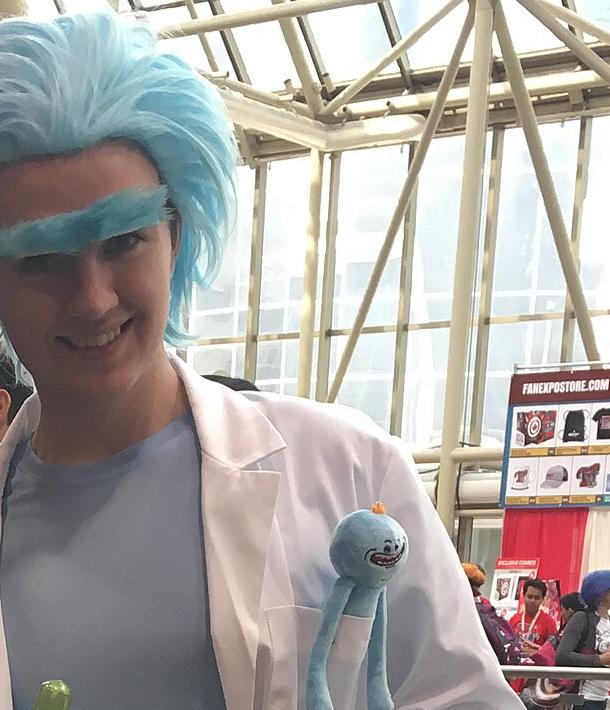
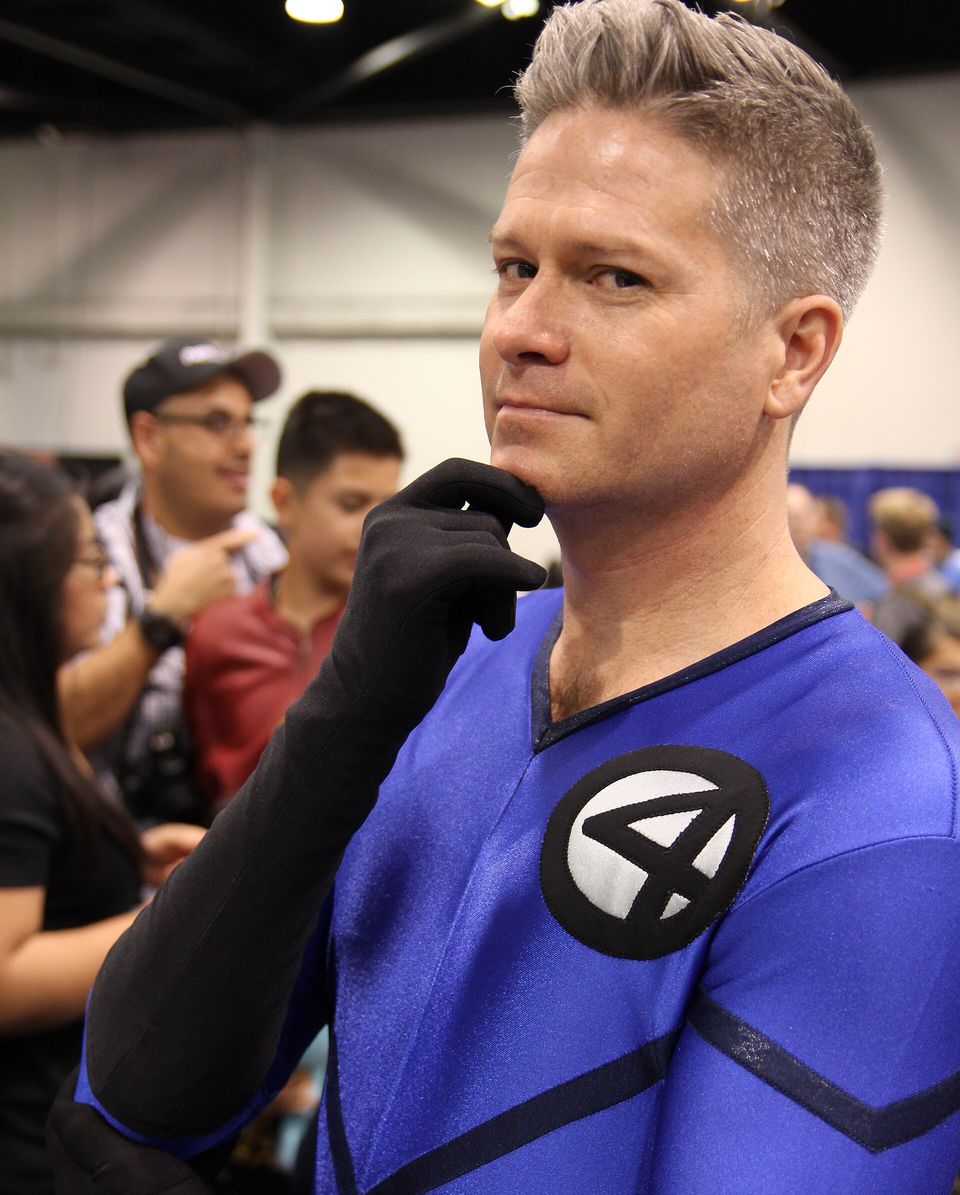
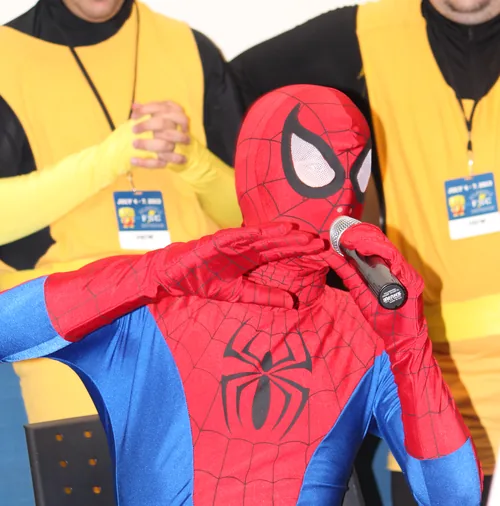
Photograph of a cosplayer as Rick Sanchez by Nicholas Moreau, CC BY-SA 4.0. Cropped from a wider photograph; background removed for the portrait above. The character is the creation of Justin Roiland and Dan Harmon. · Photograph of a cosplayer as Reed Richards by William Tung (WonderCon, April 2017), CC BY-SA 2.0. Reed Richards (Mister Fantastic) is a character created by Stan Lee and Jack Kirby for Marvel Comics. Cropped and with background removed for the portrait above. · Photograph of a cosplayer dressed as Spider-Man by Super Festivals (Florida Supercon, July 5, 2013), CC BY 2.0. Spider-Man is a character created by Stan Lee and Steve Ditko for Marvel Comics; this is a photograph of a cosplayer, not an image of the character. Cropped and with background removed for the portrait above.


An estimate is an inference.
Yours can be measured.
Thirty questions, scored against general-population benchmarks. Your score, your percentile, your ability breakdown and a printable IIF certificate.
Find your IQ score now! →