



What is Spider-Man’s IQ?
The same uncited 250 is “estimated,” “stated” and “confirmed” on three sites; the record shows a teen inventor.

No comic, film or Marvel page we could read states a number for Spider-Man’s IQ: the 250 printed for Peter Parker by GameRant, Comic Basics and Screen Rant cites no issue and no test. This site’s estimated IQ level for the character as written, in the main Marvel comics and the MCU, is 160–180, a notch below Tony Stark’s 175–195.
Spider-Man’s estimated IQ
- Wikipedia says Stan Lee and Steve Ditko conceived Peter Parker as “intellectually gifted”: in Amazing Fantasy #15 (cover-dated August 1962) he is “an excellent student and scientific prodigy” at Midtown High School, and Wikipedia lists applied science, chemistry and physics among his fields.
- He designs his own web-shooters, which depend on an organic fluid, and invents spider-tracers he can follow with his spider-sense (Wikipedia). That is inventor’s work done as a teenager: evidence of talent, but not of an extreme score.
- The comics carry the science into adulthood: he enrolls at Empire State University and graduates, later becomes a teacher at his old high school, and runs Parker Industries after the Doctor Octopus body-swap run. Comic Basics (June 29, 2025) adds that Horizon Labs and Hank Pym recognized his abilities.
- In the MCU, Wikipedia’s account has Tom Holland’s Peter Parker at the Midtown School of Science and Technology, building the Upgraded Suit with the Stark Industries Fabricator and, in Spider-Man: No Way Home (2021), developing cures for several villains. Screen Rant (January 21, 2022) calls this version “a mathematical genius.”
- The ceiling is written in too: Comic Basics’ 2025 ranking puts Spider-Man 12th, behind Iron Man (5th), Batman (4th) and Reed Richards (1st), and in No Way Home the MIT applications of Peter, MJ and Ned are rejected in the fallout from his exposed identity.
This range rates a portrayal, not a person and not the actor who plays him: Peter Parker is as brilliant as each writer needs, and the Ultimate, Spider-Verse and Superior Spider-Man versions differ. Reports of real IQ scores much above 160 are considered dubious, so the top of this range is a judgment about a fictional prodigy, not something a test could confirm.
- First appearance
- Amazing Fantasy #15, cover-dated August 1962 (the series’ final issue)
- Created by
- Stan Lee and Steve Ditko
- Schools (comics)
- Midtown High School; Empire State University
- School (MCU)
- Midtown School of Science and Technology, shown in Spider-Man: Homecoming (2017)
- Inventions
- Web-shooters and their web fluid; spider-tracers
- Played on screen by
- Tom Holland in the Marvel Cinematic Universe, from Captain America: Civil War (2016)
- Canonical IQ
- None published in any comic, film or page we could read
What an IQ of 160–180 actually means
Set the claim aside for a moment. If someone genuinely scored in this range, here is what that would represent.
Average is 100 by construction, and about two-thirds of people fall between 85 and 115. Take the test to place your own score on this scale.
| Score range | Classification | Share of people | What it indicates |
|---|---|---|---|
| 85 – 114 | Average | ~68% | The range most people fall into. |
| 115 – 129 | Above average | ~13.6% | Roughly one person in seven. |
| 130 – 144 | Gifted | ~2% | The threshold most high-IQ societies use. |
| Above 144 | Highly gifted | ~0.1% | Figures above this range are extrapolated from the curve rather than measured. |
Percentages are approximate and describe a normal distribution. The same number means different things on tests with different standard deviations.
Thirty questions gives you a measured position on this exact scale — your score, your percentile and the ability breakdown behind it.
Find out in 30 minutes →Who Spider-Man is
Spider-Man is a Marvel Comics character created by writer-editor Stan Lee and artist Steve Ditko, first seen in the anthology comic Amazing Fantasy #15, cover-dated August 1962 and the series’ final issue. Peter Parker, per Wikipedia, is a teenager whose parents died in a plane crash when he was a child; raised by his Uncle Ben and Aunt May, he is bitten by a radioactive spider at a science exhibit and is “an excellent student and scientific prodigy” at Midtown High School, though not popular with his peers. Lee and Ditko, the same article says, conceived him as “intellectually gifted.” Through his knack for science he builds wrist-mounted web-shooters of his own design. The article’s reception section adds that a BusinessWeek article listed Spider-Man among the top 10 most intelligent fictional characters in American comics, with no IQ attached: a genius reputation without a genius IQ level to match.
After Midtown High, the comics have Peter enroll at Empire State University and graduate; he is hired as a freelance photographer by Jameson at the Daily Bugle, and later becomes a teacher at his old high school. Comic Basics (Joel Scott, June 29, 2025) says Horizon Labs and Hank Pym both recognized his abilities. Amazing Spider-Man ended with issue #700 in December 2012 and was replaced by The Superior Spider-Man, in which Doctor Octopus, Otto Octavius, takes over Peter’s body, leaving Peter trapped in the Doctor’s dying body. The run lasted 31 issues before the real Peter returned in The Amazing Spider-Man #1 in April 2014; Wikipedia has him take up the reins of Parker Industries, a small company Otto founded after leaving Horizon Labs. Screen Rant adds that Amazing Spider-Man #2 (Joe Kelly, Peppe Larraz) reveals through his resume that he has an eidetic memory, credits him with the discovery of “Parker Particles,” and says Bruce Banner is astonished by his intelligence in Immortal Hulk: Great Power #1 (Tom Taylor, Jorge Molina).
In the Marvel Cinematic Universe, Tom Holland plays Peter Parker from Captain America: Civil War (2016); this page rates the fictional character only. Wikipedia’s account places him at the Midtown School of Science and Technology, where in Spider-Man: Homecoming (2017, directed by Jon Watts) he quits the academic decathlon team, rejoins it for the trip to Washington, D.C., and misses the tournament. In Spider-Man: Far From Home (2019) he “creates a new suit for himself using Stark’s technology,” and in Spider-Man: No Way Home (released in the United States on December 17, 2021) he and his allies develop cures for several villains. The same film has the MIT applications of Peter, MJ and Ned rejected in light of the controversy over his exposed identity; for what such schools can and cannot say about a score, see the average IQ of MIT, Oxford and Yale students.
Which Spider-Man is being rated matters. This page rates the main Marvel comics continuity and the MCU, and other versions differ: the Ultimate-universe Peter Parker is a separate, younger character whom Miles Morales succeeds after Peter’s apparent death; the Spider-Verse storyline, begun in November 2014, introduced variants of the hero; and the Superior Spider-Man run is Otto Octavius in Peter’s body. The comics and films document an inventor and student who is ranked among Marvel’s brightest minds without topping the lists, which supports a range around an IQ of 160 rather than the 250 that circulates. Fiction writes the plot, not a test, and none of the pages we could read shows a publisher attaching a score.
 By Elora Mercer, Celebrity Research WriterFigures checked by Leon Falkner, Data & Research Analyst
Reviewed by Aarav Vardhan, Editor-in-Chief · Last reviewed August 2026

Spider-Man: the documented record
The estimate above rests on this record. Every entry here is a matter of public fact, which is more than can be said for the number itself.
- August 1962Amazing Fantasy #15 (cover-dated August 1962), written by Stan Lee and drawn by Steve Ditko, introduces Peter Parker as a teenager and science prodigy.
- December 2012Amazing Spider-Man ends with issue #700 and is replaced by The Superior Spider-Man, in which Doctor Octopus takes over Peter Parker’s body.
- April 2014After 31 issues of The Superior Spider-Man, the real Peter Parker returns in The Amazing Spider-Man #1.
- May 3, 2014PopOptiq’s “To Better Know a Hero: Ultimate Spider-Man” gives the Ultimate-universe Peter Parker “a stated IQ of 145,” with no issue named.
- 2016Tom Holland first appears as Peter Parker in Captain America: Civil War.
- June 17, 2016Screen Rant’s “15 Smartest Superheroes in Comics History” says Spider-Man’s IQ matched Reed Richards’s, printing no number.
- 2017Spider-Man: Homecoming (Jon Watts) shows Peter at the Midtown School of Science and Technology and on its academic decathlon team; US release July 7.
- December 17, 2021Spider-Man: No Way Home is released in the United States; the MIT applications of Peter, MJ and Ned are rejected.
- 2023GameRant (updated July 19) prints a “confirmed IQ of 250”; Comic Basics (June 1) prints 250 for Spider-Man and 210–235 for Tony Stark.
- 2025Screen Rant (April 24) says “roughly 250”; Comic Basics (June 29) says 250 is “stated” and ranks Spider-Man 12th of 15.
Where the 250 figure came from
Following a claim back to its first appearance is the part almost nobody does — and it is what most people are actually asking.
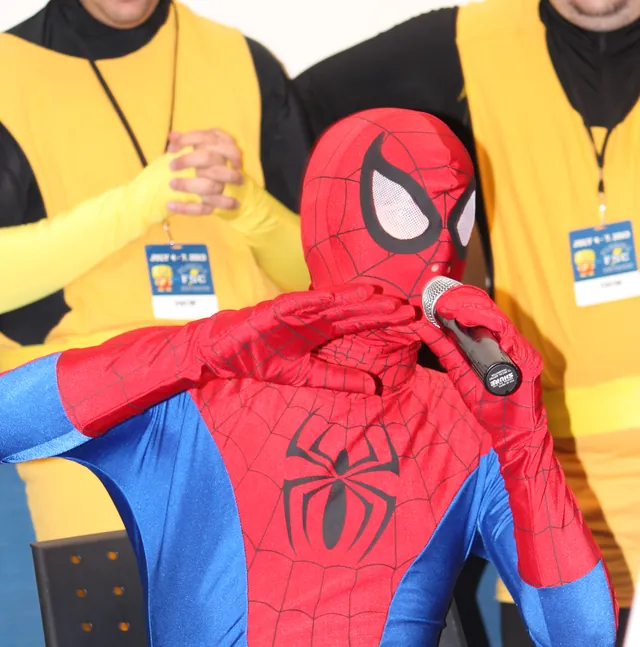
Spider-Man’s IQ is a number Marvel has not published in any comic, film or page we could read, and the figure that circulates most is 250. GameRant’s “The Smartest Comic Book Characters of All Time” (Tom Bowen, updated July 19, 2023) ranks Peter Parker 12th and gives him a “confirmed IQ of 250” without saying who confirmed it. Comic Basics prints it twice: Valentina Kraljik’s Batman article (June 1, 2023) says “Spider-Man’s IQ is 250,” and Joel Scott’s “15 Smartest Superheroes” (June 29, 2025) says it is “stated to be 250,” again with no source. Screen Rant’s Logan Silva (April 24, 2025) says Peter “holds an IQ of roughly 250,” beside a graduate degree in biophysics and a PhD in biochemistry, and cites no comic for any of it. For how a number like this spreads, see where celebrity IQ numbers come from.
The wording hardens as the number is copied. cgaa.org says Peter Parker’s IQ “has been estimated at about 250” and credits Google; Comic Basics calls it “stated”; unanswered.io (August 1, 2026) calls it “a confirmed 250” and cites GameRant. “Estimated” becomes “stated,” then “confirmed,” with no new evidence at any step. The one lower figure belongs to a different Peter Parker: PopOptiq’s “To Better Know a Hero: Ultimate Spider-Man” (May 3, 2014, updated February 25, 2025) gives the Ultimate-universe Peter “a stated IQ of 145” and names no issue. That is close to what an IQ of 145 means, a score a real test can report; 250 is not.
The Spider-Man IQ level of 250 fails on arithmetic before it fails on sourcing. On the usual scale (mean 100, standard deviation 15) it is ten standard deviations above average, and Wikipedia’s IQ article says reports of real scores “much higher than 160” are considered dubious; the IQ ceiling effect explains why test items stop separating people long before that point. The lists also contradict themselves: Comic Basics gives Spider-Man 250 against Tony Stark’s 210–235 in 2023, yet its 2025 ranking puts Iron Man 5th and Spider-Man 12th. The claims of parity with Reed Richards carry no number at all: Screen Rant’s Fred Blunden (June 17, 2016) says his IQ “matched Reed Richard’s” before he was “old enough to shave,” and RankRed’s Bipro Das (September 28, 2020) says his college-years scores are “almost identical.” Neither names an issue.
The versus queries run on the same unsourced numbers. Against Tony Stark, Comic Basics’ 2023 figures put Spider-Man ahead, while in the films Stark is the mentor: Wikipedia’s account of the MCU Peter says Stark “eventually recruits him into the Avengers.” Against Reed Richards, Comic Basics’ 2025 ranking has Reed first and Peter 12th. Against Batman, Comic Basics calls Spider-Man “far above” him on the strength of the 250, a comparison across two publishers with no shared canon. Among this site’s other fictional profiles, 160–180 puts Peter Parker a notch below Stark (175–195), Bruce Banner (180–200) and Richards (190–210), overlapping Batman’s 175–195 only at the top of his range.
How we read a number →Label “Spider-Man,” description “fictional character in Marvel Comics”; instance of film character and comics character; creators Stan Lee and Steve Ditko; inception August 1962; first appearance Amazing Fantasy #15 (Wikidata lists August 10, 1962 as the publication date; Wikipedia gives the cover date as August 1962). Confirms the entity is the character, not a film.
Spider-Man: created by Stan Lee and Steve Ditko; Amazing Fantasy #15 (August 1962); “an excellent student and scientific prodigy”; “intellectually gifted”; applied science, chemistry, physics; web-shooters on an organic fluid, spider-tracers; Empire State University, teacher at his old high school, Parker Industries; Amazing Spider-Man #700 (December 2012) replaced by The Superior Spider-Man (31 issues, real Peter back April 2014); Spider-Verse from November 2014; BusinessWeek top-10 sentence. Amazing Fantasy: #15 was the final issue. IQ article: mean 100, standard deviation 15; scores “much higher than 160” considered dubious. No Spider-Man IQ figure.
MCU page: Midtown School of Science and Technology; mentored by Tony Stark; Upgraded Suit built with the Stark Industries Fabricator; Far From Home new suit; No Way Home cures; MIT applications rejected “in light of the controversy”; infobox “Genius level intellect.” Homecoming: quits and rejoins the academic decathlon team, Washington, D.C. trip, misses the tournament; US release July 7 (2017). No Way Home: US release December 17, 2021, directed by Jon Watts. Brand New Day: 2026 film, US release July 31, 2026. No IQ figure on any.
Peter Parker is entry 12 and the only entry with an IQ figure: “With a confirmed IQ of 250, Peter Parker is a lot smarter than many people give him credit for.” No source or method named for the number.
Kraljik: “Considering that Spider-Man’s IQ is 250, he is far above Batman”; Tony Stark 210–235; Reed Richards “recorded IQ of 267.” Scott: “Spider-Man’s IQ is stated to be 250”; ranked 12th; Horizon Labs and Hank Pym recognized his abilities; list order Reed Richards 1, Black Panther 2, Mr. Terrific 3, Batman 4, Iron Man 5. No source or method for any number.
Silva: Amazing Spider-Man #2 (Joe Kelly, Peppe Larraz) resume shows eidetic memory; “holds an IQ of roughly 250”; graduate degree in biophysics and PhD in biochemistry (no comic named); Parker Particles; Immortal Hulk: Great Power #1 (Tom Taylor, Jorge Molina). Blunden: entry 14, IQ “matched Reed Richard’s” before he was old enough to shave, no number. Ratcliffe: Holland’s version “a mathematical genius,” ranked smartest of the three; no IQ number.
Peter Parker is entry 12; “Peter’s IQ scores during his college years are almost identical to that of Dr. Reed Richards”; no figure and no issue named.
cgaa.org: “estimated at about 250,” and “Google says that Tony Stark’s IQ is 186 and Peter Parker’s IQ is 250.” unanswered.io: a “confirmed 250,” citing GameRant and social-media posts. PopOptiq: Ultimate Peter Parker “an accomplished scientist for his age, with a stated IQ of 145,” no issue named.
Checked: Wikidata; Wikipedia’s Spider-Man, Peter Parker (MCU), Amazing Fantasy and film articles; GameRant, Comic Basics, Screen Rant, RankRed, cgaa.org, unanswered.io, PopOptiq. None cites a comic issue, film scene or test for any number, and no page we read attaches a score.
The sources behind our estimate
The figures that circulate for Spider-Man, what we were able to confirm, and where the two diverge.
An IQ of 250 is the figure printed for Spider-Man: GameRant’s “The Smartest Comic Book Characters of All Time” (Tom Bowen, updated July 19, 2023) says “confirmed IQ of 250”; Comic Basics says “stated to be 250” (June 29, 2025) and “is 250” (June 1, 2023); Screen Rant (April 24, 2025) says “roughly 250”; cgaa.org says “estimated at about 250.” Separately, PopOptiq gives the Ultimate-universe Peter Parker “a stated IQ of 145.” None cites an issue or a test.
No comic, film or Marvel page we could read gives Peter Parker a scored IQ. The same 250 carries a different label on each page: GameRant says “confirmed” and names no one; Comic Basics says “stated” and “is” and cites nothing; Screen Rant (Logan Silva) says “roughly 250” with no citation; cgaa.org (Tillie Fabbri) says “estimated” and credits Google; unanswered.io (August 1, 2026) calls it confirmed and cites GameRant and social-media posts. Two further pieces claim parity with Reed Richards but print no number: Screen Rant (Fred Blunden, June 17, 2016) and RankRed (Bipro Das, September 28, 2020). No page we read attaches a score to a comic issue, a film scene or a test.
The circulating 250 sits 70 points above the top of this range. On the usual scale, mean 100 and standard deviation 15, it is ten standard deviations above average, a place no norm sample reaches and no test has items to measure. The Spider-Man IQ level of 145 belongs to a different, younger Ultimate-universe Peter and sits below the range. As on most profiles this site checks, the documented record supports a lower figure than the one that circulates most.
Want a number that does hold up? Every figure on this page is somebody’s claim. Take the 30-question test and get a percentile you can check rather than a figure you have to trust.
Spider-Man — frequently asked
What is Spider-Man’s IQ?
No comic, film or Marvel page we could read states Spider-Man’s IQ. The 250 that circulates for Peter Parker traces to GameRant, Comic Basics and Screen Rant, none of which cites an issue or a test. This site’s estimated IQ for the character as written, in the main Marvel comics and the MCU, is 160–180.
What is Peter Parker’s IQ in the comics?
No comic cited by the pages we read states a number. Comic Basics says Spider-Man’s IQ is “stated to be 250” without naming an issue, and Wikipedia says only that later writers depicted his intellect at genius level. PopOptiq gives a different, Ultimate-universe Peter Parker “a stated IQ of 145,” again with no issue.
What is Peter Parker’s IQ in the MCU?
No Marvel Cinematic Universe film states an IQ for Tom Holland’s Peter Parker. The films show a student at the Midtown School of Science and Technology who builds an Upgraded Suit with the Stark Industries Fabricator, helps develop cures for villains in No Way Home (2021) and has his MIT application rejected. This site’s 160–180 covers the film character too.
Where does the Spider-Man IQ of 250 come from?
Mostly from other lists, not Marvel. GameRant calls 250 a “confirmed IQ,” Comic Basics says “stated,” cgaa.org says “estimated” and Screen Rant says “roughly 250.” None names an issue, and unanswered.io (August 2026), which calls it confirmed, cites GameRant and social-media posts. The label hardens as the number is copied.
Is Peter Parker a genius?
Within the story, yes: Wikipedia says Stan Lee and Steve Ditko conceived him as intellectually gifted, calls him a scientific prodigy and notes he designed his own web-shooters. A BusinessWeek list, as Wikipedia reports it, put Spider-Man in the top 10 most intelligent fictional characters in American comics. None of that attaches a score.
Did Peter Parker ever take an IQ test?
No comic or film we could read shows Peter Parker sitting an IQ test or receiving a score. RankRed says his college-years IQ scores were “almost identical” to Reed Richards’s, and Screen Rant says his IQ matched Reed’s, but neither prints a figure or names an issue, so any test is secondhand.
Spider-Man IQ vs Iron Man (Tony Stark): who is smarter?
No sourced score settles it. Comic Basics prints Spider-Man at 250 and Tony Stark at 210–235 in one article, yet ranks Iron Man 5th and Spider-Man 12th in another. This site estimates Peter Parker at 160–180 and Stark at 175–195; in the MCU films Stark is the mentor.
How does Spider-Man’s estimated IQ compare with Reed Richards’s?
This site puts Peter Parker at 160–180, below Reed Richards’s 190–210. Comic Basics’ 2025 ranking has Reed first and Spider-Man 12th, though other pieces say Peter’s IQ matched Reed’s without a figure. Neither Peter’s 250 nor any “matched Reed” claim comes with an issue number.
How does my IQ compare with Spider-Man?
You can find out in about fifteen minutes. The IQ Metrics assessment is 30 questions, scored on the same 100-mean scale used throughout this page, so your result and the estimate above are at least expressed in the same units — one measured, one inferred. Once you have a number, the leaderboard shows where it would sit, and how we score and norm it explains the benchmarking.
Where does this estimate come from?
From the documented record rather than a test — the method is named above and set out in full under how we read a number. Compare it against the other fictional profiles, starting with Sherlock Holmes.
- Take the 30-question IQ test — get a measured score and percentile of your own
- Average IQ by country — how the scale behaves across populations
- How IQ Metrics scores its assessment — the method behind our own number
- More on how IQ testing works — reliability, error and what a score can and cannot say
- More fictional profiles — same field, same method
More fictional



Photograph of actor Robert Downey Jr. by Edgar Meritano (promoting Iron Man, Mexico City, April 9, 2008), CC BY-SA 3.0. Tony Stark / Iron Man is a character created by Stan Lee, Larry Lieber, Don Heck and Jack Kirby and published by Marvel Comics; this is a photograph of the actor who plays the role in the Marvel Cinematic Universe, not of the character. Background removed for the portrait above. · Photograph of actor Mark Ruffalo by Gage Skidmore (San Diego Comic-Con, July 22, 2017), CC BY-SA 2.0. Bruce Banner is a character created by Stan Lee and Jack Kirby for Marvel Comics, played by Ruffalo in the Marvel Cinematic Universe films. Cropped and with background removed for the portrait above. · Photograph of a cosplayer as Reed Richards by William Tung (WonderCon, April 2017), CC BY-SA 2.0. Reed Richards (Mister Fantastic) is a character created by Stan Lee and Jack Kirby for Marvel Comics. Cropped and with background removed for the portrait above.


An estimate is an inference.
Yours can be measured.
Thirty questions, scored against general-population benchmarks. Your score, your percentile, your ability breakdown and a printable IIF certificate.
Find your IQ score now! →