



What is Reed Richards’ IQ?
No source fixes how many doctorates he holds, and the 267 people attach to him belongs to the Ultimate Reed.

Reed Richards has no test result, and no page that prints a score for him traces it to a Marvel comic about the main-continuity character: the 267 that circulates is traced only to the Ultimate universe’s teenage Reed. This site’s estimate for Mister Fantastic is 190–210, and the “616” in “reed richards iq 616” is Earth-616, the main continuity, not a score.
Reed Richards’ estimated IQ
- Wikipedia’s account of the comics has him taking college-level courses at 14, holding several science degrees by 20 and earning doctorates in physics and electrical engineering by 22; it lists his doctorates as spanning mathematics, physics and engineering.
- The same article credits him with breakthroughs in space travel, time and dimensional travel, robotics, computing, polymers, holography and energy production, and puts a spacecraft of his in Fantastic Four #1 (November 1961).
- The Negative Zone, a universe parallel to Earth’s in which all matter is negatively charged, first appears in Fantastic Four #51 (June 1966).
- BusinessWeek’s “The Smartest Superheroes” (Joseph Pisani, June 1, 2006) listed him among the ten most intelligent fictional characters in American comics, and Wikipedia’s lead says he is officially acknowledged as the smartest man alive within the Marvel Universe, citing a Marvel.com list of November 27, 2018.
- The limits are written in: Wikipedia’s summary has him conceding that Doctor Octopus knows more about radiation and Hank Pym more about biochemistry, and treating magic as a gap that Doctor Strange has to teach him to fill.
This range rates a portrayal, not a person: Reed is as smart as each writer needs him to be, and Screen Rant’s October 2022 critique argues that writers routinely cap his genius so he cannot solve every plot. Reports of scores much above 160 are considered dubious even for real people, so a fictional range this high describes authorial intent, not a score.
- First appearance
- Fantastic Four #1, cover-dated November 1961
- Created by
- Stan Lee and Jack Kirby
- Role
- Leader of the Fantastic Four; scientist and inventor
- Born
- Central City, California, per the Marvel Directory profile
- Education
- College-level courses at 14; several science degrees by 20; doctorates by 22, per Wikipedia
- Doctorates
- No fixed count: two or three in Wikipedia, “multiple” in the Marvel Directory, “over 18” in Screen Rant with no issue cited
- Family
- Married Susan Storm (Annual #3, 1965); son Franklin (Annual #6, 1968); daughter Valeria
- On screen
- Pedro Pascal in The Fantastic Four: First Steps (July 25, 2025); listed for Avengers: Doomsday (December 18, 2026)
- Continuity
- Earth-616, the main Marvel continuity; the Ultimate Reed Richards (Earth-1610) is a separate character
- Canonical IQ
- None found for the main-continuity character; 267 is tied to the Ultimate version at 16
What an IQ of 190–210 actually means
Set the claim aside for a moment. If someone genuinely scored in this range, here is what that would represent.
Average is 100 by construction, and about two-thirds of people fall between 85 and 115. Take the test to place your own score on this scale.
| Score range | Classification | Share of people | What it indicates |
|---|---|---|---|
| 85 – 114 | Average | ~68% | The range most people fall into. |
| 115 – 129 | Above average | ~13.6% | Roughly one person in seven. |
| 130 – 144 | Gifted | ~2% | The threshold most high-IQ societies use. |
| Above 144 | Highly gifted | ~0.1% | Figures above this range are extrapolated from the curve rather than measured. |
Percentages are approximate and describe a normal distribution. The same number means different things on tests with different standard deviations.
Thirty questions gives you a measured position on this exact scale — your score, your percentile and the ability breakdown behind it.
Find out in 30 minutes →Who Reed Richards is
Reed Richards, who fights as Mister Fantastic, is a Marvel Comics character created by Stan Lee and Jack Kirby; he first appeared in Fantastic Four #1, cover-dated November 1961. He leads the Fantastic Four, whose base is the Baxter Building at 42nd Street and Madison Avenue in New York City (introduced in issue #3), and in Wikipedia’s account of the team he blames himself for the failed space mission behind its origin. He marries Susan Storm in Fantastic Four Annual #3 (1965), and their son Franklin is born in Annual #6 (1968). On screen he has been played by Ioan Gruffudd (2005, 2007), Miles Teller (2015), John Krasinski (2022, as a variant from another Earth) and Pedro Pascal in The Fantastic Four: First Steps (July 25, 2025).
The in-story record is specific about schooling and vague about the count of degrees. In Wikipedia’s account, which cites the Official Handbook of the Marvel Universe #7, Reed is taking college-level courses at 14; by 20 he has “several degrees in the sciences”, with no number given; and by 22 he has PhDs in physics and electrical engineering, a sentence tagged citation needed. The same article’s powers section instead lists PhDs in mathematics, physics and engineering, and the two statements are not reconciled. The schools it names include MIT, Caltech, Harvard, Columbia and the fictional Empire State University. The Marvel Directory profile agrees on the college-level courses at 14, lists “Multiple Doctorates” with no fields, gives his birthplace as Central City, California, and names no IQ. The “over 18 doctorates” in Screen Rant and on check-iq.org has no issue behind it. The Reed Richards IQ feats that matter for an estimate are the ones the stories show: breakthroughs credited across space travel, time and dimensional travel, robotics, computing, synthetic polymers, holography and energy production; a spacecraft in the first issue; and the Negative Zone, which first appears in Fantastic Four #51 (June 1966).
His mistakes are part of the record, and the stories dwell on their costs. As a founding member of the Illuminati, which first appears in New Avengers #7 (July 2005) by Brian Michael Bendis and Steve McNiven, he belonged to the group that exiled the Hulk into space, and the Hulk returned in World War Hulk (2007). In Civil War (July 2006 to February 2007) he took the pro-registration side. The Illuminati later face the incursions, which destroy parallel universes and run into Secret Wars (2015). A character written as his universe’s foremost scientist who can still be wrong on that scale is a good illustration of why smart people make bad decisions, and of why one number cannot summarize him.
The standard description is that he is, in Wikipedia’s wording, officially acknowledged as the smartest man alive within the Marvel Universe, a claim its lead sources to a Marvel.com list of the ten smartest super heroes (November 27, 2018). That is a rank inside a story, not a measurement like a genius IQ level, and it is contested even among Marvel’s own characters: a Screen Rant op-ed by Logan Silva argues that Professor X has overtaken him, and Comicbook.com (David Harth, June 4, 2025) lists Moon Girl, Metron, Brainiac 5, Brainiac, Thanos, Lex Luthor and Doctor Doom as smarter in some way, though it concedes that Marvel has gone out of its way to show Reed is smarter than Doom. Placed against the fictional peers on this site, a range of 190–210 puts Reed near the top of the roster: above Tony Stark and Batman (both 175–195), a notch above Sherlock Holmes (180–200), overlapping Doom (185–205), Mycroft Holmes (185–205) and Rick Sanchez (195–215), and well clear of Victor Frankenstein (160–180), the other scientist-inventor here. The margin over Holmes comes from breadth, not from any stated figure.
 By Elora Mercer, Celebrity Research WriterFigures checked by Leon Falkner, Data & Research Analyst
Reviewed by Aarav Vardhan, Editor-in-Chief · Last reviewed October 2026

Reed Richards: the documented record
The estimate above rests on this record. Every entry here is a matter of public fact, which is more than can be said for the number itself.
- 1961Fantastic Four #1, cover-dated November 1961, introduces Reed Richards; Stan Lee writes and Jack Kirby draws.
- 1965Marries Susan Storm in Fantastic Four Annual #3 (July 1965).
- 1966The Negative Zone first appears in Fantastic Four #51 (June 1966).
- 2004Ultimate Fantastic Four #1 (February 2004) introduces the teenage Ultimate Reed, Earth-1610; issue #4 (May 2004) is the one Wikipedia cites for his IQ of at least 267 at 16.
- 2005The Illuminati, with Reed as a founding member, first appear in New Avengers #7 (July 2005).
- 2006BusinessWeek’s “The Smartest Superheroes” (June 1) lists him among the ten most intelligent fictional characters in American comics; Civil War begins in July, with Reed on the pro-registration side.
- 2007World War Hulk (August 2007) follows the Illuminati’s exile of the Hulk into space.
- 2010Galacta: Daughter of Galactus #1, written by Adam Warren, has Galacta judge Reed’s mind the most brilliant on Earth, as Screen Rant describes it.
- 2011Ultimate Fallout #4 (August 2011) debuts the Maker identity of the Ultimate Reed.
- 2015Secret Wars ends the incursions storyline; the Maker works with the Earth-616 Reed against Doom before the two split over their morals.
- 2018Marvel.com publishes “10 Smartest Super Heroes” (November 27), the list Wikipedia cites for calling him officially the smartest man alive in the Marvel Universe.
- 2019–2022CBR (August 8, 2019) ties the 267 to the Ultimate Reed at 16; Screen Rant (October 18, 2022) states it for Reed with no source.
- 2025–2026The Fantastic Four: First Steps opens July 25, 2025 with Pedro Pascal as Reed; Pascal is listed in the cast of Avengers: Doomsday, dated December 18, 2026.
Where the 267 figure came from
Following a claim back to its first appearance is the part almost nobody does — and it is what most people are actually asking.
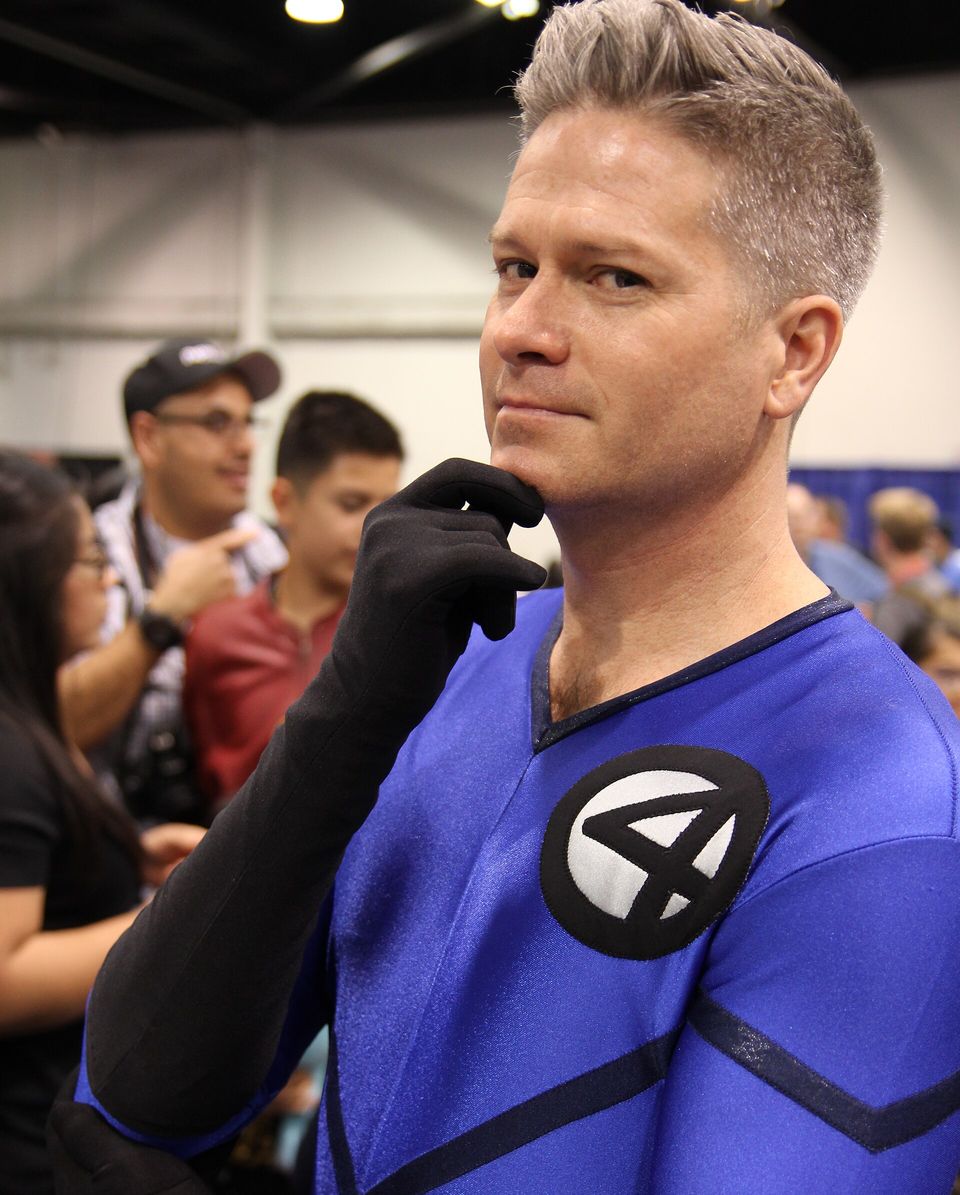
Reed Richards’s IQ is not a number that any page we checked traces to a Marvel comic about the main-continuity character. The figure that circulates is 267, and it appears on aggregator pages and in Screen Rant articles with no citation attached. check-iq.org (published September 30, 2024, updated February 12, 2025) prints it under an “Average Confidence Level: Medium” and lists three sources: a Marvel.com page and a Fandom page whose addresses are for the Ultimate (Earth-1610) character, and the October 2022 Screen Rant article, which gives 267 with no source of its own. sociosite.net calls it an estimate “discussed by writers and fans”, and a Screen Rant op-ed by Logan Silva (December 22, 2024) repeats it beside “over 18 doctorates.” None names an issue, a handbook entry or a test.
The only place a source is attached to 267 is a different Reed. CBR (Sid Natividad, August 8, 2019) says the Ultimate Reed Richards of Earth-1610 had an IQ “measured” at 267 when he was 16, and Wikipedia’s article on the Maker, the villain that Ultimate Reed became, describes him as a genius with an IQ of at least 267 at 16 and cites Ultimate Fantastic Four #4 (May 2004). Ultimate Marvel was a reinvention of the Marvel Universe for the modern age, and that teenager first appears in Ultimate Fantastic Four #1 (February 2004), so he is a separate character from the Reed Richards who debuted in Fantastic Four #1 in 1961. He becomes the Maker in Ultimate Fallout #4 (August 2011), and Wikipedia gives no figure for him above 267. The pages that hand 267 to the 1961 Reed skip that step.
The “616” in searches such as “reed richards iq 616” is not a score either. Earth-616 is the designation for the main Marvel continuity, first used in Alan Moore’s 1983 Captain Britain story in Marvel UK’s Daredevils #7, so the search is really asking about the mainstream Reed, the version for whom no page checked gives a sourced number. As for 267 itself, on the usual scale (mean 100, standard deviation 15) it lies more than eleven standard deviations above average, far outside any norm sample, and Wikipedia notes that reports of scores much higher than 160 are considered dubious. Our note on the IQ ceiling effect covers why tests cannot separate people that high, and for the general pattern see where celebrity IQ numbers come from.
The versus queries fail for the same reason. The two aggregator pages that give Reed 267 also print Tony Stark at 270 and Batman at 192, with no issue or test cited for either, so the Reed Richards IQ vs Tony Stark question is a three-point gap between two numbers with nothing behind them; CBR, meanwhile, says Tony’s IQ is still “a big mystery.” The Reed Richards IQ vs Batman question is emptier still: Batman belongs to another publisher’s universe, so the two share no canon, no test and no scale, and whichever writer stages a crossover decides who comes out ahead. A fair comparison stays inside one universe and rests on what the stories show. CBR’s ten numbered categories go seven to Reed, two to Iron Man (inventions and tactical knowledge), and it calls the IQ category a tie. Screen Rant reads Iron Man #16, in which Reed says he thinks he just became dumber after Tony shares his intellect with everyone nearby, as a point for Reed. Each is a writer’s choice.
How we read a number →Mister Fantastic: created by Stan Lee and Jack Kirby, debut Fantastic Four #1 (November 1961); college-level courses at 14 (citing Official Handbook of the Marvel Universe #7), several science degrees by 20, PhDs in physics and electrical engineering by 22 (tagged citation needed) against PhDs in mathematics, physics and engineering in the powers section; schools MIT, Caltech, Harvard, Columbia and Empire State University; a summary of his inventions and of the limits of his expertise; marriage in Annual #3 (July 1965); the film casting. The lead attributes “officially acknowledged as the smartest man alive within the Marvel Universe” to Marvel.com’s “10 Smartest Super Heroes” (November 27, 2018) and the ten-most-intelligent ranking to Joseph Pisani’s “The Smartest Superheroes” (Bloomberg, June 1, 2006). No IQ figure appears in the article. Fantastic Four: the Baxter Building at 42nd Street and Madison Avenue, with the uniforms and headquarters introduced in issue #3; Annual #6 (1968). Illuminati: New Avengers #7 (July 2005), Reed among the founding members, the exile of the Hulk and World War Hulk (August 2007), the incursions and Secret Wars. Negative Zone: Fantastic Four #51 (June 1966), a universe parallel to Earth’s with negatively charged matter. Civil War: July 2006 to February 2007, Reed on the pro-registration side.
First Steps: U.S. release July 25, 2025; Pedro Pascal as Reed Richards, “a highly intelligent scientist and the leader of the Fantastic Four”; director Matt Shakman calls Reed “the most scientifically intelligent person” on the planet; the plot has Reed use a neutron star’s gravity after the team’s faster-than-light system is destroyed and plan teleportation bridges across Earth. No IQ figure. Avengers: Doomsday: Pascal listed as Reed Richards / Mister Fantastic; U.S. release given as December 18, 2026.
Maker: the Ultimate Reed Richards first appears in Ultimate Fantastic Four #1 (February 2004); the article says he had a high IQ of 267 as a child and was a genius with an IQ of at least 267 at 16, citing Ultimate Fantastic Four #4 (May 2004) for the second statement, and gives no higher figure; the Maker name debuts in Ultimate Fallout #4 (August 2011); in Secret Wars he works with his Earth-616 counterpart until they are divided over their morals. Multiverse: Earth-616 is the main Marvel continuity, first designated in Alan Moore’s 1983 Captain Britain story in Marvel UK’s Daredevils #7; Earth-1610 is the original Ultimate Marvel universe.
Scores are scaled to a normal distribution with mean 100 and standard deviation 15 against a norming sample; reports of scores much higher than 160 are considered dubious; about 2 percent of people score above 130.
States that the Ultimate Reed Richards of Earth-1610 had an IQ measured at 267 at 16, says Tony Stark’s IQ remains a big mystery, and scores ten numbered categories: Reed wins seven, Tony two (inventions, tactical knowledge) and IQ level is a tie. Names no issue numbers.
McGuire cites Iron Man #16 (Christopher Cantwell) for Reed saying he just became dumber when Tony shares his intellect, and reads it as proof Reed is smarter. Isaak states Reed’s IQ as 267 and “over 18 doctorates” with no source, attributes a “level twelve intellect” remark to Tony Stark with no issue, and argues that writers limit Reed’s genius. J.A.M. reports Galacta: Daughter of Galactus #1 (2010, written by Adam Warren), in which Galacta judges Reed’s mind the most brilliant on Earth. Silva repeats over 18 doctorates and an IQ of 267 with no source and argues that Professor X has overtaken Reed.
Lists Moon Girl, Metron, Brainiac 5, Brainiac, Thanos, Lex Luthor and Doctor Doom as smarter in some way, while conceding that Marvel has gone out of its way to show Reed is smarter than Doom. Applies “twelfth level intellect” to DC’s Brainiac 5 as the top of that scale, the phrase Screen Rant’s Isaak attaches to a Tony Stark remark about Reed with no issue given. Gives no IQ for Reed.
Slane calls Pascal’s Reed “the world’s smartest man” and describes a pregnancy sending “the cerebral Mr. Fantastic into a frenzy of scientific inquiry”. Pascal tells Oddo that Reed’s body may stretch but “this is a brain character”. Frew lists Pascal as Reed Richards in the Avengers: Doomsday cast and gives the release date as December 18, 2026.
check-iq.org (published September 30, 2024, updated February 12, 2025) gives 267 under an “Average Confidence Level: Medium”, lists Marvel.com, Fandom and Screen Rant pages as sources (the first two under addresses for the Ultimate, Earth-1610, character), and prints over 18 doctorates by 30, Tony Stark 270 and Batman 192. sociosite.net gives 267 with no author, date or source and a disclaimer that it is an estimate discussed by writers and fans, not a measured test score; it prints Tony Stark 270 and Batman 192.
Born in Central City, California; college-level courses by 14; Caltech, Columbia, Harvard and a state university in Hegeman, New York; “Multiple Doctorates”, fields not listed. No IQ figure, no intelligence rating and no source note on the page.
Checked: Wikipedia’s Mister Fantastic article, the Marvel Directory profile and the articles above. None traces an IQ for that character to a comic, none cites an issue for 18 doctorates, and no page checked gives 616 as anyone’s IQ.
The sources behind our estimate
The figures that circulate for Reed Richards, what we were able to confirm, and where the two diverge.
An IQ of 267 is printed for Reed Richards by check-iq.org (under an “Average Confidence Level: Medium”), by sociosite.net (as an estimate “discussed by writers and fans”) and in Screen Rant pieces from October 18, 2022 and December 22, 2024, the last alongside “over 18 doctorates.” The two aggregator pages also give Tony Stark 270 and Batman 192. Searches add “616”, which is not a score.
No page that prints an IQ score for the main-continuity Reed Richards traces it to a Marvel comic. Wikipedia’s article on Mister Fantastic does not mention IQ, and neither does the Marvel Directory profile, which lists his schools and “Multiple Doctorates” but no intelligence figure. Where 267 has a source, it is the Ultimate Reed Richards of Earth-1610: CBR (August 8, 2019) says his IQ was measured at 267 at 16, and Wikipedia’s article on the Maker cites Ultimate Fantastic Four #4 (May 2004). The Marvel.com and Fandom pages that check-iq.org lists as sources for the 267 sit under addresses for the Ultimate (Earth-1610) character. No page checked states 616 as anyone’s IQ.
The circulating 267 sits 57 points above the top of this range. On the usual scale, with a mean of 100 and a standard deviation of 15, it would be more than eleven standard deviations above average, a place no norm sample reaches and no test has items to measure. As on most profiles here, the documented record supports a lower figure than the one that circulates.
Want a number that does hold up? Every figure on this page is somebody’s claim. Take the 30-question test and get a percentile you can check rather than a figure you have to trust.
Reed Richards — frequently asked
What is Reed Richards’s IQ?
Reed Richards has no official IQ: no test result exists, and no page that prints a score for him traces it to a Marvel comic about the main-continuity character. This site’s estimate for Mr. Fantastic is 190–210, which rates how he is written, not a measured score. The 267 that circulates is traced only to the Ultimate universe’s teenage Reed (Earth-1610), by CBR (August 8, 2019) and by Wikipedia’s article on the Maker.
Where does the Reed Richards IQ of 267 come from?
Where 267 has a source, it belongs to the Ultimate universe’s Reed Richards (Earth-1610): CBR says his IQ was measured at 267 at 16, and Wikipedia’s article on the Maker, the villain he later becomes, cites Ultimate Fantastic Four #4 (May 2004) for “an IQ of at least 267 at age 16.” Pages that apply it to the main Reed cite no issue or test: Screen Rant (October 18, 2022) prints it as fact, and check-iq.org lists that article and Marvel and Fandom pages for the Ultimate version as its sources. The Maker identity debuts in Ultimate Fallout #4 (August 2011), and Wikipedia gives no figure above 267 for him.
How much IQ does Reed Richards have? (“¿Cuánto IQ tiene Reed Richards?”)
The figure quoted most often, 267, comes from a comic-book story, not a test, and the same answer applies to the question in Spanish. On the usual scale (mean 100, standard deviation 15) it lies more than eleven standard deviations above average, far outside any norm sample, and Wikipedia notes that reports of scores much higher than 160 are considered dubious. The IQ bell curve shows how scores are distributed, and the ceiling effect explains why tests cannot separate people that high.
How many PhDs does Reed Richards have?
No source fixes the number, but he has multiple doctorates. Wikipedia’s biography gives two, physics and electrical engineering, by age 22 (the sentence is tagged citation needed), while its powers section lists three, mathematics, physics and engineering, and the Marvel Directory says only “Multiple Doctorates.” The “over 18 doctorates” in Screen Rant (October 18, 2022) and on check-iq.org cites no issue. Per Wikipedia he takes college-level courses at 14 (Official Handbook of the Marvel Universe #7) and has several science degrees by 20, and the schools it names include MIT, Caltech, Harvard, Columbia and the fictional Empire State University.
How smart is Reed Richards?
He is written as the smartest person in the Marvel Universe: Wikipedia says he is officially acknowledged as the smartest man alive there, citing a Marvel.com list of November 27, 2018, and Screen Rant reports that in Galacta: Daughter of Galactus #1 (2010) Galacta judges his the most brilliant mind on Earth. That is a rank inside a story, and it is contested: Comicbook.com (June 4, 2025) lists Doctor Doom, Thanos and Lex Luthor among characters smarter in some way, while conceding that Marvel has shown Reed to be smarter than Doom. This site’s 190–210 estimate puts him a notch above Sherlock Holmes’s 180–200, but it rates a portrayal, not a person.
Reed Richards IQ vs Tony Stark: who is smarter?
No sourced number settles it. Sites that print IQs give Reed 267 and Tony Stark 270 without citing an issue or test, while CBR calls Tony’s IQ a mystery, scores Reed ahead in seven of ten categories and calls the IQ category a tie. Screen Rant reads Iron Man #16, in which Reed says he thinks he just became dumber after Tony shares his intellect, as a point for Reed.
Reed Richards IQ vs Batman: who is smarter?
There is no shared scale. Batman belongs to DC and Reed to Marvel, so the two share no canon and no test, and sites that print numbers put Reed at 267 and Batman at 192 without citing an issue or test. Whichever writer stages a crossover decides who comes out ahead.
What does “Reed Richards IQ 616” mean?
It is not a score. Earth-616 is the designation for Marvel’s main continuity, so the search is asking about the mainstream Reed Richards rather than the Ultimate version. No page we checked states 616 as an IQ; the number that circulates for him is 267, and it has no source for the main character.
Does The Fantastic Four: First Steps show how smart Reed Richards is?
Pedro Pascal plays Reed in The Fantastic Four: First Steps, released in the U.S. on July 25, 2025. Wikipedia’s account has him use a neutron star’s gravity to get the team home after their faster-than-light system is destroyed and plan teleportation bridges across Earth, and director Matt Shakman calls him “the most scientifically intelligent person” on the planet; it gives no IQ figure. Boston.com’s review (July 22, 2025) calls him “the world’s smartest man,” and Pascal told ComicBook.com the role is a brain character. Pascal is also listed as Reed in the cast of Avengers: Doomsday, which Dexerto (updated December 31, 2025) dates to December 18, 2026.
How does my IQ compare with Reed Richards?
You can find out in about fifteen minutes. The IQ Metrics assessment is 30 questions, scored on the same 100-mean scale used throughout this page, so your result and the estimate above are at least expressed in the same units — one measured, one inferred. Once you have a number, the leaderboard shows where it would sit, and how we score and norm it explains the benchmarking.
Where does this estimate come from?
From the documented record rather than a test — the method is named above and set out in full under how we read a number. Compare it against the other fictional profiles, starting with Sherlock Holmes.
- Take the 30-question IQ test — get a measured score and percentile of your own
- Average IQ by country — how the scale behaves across populations
- How IQ Metrics scores its assessment — the method behind our own number
- More on how IQ testing works — reliability, error and what a score can and cannot say
- More fictional profiles — same field, same method
More fictional
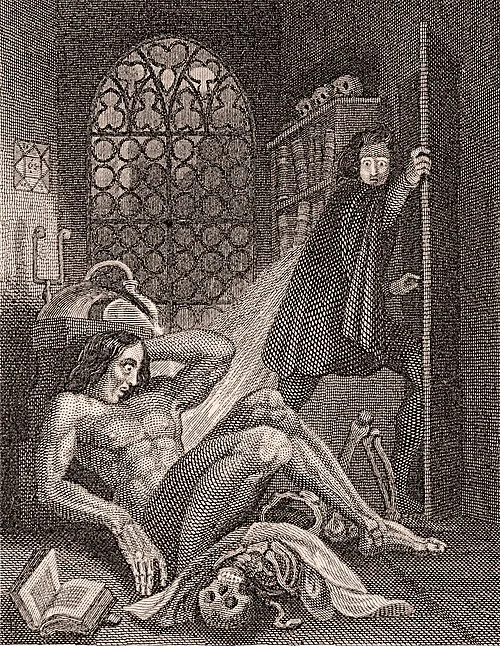
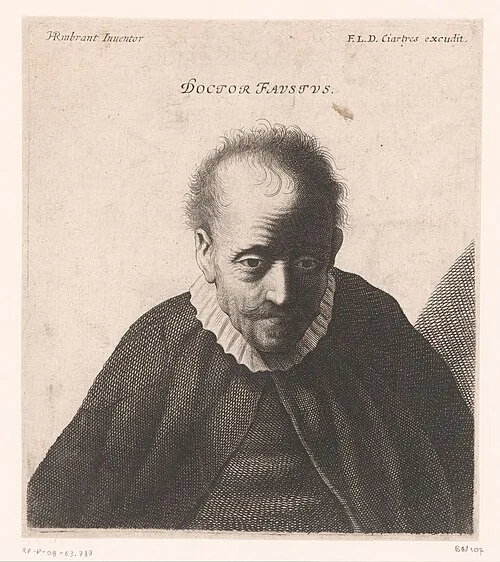

Frontispiece by Theodor von Holst for the 1831 edition, public domain. · Print attributed to Jérôme David, after Rembrandt van Rijn, published by François Langlois. Rijksmuseum (object RP-P-OB-63.789), CC0. · Photograph of a cosplayer as Light Yagami by Farhan Ahmad Tajuddin (2017), CC BY 2.0. Cropped; background removed for the portrait above. The character is the creation of Tsugumi Ohba and Takeshi Obata.


An estimate is an inference.
Yours can be measured.
Thirty questions, scored against general-population benchmarks. Your score, your percentile, your ability breakdown and a printable IIF certificate.
Find your IQ score now! →