



What is Sabrina Gonzalez Pasterski’s IQ?
No IQ score is public. The record is a Harvard Ph.D. and a faculty post at Perimeter Institute.
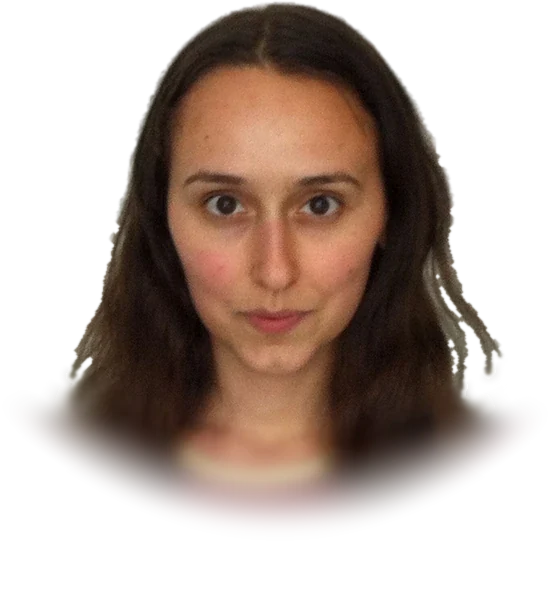
Sabrina Gonzalez Pasterski’s IQ is unknown: no IQ score has been published for her. What is documented is an MIT physics degree (2013), a Harvard Ph.D. (2019) and a faculty post at the Perimeter Institute, where she leads work on celestial holography.
Sabrina Gonzalez Pasterski’s estimated IQ
- A Ph.D. from Harvard University (2019). Her thesis, “Implications of Superrotations,” is catalogued by INSPIRE and was published in Physics Reports (2019). Andrew Strominger is listed as her advisor.
- An MIT physics education (2010–2013). The Perimeter Institute lists the Joel Matthew Orloff Award, given for the highest graduating GPA in MIT Physics, in 2013.
- Peer-reviewed papers from 2014 onward, many with Strominger. They include “Low’s Subleading Soft Theorem as a Symmetry of QED” (Physical Review Letters, 2014) and “New Gravitational Memories” (Journal of High Energy Physics, 2016, with Strominger and Alexander Zhiboedov).
- A faculty post. Perimeter lists her as Research Faculty (2022 to present), founder and principal investigator of its Celestial Holography Initiative (2021 to present) and Deputy Director of the Simons Collaboration on Celestial Holography (2023 to present).
This is an inference from a record, not a test result. No source gives her SAT, GRE or any IQ score, and degrees, awards and papers measure training and output, not points on a scale. Physics is also a team field, so the range cannot separate her from other theorists with similar records. It is best read as a floor with an uncertain top.
- Born
- 1993
- Field
- Theoretical physics: gravity, scattering amplitudes, celestial holography
- Education
- MIT physics (2010–2013); Ph.D., Harvard University (2019)
- Doctoral thesis
- “Implications of Superrotations,” Physics Reports 829 (2019)
- Position
- Research Faculty, Perimeter Institute (2022 to present, as listed by Perimeter)
- Award
- Joel Matthew Orloff Award, highest graduating GPA, MIT Physics (2013)
- Circulating figure
- None found; no published IQ test result
What an IQ of 145–165 actually means
Set the claim aside for a moment. If someone genuinely scored in this range, here is what that would represent.
| Score range | Classification | Share of people | What it indicates |
|---|---|---|---|
| 85 – 114 | Average | ~68% | The range most people fall into. |
| 115 – 129 | Above average | ~13.6% | Roughly one person in seven. |
| 130 – 144 | Gifted | ~2% | The threshold most high-IQ societies use. |
| Above 144 | Highly gifted | ~0.1% | Figures above this range are extrapolated from the curve rather than measured. |
Percentages are approximate and describe a normal distribution. The same number means different things on tests with different standard deviations.
Thirty questions gives you a measured position on this exact scale — your score, your percentile and the ability breakdown behind it.
Find out in 30 minutes →Who Sabrina Gonzalez Pasterski is
Sabrina Gonzalez Pasterski is a theoretical physicist who works on quantum field theory and gravity. Perimeter lists her as holding a Ph.D. from Harvard University (2019). INSPIRE, the field’s literature database, records her as an MIT undergraduate from 2010 to 2013 and a Harvard doctoral student from 2013 to 2019. Perimeter also lists a research post on the CMS experiment at CERN with MIT (2012–2013).
Her early papers were written with Andrew Strominger. Two appeared in 2014: “Semiclassical Virasoro symmetry of the quantum gravity S-matrix” (Journal of High Energy Physics, with Daniel Kapec, Vyacheslav Lysov and Strominger) and “Low’s Subleading Soft Theorem as a Symmetry of QED” (Physical Review Letters, with Lysov and Strominger). “New Gravitational Memories” followed in 2016, with Strominger and Alexander Zhiboedov. Crossref confirms each title, author list and journal.
Perimeter says her research includes infinite-dimensional symmetry enhancements of the S-matrix, a new observable memory effect in gravity, and a framework for extending these ideas to other theories. Papers with Shu-Heng Shao and Strominger, such as “Flat Space Amplitudes and Conformal Symmetry of the Celestial Sphere” (Physical Review D, 2017), helped start the celestial holography program.
After Harvard she held a postdoctoral post at the Princeton Center for Theoretical Science (2019–2022 on her Perimeter profile). She joined the Perimeter faculty in 2021. The profile lists her as founder and principal investigator of the Celestial Holography Initiative, lead coordinator for the Strings 2023 conference, and deputy director of the Simons Collaboration on Celestial Holography.
 By Elora Mercer, Celebrity Research WriterFigures checked by Leon Falkner, Data & Research Analyst
Reviewed by Aarav Vardhan, Editor-in-Chief · Last reviewed November 2026

Sabrina Gonzalez Pasterski: the documented record
The estimate above rests on this record. Every entry here is a matter of public fact, which is more than can be said for the number itself.
- 2010Begins undergraduate studies at MIT, per INSPIRE.
- 2013Graduates from MIT and receives the Orloff Award for the highest graduating GPA in Physics.
- 2014First papers with Strominger: Semiclassical Virasoro symmetry (JHEP) and Low’s subleading soft theorem as a symmetry of QED (Physical Review Letters).
- 2016Publishes “New Gravitational Memories” in the Journal of High Energy Physics, with Strominger and Zhiboedov.
- 2019Completes her Harvard Ph.D.; her thesis is published in Physics Reports.
- 2021Joins Perimeter Institute; “Lectures on celestial amplitudes” appears in The European Physical Journal C.
- 2023Becomes deputy director of the Simons Collaboration on Celestial Holography, per Perimeter.
Why no figure circulates
Following a claim back to its first appearance is the part almost nobody does — and it is what most people are actually asking.
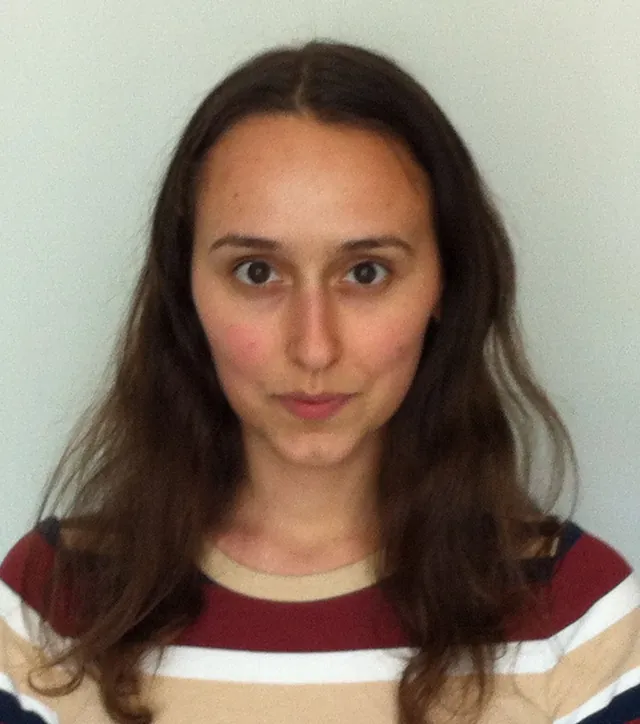
No IQ test result has been published for Sabrina Gonzalez Pasterski, so Sabrina Pasterski’s IQ score is unknown. A number attached to her name without a named test, a date and an examiner is a guess. For how such figures spread, and what to check first, see where celebrity IQ numbers come from.
Is Sabrina Gonzalez Pasterski a genius? Her record is that of a leading young theorist. Her thesis, “Implications of Superrotations,” appeared in Physics Reports in 2019. Her 2021 “Lectures on celestial amplitudes” was published in The European Physical Journal C. “Genius” has no fixed IQ cut-off, and a prize or a post is not a test. See what genius-level IQ means for where the usual lines are drawn.
Her estimated IQ, 145–165, sits level with Stephen Hawking (150–170) and below Edward Witten (165–185). It sits a little above Katherine Johnson (135–155), mainly because of the doctorate and the research output. None of these people has a published score. Above about 160 no test can separate people reliably, a limit explained in the test ceiling, so a precise high figure for any of them would be extrapolation.
The Simons Collaboration on Celestial Holography, which she helps lead as deputy director, shows how the field works: many groups share one program. Credit for a result is spread across a team, so a record like hers describes a researcher inside a community, not a lone score. For what has been measured for prize-level scientists, see the IQ of Nobel Prize winners.
How we read a number →No score report, entrance-exam result or clinician’s statement for Pasterski is public. Her Perimeter profile, INSPIRE record and Crossref entries describe degrees, positions and papers, and none gives an IQ.
Gives “PhD Harvard University, 2019,” joining Perimeter in 2021, Research Faculty 2022 to present, Celestial Holography Initiative founder, Simons Collaboration deputy director (2023), the 2013 MIT Orloff Award for highest graduating GPA, and the research summary quoted above.
Lists MIT (undergraduate, 2010–2013), Harvard (Ph.D., 2013–2019), Princeton PCTS (postdoc, 2019–2021) and Perimeter (from 2021); thesis record “Implications of Superrotations” (Ph.D., Harvard, 2019); and the papers cited on this page with their arXiv numbers.
Confirms titles, authors and journals: Physical Review Letters 113, 111601 (2014); JHEP 08 (2014) 058; JHEP 12 (2016) 053; Physical Review D 96, 065026 (2017); Physics Reports 829, 1 (2019); European Physical Journal C 81, 1062 (2021). None carries a retraction notice.
Her doctoral thesis at Harvard, published as a review.
A single-author review of the field she helped start.
Used only to confirm identity. Wikidata describes her as an American theoretical physicist born in 1993.
The sources behind our estimate
The figures that circulate for Sabrina Gonzalez Pasterski, what we were able to confirm, and where the two diverge.
No IQ figure circulates for Sabrina Gonzalez Pasterski in any source we opened. Her Perimeter Institute profile, INSPIRE record and Wikipedia article give degrees, positions and papers, not a score.
No published IQ test result exists for Sabrina Gonzalez Pasterski. The record is a Harvard Ph.D., a set of peer-reviewed papers and a faculty post. Nothing in her own record uses an IQ number.
With nothing circulating, there is no spread to audit. 145–165 is this site’s estimated range for Sabrina Pasterski and the only figure on the page. It rests on a record, not a test, so its floor, its top and its twenty-point width are judgments.
Want a number that does hold up? Every figure on this page is somebody’s claim. Take the 30-question test and get a percentile you can check rather than a figure you have to trust.
Sabrina Gonzalez Pasterski — frequently asked
What is Sabrina Gonzalez Pasterski’s IQ?
Sabrina Gonzalez Pasterski’s IQ is unknown because no IQ test result has been published for her. This site’s estimated range is 145–165. It is inferred from her MIT physics degree, her Harvard Ph.D. and her research record, not from a test.
What is Sabrina Pasterski’s estimated IQ?
This site estimates 145–165 for Sabrina Pasterski. The range rests on documented work: a Harvard Ph.D. (2019), peer-reviewed papers from 2014 onward and a faculty post at Perimeter Institute. It is an estimate from achievement, and no test backs it.
Is Sabrina Gonzalez Pasterski a genius?
Her documented record is that of a leading young theoretical physicist. “Genius” has no fixed IQ cut-off and no test score backs the word. Her published work includes a Physics Reports thesis (2019) and a 2021 review on celestial amplitudes.
Did Sabrina Pasterski go to MIT and Harvard?
Yes. INSPIRE records her as an MIT undergraduate from 2010 to 2013 and a Harvard doctoral student from 2013 to 2019. Perimeter Institute lists her Ph.D. as Harvard University, 2019, and an MIT physics award for the highest graduating GPA in 2013.
What does Sabrina Pasterski research?
Sabrina Pasterski studies quantum field theory and gravity, especially celestial holography. Perimeter credits her with work on symmetry enhancements of the S-matrix and a new observable memory effect in gravity. She leads the Celestial Holography Initiative there.
How does Sabrina Pasterski’s estimated IQ compare with Stephen Hawking’s?
This site estimates 145–165 for Sabrina Pasterski and 150–170 for Stephen Hawking. The ranges overlap from 150 to 165. Both rest on records, not tests, so neither person can be called higher.
Does a Harvard Ph.D. prove a high IQ?
No. A doctorate shows that someone completed years of original research, not what score they would earn on an IQ test. No test has the range to rank people far above 160, so a precise figure for a physicist would be extrapolation.
How does my IQ compare with Sabrina Gonzalez Pasterski?
You can find out in about fifteen minutes. The IQ Metrics assessment is 30 questions, scored on the same 100-mean scale used throughout this page, so your result and the estimate above are at least expressed in the same units — one measured, one inferred. Once you have a number, the leaderboard shows where it would sit, and how we score and norm it explains the benchmarking.
Where does this estimate come from?
From the documented record rather than a test — the method is named above and set out in full under how we read a number. Compare it against the other scientists profiles, starting with Albert Einstein.
- Take the 30-question IQ test — get a measured score and percentile of your own
- Average IQ by country — how the scale behaves across populations
- How IQ Metrics scores its assessment — the method behind our own number
- More on how IQ testing works — reliability, error and what a score can and cannot say
- More scientists profiles — same field, same method
More scientists
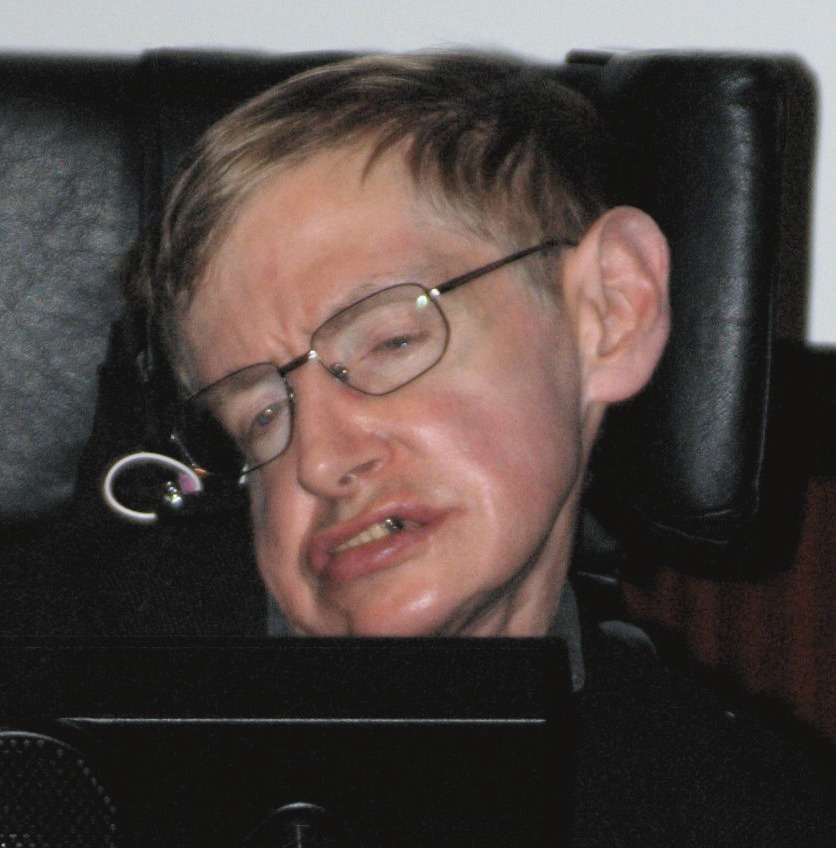
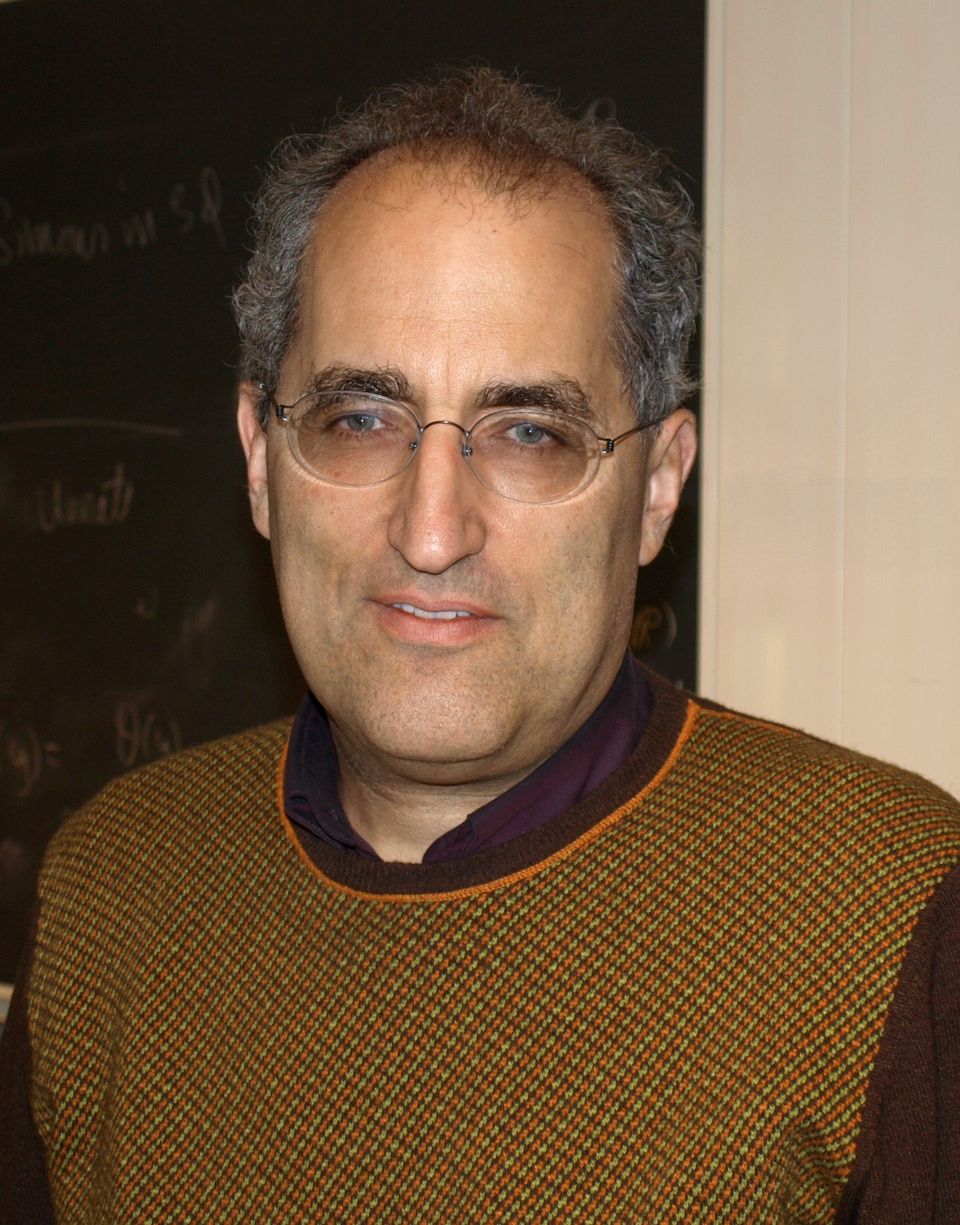
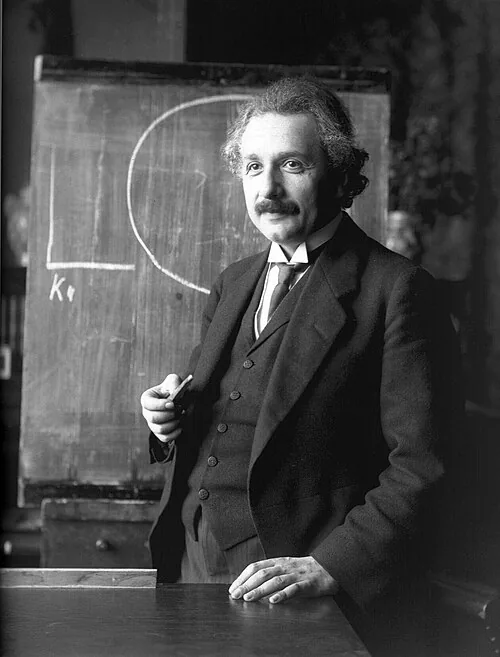
Photograph by ²°¹°°, Paris, 2006, public domain. Cropped from the original. · Photograph by Ojan (Chalmers University of Technology, April 2008), public domain. Background removed for the portrait above. · Portrait by Ferdinand Schmutzer (1921), public domain. Background removed for the portrait above.


An estimate is an inference.
Yours can be measured.
Thirty questions, scored against general-population benchmarks. Your score, your percentile, your ability breakdown and a printable IIF certificate.
Find your IQ score now! →