



What was Virginia Woolf’s IQ?
No IQ score exists. The record is nine novels, a landmark essay and a press she co-founded in 1917.
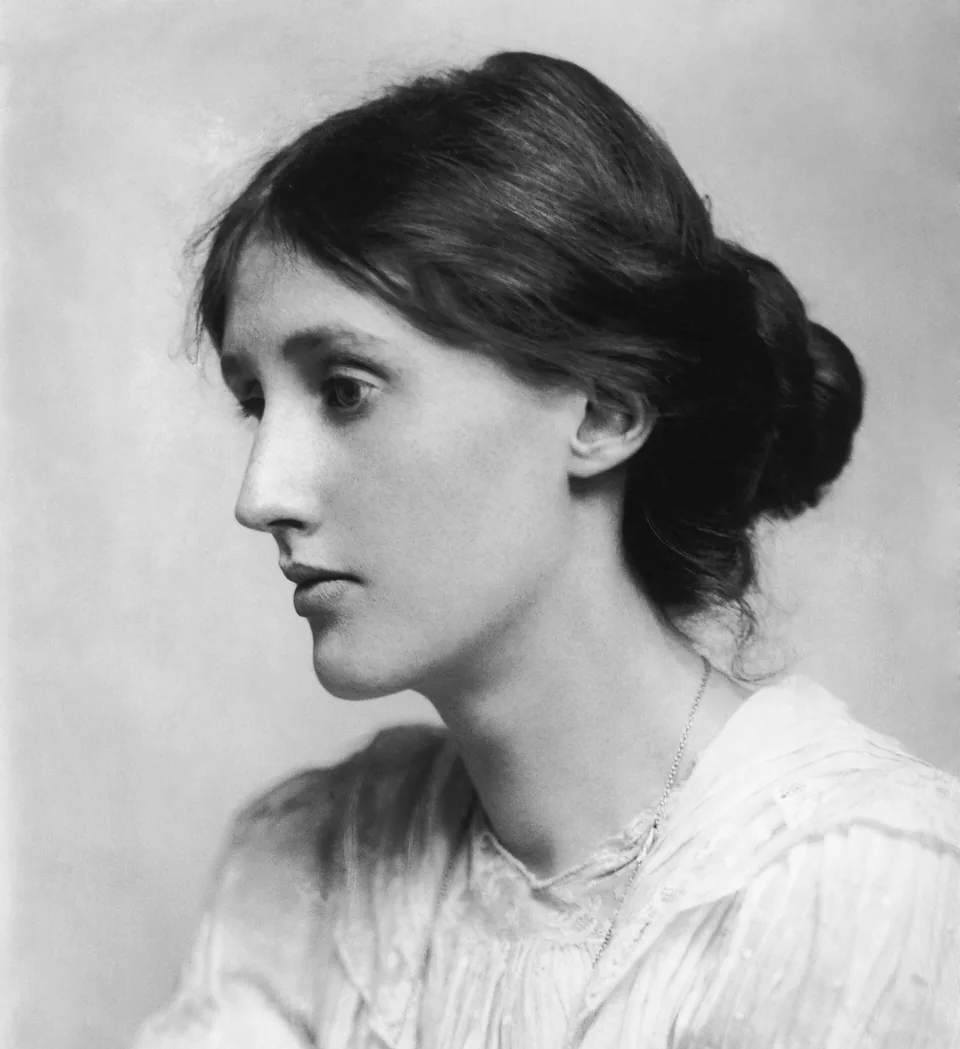
No IQ score has ever been published for Virginia Woolf: no school, army or adult test result for her is on record, and none is cited as of November 2026. Virginia Woolf’s IQ is therefore unknown. What is documented is a home education in her father’s library, the novels Mrs Dalloway (1925) and To the Lighthouse (1927), and the Hogarth Press she co-founded in 1917.
Virginia Woolf’s estimated IQ
- Educated at home rather than at school or university, with tutoring in Greek and Latin from 1897 and use of her father Leslie Stephen’s large library, according to Wikipedia’s biography and the Encyclopedia of Sex and Gender.
- Published nine novels, from The Voyage Out (1915) to Between the Acts (1941), including Mrs Dalloway (1925), To the Lighthouse (1927), Orlando (1928) and The Waves (1931), per the bibliography in Wikipedia’s biography.
- Wrote the extended essay A Room of One’s Own (1929), based on two lectures she gave at Newnham College and Girton College, Cambridge, in October 1928.
- Co-founded the Hogarth Press with Leonard Woolf in 1917; between 1917 and 1946 it published 527 titles, according to Wikipedia’s history of the press.
This is an inference from published work, not a test result. Literary achievement depends heavily on temperament, circumstance and craft, which an IQ test does not measure, and she had no university examinations that could anchor a figure. The range is placed with other essayist-novelists on this site and is a judgment, not a measurement.
- Born
- 1882, South Kensington, London
- Education
- At home; private tutoring in Greek and Latin from 1897; lectures at King’s College London (Ladies’ Department)
- Parents
- Leslie Stephen and Julia Prinsep Jackson
- Publishing
- Co-founded the Hogarth Press with Leonard Woolf in 1917
- Known for
- Mrs Dalloway, To the Lighthouse, Orlando, The Waves, A Room of One’s Own
- Group
- Founding member of the Bloomsbury Group
- Circulating figure
- None found; no published IQ test result
What an IQ of 140–155 actually means
Set the claim aside for a moment. If someone genuinely scored in this range, here is what that would represent.
| Score range | Classification | Share of people | What it indicates |
|---|---|---|---|
| 85 – 114 | Average | ~68% | The range most people fall into. |
| 115 – 129 | Above average | ~13.6% | Roughly one person in seven. |
| 130 – 144 | Gifted | ~2% | The threshold most high-IQ societies use. |
| Above 144 | Highly gifted | ~0.1% | Figures above this range are extrapolated from the curve rather than measured. |
Percentages are approximate and describe a normal distribution. The same number means different things on tests with different standard deviations.
Thirty questions gives you a measured position on this exact scale — your score, your percentile and the ability breakdown behind it.
Find out in 30 minutes →Who Virginia Woolf was
Virginia Woolf was born in 1882 in South Kensington, London, the seventh child of Julia Prinsep Jackson and Leslie Stephen. As was common for girls of her class, she was educated at home. She had private tutoring in Greek and Latin from 1897, with Clara Pater and Janet Case among her tutors, and attended lectures at the Ladies’ Department of King’s College London, according to Wikipedia’s biography.
What is Virginia Woolf’s IQ score based on, if there is no test? Only on a record, and the record begins with reading. The Encyclopedia of Sex and Gender says she had the use of Leslie Stephen’s substantial library, which substituted for the university she could not attend. Wikipedia quotes her recalling that her father told her to read what she liked. After 1904 she moved to the Bloomsbury district and became a founding member of the Bloomsbury Group.
She began publishing professionally in 1904, published her first novel The Voyage Out in 1915 and married Leonard Woolf in 1912. In 1917 the couple bought a handpress for £19, taught themselves to use it in the dining room of Hogarth House in Richmond, and issued Two Stories that July. Wikipedia says the Hogarth Press published 527 titles by 1946, and the Encyclopedia of Sex and Gender adds that it issued T. S. Eliot’s The Waste Land in 1922.
Her major novels followed: Jacob’s Room (1922), Mrs Dalloway (1925), To the Lighthouse (1927), Orlando: A Biography (1928), The Waves (1931), The Years (1937) and Between the Acts (1941). A Room of One’s Own, drawn from lectures at Newnham and Girton colleges in October 1928, appeared in 1929, and Three Guineas in 1938. For where such a writer sits among historical figures, see the ranking of historical geniuses’ IQ estimates.
 By Elora Mercer, Celebrity Research WriterFigures checked by Leon Falkner, Data & Research Analyst
Reviewed by Aarav Vardhan, Editor-in-Chief · Last reviewed November 2026

Virginia Woolf: the documented record
The estimate above rests on this record. Every entry here is a matter of public fact, which is more than can be said for the number itself.
- 1882Born in South Kensington, London.
- 1897Begins private tutoring in Greek and Latin.
- 1904Begins publishing professionally; moves to Bloomsbury.
- 1912Marries Leonard Woolf.
- 1915Publishes her first novel, The Voyage Out.
- 1917Founds the Hogarth Press with Leonard Woolf; Two Stories published in July.
- 1925Publishes Mrs Dalloway.
- 1927Publishes To the Lighthouse.
- 1928Publishes Orlando: A Biography; delivers the lectures behind A Room of One’s Own in October.
- 1929Publishes A Room of One’s Own.
Why no figure circulates
Following a claim back to its first appearance is the part almost nobody does — and it is what most people are actually asking.
Virginia Woolf’s IQ has never been reported, because no test result exists to report. Searching for a Virginia Woolf IQ score returns no page that names a test, a date and an examiner. A number attached to her name without those three things is a guess, and for how such figures spread see where celebrity IQ numbers come from.
Did Virginia Woolf take an IQ test? No record says so. She was born in 1882 and educated at home, and no test or examination score from her is known. Cambridge University Press’s Assessing Intelligence has a chapter titled “Virginia Woolf’s Hereditary Genius,” but it concerns how writers treated the IQ model in their novels, not any score for her.
Was Virginia Woolf a genius? Her documented record is that of a major novelist and essayist, and “genius” has no fixed IQ cut-off; see what genius-level IQ means. Her estimated IQ of 140–155 overlaps Oscar Wilde (140–155), who also left a body of essays and fiction, and sits slightly above George Orwell (135–150), another novelist-essayist. It is below Mark Twain (145–165), whose range reflects a licensed river-pilot’s trade and three honorary doctorates.
On the usual scale, with a mean of 100 and a standard deviation of 15, a score of 140 is about 2.7 standard deviations above average. The percentile calculator converts any score in this range. Because her record is published work and not an exam result, the top of the range is partly extrapolation, and she is best read beside other writers we have checked.
How we read a number →A search for a Virginia Woolf IQ score found no page stating one. The biographical pages describe education, publications and the Hogarth Press, and none gives a score.
Describes a study of how five novelists, including Woolf, engaged with the IQ model of intelligence in their novels; its coda is titled “Virginia Woolf’s Hereditary Genius.” It discusses the concept, not a score for her.
Used for birth in South Kensington, home education, tutoring from 1897, library access, King’s College lectures, the move to Bloomsbury, her novels with dates and the Hogarth Press.
Says the press was founded in 1917 by Leonard and Virginia Woolf, bought a handpress for £19, published Two Stories in July 1917 and issued 527 titles from 1917 to 1946.
Says the essay was first published in 1929 and is based on papers read on October 20 and 26, 1928 at Newnham College and Girton College, Cambridge.
Confirms home education, use of Leslie Stephen’s library, the 1925, 1927 and 1928 novels, and that the Hogarth Press published The Waste Land in 1922. It dates A Room of One’s Own to 1928, where other sources give 1929.
Identifies Q40909 as the English modernist writer (1882–1941).
The sources behind our estimate
The figures that circulate for Virginia Woolf, what we were able to confirm, and where the two diverge.
No IQ figure circulates for Virginia Woolf in the sources we found, although people do search for “Virginia Woolf IQ” and “Virginia Woolf IQ score.”
A search for a Virginia Woolf IQ score turned up no page that states one. The nearest academic hit is Assessing Intelligence (Cambridge University Press), which studies how five novelists, Woolf among them, wrote about the idea of IQ in their fiction. It discusses concepts of intelligence, not a measured score for her.
With nothing circulating, there is no spread to audit. 140–155 is this site’s estimated range for Virginia Woolf and the only figure on the page. It rests on a record of published work, so its floor, its top and its fifteen-point width are judgments.
Want a number that does hold up? Every figure on this page is somebody’s claim. Take the 30-question test and get a percentile you can check rather than a figure you have to trust.
Virginia Woolf — frequently asked
What was Virginia Woolf’s IQ?
No IQ score has been published for Virginia Woolf, so her IQ is unknown. This site’s estimated range is 140–155 on a scale with mean 100 and SD 15, inferred from her published novels, essays and the Hogarth Press, not from a test.
What is Virginia Woolf’s IQ score?
There is no Virginia Woolf IQ score on record. No school, army or adult test result for her has been published. The 140–155 range on this page is an estimate from her documented work, and it should be read as a judgment, not a measurement.
Did Virginia Woolf take an IQ test?
No record shows that she did. Wikipedia’s biography says she was educated at home, with private tutoring from 1897 and use of her father’s library. She began publishing professionally in 1904.
Was Virginia Woolf a genius?
Her documented record is that of a major novelist and essayist: Mrs Dalloway (1925), To the Lighthouse (1927), Orlando (1928) and A Room of One’s Own (1929). “Genius” has no fixed IQ cut-off, and no test score backs the word.
How smart was Virginia Woolf?
Her published work shows an exceptional literary mind. She read widely from her father Leslie Stephen’s library, learned Greek and Latin through private tutors, and wrote nine novels. How that translates into an IQ is not known, and this site’s 140–155 estimate is only an inference.
How does Virginia Woolf’s estimated IQ compare with George Orwell’s?
This site estimates 140–155 for Virginia Woolf and 135–150 for George Orwell. Both are novelist-essayists, and both ranges rest on published work, not tests. They overlap from 140 to 150, so neither writer can be called higher.
What was the Hogarth Press?
The Hogarth Press was the publishing house Virginia and Leonard Woolf founded in 1917 at Hogarth House, Richmond, after buying a handpress for £19. According to Wikipedia, it published 527 titles between 1917 and 1946, and it issued much of Woolf’s own work.
How does my IQ compare with Virginia Woolf?
You can find out in about fifteen minutes. The IQ Metrics assessment is 30 questions, scored on the same 100-mean scale used throughout this page, so your result and the estimate above are at least expressed in the same units — one measured, one inferred. Once you have a number, the leaderboard shows where it would sit, and how we score and norm it explains the benchmarking.
Where does this estimate come from?
From the documented record rather than a test — the method is named above and set out in full under how we read a number. Compare it against the other writers profiles, starting with Voltaire.
- Take the 30-question IQ test — get a measured score and percentile of your own
- Average IQ by country — how the scale behaves across populations
- How IQ Metrics scores its assessment — the method behind our own number
- More on how IQ testing works — reliability, error and what a score can and cannot say
- More writers profiles — same field, same method
More writers
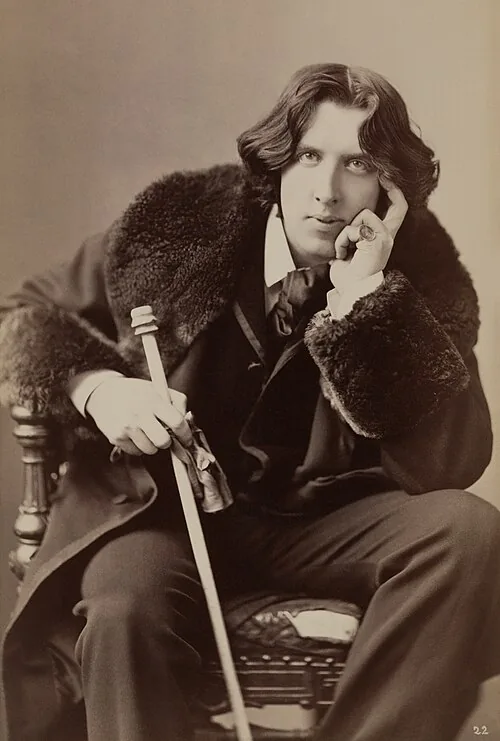
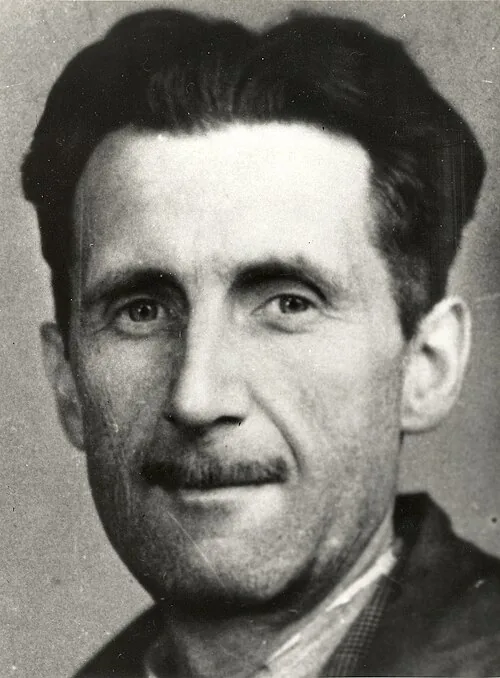
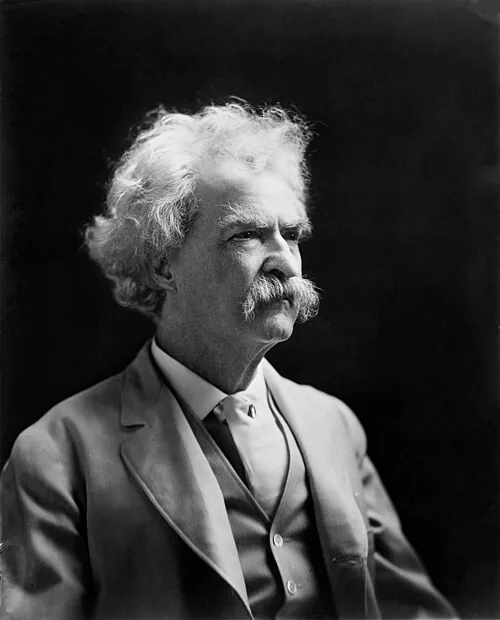
Photograph by Napoleon Sarony (1882), Library of Congress, public domain. · Press photograph by the Branch of the National Union of Journalists (1943), public domain. Background removed for the portrait above. · Photograph, 1907, via the Library of Congress (digital ID cph.3a08820), public domain. Background removed for the portrait above.

An estimate is an inference.
Yours can be measured.
Thirty questions, scored against general-population benchmarks. Your score, your percentile, your ability breakdown and a printable IIF certificate.
Find your IQ score now! →