



What is Don Quixote’s IQ?
Cervantes wrote a man who reasons well on every subject except one, and he never gave him a number.
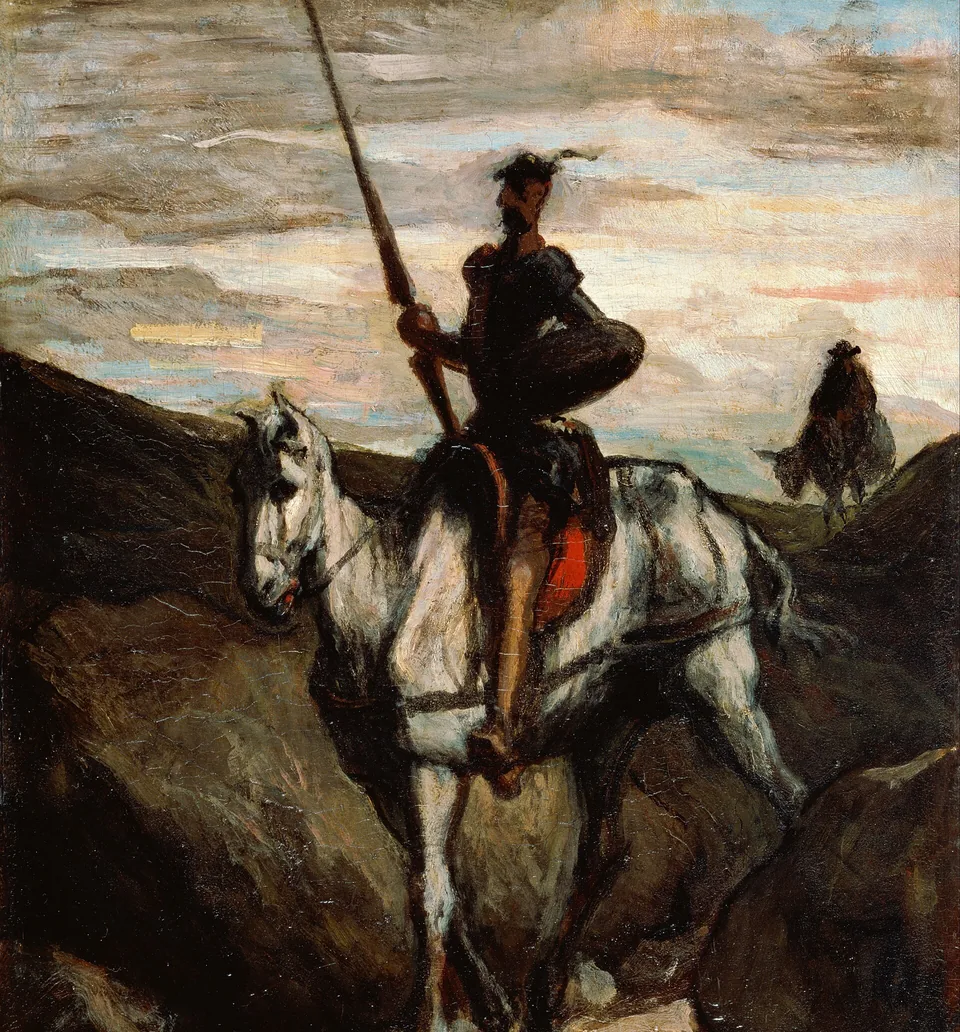
Don Quixote has no IQ score: Cervantes never gives one, and no figure circulates for him. Our Don Quixote IQ estimate is 125–145 on the usual scale, read from the novel itself, where a well-read gentleman reasons soundly on almost everything except chivalry, which Cervantes says ruined his judgment.
Don Quixote’s estimated IQ
- He is a reader and a talker: the narrator says he read so much that “his brains got so dry that he lost his wits” (Part 1, chapter 1).
- His long discourse on arms and letters at the inn (Part 1, chapter 38) leaves listeners pitying “a man of apparently sound sense, and with rational views on every subject he discussed,” who is hopeless only “when his wretched unlucky chivalry was in question.”
- A curate who is “a man of letters and a graduate” tells him he is right in all he said in favor of arms (Part 1, chapter 38).
- His own verdict at the end: “I was mad, now I am in my senses” (Part 2, chapter 74).
A fictional mind has no test, and this range is a reading of a novel, with low confidence. The delusion is the point of the book, so we do not count the knight’s mistakes against the author’s intelligence or the character’s. We keep the range below the 180–200 for Sherlock Holmes, who is written to be right.
- Created by
- Miguel de Cervantes
- First published
- Part 1 in 1605; Part 2 in 1615
- Real name in the story
- Alonso Quixano, “the Good”
- Squire
- Sancho Panza
- Famous scene
- Charging the windmills, Part 1
- Quoted translation
- John Ormsby (1885), Project Gutenberg eBook #996
- Wikidata item
- Q944201, the character (the novel is a separate item)
- Circulating figure
- None found
What an IQ of 125–145 actually means
Set the claim aside for a moment. If someone genuinely scored in this range, here is what that would represent.
| Score range | Classification | Share of people | What it indicates |
|---|---|---|---|
| 85 – 114 | Average | ~68% | The range most people fall into. |
| 115 – 129 | Above average | ~13.6% | Roughly one person in seven. |
| 130 – 144 | Gifted | ~2% | The threshold most high-IQ societies use. |
| Above 144 | Highly gifted | ~0.1% | Figures above this range are extrapolated from the curve rather than measured. |
Percentages are approximate and describe a normal distribution. The same number means different things on tests with different standard deviations.
Thirty questions gives you a measured position on this exact scale — your score, your percentile and the ability breakdown behind it.
Find out in 30 minutes →Who Don Quixote is
Who is Don Quixote? He is the title character of Miguel de Cervantes’s novel The Ingenious Gentleman Don Quixote of La Mancha, published in two parts in 1605 and 1615. He is a country gentleman “bordering on fifty” who reads so many books of chivalry that he decides to ride out as a knight-errant, with a neighboring farm laborer, Sancho Panza, as his squire. His real name, given at the end, is Alonso Quixano.
What does the novel say about his mind? The narrator says his reading destroyed his judgment, and also shows him giving discourses that other characters find sensible. At the inn in Part 1, chapter 38, he speaks at length about soldiers and scholars, and the listeners feel pity that a man of such “rational views on every subject” is lost on chivalry. We quote the public-domain translation by John Ormsby (1885).
How does Sancho compare? In Part 2, chapter 45, Sancho takes possession of an “island” and begins to govern it. On his deathbed Don Quixote asks Sancho’s forgiveness for leading him “to seem as mad as myself.” Neither man has a number, and the novel does not rank them. See the other characters in our fictional characters category, and the philosophers ranked by IQ page for thinkers who have a real record.
 By Elora Mercer, Celebrity Research WriterFigures checked by Leon Falkner, Data & Research Analyst
Reviewed by Aarav Vardhan, Editor-in-Chief · Last reviewed November 2026

Don Quixote: the documented record
The estimate above rests on this record. Every entry here is a matter of public fact, which is more than can be said for the number itself.
- 1605Part 1 comes out with the new year, introducing the knight and Sancho Panza.
- 1605Part 1, chapter 1: reading “dries” his brains and he loses his wits.
- 1605Part 1, chapter 38: his discourse on arms and letters at the inn.
- 1615Part 2 is printed at the very end of the year.
- 1615Part 2, chapter 45: Sancho takes possession of his island.
- 1615Part 2, chapter 74: he says “I was mad, now I am in my senses” and dies as Alonso Quixano the Good.
Why no figure circulates
Following a claim back to its first appearance is the part almost nobody does — and it is what most people are actually asking.
What is Don Quixote’s IQ? There is no number in the novel and none that we could trace to a source. Cervantes published Part 1 in 1605 and Part 2 in 1615, three centuries before IQ existed. Any figure for the knight is a reader’s estimate, and for how such figures are made, see where celebrity IQ numbers come from.
Was Don Quixote mad or intelligent? The text supports both. Chapter 1 of Part 1 says that “what with little sleep and much reading his brains got so dry that he lost his wits,” and calls his plan to become a knight-errant “the strangest notion that ever madman in this world hit upon.” But after his discourse on arms and letters, the onlookers pity “a man of apparently sound sense” who reasons rationally on every subject except chivalry. The usual reading is a lucid mind with one fixed delusion.
Don Quixote vs Sherlock Holmes: which mind is stronger? They are opposite designs. Sherlock Holmes (180–200 on this site) is written to be right, so his reasoning always works. Quixote is written to be wrong about one thing, so his reasoning fails against a windmill and works in a speech. The other literary minds on this site, Doctor Faustus and Victor Frankenstein, are scholars who push knowledge too far; Quixote is a reader who believes too much of it.
Does Don Quixote recover his reason? In the last chapter, Part 2 chapter 74, he wakes and says: “I was mad, now I am in my senses; I was Don Quixote of La Mancha, I am now, as I said, Alonso Quixano the Good.” The Wikidata item for the character is named for that real name, Alonso Quijano. For another character whose intelligence is argued from the text, see Odysseus, or compare a score of your own on the IQ Metrics test.
How we read a number →Read in the Gutenberg text: Part 1 chapter 1 (“his brains got so dry that he lost his wits”; “the strangest notion that ever madman in this world hit upon”); chapter 38 (the discourse on arms and letters and the listeners’ pity); Part 2 chapter 45 (Sancho’s island) and chapter 74 (“I was mad, now I am in my senses”). Ormsby’s introduction dates Part 1 to the new year 1605 and Part 2 to the end of 1615.
Dates the novel 1605–1615 (Part 1 in 1605, Part 2 in 1615), describes a hidalgo from La Mancha named Alonso Quijano who reads so many chivalric romances that he becomes a knight-errant, and notes the windmill episode behind “tilting at windmills.” It gives no IQ.
The item is described as the protagonist of Don Quixote; the novel itself is a separate item, which we do not use.
Painting by Honoré Daumier (1808–1879), 1850s, in the Artizon Museum collection, via the Google Art Project; public domain (PD-Art, the artist died in 1879).
Ranges used for comparison: Sherlock Holmes 180–200, Doctor Faustus 170–190, Victor Frankenstein 160–180, Odysseus 145–165.
Cervantes gives no number, and a web search for a stated IQ for Don Quixote found none; the results were study guides and articles on whether he is mad or wise.
The sources behind our estimate
The figures that circulate for Don Quixote, what we were able to confirm, and where the two diverge.
People search for “Don Quixote IQ,” “is Don Quixote smart” and “was Don Quixote insane,” but we found no page that gives a number for him with a source in the text.
Cervantes gives no number. A web search for a stated IQ returned none; the pages that came up are study guides and articles about whether he is mad or wise, and they disagree with each other. The only thing the text supports is that he reasons well on most subjects and is deluded about chivalry.
Only our range ends are shown, because no figure circulates. Both ends are readings of one character’s speech and conduct, not a measurement.
Want a number that does hold up? Every figure on this page is somebody’s claim. Take the 30-question test and get a percentile you can check rather than a figure you have to trust.
Don Quixote — frequently asked
What is Don Quixote’s IQ?
Don Quixote has no IQ score. Cervantes never gives one, and we found no source that does. Our own Don Quixote IQ estimate is 125–145, read from the text: a well-read gentleman who reasons soundly on most subjects and is deluded about chivalry. It is an estimate of a fiction.
Was Don Quixote mad or intelligent?
Both, in the text. Part 1, chapter 1 says his brains dried up and he lost his wits. Part 1, chapter 38 shows listeners pitying a man of sound sense who is lost only on chivalry. The usual reading is a lucid mind with one fixed delusion.
Don Quixote vs Sancho Panza: who is the wiser?
The novel does not rank them. Quixote is better read and speaks well on arms and letters, while Sancho is practical, and in Part 2 he governs an island. On his deathbed Don Quixote asks Sancho’s forgiveness for leading him to seem as mad as himself.
Don Quixote vs Sherlock Holmes: whose mind is stronger?
They are written for opposite purposes. Holmes is written to be right, so this site puts him at 180–200. Don Quixote is written to be wrong about one thing, so we put him at 125–145. Neither number is a measurement of a real mind.
What did Cervantes say about reading and reason?
In Part 1, chapter 1, he says Alonso Quixano became so absorbed in books of chivalry that, “what with little sleep and much reading his brains got so dry that he lost his wits.” The Ormsby translation (1885) is our source for the wording.
Did Don Quixote recover his sanity?
Yes, at the end. In Part 2, chapter 74 he says, “I was mad, now I am in my senses; I was Don Quixote of La Mancha, I am now, as I said, Alonso Quixano the Good,” and he makes his will before he dies.
When was Don Quixote written?
Cervantes published Part 1 at the start of 1605 and Part 2 at the end of 1615. The two parts together are usually printed as one novel, The Ingenious Gentleman Don Quixote of La Mancha, and are in the public domain.
How does my IQ compare with Don Quixote?
You can find out in about fifteen minutes. The IQ Metrics assessment is 30 questions, scored on the same 100-mean scale used throughout this page, so your result and the estimate above are at least expressed in the same units — one measured, one inferred. Once you have a number, the leaderboard shows where it would sit, and how we score and norm it explains the benchmarking.
Where does this estimate come from?
From the documented record rather than a test — the method is named above and set out in full under how we read a number. Compare it against the other fictional profiles, starting with Sherlock Holmes.
- Take the 30-question IQ test — get a measured score and percentile of your own
- Average IQ by country — how the scale behaves across populations
- How IQ Metrics scores its assessment — the method behind our own number
- More on how IQ testing works — reliability, error and what a score can and cannot say
- More fictional profiles — same field, same method
More fictional

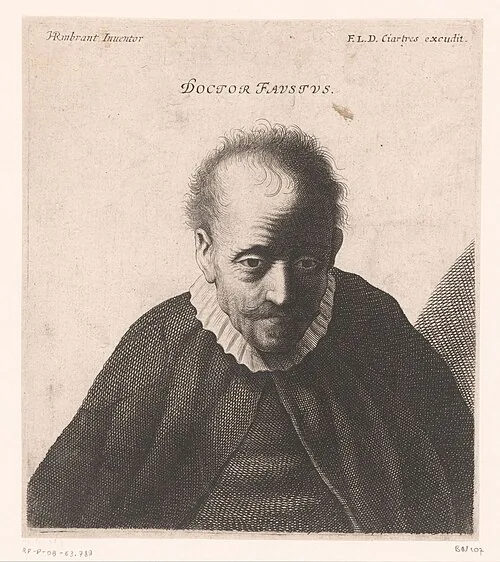
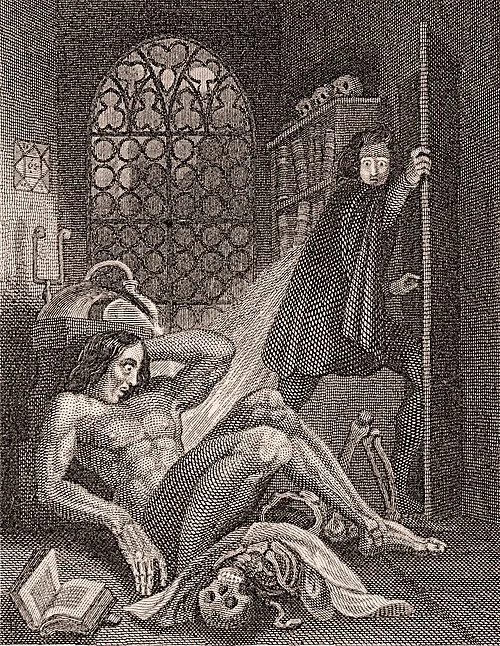
Photograph of a marble head of Odysseus (Greek, probably first century AD, from the villa of Tiberius at Sperlonga; Museo Archeologico Nazionale, Sperlonga) by Jastrow (2006), released into the public domain by the photographer. It is an ancient sculpture of a mythical hero, not a likeness of a real person. Cropped and with background removed for the portrait above. · Print attributed to Jérôme David, after Rembrandt van Rijn, published by François Langlois. Rijksmuseum (object RP-P-OB-63.789), CC0. · Frontispiece by Theodor von Holst for the 1831 edition, public domain.


An estimate is an inference.
Yours can be measured.
Thirty questions, scored against general-population benchmarks. Your score, your percentile, your ability breakdown and a printable IIF certificate.
Find your IQ score now! →