



What was Henry VIII’s IQ?
No IQ was ever measured. His record is a humanist education and a long reign.
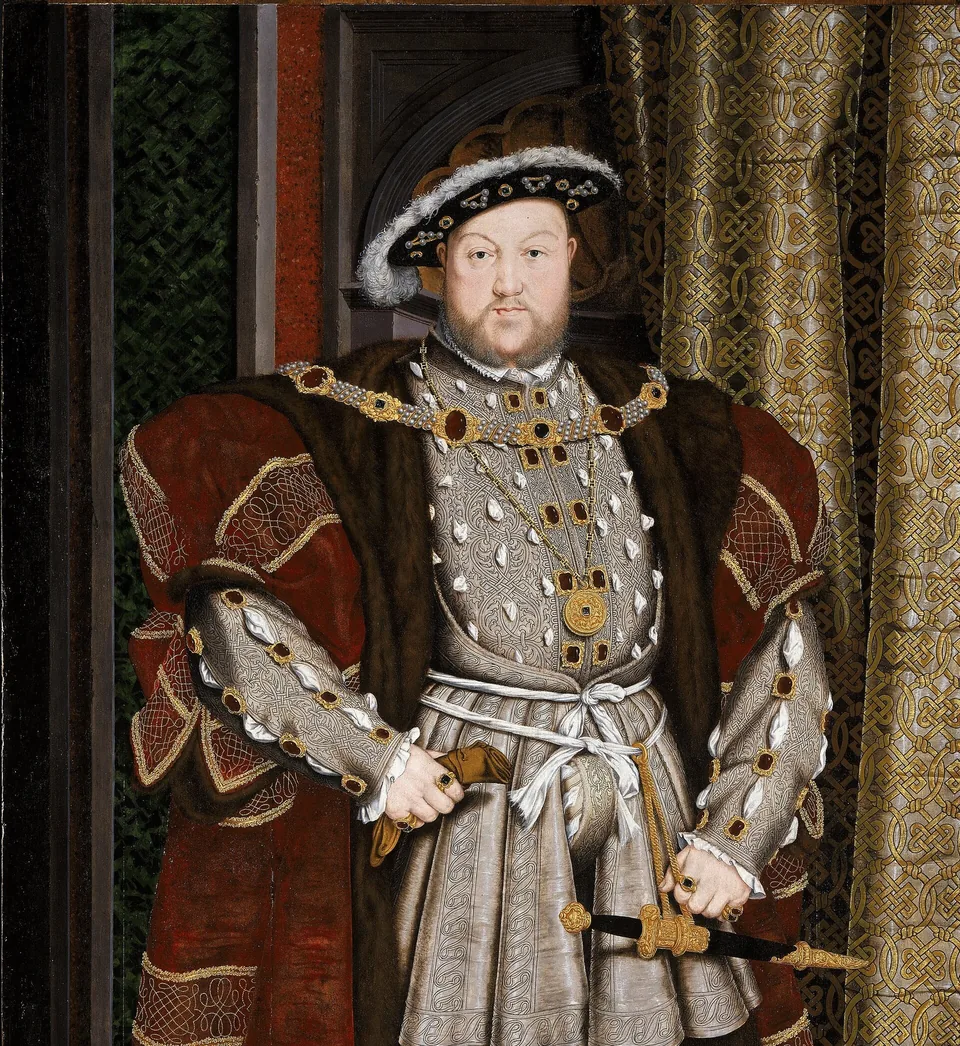
Henry VIII’s IQ was never measured and no published estimate exists, and our Henry VIII IQ estimate is 125–140. We placed him from the record: a first-rate education that left him fluent in Latin and French, a skilled musician and author, and nearly 38 years as King of England, from April 22, 1509, to January 28, 1547.
Henry VIII’s estimated IQ
- He died in 1547, centuries before intelligence tests, and no published IQ estimate for him turned up. Catharine Cox’s 1926 study of 301 geniuses does not list him as a subject: our text of the volume names him only in passing, inside other people’s biographies.
- Wikipedia says he “received a first-rate education from leading tutors”, became fluent in Latin and French and learned at least some Italian. It calls him “the first English king with a modern humanist education” who read and wrote English, French and Latin.
- He was an accomplished musician, author and poet, and published a book: his 1521 Defence of the Seven Sacraments earned him the title Defender of the Faith from Pope Leo X (Wikipedia).
- He ruled for 37 years and 9 months, broke with the Catholic Church and founded the Church of England. Wikipedia notes that he “grew more tyrannical, egotistical, lustful, and paranoid” late in life, which a score would not capture.
A king’s record shows birth and power as much as ability, and tutors and court writers shaped what survives about him. Reputation here runs from brilliant to brutal, and neither is a test result. The range is wide on purpose, and it is not a measurement of him.
- Born
- June 28, 1491, Greenwich, England
- Reign
- April 22, 1509, to January 28, 1547
- Known for
- Six marriages, the break with Rome and the Church of England
- Education
- Leading tutors; fluent in Latin and French, some Italian (Wikipedia)
- Writings
- Defence of the Seven Sacraments (1521); songs including “Pastime with Good Company”
- Title from the pope
- Defender of the Faith, 1521
- Successor
- Edward VI
- Documented IQ test
- None possible; none found
What an IQ of 125–140 actually means
Set the claim aside for a moment. If someone genuinely scored in this range, here is what that would represent.
| Score range | Classification | Share of people | What it indicates |
|---|---|---|---|
| 85 – 114 | Average | ~68% | The range most people fall into. |
| 115 – 129 | Above average | ~13.6% | Roughly one person in seven. |
| 130 – 144 | Gifted | ~2% | The threshold most high-IQ societies use. |
| Above 144 | Highly gifted | ~0.1% | Figures above this range are extrapolated from the curve rather than measured. |
Percentages are approximate and describe a normal distribution. The same number means different things on tests with different standard deviations.
Thirty questions gives you a measured position on this exact scale — your score, your percentile and the ability breakdown behind it.
Find out in 30 minutes →Who Henry VIII was
Who was Henry VIII? Henry was born on June 28, 1491, at the Palace of Placentia in Greenwich, the second son of Henry VII and Elizabeth of York. His elder brother Arthur died in 1502, which made him heir. He became king at 17 on April 22, 1509. See all historical figures on this site.
What was Henry VIII’s education? Wikipedia says he had leading tutors and became fluent in Latin and French. In his early reign he was described as “an attractive, educated, and accomplished king”. He cultivated the image of a Renaissance man and brought Renaissance music into his court. See average IQ by education level.
What is he known for? Six marriages, his break with Rome and the founding of the Church of England. The archbishop declared his first marriage void in 1533 and the pope excommunicated him. He dissolved the monasteries and seized their wealth, which contributed to the English Reformation (Wikipedia).
How did his reign end? Henry grew immobile and obese late in life, partly from a jousting injury in 1536 that left a leg wound. He died on January 28, 1547, and was buried at St George’s Chapel, Windsor Castle. His only surviving son, Edward VI, succeeded him (Wikipedia). To test yourself, take the IQ test.
 By Elora Mercer, Celebrity Research WriterFigures checked by Leon Falkner, Data & Research Analyst
Reviewed by Aarav Vardhan, Editor-in-Chief · Last reviewed November 2026

Henry VIII: the documented record
The estimate above rests on this record. Every entry here is a matter of public fact, which is more than can be said for the number itself.
- June 28, 1491Born at Greenwich.
- 1502His brother Arthur dies and Henry becomes heir.
- April 22, 1509Becomes king at 17.
- 1521His Defence of the Seven Sacraments earns the title Defender of the Faith.
- 1533Archbishop Cranmer declares the marriage to Catherine of Aragon void.
- 1536A jousting accident injures his leg.
- 1537Prince Edward is born to Jane Seymour.
- January 28, 1547Dies and is buried at St George’s Chapel, Windsor.
Why no figure circulates
Following a claim back to its first appearance is the part almost nobody does — and it is what most people are actually asking.
Has Henry VIII’s IQ ever been estimated? Not that we found. We read Wikipedia’s full article and found no IQ figure, and the 1926 Cox study of 301 geniuses does not treat him as a subject. Our range of 125–140 is placed from his record. For how such numbers start, see where celebrity IQ numbers come from.
What did his education and reign show? Wikipedia says he had a first-rate education, was fluent in Latin and French and knew some Italian. As king he published a book, was a skilled lutenist and organist, and kept a large library, annotating many books. He also ordered two of his wives beheaded. Education and cruelty both sit in the record.
Could a king’s IQ be inferred from records? Only loosely. Cox’s 1926 method scored geniuses from childhood records, and Wikipedia says little is known of Henry’s early life because he was not expected to be king. We have a good record of his schooling and none of his childhood precocity, so any figure is wide. See the research on the IQ of historical geniuses.
How does he compare with Napoleon and Leonardo here? On this site Napoleon is 130–140 and Leonardo da Vinci is 175–195. Henry’s 125–140 overlaps Napoleon’s range and sits well below Leonardo’s. All are estimates from records. See also IQ percentile calculator.
How rare would 125 to 140 be? On the usual scale (mean 100, SD 15), 125 is about the 95.2th percentile, so about 1 person in 21 scores higher. 140 is about the 99.6th percentile, or about 1 in 261. Those are our arithmetic from the normal curve for our range, not results. See the IQ percentile calculator.
How we read a number →Dates, family, education, the break with Rome, his writing and music, and his later years. It gives no IQ figure.
Names Henry VIII only in passing, inside other subjects’ biographies. He is not one of the 301 subjects, so the volume gives him no estimate.
No IQ figure or estimate turned up for Henry VIII.
Confirms the identity (King of England from 1509 to 1547) used for this page’s structured data.
A portrait by the workshop of Hans Holbein the Younger, about 1540–1547, in the Walker Art Gallery, Liverpool, in the public domain (the artist died in 1543).
How this section separates a published test result, a circulating figure and its own estimate.
The sources behind our estimate
The figures that circulate for Henry VIII, what we were able to confirm, and where the two diverge.
People search “henry viii iq”, “was henry viii smart”, “henry viii education” and “henry viii intelligence”. We found no IQ number for him in any source we read, only a reputation that swings between a Renaissance scholar and a tyrant.
We found no IQ score or estimate for Henry VIII. No test existed before 1905, and neither Wikipedia nor the one early study that might have covered him, Catharine Cox’s 1926 volume, gives him a figure. Anything you read online is a guess.
These are the ends of our range, not a score. On this site Napoleon is 130–140. Leonardo da Vinci is 175–195. None of them was ever tested.
Want a number that does hold up? Every figure on this page is somebody’s claim. Take the 30-question test and get a percentile you can check rather than a figure you have to trust.
Henry VIII — frequently asked
What is Henry VIII’s IQ?
Henry VIII’s IQ was never measured, because no IQ test existed in his lifetime, and no published estimate exists. Our Henry VIII IQ estimate is 125–140, placed from his education, writing and reign. It is an inference, not a score. To place a score on the scale, use the IQ percentile calculator.
Was Henry VIII smart?
Wikipedia calls him the first English king with a modern humanist education, fluent in Latin and French, and a skilled musician and author. It also calls him tyrannical and paranoid in later life. Intelligence is not the same as good judgment, and neither is a score.
What was Henry VIII’s education?
Wikipedia says he received a first-rate education from leading tutors, became fluent in Latin and French and learned at least some Italian. Little is known of his early life because he was not expected to become king.
What was Henry VIII’s intelligence like?
The record shows broad ability: he read and wrote English, French and Latin, owned a large library, published a book and composed songs. The record cannot turn that into a number.
How does Henry VIII compare with Napoleon and Leonardo da Vinci?
On this site Napoleon is 130–140 and Leonardo da Vinci is 175–195. Henry’s 125–140 overlaps Napoleon’s. All are estimates from records, not test results.
Why is Henry VIII shown in a painting, not a photograph?
No photograph of a 16th-century king exists. The portrait is a painting from the workshop of Hans Holbein the Younger, in the public domain, shown in a frame because automatic cut-outs damage paintings.
How rare is an IQ of 125 to 140?
On the usual scale (mean 100, SD 15), 125 is about the 95.2th percentile, so about 1 person in 21 scores higher. 140 is about the 99.6th percentile, or about 1 in 261. Those are our arithmetic from the normal curve for our range, not results. See the IQ percentile calculator.
How does my IQ compare with Henry VIII?
You can find out in about fifteen minutes. The IQ Metrics assessment is 30 questions, scored on the same 100-mean scale used throughout this page, so your result and the estimate above are at least expressed in the same units — one measured, one inferred. Once you have a number, the leaderboard shows where it would sit, and how we score and norm it explains the benchmarking.
Where does this estimate come from?
From the documented record rather than a test — the method is named above and set out in full under how we read a number. Compare it against the other historical profiles, starting with Isaac Newton.
- Take the 30-question IQ test — get a measured score and percentile of your own
- Average IQ by country — how the scale behaves across populations
- How IQ Metrics scores its assessment — the method behind our own number
- More on how IQ testing works — reliability, error and what a score can and cannot say
- More historical profiles — same field, same method
More historical
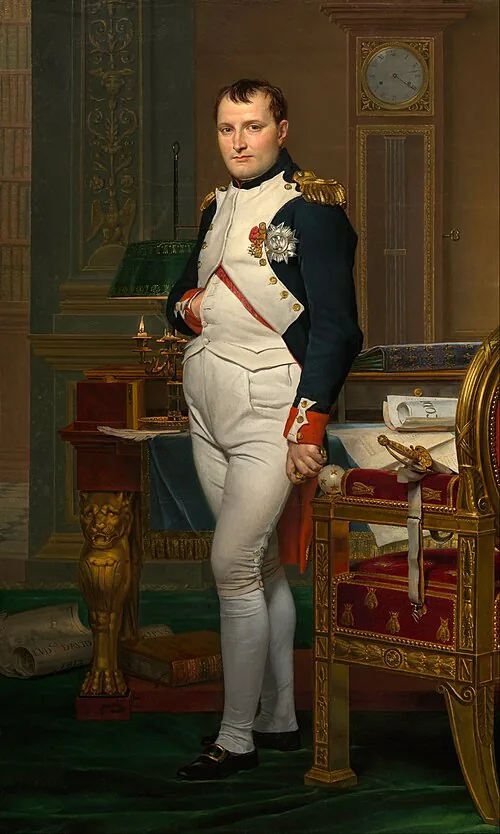
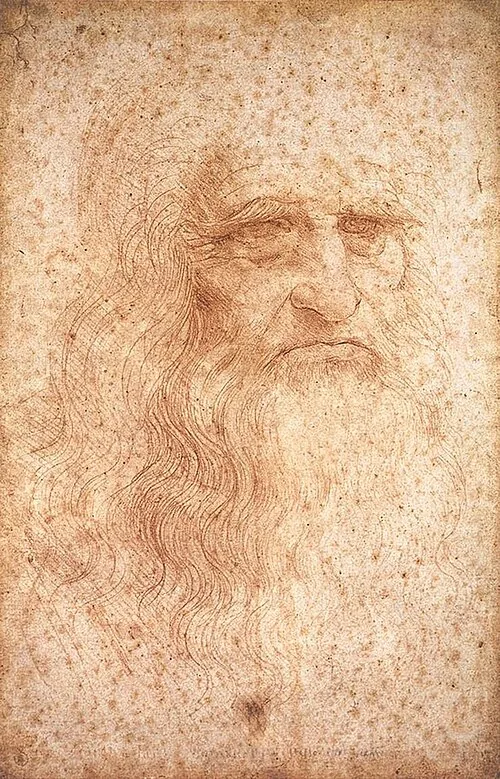
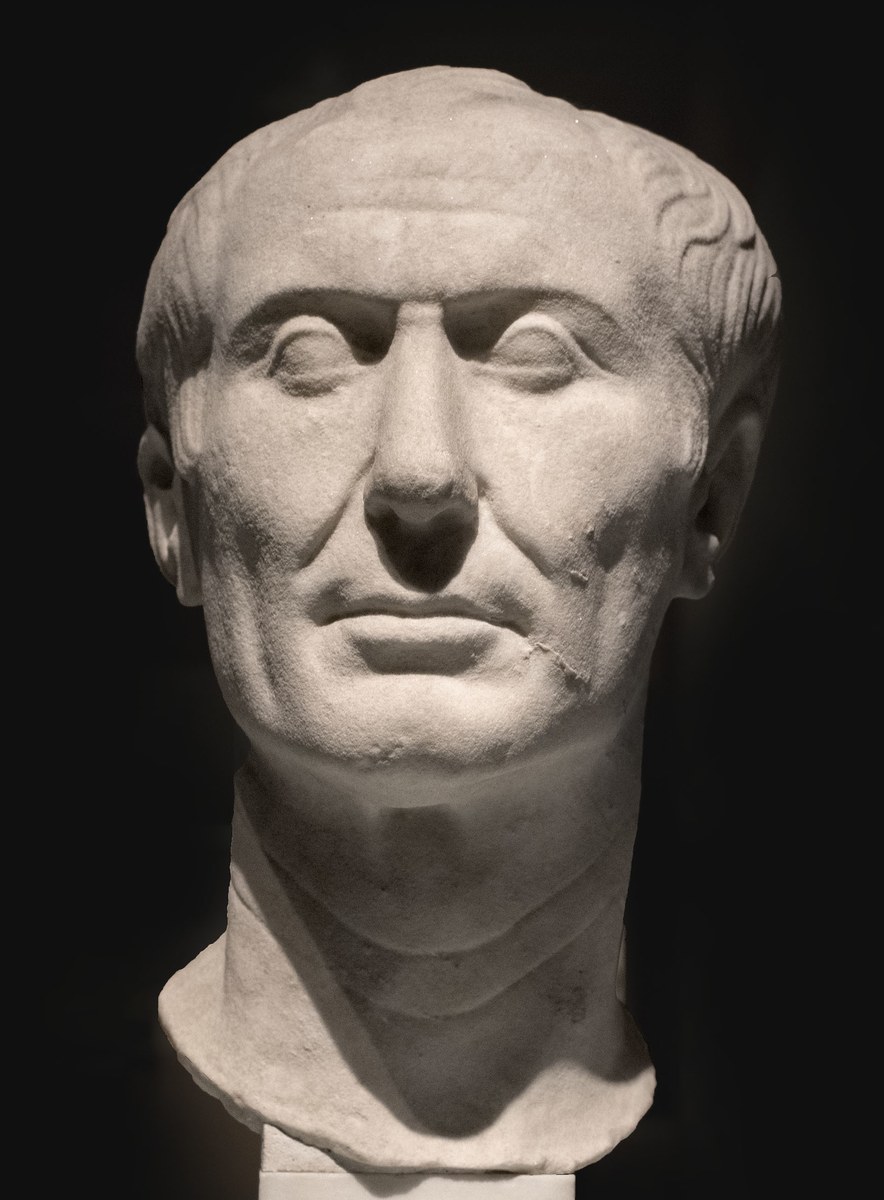
Portrait by Jacques-Louis David (1812), via Wikimedia Commons, public domain. · Presumed self-portrait, red chalk, c. 1512, via Wikimedia Commons, public domain. · Photograph by Ángel M. Felicísimo, public domain. Background removed for the portrait above.


An estimate is an inference.
Yours can be measured.
Thirty questions, scored against general-population benchmarks. Your score, your percentile, your ability breakdown and a printable IIF certificate.
Find your IQ score now! →