



What is Sergey Brin’s IQ?
A mathematics degree at nineteen, and a doctorate never finished.

The 152 attached to Sergey Brin’s name has no test behind it. What is on record is a mathematics degree taken at nineteen, a national research fellowship, and a Stanford doctorate he started and never finished.
Sergey Brin’s estimated IQ
- BS in mathematics and computer science, University of Maryland, College Park, 1993 — taken at nineteen.
- National Science Foundation Graduate Research Fellowship, one of the more competitive awards available to a US graduate student in the sciences, which funded his move to Stanford.
- The Anatomy of a Large-Scale Hypertextual Web Search Engine (Brin and Page, 1998) — a peer-reviewed conference paper that is among the most-cited computer science publications ever written.
This range is inferred from an academic record, not measured. It is also worth saying that a degree at nineteen is partly a fact about schooling and family — his father taught mathematics at the same university — and not purely a fact about the person.
- Born
- 21 August 1973, Moscow
- Field
- Computer science, search engineering
- Education
- BS mathematics and computer science, Maryland (1993); Stanford PhD programme, not completed
- Known for
- PageRank, co-founding Google
- Circulating figure
- 152, unsourced
What an IQ of 150–165 actually means
Set the claim aside for a moment. If someone genuinely scored in this range, here is what that would represent.
Average is 100 by construction, and about two-thirds of people fall between 85 and 115. Take the test to place your own score on this scale.
| Score range | Classification | Share of people | What it indicates |
|---|---|---|---|
| 85 – 114 | Average | ~68% | The range most people fall into. |
| 115 – 129 | Above average | ~13.6% | Roughly one person in seven. |
| 130 – 144 | Gifted | ~2% | The threshold most high-IQ societies use. |
| Above 144 | Highly gifted | ~0.1% | Figures above this range are extrapolated from the curve rather than measured. |
Percentages are approximate and describe a normal distribution. The same number means different things on tests with different standard deviations.
Thirty questions gives you a measured position on this exact scale — your score, your percentile and the ability breakdown behind it.
Find out in 30 minutes →Who Sergey Brin is
Sergey Brin was born in Moscow in 1973 and came to the United States with his family in 1979, when he was six. His father Michael Brin became a mathematics professor at the University of Maryland; his mother Eugenia worked as a researcher at NASA’s Goddard Space Flight Center.
He took his bachelor’s degree at Maryland in 1993 and went to Stanford on an NSF fellowship, where he met Larry Page in 1995. The search engine they built as a graduate project — originally called BackRub — became Google in September 1998.
He served as president of Alphabet until 2019 and remains a controlling shareholder. The later public work has run to other things: Parkinson’s genetics research funding, following a personal genetic finding he disclosed himself, and airships.
 By Elora Mercer, Celebrity Research WriterFigures checked by Leon Falkner, Data & Research Analyst
Reviewed by Aarav Vardhan, Editor-in-Chief · Last reviewed August 2026
.jpg)
Sergey Brin: the documented record
The estimate above rests on this record. Every entry here is a matter of public fact, which is more than can be said for the number itself.
- 1973Born in Moscow.
- 1979Family emigrates to the United States.
- 1993Takes a BS in mathematics and computer science at the University of Maryland.
- 1993Enters the Stanford computer science PhD programme on an NSF fellowship.
- 1995Meets Larry Page at Stanford.
- 1998Publishes the PageRank paper; takes leave from the doctorate and co-founds Google.
- 2015Google reorganises as Alphabet; Brin becomes president.
- 2019Steps down as president of Alphabet.
Where the 152 figure came from
Following a claim back to its first appearance is the part almost nobody does — and it is what most people are actually asking.
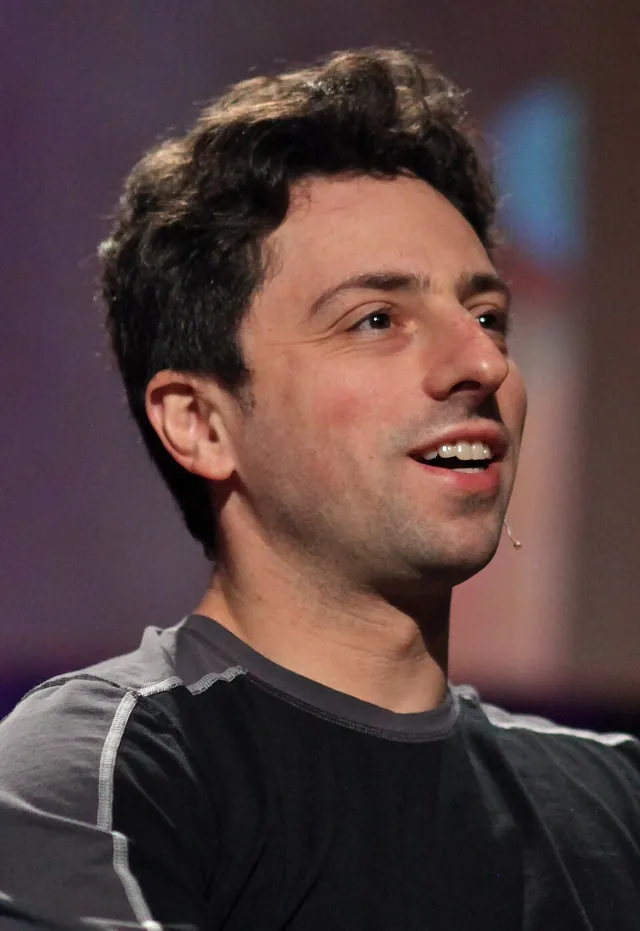
Brin is a useful case because the documented record is genuinely strong, which means the invented number adds nothing. A mathematics and computer science degree at nineteen, an NSF fellowship, and a doctoral place at Stanford are all checkable. None of them is an IQ score, and none of them needs to be dressed as one.
The detail the listicles leave out is the one that makes him interesting: he did not finish the PhD. He and Larry Page took leave from the Stanford programme in 1998 to run Google and never went back. A profile built around a score has nowhere to put that fact. A profile built around a record does — it is the single most consequential academic decision either of them made.
The 1998 paper is the strongest evidence in the file, and it is evidence of a specific thing rather than a general one. PageRank treats the link structure of the web as a citation graph and ranks pages by a recursive measure of endorsement. That is a mathematical idea, published, reviewed, and still legible twenty-five years later.
How we read a number →The peer-reviewed paper describing PageRank, presented at the Seventh International World Wide Web Conference. The strongest single piece of documented work in the file.
A conferred degree, verifiable through the institution. His father, Michael Brin, was a member of the mathematics faculty there.
A competitive federal award. Named consistently across his biographical record as the funding that took him to Stanford.
No school, university, military or press record of a test result has surfaced, and Brin has never claimed one publicly.
Source URLs and first-appearance date pending audit.
No original could be located. The figure circulates chiefly on billionaire-IQ listicles that cite each other.
The sources behind our estimate
The figures that circulate for Sergey Brin, what we were able to confirm, and where the two diverge.
152 is the figure that circulates, usually inside listicles of billionaire IQs. It appears without a test name, a date or an examiner, and the same number turns up on dozens of pages that cite one another.
We could find no evidence that Sergey Brin has ever sat an IQ test, or that any result has been published. He has not claimed a score. The 152 has no traceable first appearance — it behaves like a number that was assigned to fit the biography rather than derived from anything.
A fifteen-point spread across sources that all state their figure as fact is the ordinary signature of estimation dressed up as measurement.
Want a number that does hold up? Every figure on this page is somebody’s claim. Take the 30-question test and get a percentile you can check rather than a figure you have to trust.
Sergey Brin — frequently asked
What is Sergey Brin’s IQ?
There is no measured score. The 152 that circulates online has no test, date or examiner behind it. Our 150–165 range is inferred from his academic and published record, not from a test.
Did Sergey Brin finish his PhD?
No. He entered the Stanford computer science doctoral programme in 1993 on an NSF fellowship and took leave in 1998 to run Google. He never returned to complete it.
How old was Sergey Brin when he graduated?
Nineteen. He took his BS in mathematics and computer science at the University of Maryland in 1993.
Is Sergey Brin a member of Mensa?
There is no record of membership, and he has never claimed any tested score.
What did Sergey Brin actually invent?
With Larry Page he developed PageRank, a method of ranking web pages by treating links as citations. It was published in 1998 and became the basis of Google search.
How does Brin compare with Larry Page on this site?
They sit close together, which is appropriate — the documented records are near-identical, down to the same unfinished doctorate. Neither has a test result.
How does my IQ compare with Sergey Brin?
You can find out in about fifteen minutes. The IQ Metrics assessment is 30 questions, scored on the same 100-mean scale used throughout this page, so your result and the estimate above are at least expressed in the same units — one measured, one inferred. Once you have a number, the leaderboard shows where it would sit, and how we score and norm it explains the benchmarking.
Where does this estimate come from?
From the documented record rather than a test — the method is named above and set out in full under how we read a number. Compare it against the other business & tech profiles, starting with Steve Jobs.
- Take the 30-question IQ test — get a measured score and percentile of your own
- Average IQ by country — how the scale behaves across populations
- How IQ Metrics scores its assessment — the method behind our own number
- More on how IQ testing works — reliability, error and what a score can and cannot say
- More business & tech profiles — same field, same method
More business & tech

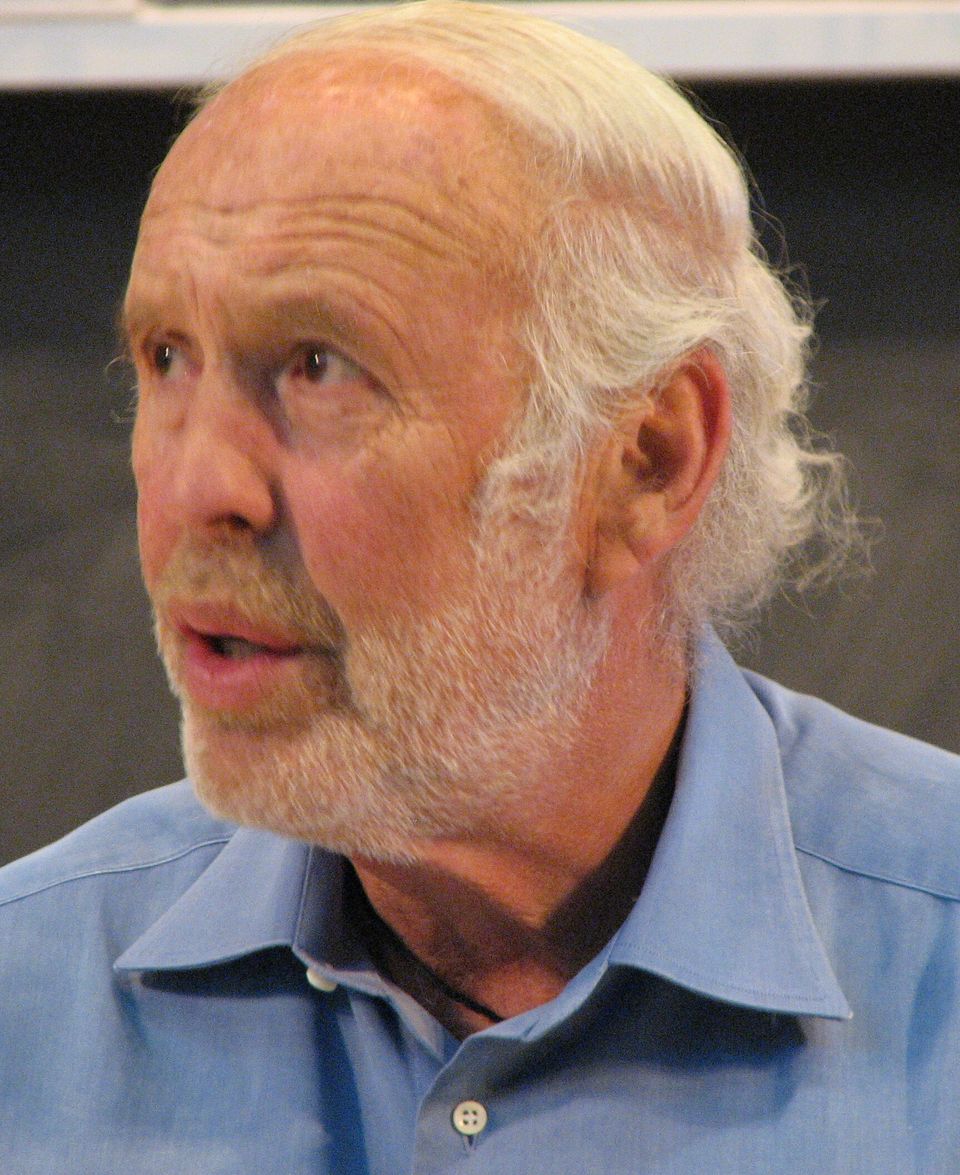

Photograph by Krd (LinuxCon Europe, October 2014; cropped by Von Sprat), CC BY-SA 4.0. Background removed for the portrait above. · Photograph by Gleuschk (MSRI, May 2007), CC BY-SA 3.0. Background removed for the portrait above. · Photograph by Gage Skidmore (Scottsdale, Arizona, 2022), CC BY-SA 3.0. Background removed for the portrait above.
.jpg)
.jpg)

An estimate is an inference.
Yours can be measured.
Thirty questions, scored against general-population benchmarks. Your score, your percentile, your ability breakdown and a printable IIF certificate.
Find your IQ score now! →