



What was Boris Spassky’s IQ?
He beat Petrosian for the world title and lost to Fischer, and neither match came with an IQ result.
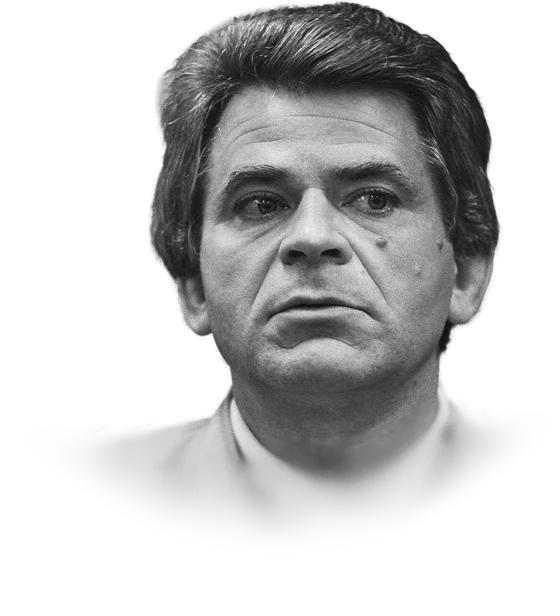
Boris Spassky has no published IQ score and no figure circulates for him. Our Boris Spassky IQ estimate is 135–150 on the usual scale (mean 100, SD 15), drawn from his chess record: grandmaster at 18, world champion from 1969 to 1972 and a peak FIDE rating of 2690, second in the world, in January 1971. A chess rating measures chess strength, not IQ.
Boris Spassky’s estimated IQ
- A peak FIDE rating of 2690 in January 1971, when he was ranked second in the world (Wikipedia).
- The Grandmaster title at 18, after the 1955 Gothenburg Interzonal, and a debut in the Candidates Tournament at Amsterdam in 1956 at 19 (FIDE Museum).
- World Junior Champion in 1955 at Antwerp, scoring 14 of 16 (The Week in Chess; Wikipedia).
- World Champion from 1969 to 1972, winning the 1969 title match against Tigran Petrosian by 12½–10½ (FIDE Museum).
- Seven appearances for the Soviet Olympiad team, 1962–1978, with 13 medals and 69 points from 94 games (FIDE Museum).
A chess rating measures strength against other rated players, and its link with general intelligence is modest. Spassky left no test result, so this range uses the site’s rating-based method. His reputation as a universal player and his title are evidence of chess skill, not of a score. We read no FIDE profile for him, so the 2690 rests on Wikipedia.
- Born
- January 30, 1937, Leningrad
- Died
- February 27, 2025, Moscow
- Titles
- International Master (1953); Grandmaster (1955, at 18); World Champion 1969–1972
- Peak FIDE rating
- 2690 (January 1971), ranked second in the world (Wikipedia)
- World Junior Championship
- Won at Antwerp, 1955, 14 of 16
- 1969 title match
- Beat Tigran Petrosian 12½–10½ in Moscow
- 1972 title match
- Lost to Bobby Fischer 12½–8½ (+7 −3 =11)
- Circulating figure
- None found; no IQ score, Mensa listing or school test score is published
What an IQ of 135–150 actually means
Set the claim aside for a moment. If someone genuinely scored in this range, here is what that would represent.
| Score range | Classification | Share of people | What it indicates |
|---|---|---|---|
| 85 – 114 | Average | ~68% | The range most people fall into. |
| 115 – 129 | Above average | ~13.6% | Roughly one person in seven. |
| 130 – 144 | Gifted | ~2% | The threshold most high-IQ societies use. |
| Above 144 | Highly gifted | ~0.1% | Figures above this range are extrapolated from the curve rather than measured. |
Percentages are approximate and describe a normal distribution. The same number means different things on tests with different standard deviations.
Thirty questions gives you a measured position on this exact scale — your score, your percentile and the ability breakdown behind it.
Find out in 30 minutes →Who Boris Spassky was
Who was Boris Spassky? He was born in Leningrad on January 30, 1937, and died in Moscow on February 27, 2025, aged 88. He became an International Master at 16 after a shared fourth place at Bucharest in 1953, and the Grandmaster title followed at 18 after the 1955 Gothenburg Interzonal, which made him the youngest Candidate to that time (The Week in Chess; FIDE Museum).
Was Spassky a prodigy? His record says so. He tied for third at the 22nd Soviet Championship final in 1955 and won the World Junior Championship at Antwerp that year, scoring 14 of 16. After defeating Keres, Geller and Tal in the 1965 Candidates matches, he lost a first title match to Petrosian in 1966, then beat him in 1969 to become the tenth World Champion (FIDE Museum; Wikipedia).
What came after the title? In 1972 he lost the Reykjavík match to Bobby Fischer, 12½–8½ (+7 −3 =11 from Fischer’s side), and one of Spassky’s three wins came by forfeit. He stayed a leading player into the early 1980s. He moved to France in 1976, became a French citizen in 1978 and returned to Russia in 2012. He lost an unofficial rematch with Fischer in 1992 (Wikipedia). See other athletes we have checked.
 By Elora Mercer, Celebrity Research WriterFigures checked by Leon Falkner, Data & Research Analyst
Reviewed by Aarav Vardhan, Editor-in-Chief · Last reviewed November 2026

Boris Spassky: the documented record
The estimate above rests on this record. Every entry here is a matter of public fact, which is more than can be said for the number itself.
- 1937Born January 30 in Leningrad.
- 1953Becomes an International Master at 16 after Bucharest.
- 1955Wins the World Junior Championship at Antwerp and earns the Grandmaster title.
- 1956Plays in the Candidates Tournament in Amsterdam at 19.
- 1966Loses a first world title match to Tigran Petrosian.
- 1969Beats Petrosian 12½–10½ in Moscow to become World Champion.
- 1971Reaches his peak FIDE rating, 2690, in January.
- 1972Loses the title to Bobby Fischer in Reykjavík, 12½–8½.
- 1976Emigrates to France with his third wife.
- 1992Loses an unofficial rematch against Fischer.
- 2025Dies in Moscow on February 27.
Why no figure circulates
Following a claim back to its first appearance is the part almost nobody does — and it is what most people are actually asking.
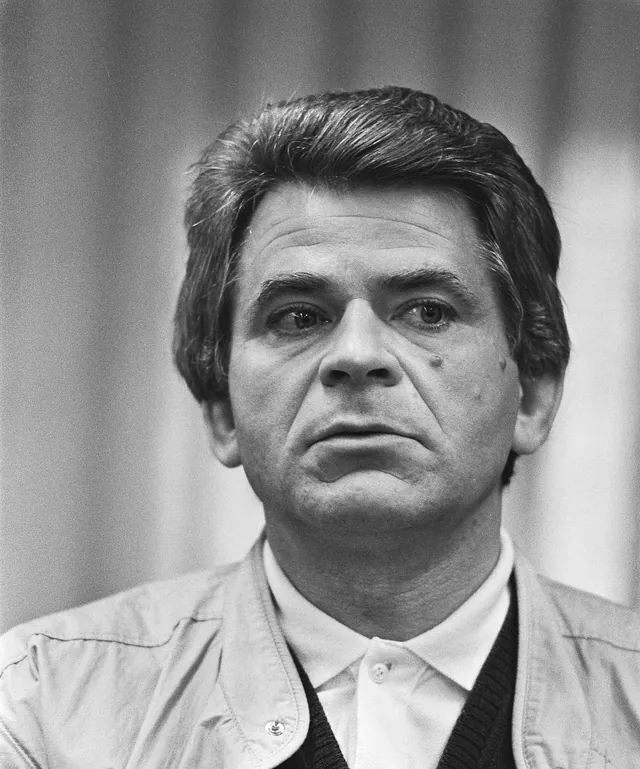
What was Boris Spassky’s IQ? No score has been published. The FIDE Museum biography, Wikipedia and a 2025 obituary in The Week in Chess list his titles and results, and none states a test. If you meet a figure for Spassky, ask which test, which year and which source; for how these labels turn into numbers, see where celebrity IQ numbers come from.
Spassky vs Fischer: who had the higher IQ? Neither has a published test. Our Bobby Fischer page explains that his 180 was never backed by a published test paper, so it cannot be set against a Spassky number that does not exist.
What can be compared is rating: on the July 1972 list, Fischer’s 2785 was 125 points above Spassky’s 2660, as stated on that page. By the standard Elo formula the lower-rated player is expected to score about 33 points in 100, and Spassky scored 8½ of 21 (about 40) in Reykjavík.
What was Spassky’s peak rating, and can it stand in for an IQ? A FIDE rating is published and governed internationally, which is why this site uses it for chess players, but it measures chess strength. Spassky’s peak was 2690 in January 1971, second in the world. Our explainer on chess ratings and IQ shows where the link holds and where it fails, and chess players ranked by IQ traces each number to its source.
How does Spassky compare with other champions on this site? Anatoly Karpov, whose 1975 title came after Fischer forfeited, and Garry Kasparov are both 135–155, and Mikhail Tal is 140–155. The 2690 sits below Karpov’s 2780 peak and below Kasparov’s, which passed Fischer’s 2785 record in 1990, so our top end for Spassky is 150, not 155.
How we read a number →FIDE’s own account: Grandmaster title at 18, Candidates debut at Amsterdam in 1956 at 19, the 1965 Candidates wins over Keres, Geller and Tal, the 1966 loss to Petrosian, the 1969 title match won 12½–10½, seven Soviet Olympiad appearances and 13 medals, the move to France in 1976 and the return to Russia in 2012. It gives no IQ.
Infobox: Grandmaster (1955), World Champion 1969–1972, peak rating 2690 and ranking No. 2 in January 1971; the 1972 match result 12½–8½ (+7 −3 =11), one of the three losses by default; the 1992 unofficial rematch; birth and death dates. The article gives no IQ.
International Master at 16 after Bucharest 1953, the 1955 Gothenburg Interzonal as youngest Candidate to that time, and the World Junior title at Antwerp with 14 of 16.
Confirms Q177310 is the Russian chess player (1937–2025), not a namesake.
Photograph by Rob Bogaerts for Anefo, October 12, 1983, Tilburg tournament, from the Nationaal Archief; released under CC0.
The July 1972 ratings (Fischer 2785, Spassky 2660) and the ranges used for comparison: Fischer 160–180, Kasparov 135–155, Karpov 135–155, Tal 140–155. The expected-score figure is our arithmetic.
The FIDE Museum page, Wikipedia, The Week in Chess and a web search for a stated figure found no IQ test result, Mensa listing or school test score for Boris Spassky. Spassky’s FIDE rating profile could not be retrieved.
The sources behind our estimate
The figures that circulate for Boris Spassky, what we were able to confirm, and where the two diverge.
People search for “Boris Spassky IQ,” “Spassky vs Fischer IQ” and “Boris Spassky IQ score,” but we found no page that gives a number for Spassky with a test, a date and a source.
A web search for a stated figure returned none for Spassky; the results that mention IQ concern Bobby Fischer, whose own figure was never published as a test paper. Wikipedia’s biography, the FIDE Museum page and the obituary in The Week in Chess give titles, ratings and results but no IQ, Mensa listing or school score.
Two of these numbers sit on the IQ scale (the ends of our range) and 2690 is his peak chess rating, so it cannot be compared with them. Next to Anatoly Karpov (135–155) and Mikhail Tal (140–155) on this site, Spassky’s top end sits a little lower.
Want a number that does hold up? Every figure on this page is somebody’s claim. Take the 30-question test and get a percentile you can check rather than a figure you have to trust.
Boris Spassky — frequently asked
What was Boris Spassky’s IQ?
Boris Spassky has no published IQ score. Our own Boris Spassky IQ estimate is 135–150 on the usual scale (mean 100, SD 15), drawn from his chess record: Grandmaster at 18, World Champion 1969–1972 and a peak FIDE rating of 2690. A chess rating measures chess strength, not IQ.
Spassky vs Fischer: who had the higher IQ?
Neither has a published IQ test. Fischer’s 180 was never backed by a test paper, and Spassky has no figure at all. On ratings, Fischer’s 2785 was 125 points above Spassky’s 2660 on the July 1972 list, and Fischer won the match 12½–8½.
What was Boris Spassky’s peak chess rating?
His peak FIDE rating was 2690 in January 1971, when he was ranked second in the world (Wikipedia). The figure is a measure of chess results against other rated players. It is not an IQ and cannot be converted to one.
How did the 1972 match between Spassky and Fischer end?
Fischer won 12½–8½, with seven wins, three losses and 11 draws, and one of Fischer’s three losses was a forfeit. The match took place in Reykjavík, Iceland, and ended Spassky’s three years as World Champion.
Was Boris Spassky a chess prodigy?
Yes. He became an International Master at 16 and a Grandmaster at 18, won the 1955 World Junior Championship at Antwerp with 14 of 16, and was the youngest Candidate to that time. FIDE’s museum page calls him a chess prodigy.
Was Boris Spassky a genius?
His results support exceptional chess talent: a world title in 1969 and a rating of 2690. “Genius” is a label, not a test result, and he published no IQ score. Our estimate treats the record as evidence of high ability, with the usual caution about chess ratings.
How does Spassky’s estimated IQ compare with Karpov’s and Kasparov’s?
On this site Spassky is 135–150, Anatoly Karpov 135–155 and Garry Kasparov 135–155. All three ranges come from published Elo ratings. Spassky’s peak of 2690 is below Karpov’s 2780 and below Kasparov’s, which passed Fischer’s 2785 in 1990, so his top end is lower.
How does my IQ compare with Boris Spassky?
You can find out in about fifteen minutes. The IQ Metrics assessment is 30 questions, scored on the same 100-mean scale used throughout this page, so your result and the estimate above are at least expressed in the same units — one measured, one inferred. Once you have a number, the leaderboard shows where it would sit, and how we score and norm it explains the benchmarking.
Where does this estimate come from?
From the documented record rather than a test — the method is named above and set out in full under how we read a number. Compare it against the other athletes profiles, starting with Magnus Carlsen.
- Take the 30-question IQ test — get a measured score and percentile of your own
- Average IQ by country — how the scale behaves across populations
- How IQ Metrics scores its assessment — the method behind our own number
- More on how IQ testing works — reliability, error and what a score can and cannot say
- More athletes profiles — same field, same method
More athletes
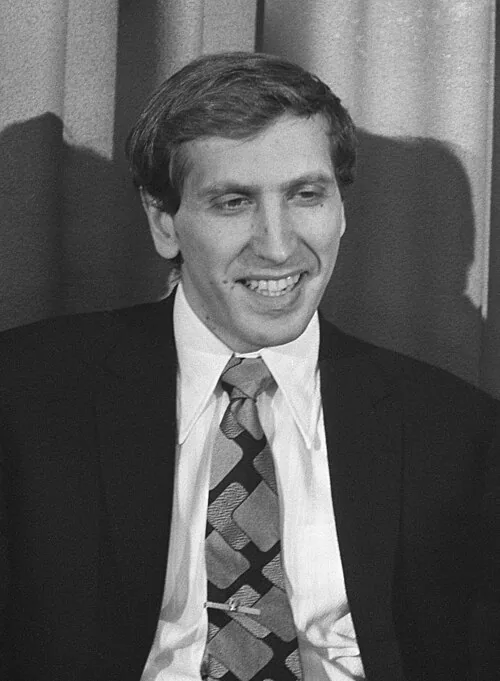
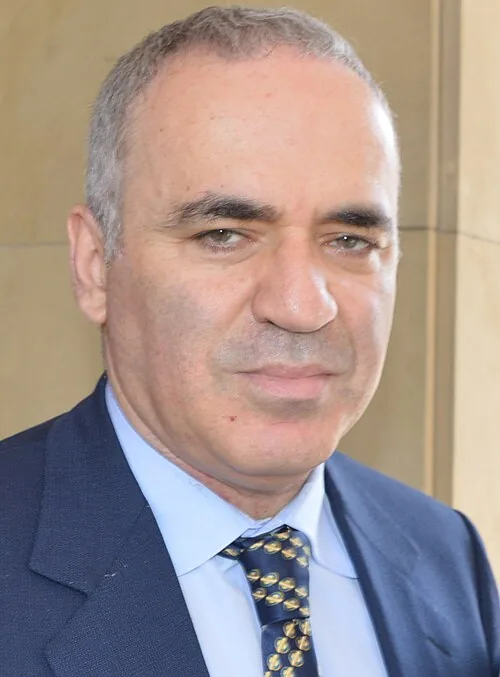
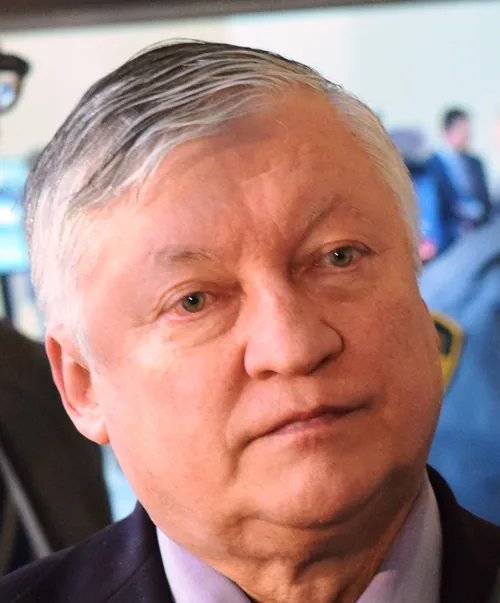
Photograph by Bert Verhoeff for Anefo (1972), CC0. Background removed for the portrait above. · Photograph by Fryta 73 (2015), CC BY-SA 2.0. Background removed for the portrait above. · Photograph of Anatoly Karpov by Veni Markovski (April 6, 2017), CC BY-SA 4.0. Cropped and with background removed for the portrait above.


An estimate is an inference.
Yours can be measured.
Thirty questions, scored against general-population benchmarks. Your score, your percentile, your ability breakdown and a printable IIF certificate.
Find your IQ score now! →