



What was Mikhail Tal’s IQ?
At 43, with one kidney and two decades past his best chess, he was still the second-highest-rated player alive — an official number from the tail of a career that peaked before ratings existed.

No IQ test result has been published for Mikhail Tal, the eighth World Chess Champion, and the 170–190 IQ figures that circulate for him cite no test. What is documented is a philology degree from the University of Latvia and, under the retrospective Chessmetrics system, 32 months as the world’s top-rated player from 1958 to 1961 — a record that supports an estimated IQ of 140–155, well short of 190.
Mikhail Tal’s estimated IQ
- By Chessmetrics’ retrospective rating system — which reconstructs playing strength for the decades before FIDE adopted Elo ratings in 1970 — Tal was the world’s number one player for 32 months, October 1958 through April 1961, according to a 2005 Chessmetrics profile by Jeff Sonas as cited on Wikipedia.
- Won the 1958 Portorož Interzonal (13½/20) and the 1959 Candidates Tournament at Bled, Zagreb and Belgrade (20/28), then beat the reigning champion, Mikhail Botvinnik, 12½–8½ in Moscow in 1960 to become World Chess Champion at 23, the youngest to that point.
- Six-time Soviet Champion (1957, at 20; 1958; 1967; 1972; 1974; 1978) and a graduate in literature (philology) from the University of Latvia, awarded in 1957, the same year as his International Grandmaster title.
- A 95-game unbeaten streak (46 wins, 49 draws) from October 1973 to October 1974, the longest in top-level chess history, and an official peak FIDE rating of 2705 in January 1980 — still world No. 2 at 43, eleven years after a kidney was removed.
- A 2016 meta-analysis (corrected 2018) found chess skill correlates with general cognitive ability at only r = .24 (.22 corrected) across 1,779 players, with pooled ratings no higher than 2,607 — a loose, restricted-range link that is why this is a band, not a point estimate.
Tal’s title-winning peak predates the Elo system FIDE adopted in 1970 by a decade, so “world number one” here describes a rating algorithm’s retrospective judgment of old tournament results, not a number Tal was ever assigned in real time — however careful the Chessmetrics methodology, it is a reconstruction. His one fully official rating peak, 2705 in January 1980, was set at 43, in a body with one kidney, two decades after his best chess, and even that faded form still ranked world No. 2, which suggests his true peak was higher still, though no published number from 1960 exists to cite. The r = .22–.24 link between chess skill and general cognitive ability, and the meta-analysis’s cap at a 2,607 rating, mean even a firm number would translate loosely. Mikhail Tal’s estimated IQ here is inferred from a career and a retrospective ranking, not measured.
- Born
- November 9, 1936, Riga, Latvia
- Died
- June 28, 1992, Moscow, aged 55
- Education
- Degree in literature (philology), University of Latvia, 1957; briefly a schoolteacher afterward
- Titles
- International Grandmaster, 1957 (FIDE congress waiver); 8th World Chess Champion, 1960–61
- Soviet Champion
- Six times: 1957 (age 20), 1958, 1967, 1972, 1974, 1978
- Rating peak
- 2705 official FIDE rating, January 1980, world No. 2 at 43; world No. 1 for 32 months (Oct. 1958 – Apr. 1961) by the retrospective Chessmetrics system
- Other records
- 95-game unbeaten streak, Oct. 1973 – Oct. 1974; first official FIDE World Blitz Champion, 1988, age 51
- Circulating IQ figure
- 170 to 190 across three pages; none cites a test
What an IQ of 140–155 actually means
Set the claim aside for a moment. If someone genuinely scored in this range, here is what that would represent.
Average is 100 by construction, and about two-thirds of people fall between 85 and 115. Take the test to place your own score on this scale.
| Score range | Classification | Share of people | What it indicates |
|---|---|---|---|
| 85 – 114 | Average | ~68% | The range most people fall into. |
| 115 – 129 | Above average | ~13.6% | Roughly one person in seven. |
| 130 – 144 | Gifted | ~2% | The threshold most high-IQ societies use. |
| Above 144 | Highly gifted | ~0.1% | Figures above this range are extrapolated from the curve rather than measured. |
Percentages are approximate and describe a normal distribution. The same number means different things on tests with different standard deviations.
Thirty questions gives you a measured position on this exact scale — your score, your percentile and the ability breakdown behind it.
Find out in 30 minutes →Who Mikhail Tal was
Mihails Tāls — Mikhail Nekhemyevich Tal in Russian — was born on November 9, 1936, in Riga, then the capital of independent Latvia. By one biographical account his father was a physician, and Tal is said to have first watched chess being played in his father’s waiting room; he began serious training in 1949 under the Latvian master and trainer Alexander Koblencs. He rose fast from there: the International Grandmaster title in 1957, awarded after that year’s FIDE congress waived its normal norm requirements for him, and his first Soviet Championship the same year, won at 20, the youngest champion the USSR had crowned to that point. That year he also graduated in literature (philology) from the University of Latvia, having carried the degree alongside competitive chess through his teens, and worked briefly afterward as a schoolteacher.
The chess kept accelerating. Tal won the 1958 Portorož Interzonal with 13½ points from 20 games and a second Soviet Championship that same year, then the 1959 Candidates Tournament at Bled, Zagreb and Belgrade with 20 points from 28 games, a result that earned him a title match against the reigning World Champion, Mikhail Botvinnik. In Moscow in 1960 Tal won that match 12½–8½, becoming, at 23, the youngest World Chess Champion to that point — a record Garry Kasparov broke twenty-five years later — and earning the nickname “the Magician from Riga” for a style built on complications and sacrifices that his more methodical opponents struggled to refute over the board.
Botvinnik reclaimed the title in the 1961 rematch, winning 13–8; Tal’s chronic kidney problems, present for years, contributed to the loss, and in 1969 he had a kidney removed entirely. Neither the loss nor the surgery ended his competitive career: he won four more Soviet Championships (1967, 1972, 1974 and 1978, six in total) and, between October 23, 1973 and October 16, 1974, put together a 95-game unbeaten run — 46 wins and 49 draws — that remains the longest in top-level chess history. Across his career he played on eight Soviet Olympiad teams, all of which won gold, scoring 65 wins, 34 draws and 2 losses individually.
Late in his career, weakened by one kidney, heavy drinking and smoking, and a period of treatment for pain with morphine, Tal still produced results that outran his health: his last official FIDE rating peak, 2705 in January 1980, ranked him world No. 2 at 43, and in 1988, at 51, he won the first official FIDE World Blitz Championship, held in Saint John, Canada, in a field that included the reigning World Champion, Garry Kasparov. Tal died in Moscow on June 28, 1992, aged 55, officially of a hemorrhage in the esophagus.
 By Elora Mercer, Celebrity Research WriterFigures checked by Leon Falkner, Data & Research Analyst
Reviewed by Aarav Vardhan, Editor-in-Chief · Last reviewed August 2026

Mikhail Tal: the documented record
The estimate above rests on this record. Every entry here is a matter of public fact, which is more than can be said for the number itself.
- 1936Born November 9 in Riga, then the capital of independent Latvia.
- 1949Begins training under Latvian master and trainer Alexander Koblencs.
- 1957Wins his first Soviet Championship at 20, earns the International Grandmaster title, and graduates in literature from the University of Latvia.
- 1958Wins the Portorož Interzonal (13½/20) and a second Soviet Championship; by Chessmetrics’ retrospective count, becomes the world’s top-rated player this October, a status that lasts until April 1961.
- 1959–60Wins the Candidates Tournament at Bled, Zagreb and Belgrade (20/28), then beats Mikhail Botvinnik 12½–8½ in 1960 to become World Chess Champion at 23.
- 1961Loses the title back to Botvinnik, 13–8, in a rematch hampered by chronic kidney problems.
- 1969Undergoes a nephrectomy, having a kidney removed.
- 1973–74Runs a 95-game unbeaten streak (46 wins, 49 draws) between October 23, 1973 and October 16, 1974, the longest in top-level chess history.
- 1988Wins the first official FIDE World Blitz Championship, in Saint John, Canada, at 51.
- 1992Dies in Moscow on June 28, aged 55, officially of a hemorrhage in the esophagus.
Where the 170–190 figure came from
Following a claim back to its first appearance is the part almost nobody does — and it is what most people are actually asking.
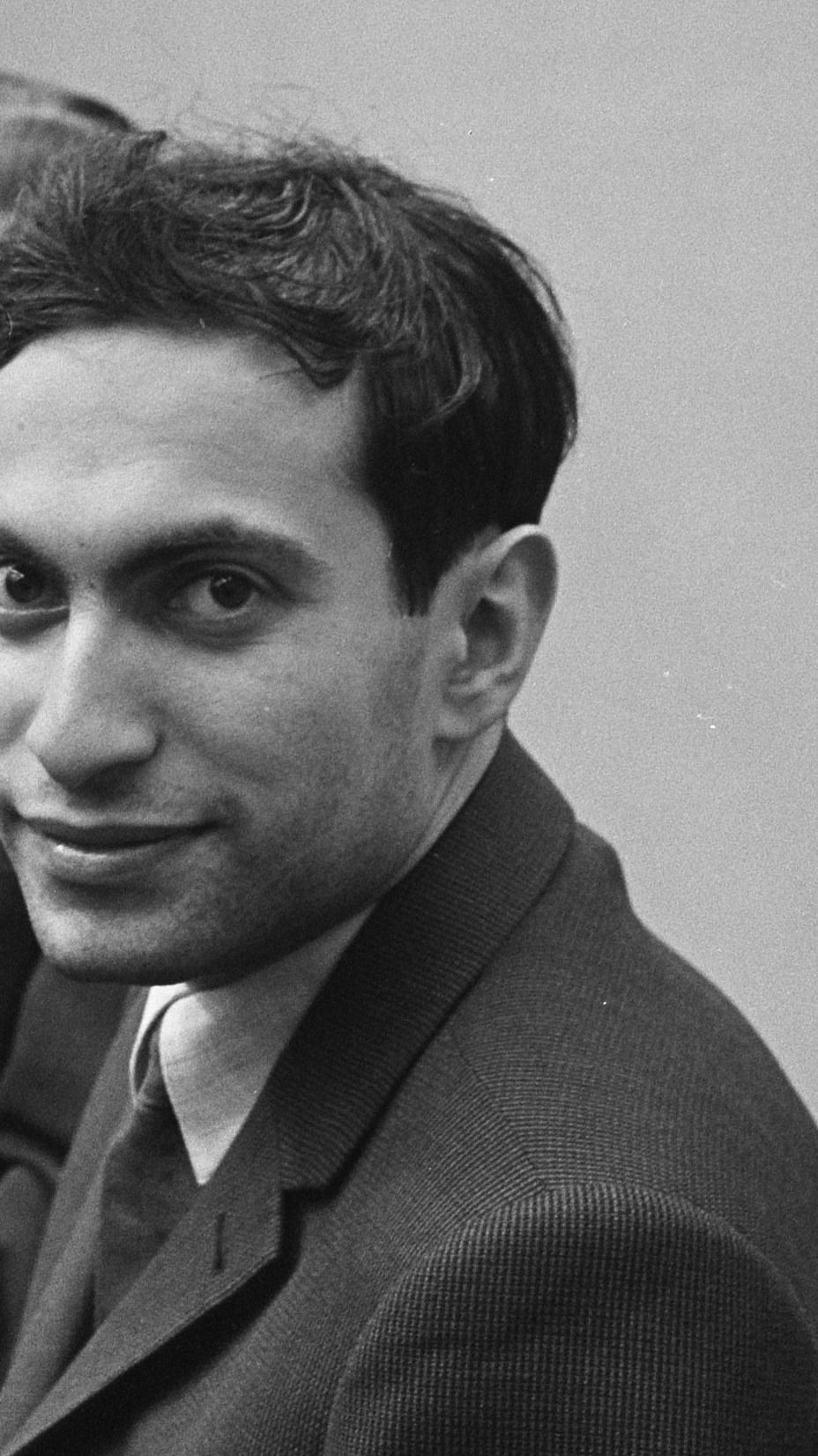
Mikhail Tal’s IQ level is quoted at three heights online, and none cites a test. celebrityiq.info gives 190, labelled “Extraordinary Genius,” and names no source beyond a general note that celebrity IQ estimates are “compiled from academic records, biographical accounts, performance data, and expert analysis.” correspondencechess.com, in a page dated November 3, 2023 (updated November 20, 2023), gives an estimated IQ ranging from 170 to 180 with no citation at all. chessjournal.com prints 175 and, in the same piece, admits “this IQ score hasn’t been able to be verified.” Three pages, three numbers, none sourced — the pattern this site traces across celebrity IQ figures generally.
What is documented instead is a ranking, not a score. Wikipedia’s account of Tal’s career, citing a 2005 Chessmetrics player profile by Jeff Sonas, states that the retrospective Chessmetrics system — which reconstructs playing strength for the decades before FIDE adopted Elo ratings in 1970 — placed Tal as the world’s number one player for 32 months, from October 1958 (after the Portorož Interzonal and that year’s Olympiad) through April 1961. That is a real, load-bearing claim about his level of play, but it is a rating algorithm’s retrospective judgment of decades-old results, not a number Tal was ever assigned at the time; direct access to chessmetrics.com itself was not possible for this profile (a certificate error blocked the site), so the finding is sourced here to Wikipedia’s citation of it. See what a chess rating can and cannot say about IQ.
Even a firm rating converts loosely to IQ. The largest synthesis of the question, a 2016 meta-analysis by Burgoyne and colleagues in Intelligence (19 studies, 26 samples, 1,779 players), found chess skill correlated with general cognitive ability at only r = .24 on average, revised to .22 in a 2018 corrigendum, and the Elo ratings in the pooled studies ran only from 1,311 to 2,607 — below Tal’s documented level throughout his adult career. See the wider research on chess and intelligence. Tal’s own record makes a related point from the other direction: his one fully official FIDE rating peak, 2705 in January 1980, was set at 43, eleven years after a kidney was removed and two decades past his title-winning form, and it still ranked him world No. 2 — a floor for a damaged late career, not a ceiling for the player who beat Botvinnik in 1960.
Placed against the site’s other chess profiles, Tal’s estimate (140–155) matches Viswanathan Anand’s exactly (140–155, peak rating 2817), overlaps Garry Kasparov’s (135–155, peak rating 2851), and sits just under Magnus Carlsen’s (145–160, peak rating 2882) — three ranges built on peaks that FIDE actually published every month, not reconstructed decades after the fact. Tal, at 51 and playing with one kidney, beat the reigning World Champion, Kasparov, to win the first official FIDE World Blitz Championship in 1988 — a late-career data point, not a peak one. The top of this estimate is 155, thirty-five short of the 190 celebrityiq.info prints; for what a score in that range means in practice, see what an IQ of 140 means.
How we read a number →Confirms the Wikidata item is the Soviet-Latvian chess grandmaster (1936–1992), not a namesake. Wikipedia: birth (November 9, 1936, Riga) and death (June 28, 1992, Moscow, of a hemorrhage in the esophagus — Wikidata’s own item gives June 27, a discrepancy noted in the research log); International Grandmaster title 1957 (FIDE congress waiver); six Soviet Championships (1957, 1958, 1967, 1972, 1974, 1978); the 1958 Portorož Interzonal (13½/20) and 1959 Candidates Tournament (Bled–Zagreb–Belgrade, 20/28); the 1960 title match win over Botvinnik (12½–8½) and the 1961 loss (13–8); highest official Elo rating 2705, achieved January 1980; the 95-game unbeaten streak, October 23, 1973 to October 16, 1974; chronic kidney problems and a nephrectomy in 1969; heavy drinking, smoking and a period of morphine use for pain; and, citing a 2005 Chessmetrics player profile by Jeff Sonas, that Tal was Chessmetrics’ world number one for 32 months, October 1958 through April 1961. No IQ figure appears anywhere in the article (confirmed against the raw wikitext).
Career summary: rose from master to World Champion in three years; won the 1959 Candidates Tournament in Yugoslavia; beat Botvinnik 12½–8½ in 1960; lost the 1961 rematch; lost a 1965 Candidates match to Spassky; six-time Soviet Champion; eight-time FIDE Olympiad gold medalist; the 95-game unbeaten streak; “The Wizard from Riga” nickname; and that Tal won the official World Blitz Championship in 1988, at 51, in a field that included Garry Kasparov. No IQ figure; no education details.
Three lower-authority secondary profiles, cross-checked against each other and against Wikipedia for facts Wikipedia’s article itself omits: a literature/philology degree from the University of Latvia, graduating 1957 (thefamouspeople.com), corroborated more generally (“studied Literature at the University of Latvia”) by kiddle.co and chess-teacher.com, plus a few years teaching school afterward. thefamouspeople.com alone gives his father’s occupation (a physician) and the story that Tal first saw chess played in his father’s waiting room, and dates his study under Alexander Koblencs to 1949 — single-sourced among the pages opened for this profile, flagged in the research log. chess-teacher.com adds that Tal “could read at age three” and had a congenital deformity in his right hand despite being a skilled pianist, which matches Wikipedia’s account of the hand condition. None of the three gives an IQ figure or claims Tal took a test.
19 studies, 26 samples, 1,779 players; average r = .24 between chess skill and general cognitive ability, corrected to .22 in the 2018 corrigendum; the Elo ratings in the pooled studies ran from 1,311 to 2,607, below Tal’s documented adult level throughout his career. Citation and figures reused from this site’s existing Gukesh Dommaraju profile, which cites the same paper; not independently re-fetched in this session — see research log.
Gives 190, labelled “Extraordinary Genius.” Cites no test, expert or date; its own site-wide disclaimer states IQ figures are “estimates compiled from public sources, biographies, and expert analysis” and “not verified test results unless otherwise noted.”
Gives an estimated range of 170 to 180 (“remarkable intellectual abilities with an estimated IQ ranging from 170 to 180”), with no citation, test or expert named anywhere on the page.
States a figure of 175 and, in the same piece, admits “this IQ score hasn’t been able to be verified.” Its headline claim about Kasparov “fearing” Tal is not supported anywhere in its own text — the only substantiated link it gives is that Tal beat a already-world-number-one Kasparov in a blitz game in Moscow in 1992, a detail this profile does not otherwise rely on since it could not be corroborated elsewhere.
Ranges and peak ratings used for comparison: Kasparov 135–155 (peak 2851), Anand 140–155 (peak 2817), Carlsen 145–160 (peak 2882), all estimated by the same domain-performance method from officially published FIDE ratings.
None appears in Wikipedia, Wikidata, FIDE’s Open Chess Museum profile, or any of the three pages that estimate a figure for him, and none claims he took a test. Tal was born in 1936, well after intelligence testing began, so a result could in principle exist; none has surfaced in the sources checked for this profile.
The sources behind our estimate
The figures that circulate for Mikhail Tal, what we were able to confirm, and where the two diverge.
Two figures circulate for Mikhail Tal’s IQ, plus a third that lands inside one of them. celebrityiq.info gives 190, labelled “Extraordinary Genius.” correspondencechess.com, dated November 3, 2023 (updated November 20, 2023), gives an estimated range of 170 to 180. chessjournal.com prints 175 while noting, in the same piece, that the number “hasn’t been able to be verified.” None cites a test, an examiner, or where the figure originated.
No published IQ test result exists for Mikhail Tal. We checked Wikipedia and Wikidata’s entries for him, FIDE’s Open Chess Museum profile, and the biographical pages listed under sources; none mentions an IQ test ever being administered. The three pages that do give a number cite no test either: celebrityiq.info’s own site-wide disclaimer says its figures are “estimates compiled from public sources, biographies, and expert analysis” and “not verified test results unless otherwise noted”; correspondencechess.com gives its 170–180 range with no citation at all; chessjournal.com flags its own 175 as unverified in the same sentence that states it.
Our band tops out at 155 — twenty short of the 175 chessjournal.com prints and thirty-five short of the 190 celebrityiq.info gives — and does not reach either. As on this site’s other chess profiles, the documented record supports a lower range than the number that circulates, and the gap runs the same direction each time: toward a lower, achievement-based figure, not a higher, unsourced one.
Want a number that does hold up? Every figure on this page is somebody’s claim. Take the 30-question test and get a percentile you can check rather than a figure you have to trust.
Mikhail Tal — frequently asked
What is Mikhail Tal’s IQ?
No IQ test result has been published for Mikhail Tal, the eighth World Chess Champion. Figures of 170 to 190 circulate online, but none cites a test. From his documented record — 32 months as the world’s top-rated player by the retrospective Chessmetrics system, the 1960 world title, and a University of Latvia philology degree — this site estimates a range of 140–155.
What was Mikhail Tal’s IQ level, and where does the 190 figure come from?
No source is given for the 190 some pages print for Mikhail Tal’s IQ level: celebrityiq.info labels it “Extraordinary Genius” and cites only a general disclaimer about how its estimates are compiled, not a test or an expert. A second page, correspondencechess.com, gives 170–180 with no citation at all. This site’s estimate, 140–155, is inferred from his chess record and stops well short of either figure.
Did Mikhail Tal ever take an IQ test?
No IQ test result for Mikhail Tal appears in any source checked for this profile — not Wikipedia, not FIDE’s own record of his career, not the pages that estimate his IQ. Intelligence tests existed throughout his lifetime (he was born in 1936, decades after the first practical test), but none has ever been published for him.
What is Mikhail Tal’s chess IQ, since he played before Elo ratings existed?
Tal’s title-winning years came before FIDE adopted the Elo system in 1970, so no official rating covers his peak. The retrospective Chessmetrics system ranks him world number one for 32 months, October 1958 to April 1961; his one fully official FIDE rating, set at 43 in 1980, peaked at 2705 and still ranked world No. 2. A 2016 meta-analysis puts the link between chess skill and cognitive ability at only r = .24, so neither figure converts to a precise IQ; this site’s estimate is 140–155.
How does Mikhail Tal’s estimated IQ compare with Garry Kasparov’s or Viswanathan Anand’s?
This site’s range for Tal is 140–155 — the same as Viswanathan Anand’s (peak rating 2817) and overlapping Garry Kasparov’s 135–155 (peak 2851). All three rest on chess achievement rather than a test; Tal’s is the least numerically firm of the three, since his title-winning peak predates any officially published rating.
Was Mikhail Tal really ranked the best chess player in the world?
By one measure, yes: the retrospective Chessmetrics rating system ranks him world number one for 32 months, from October 1958 to April 1961, spanning his Interzonal and Candidates wins and his 1960 title match against Mikhail Botvinnik. That is a reconstruction of decades-old results by a modern rating algorithm, not a number Tal was assigned at the time — official FIDE ratings did not exist until 1970.
What did Mikhail Tal study besides chess?
Tal earned a degree in literature (philology) from the University of Latvia in 1957, the same year he won his first Soviet Championship and the International Grandmaster title, and worked briefly afterward as a schoolteacher. It is a documented academic credential, though this site’s IQ estimate for him rests on his chess record, not his degree.
How does my IQ compare with Mikhail Tal?
You can find out in about fifteen minutes. The IQ Metrics assessment is 30 questions, scored on the same 100-mean scale used throughout this page, so your result and the estimate above are at least expressed in the same units — one measured, one inferred. Once you have a number, the leaderboard shows where it would sit, and how we score and norm it explains the benchmarking.
Where does this estimate come from?
From the documented record rather than a test — the method is named above and set out in full under how we read a number. Compare it against the other athletes profiles, starting with Magnus Carlsen.
- Take the 30-question IQ test — get a measured score and percentile of your own
- Average IQ by country — how the scale behaves across populations
- How IQ Metrics scores its assessment — the method behind our own number
- More on how IQ testing works — reliability, error and what a score can and cannot say
- More athletes profiles — same field, same method
More athletes
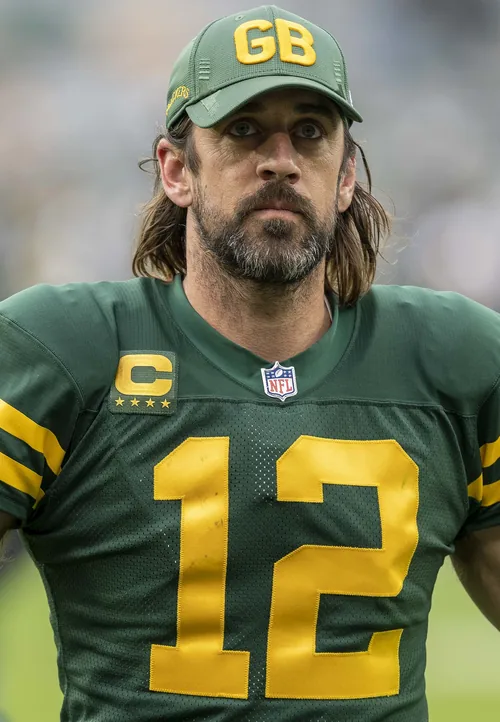
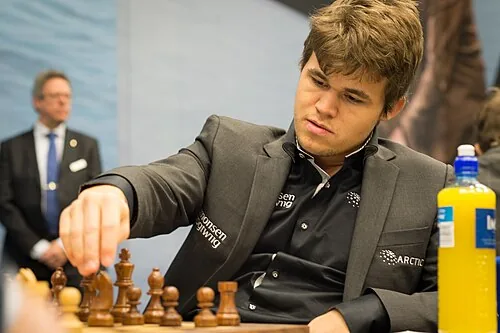
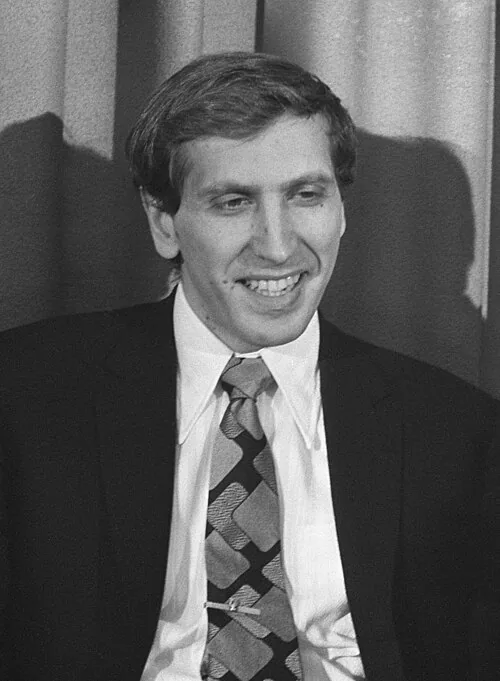
Photograph by All-Pro Reels (Lambeau Field, Green Bay, Wisconsin, October 24, 2021), CC BY-SA 2.0. Background removed for the portrait above. · Portrait © Frans Peeters, CC BY-SA 2.0. The background-removed portrait above is a derivative work and is likewise offered under the same licence. · Photograph by Bert Verhoeff for Anefo (1972), CC0. Background removed for the portrait above.
.jpg)


An estimate is an inference.
Yours can be measured.
Thirty questions, scored against general-population benchmarks. Your score, your percentile, your ability breakdown and a printable IIF certificate.
Find your IQ score now! →