



What was Francis Galton’s IQ?
The “200” leans on childhood letters. His biographer, Karl Pearson, saw “a normal child with rather more than average ability.”
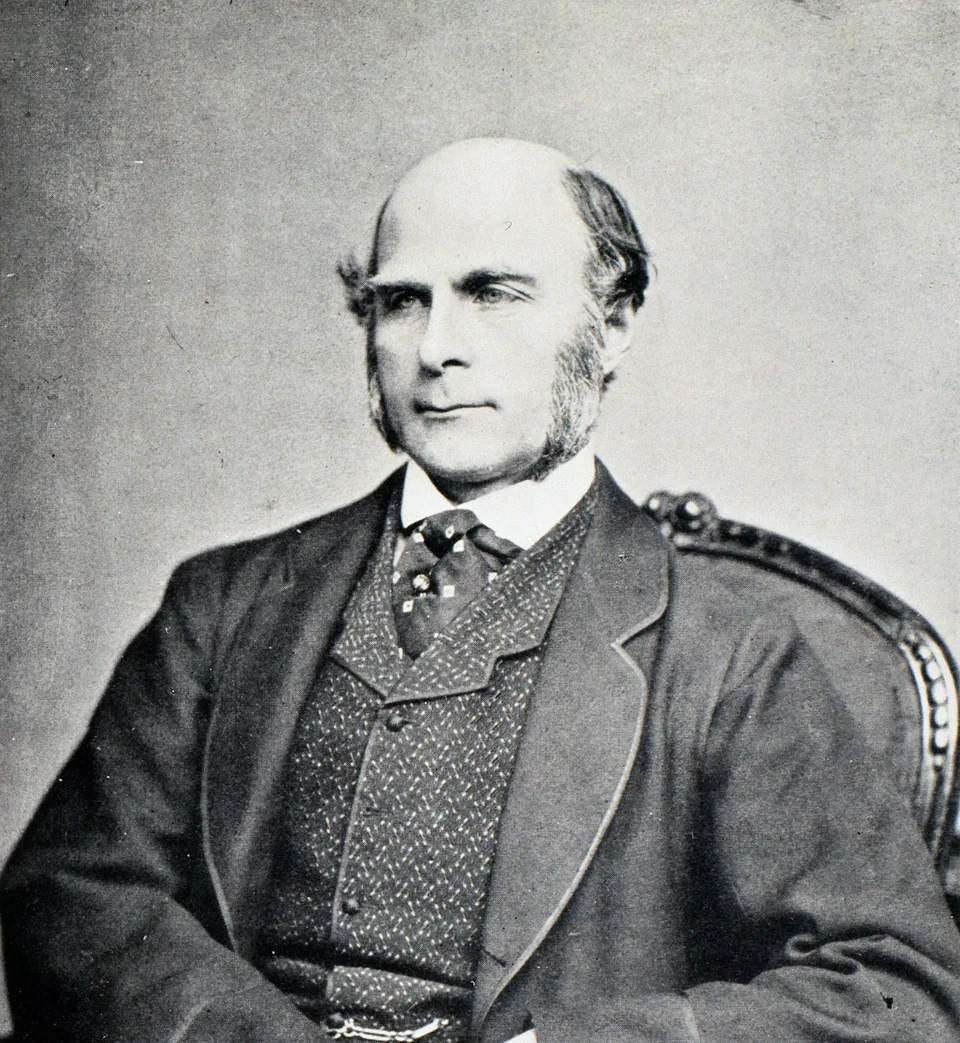
Francis Galton’s IQ was never measured: the figure of about 200 is Lewis Terman’s 1917 estimate for Galton as a child, a ratio IQ inferred from letters and family reports, not an IQ test score. The documented record is a pass degree from Trinity College, Cambridge, then a career in which he helped found psychometrics, wrote Hereditary Genius (1869) and measured 9,337 people in 1884.
Francis Galton’s estimated IQ
- Lewis Terman’s 1917 paper in the American Journal of Psychology (28(2): 209–215) concluded from Karl Pearson’s biography that between the ages of three and eight Galton “must have had” a ratio IQ “not far from 200.” It is a retrospective estimate from documents, not a test.
- A letter to his sister Adèle dated February 15, 1827, the day before his fifth birthday, says he can read any English book and say 52 lines of Latin poetry. Terman took the reading claim as the level of an average child of nine or ten, and accepted it because other sources corroborated the boy’s statements.
- Terman’s own yardstick in 1917: the highest quotient his Stanford team had found among many thousand California children was 170, so a childhood 200 lies beyond the top of that group.
- Catharine Cox’s 1926 summary of Galton’s years 17 to 26 records a third, a second and a fourth class rank in successive years at Cambridge and a degree taken without competing for honors. She wrote that the record might not justify a rating “above IQ 135,” while his adult achievement suggested the early promise was real.
- The adult record, per the Dictionary of National Biography: Hereditary Genius (1869), the 1884 Anthropometric Laboratory, correlation and fingerprint work, a knighthood in 1909 and the Royal Society’s Copley Medal in 1910.
No IQ test result exists, so every figure here is an inference from documents. Terman’s 200 is a ratio quotient for a child aged three to eight and Cox’s 135 describes ages 17 to 26. The two cannot be placed on one scale, so the range is a judgment between them. Extreme early scores tend to move toward the average on retesting, which is why the top is set well below 200.
- Born
- February 16, 1822, Birmingham, England
- Died
- January 17, 1911, Haslemere, Surrey, England
- Education
- King Edward’s School, Birmingham (1836–1838); medical study in Birmingham and at King’s College London; Trinity College, Cambridge, from 1840 (pass degree, 1844)
- Known for
- Hereditary Genius (1869), regression and correlation, the 1884 Anthropometric Laboratory, fingerprint classification
- Honors
- Knighted 1909; Copley Medal of the Royal Society, 1910
- Biographer
- Karl Pearson, The Life, Letters and Labours of Francis Galton (volume 1, 1914)
- Circulating figure
- About 200 (Lewis Terman, 1917), a retrospective estimate for ages three to eight, not a test
What an IQ of 150–170 actually means
Set the claim aside for a moment. If someone genuinely scored in this range, here is what that would represent.
Average is 100 by construction, and about two-thirds of people fall between 85 and 115. Take the test to place your own score on this scale.
| Score range | Classification | Share of people | What it indicates |
|---|---|---|---|
| 85 – 114 | Average | ~68% | The range most people fall into. |
| 115 – 129 | Above average | ~13.6% | Roughly one person in seven. |
| 130 – 144 | Gifted | ~2% | The threshold most high-IQ societies use. |
| Above 144 | Highly gifted | ~0.1% | Figures above this range are extrapolated from the curve rather than measured. |
Percentages are approximate and describe a normal distribution. The same number means different things on tests with different standard deviations.
Thirty questions gives you a measured position on this exact scale — your score, your percentile and the ability breakdown behind it.
Find out in 30 minutes →Who Francis Galton was
Was Francis Galton a genius? His documented record is that of an exceptionally productive polymath who helped found psychometrics, and no test score backs the word. “Genius” has no fixed IQ cut-off; see what genius-level IQ means. He wrote Hereditary Genius (1869), described as the first social-scientific attempt to study genius and greatness, and Terman observed in 1917 that Galton’s main contributions to science came so late in his life that he is often cited as an example of late-maturing genius.
Francis Galton was born on February 16, 1822, in Birmingham, England, and died on January 17, 1911, at Haslemere, Surrey, according to the Dictionary of National Biography. He attended King Edward’s School, Birmingham, from 1836 to 1838, studied medicine at Birmingham General Hospital and at King’s College London, and entered Trinity College, Cambridge, in 1840 to read mathematics under William Hopkins.
Illness prevented him from finishing the course, and he took a pass (“poll”) degree in 1844. Charles Darwin was his half-cousin, through their shared grandfather Erasmus Darwin. From 1845 to 1850 he traveled and pursued sport, then led an expedition to Damaraland in south-west Africa, the subject of Tropical South Africa (1853). The Royal Geographical Society gave him its Founder’s Medal that year, and Meteorographica (1863) introduced the word “anticyclone.”
Francis Galton intelligence research, as distinct from any score of his own, began after Darwin’s On the Origin of Species (1859) turned his attention to heredity. Hereditary Genius (1869) counted the eminent relatives of eminent men and found that their numbers fell from first-degree to second-degree to third-degree kin, a method that has been called the first example of historiometry, the approach Terman and Cox later applied to Galton himself.
English Men of Science: Their Nature and Nurture (1874) drew on a questionnaire sent to Fellows of the Royal Society, and an 1875 paper on twins anticipated modern twin studies. In 1883 he published Inquiries into Human Faculty and Its Development, in which he introduced the word “eugenics.” In the 1880s he worked out regression and correlation, set out in Natural Inheritance (1889), a book Karl Pearson said changed his thinking about applying mathematics to living forms and human conduct.
At the 1884 International Health Exhibition in London, Galton ran an Anthropometric Laboratory where, by his own count in an 1885 paper, 9,337 people were measured, each in 17 ways, for an admission fee of 3d.
The instruments he lists covered sight, color sense, judgment of eye, hearing, the highest audible note, breathing power, strength of pull and squeeze, swiftness of blow, span of arms, height and weight: physical and sensory traits, not an IQ test. Wikipedia reports that he suggested differences in general ability show up in sensory discrimination and speed of reaction.
His follower James McKeen Cattell carried mental testing to the United States, and in 1901 Cattell’s student Clark Wissler at Columbia University reported no statistical relationship between scores on Cattell’s tests and academic performance; Alfred Binet’s intelligence measurements later replaced them. How much quick, simple responses say about ability is still studied under processing speed and IQ.
Galton’s fingerprint work, set out in books from the early 1890s to 1895, became the basis of the Galton–Henry classification system that began to be used at Scotland Yard in 1901. He was knighted in 1909 and received the Royal Society’s Copley Medal in 1910.
 By Elora Mercer, Celebrity Research WriterFigures checked by Leon Falkner, Data & Research Analyst
Reviewed by Aarav Vardhan, Editor-in-Chief · Last reviewed November 2026

Francis Galton: the documented record
The estimate above rests on this record. Every entry here is a matter of public fact, which is more than can be said for the number itself.
- 1822Born February 16 in Birmingham, England.
- 1827Writes the letter to his sister Adèle on February 15, the day before his fifth birthday.
- 1840Enters Trinity College, Cambridge, after medical study in Birmingham and at King’s College London.
- 1844Takes a pass (“poll”) degree at Cambridge after illness cuts short his mathematics course.
- 1869Publishes Hereditary Genius.
- 1884Runs the Anthropometric Laboratory at the International Health Exhibition in London; 9,337 people are measured in 17 ways.
- 1909Knighted.
- 1911Dies January 17 at Haslemere, Surrey.
- 1914Karl Pearson publishes the first volume of The Life, Letters and Labours of Francis Galton.
- 1917Lewis Terman publishes “The Intelligence Quotient of Francis Galton in Childhood”: “not far from 200” for ages three to eight.
Where the 200 figure came from
Following a claim back to its first appearance is the part almost nobody does — and it is what most people are actually asking.
Where does the Francis Galton IQ 200 figure come from? It comes from one paper: Lewis M. Terman’s “The Intelligence Quotient of Francis Galton in Childhood,” published in 1917 in the American Journal of Psychology (28(2): 209–215) while Terman was at Stanford University.
Terman worked from the first volume of Karl Pearson’s biography of Galton, which printed documents from his childhood, and concluded that between the ages of three and eight Galton “must have had an intelligence quotient not far from 200,” a mental age close to double his actual age. That is a retrospective estimate from documents. No test was given, and the sentence that circulates today drops the age, the method and the author.
The evidence is a small set of childhood documents. Terman, following Pearson, cites a note from Galton’s fourth year about ducks and a nest, and a letter to his sister Adèle dated February 15, 1827, the day before his fifth birthday. In the letter Galton says he is four, can read any English book, can say 52 lines of Latin poetry and can multiply by a series of numbers.
Terman notes that two of the multipliers were later obscured, one scratched out with a knife and the other pasted over, which he read as the boy feeling he had claimed too much. Terman argued that reading any English book before age five matches the average child of nine or ten, and he accepted the statements because other sources confirmed them. He also reported that the highest quotient his team had found among many thousand California children was 170.
How smart was Francis Galton? The documents show an unusually precocious child, an uneven student and an exceptional adult, and they do not add up to one number. Terman quotes Pearson, who published the letters, as writing that Galton “was a normal child with rather more than average ability,” and Terman called that a failure to weigh the mental age each performance implies.
In 1926 Catharine Cox, whose method grew out of Terman’s Galton study, wrote that the record for ages 17 to 26 might not justify a rating “above IQ 135,” though his adult achievement suggested the early promise was real. This site’s range of 150–170 sits above Charles Darwin (125–140), his half-cousin, and overlaps Benjamin Franklin (155–175), another self-directed polymath. It sits below Blaise Pascal (180–195), whose Cox rating of 180, corrected to 195, is also built on childhood records.
The figure also changes meaning once it is detached from its scale. Terman’s quotient is a ratio, mental age divided by actual age times 100, estimated for a young child. On today’s scale, with a mean of 100 and a standard deviation of 15, a 200 would be 6.7 standard deviations above average, about 1 in 76 billion people. No test can separate people reliably much above 160.
Early extremes also tend to move toward the average on retesting, a regression toward the mean that Galton himself identified in sweet-pea seeds and later in human heights. Terman repeated “not far from 200” in his preface to Cox’s The Early Mental Traits of Three Hundred Geniuses (1926), but Galton is not one of her 301 subjects. The table of Cox’s estimates for historical geniuses grew out of Terman’s study of him. For the wider group, see other historical figures we have checked.
How we read a number →No school, army or adult IQ test result for Galton is on record. The papers and biographies listed here describe letters, degrees, laboratory measurements and publications, and none reports a test score.
Origin of the 200 figure. Concludes from Pearson’s biography that between ages three and eight Galton “must have had an intelligence quotient not far from 200”; reproduces the 1827 letter to Adèle; reports 170 as the highest quotient found among many thousand California children; quotes Pearson’s “normal child with rather more than average ability” and calls it an error.
Terman’s preface repeats “not far from 200.” Cox says her method was suggested by Terman’s Galton study, uses Galton as a worked example, and writes that for ages 17 to 26 one might not be justified in rating him above IQ 135. Galton is not among her 301 subjects.
Galton’s own account: 9,337 persons measured, each in 17 ways, for a 3d. fee, about ninety a day; lists the instruments (sight, color sense, hearing, breathing power, strength, swiftness of blow, height, weight).
Gives birth in Birmingham on February 16, 1822, King Edward’s School 1836–1838, King’s College London, Trinity College from 1840, a pass degree in 1844, his principal works, honors including the 1910 Copley Medal and the 1909 knighthood, and his death on January 17, 1911.
Confirms the Birmingham schooling, Trinity College and mathematics, Hereditary Genius (1869), the 1884–85 laboratory, regression and correlation, the fingerprint system used at Scotland Yard from 1901, and the 1909 knighthood and 1910 Copley Medal.
Used for orientation and for Wissler’s 1901 finding that Cattell’s test scores bore no relation to academic performance. Wikidata describes Galton as a British polymath and behavioral geneticist (1822–1911); the Galton article does not state an IQ figure.
Both print about 200 for Galton. The first says it has been estimated that his IQ would have been around 200; the second lists “Francis Galton (200)”. Neither names a test or cites Terman.
Explains Terman’s ratio method and traces the Galton estimate to Terman, who inferred that Galton’s IQ approached 200 from his childhood letters.
The sources behind our estimate
The figures that circulate for Francis Galton, what we were able to confirm, and where the two diverge.
A figure of about 200 circulates for Francis Galton. All That’s Interesting’s list “27 Geniuses With The Highest IQs In History” (published March 27, 2026, updated July 2, 2026) says his IQ “would’ve been around 200,” and the Briefly.co.za list “Top 35 smartest people of all time” (March 21, 2022) prints “Francis Galton (200).”
Neither list names a test, an estimator or a year for the number. The number traces to Lewis Terman’s 1917 paper, which concluded from documents that Galton’s childhood IQ was “not far from 200,” and Terman repeated it in his preface to Catharine Cox’s 1926 volume. Dean Keith Simonton’s 2018 essay in Nautilus also traces it to Terman. No school, army or adult IQ test result exists for Galton.
The circulating 200 sits 30 points above the top of this site’s 150–170 range and 65 above the 135 that Cox thought his years 17 to 26 might justify. It is not invented, since it has a named author and a stated method, but the lists strip away its age, its scale and its author. The direction of the error is upward: the records from his university years onward support less than the childhood figure.
Want a number that does hold up? Every figure on this page is somebody’s claim. Take the 30-question test and get a percentile you can check rather than a figure you have to trust.
Francis Galton — frequently asked
What was Francis Galton’s IQ?
Francis Galton’s IQ was never measured, because no IQ test result exists for him. The figure of about 200 is Lewis Terman’s 1917 retrospective estimate of his childhood, a ratio IQ (mental age divided by actual age, times 100) inferred from letters. This site’s estimated range for the adult Galton is 150–170.
What was Francis Galton’s IQ score?
No IQ score exists for Francis Galton, and the lists that print 200 do not name a test or an estimator. All That’s Interesting (2026) says his IQ “would’ve been around 200,” and Briefly (2022) prints “200.” Terman’s own 1917 wording was “not far from 200,” for ages three to eight.
Did Francis Galton take an IQ test?
No. Francis Galton died on January 17, 1911, five years before Lewis Terman devised the Stanford–Binet test in 1916. In 1884 Galton measured 9,337 people, but the instruments he lists covered physical and sensory traits such as sight, hearing, breathing power and strength of pull, not an IQ test.
How smart was Francis Galton?
The documented record points to exceptional ability, but no test gives a number. Terman judged him a prodigy in childhood, Catharine Cox thought his Cambridge years alone might not justify more than IQ 135, and his adult work spans statistics, psychometrics, meteorology and fingerprints. This site’s estimated range is 150–170.
Was Francis Galton a genius?
Francis Galton is documented as an exceptionally productive polymath, but no test score backs the word genius. He wrote Hereditary Genius (1869), ran the 1884 Anthropometric Laboratory, helped develop correlation and regression, was knighted in 1909 and received the Royal Society’s Copley Medal in 1910. “Genius” has no fixed IQ cut-off.
How does Francis Galton’s estimated IQ compare with Charles Darwin’s?
This site estimates 150–170 for Galton and 125–140 for Charles Darwin, his half-cousin. Both took pass degrees at Cambridge. The gap rests on Galton’s unusually well-documented childhood precocity, which Terman described in 1917. Both ranges are inferences from records, not test results.
Where does the 200 for Francis Galton come from?
It comes from Lewis Terman’s 1917 paper “The Intelligence Quotient of Francis Galton in Childhood” in the American Journal of Psychology. Using letters printed in Karl Pearson’s biography, Terman estimated a mental age close to double Galton’s actual age between ages three and eight. It is a retrospective estimate, not a test.
How many people did Francis Galton measure at his Anthropometric Laboratory?
Galton’s laboratory at the 1884 International Health Exhibition in London measured 9,337 people, each in 17 ways, according to his own 1885 paper in the Journal of the Anthropological Institute. The instruments covered sight, hearing, breathing power, strength, swiftness of blow, height and weight.
How does my IQ compare with Francis Galton?
You can find out in about fifteen minutes. The IQ Metrics assessment is 30 questions, scored on the same 100-mean scale used throughout this page, so your result and the estimate above are at least expressed in the same units — one measured, one inferred. Once you have a number, the leaderboard shows where it would sit, and how we score and norm it explains the benchmarking.
Where does this estimate come from?
From the documented record rather than a test — the method is named above and set out in full under how we read a number. Compare it against the other historical profiles, starting with Isaac Newton.
- Take the 30-question IQ test — get a measured score and percentile of your own
- Average IQ by country — how the scale behaves across populations
- How IQ Metrics scores its assessment — the method behind our own number
- More on how IQ testing works — reliability, error and what a score can and cannot say
- More historical profiles — same field, same method
More historical
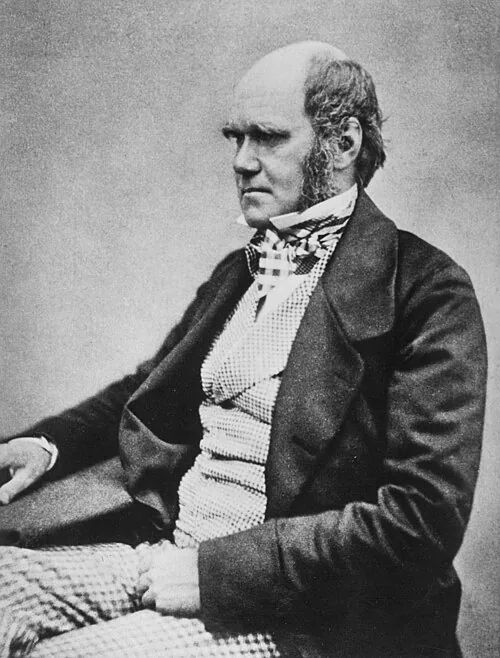
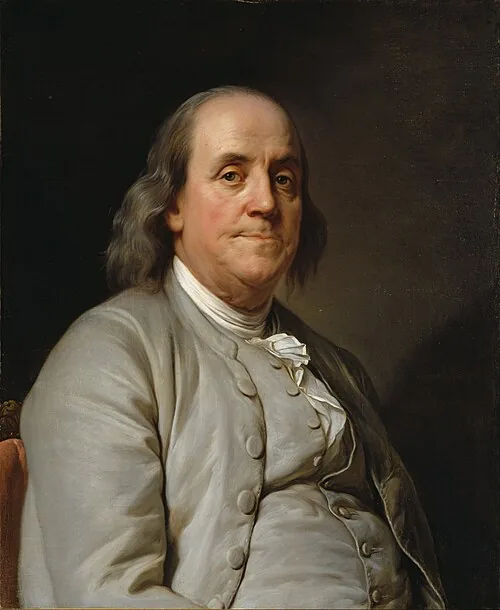
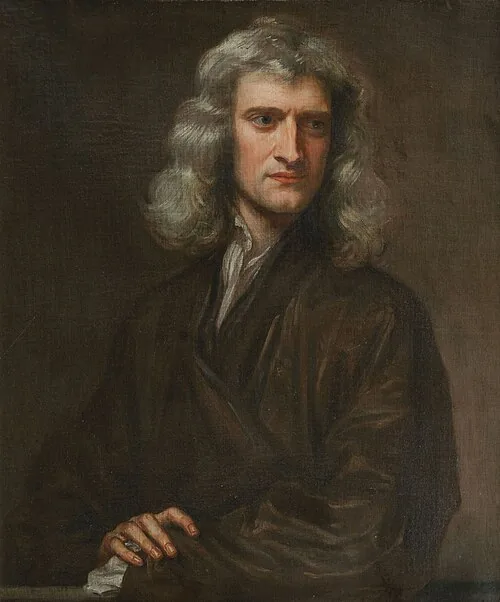
Photograph by Maull & Fox (1854), public domain. Background removed for the portrait above. · Portrait by Joseph-Siffred Duplessis (c. 1785), public domain. · Portrait by Godfrey Kneller (1689), public domain.


An estimate is an inference.
Yours can be measured.
Thirty questions, scored against general-population benchmarks. Your score, your percentile, your ability breakdown and a printable IIF certificate.
Find your IQ score now! →