



What is Neil deGrasse Tyson’s IQ?
An unpublished score, a 1991 Columbia PhD and one joke about the IQ test.

No IQ test result for Neil deGrasse Tyson has ever been published, and the IQ score of 123 repeated on celebrity-IQ sites names no test, date or source. The record is a Harvard physics degree (1980), a Columbia astrophysics PhD (1991) and the Hayden Planetarium directorship since May 1996; his best-documented remark about IQ tests is a joke he posted on March 10, 2015.
Neil deGrasse Tyson’s estimated IQ
- BA in physics from Harvard (June 1980); MA in astronomy from the University of Texas at Austin (May 1983); MPhil (May 1989) and PhD (May 1991) in astrophysics from Columbia University, advised by R. Michael Rich, on the chemical evolution and structure of the Galactic bulge.
- Applied to five colleges as a Bronx High School of Science senior and was invited to Cornell by Carl Sagan, then the best-known astrophysicist in the world, according to The New Yorker; Tyson chose Harvard.
- Frederick P. Rose Director of the Hayden Planetarium since May 1996, after serving as acting director from June 1995, and project scientist for the $210 million reconstruction of the planetarium and the Rose Center for Earth and Space (January 1997–February 2000).
- NASA’s Distinguished Public Service Medal (September 22, 2004) and the National Academy of Sciences’ Public Welfare Medal (April 2015), an award Carl Sagan received in 1994.
- Member of two presidential commissions: the Commission on the Future of the United States Aerospace Industry (September 2001–November 2002) and the Moon, Mars and Beyond commission on space exploration policy (February–June 2004).
A completed doctorate reflects sustained academic achievement, not a cognitive score, and this range is inferred from the degrees and institutions, the method used for other completed-PhD profiles on this site. Tyson’s medals and commission seats reflect public service and science communication, so the doctorate carries most of the weight.
- Born
- October 5, 1958, Manhattan, New York City
- Name spelling
- Neil deGrasse Tyson (one word, lowercase d); often searched as “Neil de Grasse Tyson”
- Field
- Astrophysics, science communication
- Education
- BA Physics, Harvard (1980); MA Astronomy, UT Austin (1983); MPhil (1989) and PhD (1991) Astrophysics, Columbia
- Role
- Frederick P. Rose Director, Hayden Planetarium, since May 1996
- Known for
- Hosting Cosmos (2014, 2020) and StarTalk
- IQ test result
- None published
- Circulating figure
- 123, an unsourced estimate on celebrity-IQ sites
What an IQ of 140–155 actually means
Set the claim aside for a moment. If someone genuinely scored in this range, here is what that would represent.
Average is 100 by construction, and about two-thirds of people fall between 85 and 115. Take the test to place your own score on this scale.
| Score range | Classification | Share of people | What it indicates |
|---|---|---|---|
| 85 – 114 | Average | ~68% | The range most people fall into. |
| 115 – 129 | Above average | ~13.6% | Roughly one person in seven. |
| 130 – 144 | Gifted | ~2% | The threshold most high-IQ societies use. |
| Above 144 | Highly gifted | ~0.1% | Figures above this range are extrapolated from the curve rather than measured. |
Percentages are approximate and describe a normal distribution. The same number means different things on tests with different standard deviations.
Thirty questions gives you a measured position on this exact scale — your score, your percentile and the ability breakdown behind it.
Find out in 30 minutes →Who Neil deGrasse Tyson is
Neil deGrasse Tyson was born on October 5, 1958 in Manhattan and graduated from the Bronx High School of Science in 1976, where he captained the wrestling team and edited the school’s Physical Science Journal. He applied to Harvard, NYU, MIT, Princeton and Cornell. Carl Sagan, then the best-known astrophysicist in the world, had invited him to Cornell, but Tyson chose Harvard after tabulating where recent Scientific American physics and astrophysics authors had studied, according to The New Yorker.
At Harvard he earned a BA in physics (June 1980), at the University of Texas at Austin an MA in astronomy (May 1983, advisor John M. Scalo), and at Columbia University an MPhil (May 1989) and a PhD in astrophysics (May 1991) under R. Michael Rich, on the chemical evolution, abundances and structure of the Galactic bulge. After postdoctoral research at Princeton (July 1991–June 1994) he joined the Hayden Planetarium at the American Museum of Natural History as a staff scientist in July 1994, served as acting director from June 1995, and has been its Frederick P. Rose Director since May 1996, according to his CV.
He hosted NOVA ScienceNow on PBS (February 2006–May 2011), Cosmos: A Spacetime Odyssey (premiered March 9, 2014; 13 episodes) and Cosmos: Possible Worlds (March 9, 2020), has hosted the StarTalk podcast since 2009, and began hosting the StarTalk talk show on the National Geographic Channel on April 20, 2015. His books include Death by Black Hole (2007) and Astrophysics for People in a Hurry (May 2017).
He served on two presidential commissions, the Commission on the Future of the United States Aerospace Industry (September 2001–November 2002) and the commission on implementing U.S. space exploration policy, known as Moon, Mars and Beyond (February–June 2004). NASA awarded him its Distinguished Public Service Medal on September 22, 2004, and the National Academy of Sciences its Public Welfare Medal in April 2015. The asteroid 13123 Tyson (1994 KA), discovered in 1994 by Carolyn Shoemaker and David Levy, carries his name, and his CV lists 27 honorary doctorates. For another group of high achievers whose scores were measured for some and guessed for others, see the article on the IQ of Nobel Prize winners.
 By Elora Mercer, Celebrity Research WriterFigures checked by Leon Falkner, Data & Research Analyst
Reviewed by Aarav Vardhan, Editor-in-Chief · Last reviewed October 2026
Neil deGrasse Tyson: the documented record
The estimate above rests on this record. Every entry here is a matter of public fact, which is more than can be said for the number itself.
- 1958Born October 5 in Manhattan, New York City.
- 1976Graduates from the Bronx High School of Science.
- 1980BA in physics, Harvard University.
- 1983MA in astronomy, University of Texas at Austin.
- 1991PhD in astrophysics, Columbia University (MPhil, 1989), under R. Michael Rich.
- 1996Becomes Frederick P. Rose Director of the Hayden Planetarium (staff scientist since 1994, acting director from 1995).
- 2004Receives NASA’s Distinguished Public Service Medal; serves on the Moon, Mars and Beyond commission.
- 2014Hosts Cosmos: A Spacetime Odyssey, premiering March 9.
- 2015Posts a joke about IQ tests (March 10); receives the National Academy of Sciences’ Public Welfare Medal (April); begins StarTalk on National Geographic (April 20).
- 2020Hosts Cosmos: Possible Worlds, premiering March 9 on National Geographic.
Where the 123 figure came from
Following a claim back to its first appearance is the part almost nobody does — and it is what most people are actually asking.
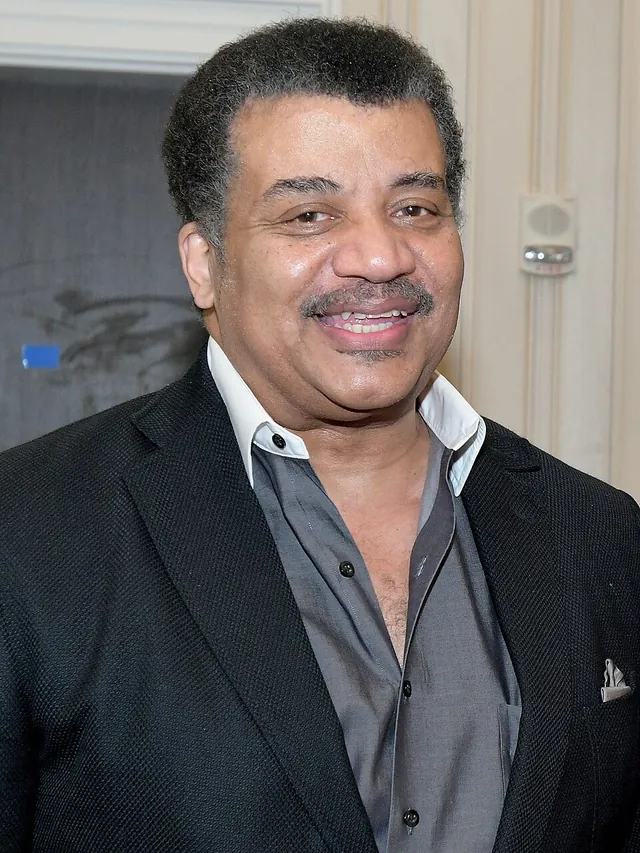
Where the number appears is clear; where it comes from is not. CelebrityIQ.info says Neil deGrasse Tyson’s IQ is “estimated at approximately 123,” The Genius Index headlines an “Estimated Cognitive Quotient” of 123, and Celebrities IQ attributes its 123 to a site called Height of Celebrities. None names a test, an examiner or a date. CelebrityIQ.info says in general terms that its estimates are compiled from academic records, biographical accounts and expert analysis, which makes 123 a guess made from a résumé; the explainer on where celebrity IQ numbers come from shows how such guesses spread.
Tyson’s own words on the subject are a joke, not a score. On March 10, 2015 he posted on Twitter: “Ongoing research continues to demonstrate conclusively that your IQ is an excellent predictor of your score on an IQ test.” The sentence is circular, because an IQ is the number an IQ test produces, and it gives no hint of his own result. No published interview, book or post reports a score from him.
What can be documented is a completed doctorate from Columbia in May 1991 under R. Michael Rich, after a Harvard physics degree and a Texas master’s in astronomy. A finished PhD in a demanding technical field is one of the stronger achievement anchors this site can point to, because it represents years of examined, supervised work brought to completion. That supports the 140–155 range this site infers (see what an IQ of 140 means), but it supports no single number. The 123 would sit below that range, yet the gap proves nothing, because neither figure comes from a test. For group-level context, see the data on average IQ by education level.
The same audit is applied to the other science communicators on this site, including Carl Sagan, whose 1980 Cosmos series Tyson’s 2014 sequel continued, Michio Kaku, Brian Cox and Bill Nye. In each case the range is inferred from the documented record, not from fame or audience size.
How we read a number →Reads: “Ongoing research continues to demonstrate conclusively that your IQ is an excellent predictor of your score on an IQ test.” A joke about the test; it reports no score.
Degrees and dates (Harvard BA 1980, Texas MA 1983, Columbia MPhil 1989 and PhD 1991, advisor R. Michael Rich), Hayden Planetarium roles from July 1994, the 2001 and 2004 commissions, NASA and National Academy medals, asteroid 13123, honorary doctorates, books and shows.
Bronx Science years, his five college applications, Carl Sagan’s invitation to Cornell, and the choice of Harvard.
Discovered May 16, 1994 by C. S. Shoemaker and D. H. Levy at Palomar; carries the Tyson naming citation.
StarTalk on National Geographic from April 20, 2015, Cosmos: Possible Worlds on March 9, 2020, the Moon, Mars and Beyond commission; Public Welfare Medal recipients include Carl Sagan (1994) and Tyson (2015). Used for orientation and cross-checked against Tyson’s CV.
Each gives 123 as an estimate; none names a test, an examiner or a date. Celebrities IQ credits the figure to Height of Celebrities; Legit.ng notes that no formal test result has been released.
Riot IQ: no credible outlet has reported a score. checkiqfree.com: estimates of 123, 145 and 160 circulate with no verification by any public record.
No score report, school record or clinician’s account is public, and no interview, book or post reports a score from Tyson.
The sources behind our estimate
The figures that circulate for Neil deGrasse Tyson, what we were able to confirm, and where the two diverge.
123 is the figure repeated on celebrity-IQ websites, always as an “estimate” and never with a test attached. CelebrityIQ.info and The Genius Index print it as his estimated IQ, Celebrities IQ credits it to a site called Height of Celebrities, and History Tools writes that “expert estimates” put it there.
No IQ test result for Tyson has been published. The pages that print 123 label it an estimate; CelebrityIQ.info says such estimates are compiled from academic records and biographical accounts, and Legit.ng adds that he has not publicly released the results of any formal IQ test. Riot IQ says no credible outlet has reported a score for him, and checkiqfree.com says none of the circulating numbers has been verified by a public record. Tyson’s own remark on the subject, posted on March 10, 2015, is a joke about the test, not a score.
123 is the most-repeated figure, and every page that prints it treats it as an estimate drawn from his credentials. checkiqfree.com also lists 145 and 160 among the numbers that circulate, so even the pages that publish an estimate disagree on its size.
Want a number that does hold up? Every figure on this page is somebody’s claim. Take the 30-question test and get a percentile you can check rather than a figure you have to trust.
Neil deGrasse Tyson — frequently asked
What is Neil deGrasse Tyson’s IQ?
No IQ test result for Neil deGrasse Tyson has been published, so his IQ is not known. The 123 that circulates is an unsourced estimate on celebrity-IQ websites. This site’s estimated range, 140–155, is inferred from his Columbia astrophysics PhD (1991) and career, not from a test.
How smart is Neil deGrasse Tyson?
The documented record is that of a high achiever in a demanding field: a Harvard physics degree (1980), a Columbia astrophysics PhD (1991) and the Hayden Planetarium directorship since 1996. No test turns that record into an IQ, so “smart” here means accomplished, not scored; this site’s inferred range is 140–155.
Has Neil deGrasse Tyson ever taken an IQ test?
No public record of one exists: no score report, school record or clinician’s account has been published. The nearest thing is a joke he posted on March 10, 2015, saying that your IQ is an excellent predictor of your score on an IQ test, which says nothing about his own result.
Where does Neil deGrasse Tyson’s 123 IQ score come from?
It cannot be traced to a test. The figure appears as an “estimate” on celebrity-IQ pages such as CelebrityIQ.info and The Genius Index, and Celebrities IQ credits it to Height of Celebrities; none names a test or a date. Other pages say none of the circulating numbers has been verified by any public record.
What is the average IQ of an astrophysicist?
No survey of astrophysicists’ IQ exists to cite, so there is no measured average. The documented anchor is the completed doctorate: Tyson’s Columbia astrophysics PhD (1991) is the kind of record this site uses for its ranges, which is why this page infers 140–155 without a test.
Is Neil deGrasse Tyson a genius?
No test score exists that would label him one, and this site does not award the word on reputation. The record is that of a trained astrophysicist and a widely known communicator: the National Academy of Sciences cited his role in “exciting the public about the wonders of science” when it gave him its Public Welfare Medal in 2015. See what counts as a genius IQ level.
How does Neil deGrasse Tyson’s estimated IQ compare with Brian Cox’s and Carl Sagan’s?
On this site Tyson’s inferred range is 140–155, against 125–140 for Brian Cox and 145–165 for Carl Sagan. All three ranges are inferences from degrees and careers, not test results, and none of them is a ranking of intelligence.
What is Neil deGrasse Tyson’s academic record?
Bronx High School of Science (1976); a physics BA from Harvard (June 1980); an MA in astronomy from the University of Texas at Austin (May 1983); and an MPhil (May 1989) and PhD (May 1991) in astrophysics from Columbia University, advised by R. Michael Rich.
Did Carl Sagan really recruit Neil deGrasse Tyson?
Sagan tried to. As a Bronx Science senior, Tyson was invited to Cornell by Carl Sagan, then the best-known astrophysicist in the world, The New Yorker reported in 2014. Tyson had applied to Harvard, NYU, MIT, Princeton and Cornell, and chose Harvard.
How does my IQ compare with Neil deGrasse Tyson?
You can find out in about fifteen minutes. The IQ Metrics assessment is 30 questions, scored on the same 100-mean scale used throughout this page, so your result and the estimate above are at least expressed in the same units — one measured, one inferred. Once you have a number, the leaderboard shows where it would sit, and how we score and norm it explains the benchmarking.
Where does this estimate come from?
From the documented record rather than a test — the method is named above and set out in full under how we read a number. Compare it against the other scientists profiles, starting with Albert Einstein.
- Take the 30-question IQ test — get a measured score and percentile of your own
- Average IQ by country — how the scale behaves across populations
- How IQ Metrics scores its assessment — the method behind our own number
- More on how IQ testing works — reliability, error and what a score can and cannot say
- More scientists profiles — same field, same method
More scientists
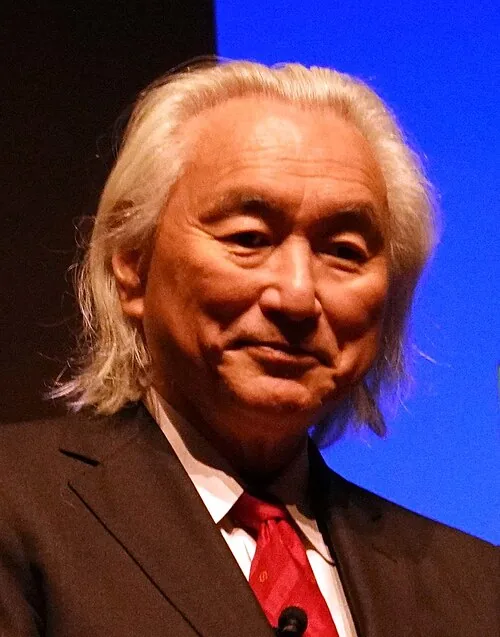
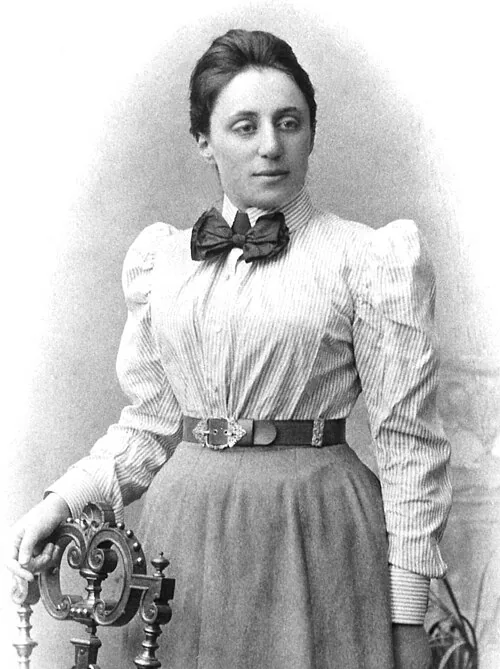
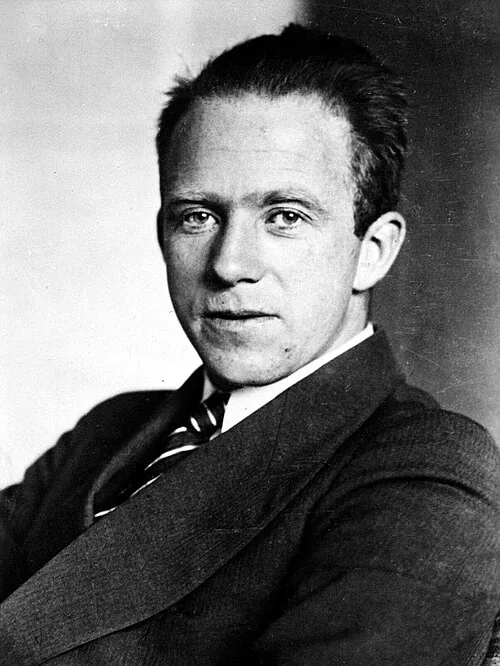
Photograph by Jay Murdock, CC BY-SA 4.0. · Photograph, publisher Mathematical Association of America, via Wikimedia Commons, public domain. Background removed for the portrait above. · Photographer unknown, via Wikimedia Commons, CC BY-SA 3.0 DE. Background removed for the portrait above.
.jpg)
.jpg)
.jpg)
An estimate is an inference.
Yours can be measured.
Thirty questions, scored against general-population benchmarks. Your score, your percentile, your ability breakdown and a printable IIF certificate.
Find your IQ score now! →