



What was John Adams’ IQ?
Seventh of 42 presidents on Simonton’s table, and the first Cox score is the lowest because his boyhood left almost no record.

John Adams has no IQ test score, because he died in 1826. The estimates that exist come from Catharine Cox’s 1926 study and Dean Keith Simonton’s 2006 paper: four figures from 120 to 155, which average 142.5 and rank him 7th of 42 presidents. Our John Adams IQ estimate is 140–155.
John Adams’ estimated IQ
- Cox rated his record to age 17 at IQ 120 and his years 17 to 26 at 145; her corrected scores are 150 and 155 (Early Mental Traits of Three Hundred Geniuses, case study pp. 273–274 and Table 12A). The data to 17 are thin (reliability .20); those for 17 to 26 are good (.75).
- Simonton’s 2006 Table 1 prints the same four numbers, 120, 150, 145 and 155. They average 142.5, which is seventh of the 42 presidents, behind John Quincy Adams, Jefferson, Kennedy, Clinton, Woodrow Wilson and Carter (the average and rank are our arithmetic).
- Cox’s case study names him one of the three most able members of his Harvard class. The Miller Center says he entered Harvard College at 15 and graduated in 1755, taught Latin in Worcester to pay for his law studies and began practicing in Boston in 1758.
- He defended the British soldiers charged after the Boston Massacre in 1770, served on the committee that prepared the Declaration of Independence in 1776, was part of the commission that negotiated the Treaty of Paris, then became vice president in 1789 and the second president in 1797 (Miller Center).
Every figure is a retrospective rating from documents, not a test. Cox rated his first 17 years on almost no record, which is why her first score is only 120, and Simonton warns that her corrected scores “may be overestimates”. The range is a judgment about the whole record.
- Born
- October 30, 1735, Braintree, Massachusetts
- Education
- Harvard College, 1755; law practice in Boston from 1758
- Office
- Vice president 1789–1797; second president 1797–1801
- Cox 1926 ratings
- 120 and 145 as obtained; 150 and 155 corrected (Table 12A)
- Simonton 2006, Table 1
- 120, 150, 145, 155: average 142.5, 7th of 42
- Died
- July 4, 1826, the same day as Jefferson
- Circulating IQ figure
- None with a test behind it
- Documented IQ test
- None; died in 1826
What an IQ of 140–155 actually means
Set the claim aside for a moment. If someone genuinely scored in this range, here is what that would represent.
Average is 100 by construction, and about two-thirds of people fall between 85 and 115. Take the test to place your own score on this scale.
| Score range | Classification | Share of people | What it indicates |
|---|---|---|---|
| 85 – 114 | Average | ~68% | The range most people fall into. |
| 115 – 129 | Above average | ~13.6% | Roughly one person in seven. |
| 130 – 144 | Gifted | ~2% | The threshold most high-IQ societies use. |
| Above 144 | Highly gifted | ~0.1% | Figures above this range are extrapolated from the curve rather than measured. |
Percentages are approximate and describe a normal distribution. The same number means different things on tests with different standard deviations.
Thirty questions gives you a measured position on this exact scale — your score, your percentile and the ability breakdown behind it.
Find out in 30 minutes →Who John Adams was
Who was John Adams? He was born on October 30, 1735, in Braintree, Massachusetts, into a farming family; his father was a deacon and a farmer. He entered Harvard College at 15, graduated in 1755 and taught Latin in Worcester while he studied law. He began his legal career in Boston in 1758 (Miller Center).
What did he do before the presidency? He defended the British soldiers charged after the Boston Massacre in 1770 and went to the First Continental Congress in 1774. In June 1776 he was named, with Thomas Jefferson and Benjamin Franklin among others, to the committee that prepared the Declaration of Independence. He was part of the American commission that negotiated the Treaty of Paris, and was elected vice president in 1789.
How did it end? Adams was the second president, from 1797 to 1801. He died on July 4, 1826, the same day as Jefferson and the fiftieth anniversary of the signing of the Declaration of Independence (Miller Center). See other presidents in our politicians category.
 By Elora Mercer, Celebrity Research WriterFigures checked by Leon Falkner, Data & Research Analyst
Reviewed by Aarav Vardhan, Editor-in-Chief · Last reviewed November 2026

John Adams: the documented record
The estimate above rests on this record. Every entry here is a matter of public fact, which is more than can be said for the number itself.
- 1735Born on October 30 in Braintree, Massachusetts.
- 1755Graduates from Harvard College.
- 1758Begins his law practice in Boston.
- 1770Defends the British soldiers charged after the Boston Massacre.
- 1776Named to the committee that prepares the Declaration of Independence.
- 1781Joins the commission that negotiates the Treaty of Paris.
- 1789Elected vice president under George Washington.
- 1797Becomes the second president of the United States.
- 1826Dies on July 4.
- 1926Catharine Cox publishes the first IQ estimates for him.
- 2006Simonton reprints her scores for all 42 presidents.
Where the 120–155 figure came from
Following a claim back to its first appearance is the part almost nobody does — and it is what most people are actually asking.
What is John Adams’s IQ? No test exists, so every number is an estimate. Catharine Cox rated his record in 1926, and Dean Keith Simonton reprinted her scores in a 2006 table of all 42 presidents. The four figures are 120, 150, 145 and 155. For how the whole table works, see our explainer on U.S. presidents ranked by IQ.
Why is his first Cox score only 120? Because the record is thin. Cox’s case study lists “no specific record” for his boyhood interests, reading, achievements and signs of early ability, and she graded that data at .20. For ages 17 to 26 she had more to work with: Harvard, three years of teaching in Worcester while he studied law, and admission to the bar at 23. She graded it .75 and scored him 145.
How does he rank? Seventh of 42 on the average of Simonton’s four figures. John Quincy Adams, his son, tops the table at 168.75 and Thomas Jefferson is second at 153.75. George Washington averages 132.5. For Cox’s method on the founders, see founding fathers ranked by IQ; for 140 as a score, see what an IQ of 140 means.
How we read a number →Read in the archive.org scan. The case study gives “AI IQ 120” (reliability .20) and “AII IQ 145” (.75); Table 12A gives his corrected estimates, 150 and 155 (Cattell rank 104). It lists no specific record of his boyhood interests, reading, achievement or precocity.
Table 1 prints his four estimates (120, 150, 145, 155), his Intellectual Brilliance score (0.6) and his Openness score (61). The paper says Cox’s corrected scores “may be overestimates”. The DOI and title were checked on Crossref.
Born October 30, 1735 in Braintree; Harvard College at 15 and graduation in 1755; teaching in Worcester and law study; Boston in 1758; the Boston Massacre defense; the Continental Congress, the Declaration committee and the Treaty of Paris commission; the vice presidency in 1789; death on July 4, 1826.
Confirms Q11806 is the Founding Father and U.S. president from 1797 to 1801 (1735–1826), not John Quincy Adams.
Adams died in 1826. Cox’s table, the Miller Center pages and Simonton’s paper give no test score; every number is a rating of documents.
On this site John Quincy Adams is 150–170, Jefferson 150–170 and Washington 125–145.
The sources behind our estimate
The figures that circulate for John Adams, what we were able to confirm, and where the two diverge.
People type “john adams iq”, “john adams estimated iq” and “john adams vs jefferson iq”. The numbers behind those searches are Cox’s ratings as printed in Simonton’s 2006 table: 120, 150, 145 and 155. No test exists.
No IQ test result exists for John Adams. Every figure traces to the four scores Cox’s raters gave him, which Simonton reprinted in Table 1 of his 2006 paper: 120 and 150 for birth to 17, 145 and 155 for 17 to 26, the second of each pair being Cox’s corrected score. We average them to 142.5; the paper prints the four numbers, not an average.
The four scores run from 120 to 155. The lowest, 120, is Cox’s first score, drawn from a boyhood for which her case study lists no specific record of interests, reading or achievement. The other three sit at 145 to 155, and our 140–155 follows them.
Want a number that does hold up? Every figure on this page is somebody’s claim. Take the 30-question test and get a percentile you can check rather than a figure you have to trust.
John Adams — frequently asked
What is John Adams’s IQ?
No IQ test result exists for John Adams, who died in 1826. The estimates come from Catharine Cox and Dean Keith Simonton: four figures from 120 to 155, averaging 142.5. Our John Adams IQ estimate is 140–155.
What is John Adams’s estimated IQ?
Simonton’s 2006 table gives 120 and 145 as Cox obtained them and 150 and 155 after her correction. Their average is 142.5, which puts Adams seventh of 42 presidents. A score of 140 is about the 99.6th percentile; see what an IQ of 140 means.
Is John Adams’s IQ higher than Thomas Jefferson’s?
On Simonton’s table, no. Jefferson averages 153.75 and is second of 42, and Adams averages 142.5 and is seventh. Both are retrospective ratings of documents, not tests. Our range for Jefferson is 150–170, for Adams 140–155.
Why was Cox’s first score for John Adams only 120?
Because the record of his first 17 years is thin. Her case study lists no specific record of his interests, reading, achievements or early signs of ability, and she graded the data at .20. Her score for ages 17 to 26, where the record is fuller, is 145.
How does John Adams’s IQ compare with John Quincy Adams’s?
His son does better on the same table: 168.75 against 142.5. Cox graded the data on the son at .82, the highest reliability she gives. See our John Quincy Adams profile.
What did John Adams study?
He graduated from Harvard College in 1755, taught Latin in Worcester and studied law there from 1756 to 1758, then began practicing in Boston in 1758 (Miller Center). To see where a score lands, take our IQ test.
How does my IQ compare with John Adams?
You can find out in about fifteen minutes. The IQ Metrics assessment is 30 questions, scored on the same 100-mean scale used throughout this page, so your result and the estimate above are at least expressed in the same units — one measured, one inferred. Once you have a number, the leaderboard shows where it would sit, and how we score and norm it explains the benchmarking.
Where does this estimate come from?
From the documented record rather than a test — the method is named above and set out in full under how we read a number. Compare it against the other politics profiles, starting with Thomas Jefferson.
- Take the 30-question IQ test — get a measured score and percentile of your own
- Average IQ by country — how the scale behaves across populations
- How IQ Metrics scores its assessment — the method behind our own number
- More on how IQ testing works — reliability, error and what a score can and cannot say
- More politics profiles — same field, same method
More politics
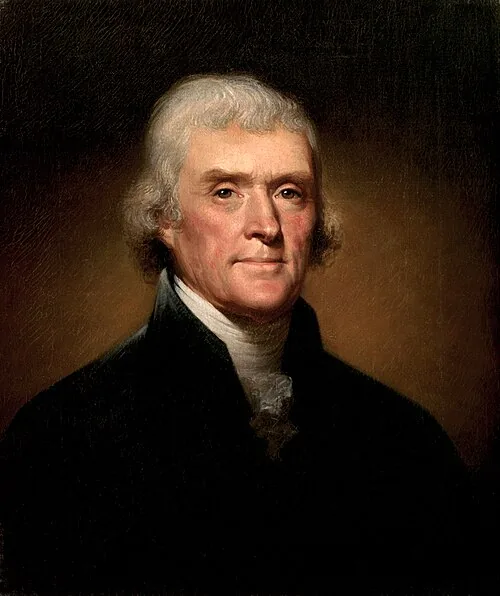
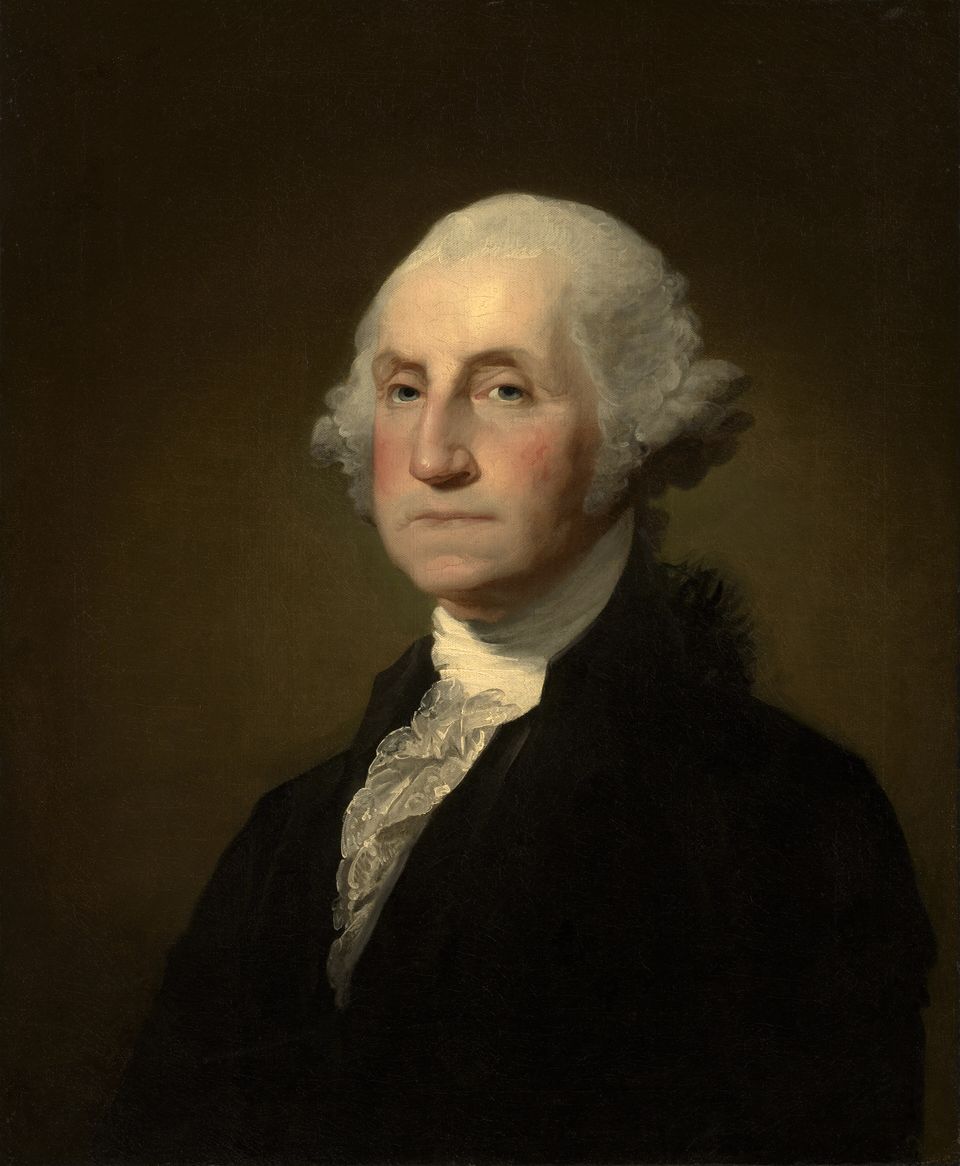
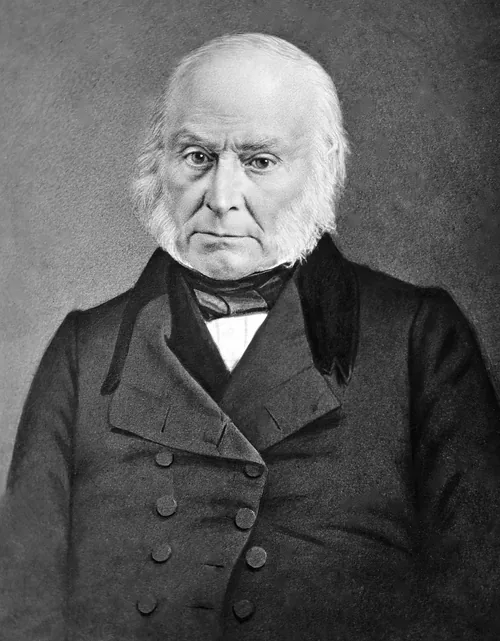
Portrait by Rembrandt Peale (1800), public domain. · Portrait by Gilbert Stuart (the Williamstown portrait, his copy of the Athenaeum portrait, in the Clark Art Institute), public domain. · Copy by Mathew Brady (c. 1855–1865) of a daguerreotype made between 1843 and 1848 by an unknown photographer, from the U.S. National Archives (Record Group 111) and digitally restored, via Wikimedia Commons, public domain. Background removed for the portrait above.


An estimate is an inference.
Yours can be measured.
Thirty questions, scored against general-population benchmarks. Your score, your percentile, your ability breakdown and a printable IIF certificate.
Find your IQ score now! →