



What is John Urschel’s IQ?
The one credential most “smartest athlete” lists undercount.

Urschel spent three seasons as a starting offensive lineman for the Baltimore Ravens while co-authoring peer-reviewed mathematics papers on the side. Most “smartest athlete” lists mention this and still undersell it.
John Urschel’s estimated IQ
- Won the William V. Campbell Trophy in 2013 — college football’s National Scholar-Athlete award, nicknamed the “Academic Heisman” — while earning a bachelor’s and a master’s degree in mathematics at Penn State.
- Co-authored and published peer-reviewed papers on spectral graph theory in academic mathematics journals during his active NFL career with the Baltimore Ravens (2014–2017).
- Retired from the NFL in 2017 to pursue a PhD in mathematics at MIT, which he completed.
This is an academic and achievement-based estimate, not a test score — no IQ test for Urschel appears on the public record. It is unusually well-supported by comparison to most entries on this site, resting on a completed doctorate and published, peer-reviewed research rather than an unverifiable anecdote.
- Born
- 24 June 1991, Winnipeg, Canada
- Field
- American football (offensive line); mathematics
- Education
- Penn State (BA and MA, mathematics); MIT (PhD, mathematics)
- Known for
- William V. Campbell Trophy (2013); NFL career with the Baltimore Ravens (2014–2017); published research in spectral graph theory
- Documented record
- Completed mathematics PhD and peer-reviewed publications; no published IQ test result
What an IQ of 145–160 actually means
Set the claim aside for a moment. If someone genuinely scored in this range, here is what that would represent.
Average is 100 by construction, and about two-thirds of people fall between 85 and 115. Take the test to place your own score on this scale.
| Score range | Classification | Share of people | What it indicates |
|---|---|---|---|
| 85 – 114 | Average | ~68% | The range most people fall into. |
| 115 – 129 | Above average | ~13.6% | Roughly one person in seven. |
| 130 – 144 | Gifted | ~2% | The threshold most high-IQ societies use. |
| Above 144 | Highly gifted | ~0.1% | Figures above this range are extrapolated from the curve rather than measured. |
Percentages are approximate and describe a normal distribution. The same number means different things on tests with different standard deviations.
Thirty questions gives you a measured position on this exact scale — your score, your percentile and the ability breakdown behind it.
Find out in 30 minutes →Who John Urschel is
John Urschel was born in 1991 in Winnipeg, Canada, and played college football at Penn State, where he earned a bachelor’s degree and then a master’s degree in mathematics while starting on the offensive line. He won the 2013 William V. Campbell Trophy, awarded annually to college football’s top scholar-athlete.
Drafted by the Baltimore Ravens in 2014, he played three NFL seasons as an offensive lineman while co-authoring peer-reviewed papers in spectral graph theory. He retired from professional football in 2017, shortly after a study on chronic traumatic encephalopathy in former NFL players was published, a factor he cited in his decision, and went on to complete a PhD in mathematics at MIT.
 By Elora Mercer, Celebrity Research WriterFigures checked by Leon Falkner, Data & Research Analyst
Reviewed by Aarav Vardhan, Editor-in-Chief · Last reviewed August 2026

John Urschel: the documented record
The estimate above rests on this record. Every entry here is a matter of public fact, which is more than can be said for the number itself.
- 1991Born in Winnipeg, Canada.
- 2013Wins the William V. Campbell Trophy at Penn State.
- 2014Drafted by the Baltimore Ravens; begins publishing mathematics research alongside his NFL career.
- 2017Retires from the NFL; begins a PhD in mathematics at MIT.
- 2021Completes his PhD in mathematics at MIT.
Where the 140 figure came from
Following a claim back to its first appearance is the part almost nobody does — and it is what most people are actually asking.
Most pages on this site describe a headline figure that outruns the documented record. Urschel’s is closer to the opposite: the record — a national scholar-athlete award, published peer-reviewed research completed during active NFL seasons, and a subsequent MIT doctorate — is more specific and more verifiable than the general “smart athlete” framing that follows him in casual coverage.
Among athletes profiled on this site, only the chess players — Magnus Carlsen, Bobby Fischer and Garry Kasparov — rest on comparably hard, domain-specific evidence. Urschel’s case is unusual for resting on an academic credential external to his sport entirely, earned and published while he was still competing in it.
How we read a number →Institutional record of the National Scholar-Athlete award.
Institutional academic record, completed after Urschel’s 2017 NFL retirement.
Published mathematics research, independently verifiable through the originating journals.
No test score for Urschel appears in the public record.
The sources behind our estimate
The figures that circulate for John Urschel, what we were able to confirm, and where the two diverge.
Figures around 140 appear on “smartest active and former athletes” lists, usually citing his football-and-mathematics story in general terms rather than the specific credentials behind it.
Unlike most entries on this site, the number here is not obviously inflated — if anything, general coverage undersells the record. An NFL lineman publishing peer-reviewed spectral graph theory research during active seasons, then completing a mathematics PhD at MIT after retiring, is a rare, specific, independently checkable credential most listicle treatments compress into a vague “smart athlete” framing.
The range sits close together because the documented record — a completed doctorate, published research, a national academic award — is unusually solid for this category, leaving little room for the wide, unsupported spreads seen elsewhere on this site.
Want a number that does hold up? Every figure on this page is somebody’s claim. Take the 30-question test and get a percentile you can check rather than a figure you have to trust.
John Urschel — frequently asked
What is John Urschel’s IQ?
No test result has ever been published. A figure around 140 circulates on athlete-focused listicles, though his documented academic record — a completed MIT mathematics PhD and published research — is unusually solid for this category.
Did John Urschel really publish math papers while playing in the NFL?
Yes — he co-authored peer-reviewed papers on spectral graph theory during his active seasons with the Baltimore Ravens (2014–2017).
What is the William V. Campbell Trophy?
College football’s National Scholar-Athlete award, sometimes called the “Academic Heisman,” which Urschel won in 2013 while at Penn State.
Why did John Urschel retire from the NFL?
He retired in 2017 shortly after a study on chronic traumatic encephalopathy (CTE) in former NFL players was published, a factor he has cited publicly, to pursue a PhD in mathematics at MIT.
Has John Urschel ever taken an IQ test?
There is no published record of one.
How does Urschel’s case compare to others in this category?
Most athlete profiles on this site show a circulating figure well ahead of the documented record. Urschel’s documented record — a completed doctorate and published research — is arguably stronger than the modest figure usually attached to him.
How does my IQ compare with John Urschel?
You can find out in about fifteen minutes. The IQ Metrics assessment is 30 questions, scored on the same 100-mean scale used throughout this page, so your result and the estimate above are at least expressed in the same units — one measured, one inferred. Once you have a number, the leaderboard shows where it would sit, and how we score and norm it explains the benchmarking.
Where does this estimate come from?
From the documented record rather than a test — the method is named above and set out in full under how we read a number. Compare it against the other athletes profiles, starting with Magnus Carlsen.
- Take the 30-question IQ test — get a measured score and percentile of your own
- Average IQ by country — how the scale behaves across populations
- How IQ Metrics scores its assessment — the method behind our own number
- More on how IQ testing works — reliability, error and what a score can and cannot say
- More athletes profiles — same field, same method
More athletes
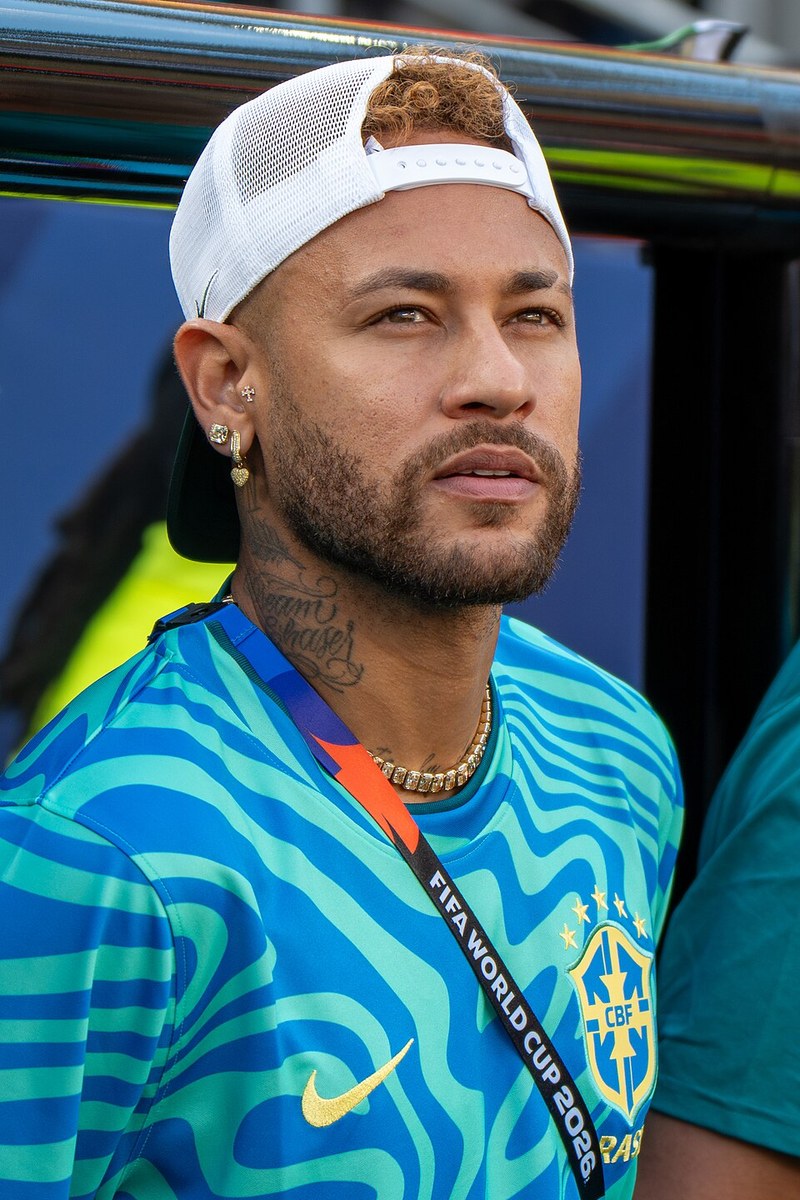


Photograph by Bryan Berlin (13 June 2026), CC BY-SA 4.0. Background removed for the portrait above. · Photograph by Harry Pot for Anefo, Dutch National Archives, via Wikimedia Commons (26 April 1962), CC BY-SA 3.0 NL. Cropped to exclude another member of the delegation visible in the original frame. Background removed for the portrait above. · Photograph by Anand Anil (November 2017), CC BY-SA 4.0. Background removed for the portrait above.


An estimate is an inference.
Yours can be measured.
Thirty questions, scored against general-population benchmarks. Your score, your percentile, your ability breakdown and a printable IIF certificate.
Find your IQ score now! →