



What is Judit Polgár’s IQ?
The one case where the childhood was the experiment.

No IQ figure circulates for Judit Polgár, which is unusual for someone this strong. What exists instead is better: a documented rating, and a father who announced in advance what he was trying to prove.
Judit Polgár’s estimated IQ
- Peak FIDE rating of 2735, reached in 2005 — world number eight, and the only woman ever to enter the FIDE top ten.
- Awarded the Grandmaster title in December 1991 at fifteen years and four months, younger than Bobby Fischer had been when he took it.
- Beat Garry Kasparov in a rated game at Russia versus the Rest of the World, Moscow, 2002, while he was world number one.
- Played open competition throughout her career and never entered the women-only world championship cycle.
Elo measures chess strength against other chess players. It is a genuine, audited, published measurement — and it is a measurement of one skill, developed under conditions almost nobody else has experienced. Reading it across to general intelligence is exactly the inference her own family’s experiment was designed to complicate.
- Born
- 23 July 1976, Budapest
- Field
- Chess
- Peak rating
- 2735 FIDE (2005), world number 8
- Grandmaster
- December 1991, aged 15 years 4 months
- Known for
- Strongest female player in the history of chess
What an IQ of 135–155 actually means
Set the claim aside for a moment. If someone genuinely scored in this range, here is what that would represent.
Average is 100 by construction, and about two-thirds of people fall between 85 and 115. Take the test to place your own score on this scale.
| Score range | Classification | Share of people | What it indicates |
|---|---|---|---|
| 85 – 114 | Average | ~68% | The range most people fall into. |
| 115 – 129 | Above average | ~13.6% | Roughly one person in seven. |
| 130 – 144 | Gifted | ~2% | The threshold most high-IQ societies use. |
| Above 144 | Highly gifted | ~0.1% | Figures above this range are extrapolated from the curve rather than measured. |
Percentages are approximate and describe a normal distribution. The same number means different things on tests with different standard deviations.
Thirty questions gives you a measured position on this exact scale — your score, your percentile and the ability breakdown behind it.
Find out in 30 minutes →Who Judit Polgár is
Judit Polgár was born in Budapest in 1976, the youngest of three sisters. Her parents home-schooled all three with chess as the specialism, an arrangement that was contested with the Hungarian authorities at the time.
She took the Grandmaster title in 1991 at fifteen, breaking Fischer’s age record, and spent the following two decades in open competition against the strongest players in the world. She refused throughout to play in women-only events, including the women’s world championship, on the grounds that they were a separate and lower track.
She reached world number eight in 2005 with a rating of 2735 — still the highest a woman has achieved — and beat Kasparov, Karpov, Anand and Carlsen in rated play across her career. She retired from competition in 2014 and now works in chess education.
 By Elora Mercer, Celebrity Research WriterFigures checked by Leon Falkner, Data & Research Analyst
Reviewed by Aarav Vardhan, Editor-in-Chief · Last reviewed August 2026

Judit Polgár: the documented record
The estimate above rests on this record. Every entry here is a matter of public fact, which is more than can be said for the number itself.
- 1976Born in Budapest, the youngest of three sisters.
- 1991Awarded the Grandmaster title at fifteen, breaking Fischer’s age record.
- 1996Enters the world top twenty.
- 2002Beats Garry Kasparov in a rated game in Moscow.
- 2005Reaches a peak rating of 2735 and world number eight.
- 2014Retires from competitive play.
Where the 135–155 figure came from
Following a claim back to its first appearance is the part almost nobody does — and it is what most people are actually asking.
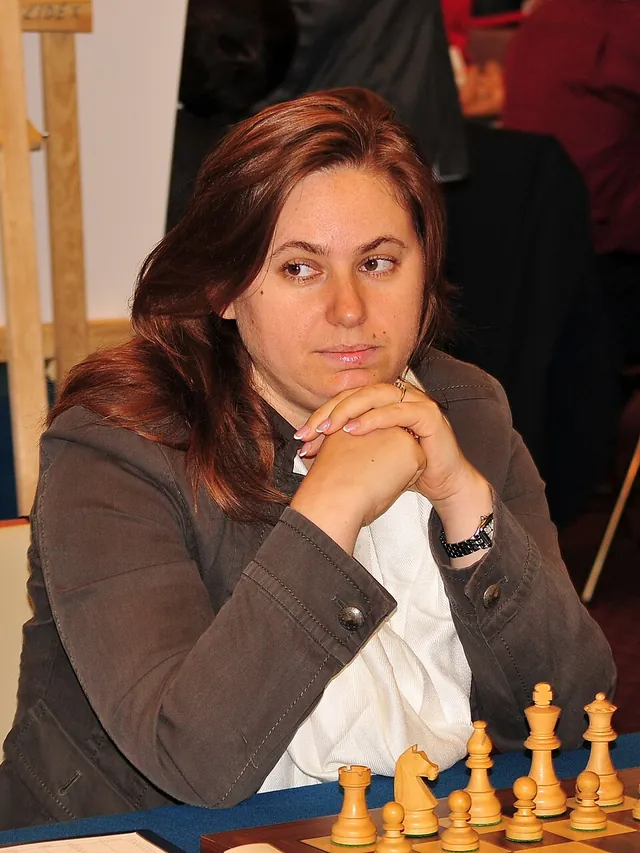
Polgár is on this site because her case runs against the section’s usual grain. Most pages here document a number that was made up to explain a person. This one documents a person raised to test a proposition — and the proposition was that the number does not come first.
László Polgár argued, in print and before his daughters were born, that expertise is trained rather than innate, and that with early specialised instruction any healthy child could be brought to exceptional level. He then home-schooled three daughters in chess to find out. All three became strong players; Judit, the youngest, became the strongest woman ever to play the game. Susan and Sofia both reached international titles.
It is worth being careful about what that demonstrates. Three children is not a controlled study, the family selected itself, and no one knows what the sisters’ scores would have been on any measure. What the case does show, unusually well, is that an extraordinary result was produced by a documented process rather than discovered by a test. That is the opposite of how the rest of this section’s subjects are usually explained.
How we read a number →Published monthly by the international federation and archived. An audited, comparable measurement of playing strength, which is more than any IQ figure on this site can claim.
Awarded at fifteen years and four months. Younger than Bobby Fischer, whose record it broke.
A rated win over the reigning world number one. Recorded in the tournament crosstable and reproduced in game databases.
The pedagogical thesis was stated before the children were born, which is what makes the case unusual. It remains an uncontrolled family experiment, not a study.
None has been published by Polgár or anyone else, and — unusually for a player of her standing — no invented figure circulates either.
The sources behind our estimate
The figures that circulate for Judit Polgár, what we were able to confirm, and where the two diverge.
Almost nothing circulates. Polgár is largely absent from the celebrity-IQ pages, despite being the strongest female chess player in history and an obvious candidate for them.
There is no IQ figure to audit here, and that absence is the most interesting thing on the page. The aggregators reach for chess players constantly — Fischer, Kasparov and Carlsen all carry invented numbers on this site. Polgár has a documented rating instead, and no one has felt the need to supply a score alongside it.
One number, from one governing body, published monthly and independently auditable. That is what a measurement looks like, and it is why nothing needed inventing.
Want a number that does hold up? Every figure on this page is somebody’s claim. Take the 30-question test and get a percentile you can check rather than a figure you have to trust.
Judit Polgár — frequently asked
What is Judit Polgár’s IQ?
No score has ever been published, and unusually no invented figure circulates either. Our 135–155 range is inferred from her peak FIDE rating of 2735, which is a real measurement of chess strength rather than of general intelligence.
Is Judit Polgár the best female chess player ever?
By rating, yes. Her peak of 2735 in 2005 remains the highest achieved by a woman, and she is the only woman to have entered the FIDE top ten.
Did Judit Polgár beat Kasparov?
Yes, in a rated game at Russia versus the Rest of the World in Moscow in 2002, while Kasparov was world number one.
What was the Polgár experiment?
Her father László argued before his children were born that expertise is trained rather than innate, then home-schooled all three daughters with chess as the specialism. All three became strong players.
Was Judit Polgár younger than Fischer when she became a Grandmaster?
Yes — fifteen years and four months, about a month younger than Fischer had been, breaking a record that had stood since 1958.
Why did she never play in the women’s world championship?
She competed only in open events, taking the position that a separate women’s track was a lower one. She played the strongest men in the world instead.
How does my IQ compare with Judit Polgár?
You can find out in about fifteen minutes. The IQ Metrics assessment is 30 questions, scored on the same 100-mean scale used throughout this page, so your result and the estimate above are at least expressed in the same units — one measured, one inferred. Once you have a number, the leaderboard shows where it would sit, and how we score and norm it explains the benchmarking.
Where does this estimate come from?
From the documented record rather than a test — the method is named above and set out in full under how we read a number. Compare it against the other athletes profiles, starting with Magnus Carlsen.
- Take the 30-question IQ test — get a measured score and percentile of your own
- Average IQ by country — how the scale behaves across populations
- How IQ Metrics scores its assessment — the method behind our own number
- More on how IQ testing works — reliability, error and what a score can and cannot say
- More athletes profiles — same field, same method
More athletes

Michael Jordan

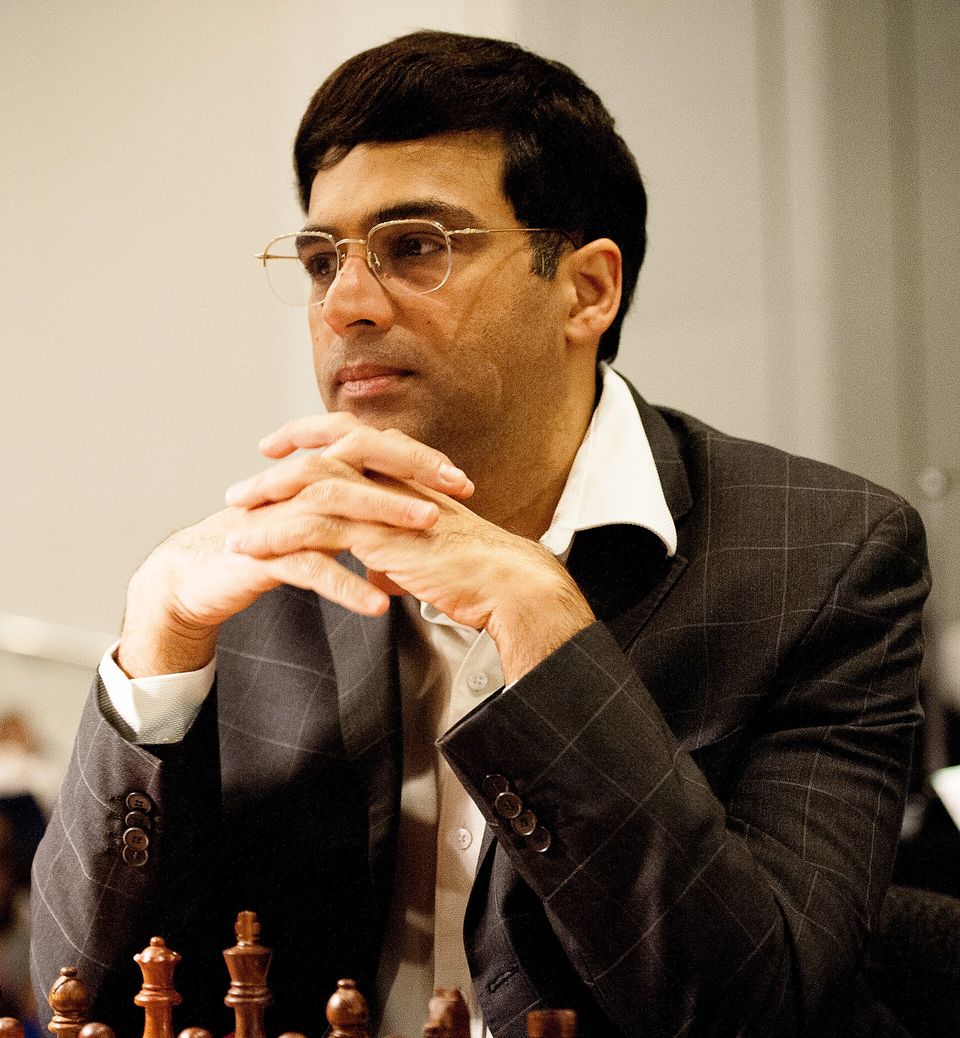
Photograph by Joshua Massel, cropped by Commons user Quadzilla99, CC BY-SA 2.0. · Photograph by Super Festivals, CC BY 2.0. Background removed for the portrait above. · Photograph by Wolfgang Jekel (London Chess Classic, 2016), CC BY 2.0. Background removed for the portrait above.


_(cropped).jpeg)
An estimate is an inference.
Yours can be measured.
Thirty questions, scored against general-population benchmarks. Your score, your percentile, your ability breakdown and a printable IIF certificate.
Find your IQ score now! →