



What is Karl Deisseroth’s IQ?
A Nobel for switching neurons on with light, and no IQ test on file.

No published IQ test result exists for Karl Deisseroth, and no source gives a Karl Deisseroth IQ score. What is documented is a Harvard degree, summa cum laude (1992), a Stanford M.D. and Ph.D., and a share of the 2026 Nobel Prize in Physiology or Medicine for optogenetics, announced October 5, 2026.
Karl Deisseroth’s estimated IQ
- A Harvard A.B. in biochemical sciences, summa cum laude and Phi Beta Kappa (1992), with highest honors in biochemistry and molecular biology and a John Harvard Scholarship for “Academic Achievement of the Highest Distinction” in 1990, 1991 and 1992. His Stanford CV also lists a National Merit Scholarship (1988).
- Stanford’s Medical Scientist Training Program (1992–2000), which produced a Ph.D. in neuroscience (1998) and an M.D. (2000), followed by an internship (2000–2001), a psychiatry residency (2001–2004) and board certification in psychiatry (2006).
- Two papers with documented reach: “Millisecond-timescale, genetically targeted optical control of neural activity” (Nature Neuroscience, volume 8, issue 9, pages 1263–1268, 2005, with Boyden, Zhang, Bamberg and Nagel) and the CLARITY paper “Structural and molecular interrogation of intact biological systems” (Nature, volume 497, pages 332–337, 2013). OpenAlex lists 133,688 citations and an h-index of 183 as of October 25, 2026.
- Prizes from independent juries: the Breakthrough Prize in Life Sciences (2016), the Kyoto Prize in Advanced Technology (2018), the Albert Lasker Basic Medical Research Award (2021, shared with Peter Hegemann and Dieter Oesterhelt) and the Japan Prize (2023).
- The 2026 Nobel Prize in Physiology or Medicine, announced October 5, 2026 “for their discoveries concerning light-gated ion channels and optogenetics,” shared with Peter Hegemann and Georg Nagel.
This is an inference from documented achievement, not a test result. No source gives his Harvard class rank, an entrance-exam score or any psychometric result, and honors and prizes are grades and judgments, not points on a scale. Optogenetics was a multi-laboratory effort (three laureates, a five-author founding paper), and prizes reward impact and timing as well as ability, so the range cannot separate him from other laureates and is best read as a floor with an uncertain top.
- Born
- November 18, 1971, Boston, Massachusetts
- Field
- Neuroscience, psychiatry, bioengineering; optogenetics
- Education
- A.B., Harvard, biochemical sciences, summa cum laude (1992); Ph.D., neuroscience (1998) and M.D. (2000), Stanford
- Training
- Internship 2000–2001 and psychiatry residency 2001–2004, Stanford; board certified in psychiatry (2006)
- Known for
- Optogenetics (Nature Neuroscience, 2005); CLARITY (Nature, 2013); the book Projections (2021)
- Position
- D. H. Chen Professor, Stanford; Howard Hughes Medical Institute Investigator since 2014 (as of October 2026)
- Honors
- Breakthrough Prize (2016); Kyoto Prize (2018); Lasker Award (2021); Japan Prize (2023); Nobel Prize in Physiology or Medicine (2026)
- Circulating figure
- None found; no published IQ test result
What an IQ of 150–165 actually means
Set the claim aside for a moment. If someone genuinely scored in this range, here is what that would represent.
| Score range | Classification | Share of people | What it indicates |
|---|---|---|---|
| 85 – 114 | Average | ~68% | The range most people fall into. |
| 115 – 129 | Above average | ~13.6% | Roughly one person in seven. |
| 130 – 144 | Gifted | ~2% | The threshold most high-IQ societies use. |
| Above 144 | Highly gifted | ~0.1% | Figures above this range are extrapolated from the curve rather than measured. |
Percentages are approximate and describe a normal distribution. The same number means different things on tests with different standard deviations.
Thirty questions gives you a measured position on this exact scale — your score, your percentile and the ability breakdown behind it.
Find out in 30 minutes →Who Karl Deisseroth is
Karl Deisseroth was born on November 18, 1971, in Boston, Massachusetts. He graduated from Harvard in 1992 with an A.B. in biochemical sciences, summa cum laude, and was a teaching fellow there in physical chemistry and quantum mechanics in 1991–1992. At Stanford he took a Ph.D. in neuroscience in 1998 and an M.D. in 2000 within the Medical Scientist Training Program (1992–2000). An internship (2000–2001) and a psychiatry residency (2001–2004) followed, and he was board certified in psychiatry in 2006. For how schooling levels relate to score averages, see average IQ by education level.
Karl Deisseroth’s optogenetics work controls nerve cells with light. Peter Hegemann and Georg Nagel identified the light-sensitive algal protein channelrhodopsin in the 2000s, according to the Karolinska Institutet. Deisseroth’s group introduced the channelrhodopsin gene into nerve cells from rats, reported in Nature Neuroscience in 2005 with Edward Boyden, Feng Zhang, Ernst Bamberg and Nagel, and two years later made the light-controlled switch work in the brains of living mice. The Howard Hughes Medical Institute adds that in 2009 the group used optogenetics to study how deep brain stimulation helps in a Parkinson’s disease model, and that in 2013 it showed that light control of dopamine neurons could quickly reverse the effects of stress-induced depression.
The same group described CLARITY in Nature in 2013 (volume 497, pages 332–337; first author Kwanghun Chung, Deisseroth last author), a method for making intact tissue transparent with hydrogels built within it. As of October 2026 Deisseroth is the D. H. Chen Professor and a professor of bioengineering and of psychiatry and behavioral sciences at Stanford, a practicing psychiatrist, and an Investigator of the Howard Hughes Medical Institute since 2014. HHMI calls him the 36th of its scientists to receive a Nobel Prize.
The honors run from 2016 to 2026: the Breakthrough Prize in Life Sciences (2016), the Kyoto Prize in Advanced Technology (2018), the 2021 Albert Lasker Basic Medical Research Award, shared with Peter Hegemann and Dieter Oesterhelt “for the discovery of light-sensitive microbial proteins that can activate or silence individual brain cells,” the Japan Prize (2023, shared with Gero Miesenböck) and the 2026 Nobel Prize in Physiology or Medicine, announced on October 5, 2026. Hegemann (born 1954) and Nagel (born 1953) did their prize-winning work at Max Planck institutes in Germany. In 2021 Random House published his book Projections: A Story of Human Emotions. Each prize is a jury’s judgment of work, and a prize record cannot be turned into IQ points by arithmetic.
 By Elora Mercer, Celebrity Research WriterFigures checked by Leon Falkner, Data & Research Analyst
Reviewed by Aarav Vardhan, Editor-in-Chief · Last reviewed October 2026

Karl Deisseroth: the documented record
The estimate above rests on this record. Every entry here is a matter of public fact, which is more than can be said for the number itself.
- 1971Born November 18 in Boston, Massachusetts.
- 1992Graduates from Harvard with an A.B. in biochemical sciences, summa cum laude, and begins Stanford’s Medical Scientist Training Program.
- 1998Completes a Ph.D. in neuroscience at Stanford.
- 2000Earns an M.D. at Stanford; his internship runs 2000–2001.
- 2004Finishes a psychiatry residency at Stanford (begun 2001).
- 2005Co-authors the Nature Neuroscience paper on millisecond-timescale optical control of neural activity with channelrhodopsin.
- 2013Last author of the CLARITY paper in Nature.
- 2018Receives the Kyoto Prize in Advanced Technology.
- 2021Shares the Albert Lasker Basic Medical Research Award; Random House publishes Projections.
- 2026On October 5, shares the Nobel Prize in Physiology or Medicine with Peter Hegemann and Georg Nagel.
Why no figure circulates
Following a claim back to its first appearance is the part almost nobody does — and it is what most people are actually asking.
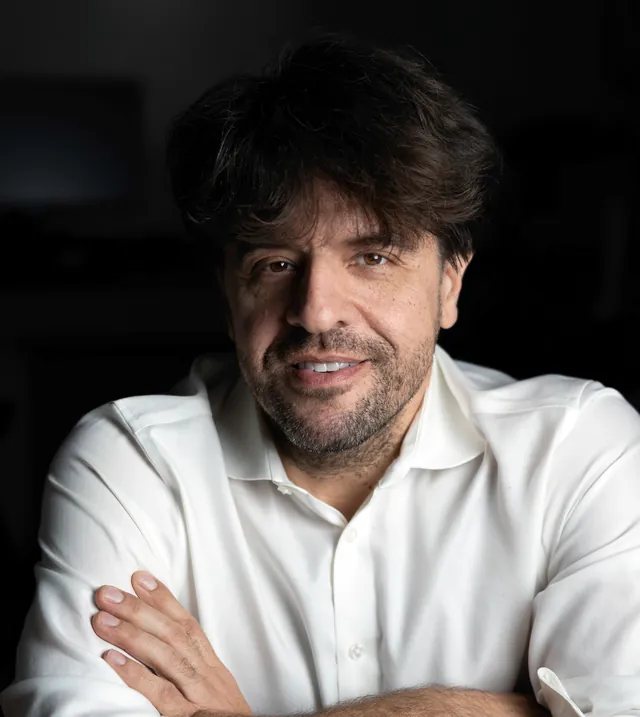
No published IQ test result exists for Karl Deisseroth, so Karl Deisseroth’s IQ score is unknown. His public record is one of degrees, papers and prizes, and no IQ figure appears anywhere in it. A number attached to his name without a named test, a date and an examiner is a guess. For how such numbers spread, and what to check before trusting one, see where celebrity IQ numbers come from.
Is Karl Deisseroth a genius? The Karl Deisseroth Nobel Prize is the strongest public fact. The 2026 Nobel Prize in Physiology or Medicine was announced on October 5, 2026, “for their discoveries concerning light-gated ion channels and optogenetics,” and he shares it with Peter Hegemann (Humboldt University of Berlin) and Georg Nagel (University of Würzburg). A prize is a committee’s judgment of a body of work, not a psychometric result. A standard test has few or no items that separate people far above about 160, a limit known as the test ceiling, so a high figure for any laureate would be extrapolation. Whether a record like his counts as genius-level is a separate question from what any score would show. For what has actually been measured for laureates, see the IQ of Nobel Prize winners.
Karl Deisseroth’s IQ level has one test-linked clue, and it is not a score. His Stanford CV lists a National Merit Scholarship in 1988, and students enter that program by taking the PSAT/NMSQT. No result from that test is public. His other early honors are grade-based: summa cum laude, Phi Beta Kappa and highest honors in biochemistry (all 1992). Honors like these recognize standing among classmates and report no score. For what such test scores mean in percentiles, see National Merit PSAT scores in percentiles and IQ.
Karl Deisseroth’s estimated IQ, 150–165, sits level with Geoffrey Hinton and Yann LeCun on this site, and above the 130–145 given to Andrew Huberman, a neuroscientist at the Stanford University School of Medicine. Hinton shared the 2024 Nobel Prize in Physics with John Hopfield, so he is the closest comparison: a recent laureate whose range rests on a record, not a test. The gap to Huberman reflects the Nobel Prize and the other major prizes in Deisseroth’s record. None of the four has a published test score, and the three upper ranges all start at an IQ of 150.
How we read a number →No score report, school record or clinician’s account for Deisseroth is public. His Stanford CV and faculty page, HHMI, Karolinska Institutet, Lasker Foundation and Kyoto Prize pages and Wikipedia mention no IQ test or score.
Dated October 5, 2026. Names the three laureates of the 2026 Nobel Prize in Physiology or Medicine: Deisseroth (born 1971, Stanford University), Hegemann (born 1954, Humboldt University of Berlin) and Nagel (born 1953, University of Würzburg). Says Deisseroth introduced the channelrhodopsin gene into rat nerve cells and, two years later, made the light-controlled switch work in the brains of living mice.
Lists co-laureates Peter Hegemann (Humboldt University of Berlin) and Georg Nagel (University of Würzburg); says Deisseroth has been an HHMI Investigator since 2014, is the 36th HHMI scientist to receive a Nobel Prize, first reported the rat-neuron result in 2005, and used optogenetics in a Parkinson’s model (2009) and on dopamine neurons in stress-induced depression (2013).
The CV lists A.B. Harvard 1992 (Biochemical Sciences, summa cum laude), Ph.D. Stanford 1998 (Neuroscience), M.D. Stanford 2000, internship 2000–2001, psychiatry residency 2001–2004, Phi Beta Kappa and highest honors (1992), John Harvard Scholarship (1990–1992), National Merit Scholarship (1988) and the Medical Scientist Training Program (1992–2000). The faculty page gives his titles, the same three degrees and psychiatry board certification (2006).
Lists the 2021 Albert Lasker Basic Medical Research Award for Karl Deisseroth, Peter Hegemann and Dieter Oesterhelt, “For the discovery of light-sensitive microbial proteins that can activate or silence individual brain cells.”
Gives the 2018 Kyoto Prize in Advanced Technology (Biotechnology and Medical Technology) and says he has spearheaded optogenetics.
Crossref confirms Boyden, Zhang, Bamberg, Nagel and Deisseroth, “Millisecond-timescale, genetically targeted optical control of neural activity,” Nature Neuroscience 8(9), 1263–1268 (2005), and Chung, Wallace, Kim and others, with Deisseroth last, “Structural and molecular interrogation of intact biological systems,” Nature 497(7449), 332–337 (2013). OpenAlex, updated October 25, 2026, lists 767 works, 133,688 citations and an h-index of 183 for Karl A. Deisseroth.
Orientation for the birthplace (Boston), the Nobel citation “for their discoveries concerning light-gated ion channels and optogenetics”, the 2016 Breakthrough Prize and 2023 Japan Prize, the CLARITY description, Hinton’s 2024 Nobel Prize in Physics with John Hopfield, Huberman’s Stanford post, and PSAT/NMSQT entry to the National Merit program. Open Library gives Random House, 2021, for Projections.
The sources behind our estimate
The figures that circulate for Karl Deisseroth, what we were able to confirm, and where the two diverge.
No figure circulates. No biography, university profile or prize page for Karl Deisseroth gives an IQ, so there is no number to trace.
No published IQ test result exists for Karl Deisseroth. His Stanford CV and faculty page, the Howard Hughes Medical Institute, the Karolinska Institutet, the Lasker Foundation, the Kyoto Prize and Wikipedia describe degrees, papers, appointments and prizes, and none gives an IQ figure. A National Merit Scholarship (1988) on his CV is the only test-linked honor in the record, and it carries no published score.
With nothing circulating, there is no spread to audit. 150–165 is Karl Deisseroth’s estimated IQ range on this site and the only figure on the page. It rests on a documented record, not a test, so its floor, its top and its fifteen-point width are judgments, not measurements.
Want a number that does hold up? Every figure on this page is somebody’s claim. Take the 30-question test and get a percentile you can check rather than a figure you have to trust.
Karl Deisseroth — frequently asked
What is Karl Deisseroth’s IQ?
No published IQ test result exists for Karl Deisseroth, so his exact IQ is not known, and no source gives a figure for him. This site’s estimated IQ range for Karl Deisseroth, 150–165, is inferred from his Harvard and Stanford record and the 2026 Nobel Prize in Physiology or Medicine, not from a test.
Did Karl Deisseroth take an IQ test?
No source says Karl Deisseroth took an IQ test, and no Karl Deisseroth IQ score is on record. His public record lists degrees, scholarships, papers and prizes. The only test-linked item is a 1988 National Merit Scholarship on his CV, which carries no published score.
Is Karl Deisseroth a genius?
The documented record is that of a leading scientist: a Harvard A.B. summa cum laude (1992), a Stanford Ph.D. and M.D., the Lasker Award (2021) and the 2026 Nobel Prize. “Genius” has no fixed IQ cutoff and no test score backs the word; his estimated IQ range here is 150–165.
Did Karl Deisseroth win the Nobel Prize?
Yes. Karl Deisseroth shares the 2026 Nobel Prize in Physiology or Medicine with Peter Hegemann and Georg Nagel, announced October 5, 2026 “for their discoveries concerning light-gated ion channels and optogenetics.” Hegemann and Nagel identified channelrhodopsin in an alga; Deisseroth turned it into a light-controlled switch for nerve cells.
What is Karl Deisseroth known for in optogenetics?
Karl Deisseroth is known for optogenetics, a method that uses light to switch genetically targeted nerve cells on or off. His group put the channelrhodopsin gene into rat nerve cells (Nature Neuroscience, 2005) and made it work in living mice two years later. He is also last author of the 2013 CLARITY paper in Nature.
How does Karl Deisseroth’s estimated IQ compare with Geoffrey Hinton’s?
This site estimates 150–165 for both Karl Deisseroth and Geoffrey Hinton. Hinton shared the 2024 Nobel Prize in Physics with John Hopfield; Deisseroth shares the 2026 Nobel Prize in Physiology or Medicine. Both ranges rest on records, not tests, and they overlap completely, so neither is higher.
What did Karl Deisseroth study?
Deisseroth earned an A.B. in biochemical sciences from Harvard in 1992, summa cum laude. At Stanford he completed a Ph.D. in neuroscience in 1998 and an M.D. in 2000, then a psychiatry residency (2001–2004). He is now a Stanford professor of bioengineering and of psychiatry and behavioral sciences.
Is a Nobel Prize the same as a high IQ?
No. A Nobel Prize is a committee’s judgment of a body of work, not a test score. Deisseroth’s 2026 prize is shared with two other laureates, so it measures impact, not one person’s ability. This site uses it as evidence for a range, never as a measurement.
How does my IQ compare with Karl Deisseroth?
You can find out in about fifteen minutes. The IQ Metrics assessment is 30 questions, scored on the same 100-mean scale used throughout this page, so your result and the estimate above are at least expressed in the same units — one measured, one inferred. Once you have a number, the leaderboard shows where it would sit, and how we score and norm it explains the benchmarking.
Where does this estimate come from?
From the documented record rather than a test — the method is named above and set out in full under how we read a number. Compare it against the other scientists profiles, starting with Albert Einstein.
- Take the 30-question IQ test — get a measured score and percentile of your own
- Average IQ by country — how the scale behaves across populations
- How IQ Metrics scores its assessment — the method behind our own number
- More on how IQ testing works — reliability, error and what a score can and cannot say
- More scientists profiles — same field, same method
More scientists
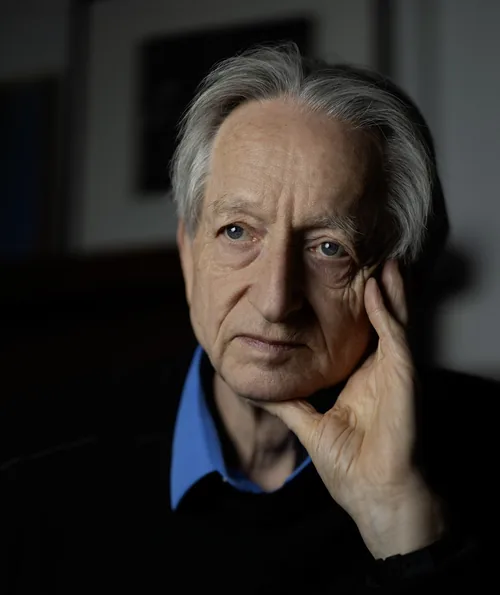
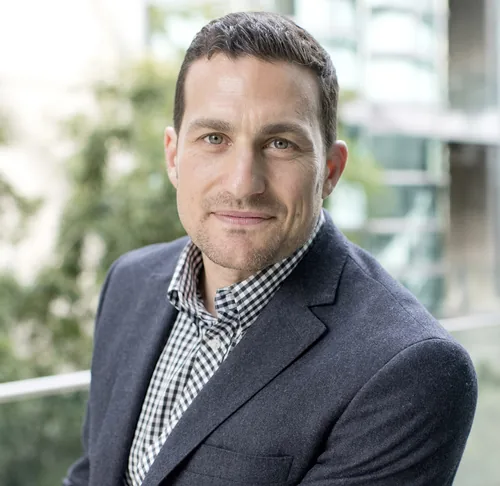

Photograph by Christopher Michel (Cmichel67) (May 13, 2026), CC BY-SA 4.0. Background removed for the portrait above. · Photograph of Andrew Huberman by Jamesbrianbounds (2016), CC BY-SA 4.0. Background removed for the portrait above. · Photograph of Yann LeCun by Jérémy Barande / École polytechnique (June 24, 2024), CC BY-SA 2.0. Background removed for the portrait above.


An estimate is an inference.
Yours can be measured.
Thirty questions, scored against general-population benchmarks. Your score, your percentile, your ability breakdown and a printable IIF certificate.
Find your IQ score now! →