



What is Geoffrey Hinton’s IQ?
A psychology graduate whose neural-network research was honored by both computing and physics — and whose intelligence is documented in papers and prizes, not in a test score.
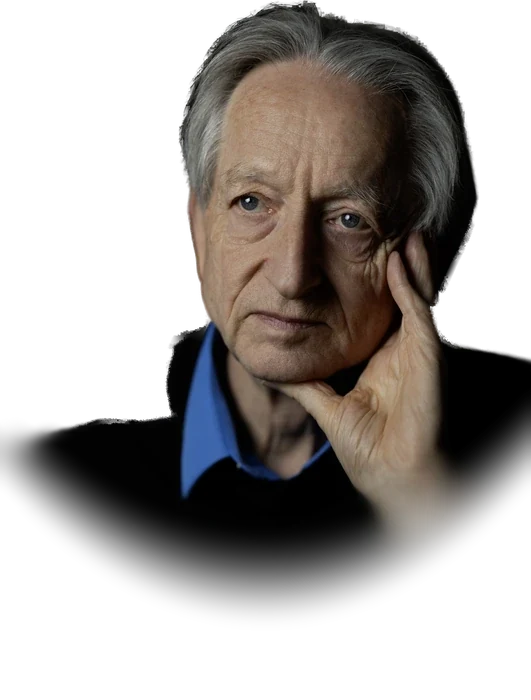
No IQ test result has been published for Geoffrey Hinton, and no Geoffrey Hinton IQ score turned up on any page checked for this profile. What is documented is a Cambridge degree in experimental psychology, an Edinburgh Ph.D. in artificial intelligence, the 2018 Turing Award and a share of the 2024 Nobel Prize in Physics.
Geoffrey Hinton’s estimated IQ
- B.A. in experimental psychology from the University of Cambridge (King’s College; matriculated 1967, graduated 1970) and a Ph.D. in artificial intelligence from the University of Edinburgh (1978), supervised by Christopher Longuet-Higgins.
- Co-author of two landmark papers: “A Learning Algorithm for Boltzmann Machines” (Cognitive Science, 1985, with David Ackley and Terrence Sejnowski) and “Learning representations by back-propagating errors” (Nature, October 1986, with David Rumelhart and Ronald Williams).
- The 2018 ACM A.M. Turing Award, shared with Yoshua Bengio and Yann LeCun “for conceptual and engineering breakthroughs that have made deep neural networks a critical component of computing.”
- The 2024 Nobel Prize in Physics, shared with John J. Hopfield “for foundational discoveries and inventions that enable machine learning with artificial neural networks,” announced October 8, 2024.
- Fellowships of the Royal Society, the Royal Society of Canada and the Association for the Advancement of Artificial Intelligence, and a 2025 Queen Elizabeth Prize for Engineering shared with six others.
This is an inference from documented achievement, not a test result. The record shows decades of peer-judged research across psychology, computer science and physics, but none of the sources opened gives his degree class, an exam score or any psychometric result, and prizes of this kind also depend on collaborators, timing and the maturity of a field. The range cannot separate him from other laureates in this section; read it as a floor with an uncertain top.
- Born
- December 6, 1947, London, England
- Field
- Machine learning, artificial neural networks, cognitive psychology
- Education
- B.A. experimental psychology, University of Cambridge (King’s College; 1970); Ph.D. artificial intelligence, University of Edinburgh (1978)
- Doctoral supervisor
- Christopher Longuet-Higgins
- Known for
- Boltzmann machine (1985); backpropagation paper in Nature (1986); AlexNet (2012)
- Career
- Carnegie Mellon faculty; University of Toronto since 1987 (emeritus distinguished professor as of October 2026); Gatsby Unit, UCL (1998–2001); Google, half-time (2013–2023)
- Honors
- ACM A.M. Turing Award (2018); Princess of Asturias Award (2022); Nobel Prize in Physics (2024); Queen Elizabeth Prize for Engineering (2025)
- Circulating figure
- None found; no published IQ test result
What an IQ of 150–165 actually means
Set the claim aside for a moment. If someone genuinely scored in this range, here is what that would represent.
| Score range | Classification | Share of people | What it indicates |
|---|---|---|---|
| 85 – 114 | Average | ~68% | The range most people fall into. |
| 115 – 129 | Above average | ~13.6% | Roughly one person in seven. |
| 130 – 144 | Gifted | ~2% | The threshold most high-IQ societies use. |
| Above 144 | Highly gifted | ~0.1% | Figures above this range are extrapolated from the curve rather than measured. |
Percentages are approximate and describe a normal distribution. The same number means different things on tests with different standard deviations.
Thirty questions gives you a measured position on this exact scale — your score, your percentile and the ability breakdown behind it.
Find out in 30 minutes →Who Geoffrey Hinton is
Geoffrey Hinton was born in London on December 6, 1947. He matriculated at King’s College, Cambridge, in 1967 and, after switching between natural sciences, history of art and philosophy according to his Wikipedia biography, graduated with a B.A. in experimental psychology in 1970. A degree subject says little about any one graduate; for the averages by field, see average IQ by college major. He then took a Ph.D. in artificial intelligence at the University of Edinburgh, awarded in 1978 for research supervised by Christopher Longuet-Higgins, with a thesis titled “Relaxation and Its Role in Vision.”
After postdoctoral work at Sussex University and the University of California San Diego, Hinton spent five years on the computer science faculty at Carnegie Mellon University, then became a fellow of the Canadian Institute for Advanced Research and moved to the University of Toronto, which he joined in 1987. From 1998 to 2001 he set up the Gatsby Computational Neuroscience Unit at University College London, then returned to Toronto. He directed CIFAR’s program on “Neural Computation and Adaptive Perception” from 2004 to 2013, and from 2013 to 2023 he worked half-time at Google, where he became a Vice President and Engineering Fellow. As of October 2026, his University of Toronto page lists him as an emeritus distinguished professor of computer science.
The papers behind his record are short and dated. In 1985, with David Ackley and Terrence Sejnowski, he published “A Learning Algorithm for Boltzmann Machines” in Cognitive Science (volume 9, issue 1, pages 147–169). In October 1986, with David Rumelhart and Ronald Williams, he published “Learning representations by back-propagating errors” in Nature (volume 323, issue 6088, pages 533–536). In 2006, with R. R. Salakhutdinov, he published “Reducing the Dimensionality of Data with Neural Networks” in Science (July 28, 2006; volume 313, pages 504–507). In 2012, with Alex Krizhevsky and Ilya Sutskever, he co-authored “ImageNet Classification with Deep Convolutional Neural Networks” in Advances in Neural Information Processing Systems 25, the paper that introduced the network known as AlexNet.
The honors run from 2018 to 2025. He shared the 2018 ACM A.M. Turing Award with Yoshua Bengio and Yann LeCun, and the 2022 Princess of Asturias Award for Technical and Scientific Research with LeCun, Bengio and Demis Hassabis. On October 8, 2024, the Nobel Prize in Physics was announced for Hinton and John J. Hopfield; the University of Cambridge’s announcement notes that Hinton used a network invented by Hopfield as the foundation for the Boltzmann machine. In 2025 he was one of seven laureates of the Queen Elizabeth Prize for Engineering, alongside Jensen Huang, Bengio, Bill Dally, Hopfield, LeCun and Fei-Fei Li. His own biography also lists honorary foreign membership of the US National Academy of Sciences, the US National Academy of Engineering and the American Academy of Arts and Sciences, and honorary doctorates from Edinburgh, Sussex, Sherbrooke and Toronto. Reputation is not a score, and what counts as genius-level is a separate question from what any of these prizes shows.
 By Elora Mercer, Celebrity Research WriterFigures checked by Leon Falkner, Data & Research Analyst
Reviewed by Aarav Vardhan, Editor-in-Chief · Last reviewed August 2026

Geoffrey Hinton: the documented record
The estimate above rests on this record. Every entry here is a matter of public fact, which is more than can be said for the number itself.
- 1947Born December 6 in London.
- 1970Graduates from the University of Cambridge with a B.A. in experimental psychology.
- 1978Awarded a Ph.D. in artificial intelligence by the University of Edinburgh; thesis “Relaxation and Its Role in Vision.”
- 1985Publishes “A Learning Algorithm for Boltzmann Machines” in Cognitive Science with David Ackley and Terrence Sejnowski.
- 1986Publishes “Learning representations by back-propagating errors” in Nature (October) with David Rumelhart and Ronald Williams.
- 2012Co-authors “ImageNet Classification with Deep Convolutional Neural Networks” with Alex Krizhevsky and Ilya Sutskever.
- 2013Begins working half-time at Google, where he becomes a Vice President and Engineering Fellow; the arrangement runs to 2023.
- 2018Shares the ACM A.M. Turing Award with Yoshua Bengio and Yann LeCun.
- 2022Shares the Princess of Asturias Award for Technical and Scientific Research with LeCun, Bengio and Demis Hassabis.
- 2024On October 8, the Nobel Prize in Physics is announced for Hinton and John J. Hopfield.
- 2025One of seven laureates of the Queen Elizabeth Prize for Engineering.
Why no figure circulates
Following a claim back to its first appearance is the part almost nobody does — and it is what most people are actually asking.
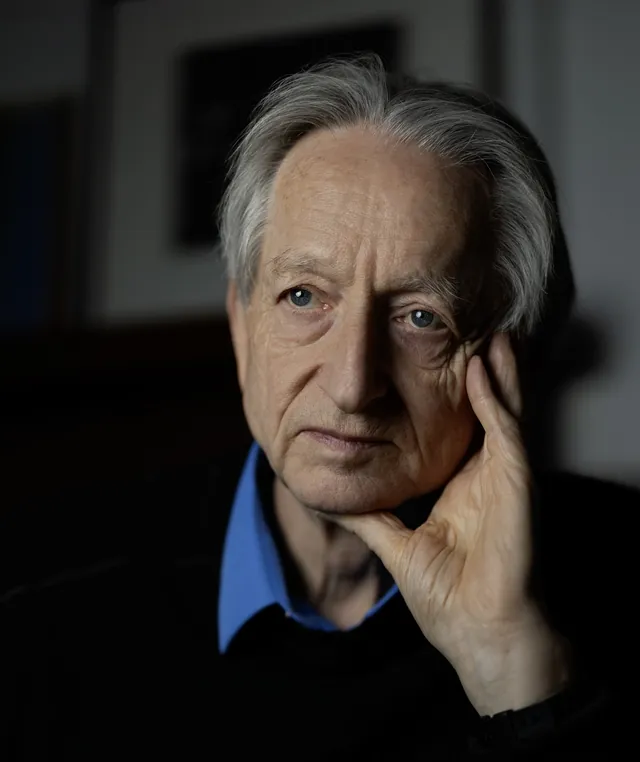
Geoffrey Hinton’s IQ score is not published anywhere this profile could find, and no test result exists in the public record. The sites that publish celebrity IQ numbers did not list him on the pages checked on October 6, 2026: check-iq.org’s scientist ranking, realiqtestonline.com’s celebrity IQ list and a public database of IQ estimations all omit him. Searches on the phrasings people type, from “geoffrey hinton iq” to “geoffrey hinton intelligence,” returned biographies, news coverage and prize pages, none with a figure.
Is Geoffrey Hinton smart? Every measure that exists is a peer-judged one. His Edinburgh doctorate was awarded in 1978, his 1986 backpropagation paper appeared in Nature, and both the Turing Award (2018) and the Nobel Prize in Physics (2024) were decided by committees weighing the importance of the work. None of those is a psychometric result, which is why this page gives a range rather than a score. For how celebrity IQ numbers usually arise, and what to check before trusting one, see where celebrity IQ numbers come from; if a figure for Hinton starts to circulate, nothing in his published record supplies a test result for it to rest on.
Geoffrey Hinton’s intelligence, read through prizes, also runs into the ceiling problem. A standard test has few or no items that separate people far above about 160 — the test ceiling — so a figure far above that for any laureate is extrapolation rather than measurement, and a prize record cannot be converted into points by arithmetic. The direction of the error in this section is usually upward: Demis Hassabis, who shared the 2022 Princess of Asturias Award with Hinton, has a 170 circulating against the 145–160 this site estimates from his record. For Hinton there is no such number to correct downward, which leaves the documented record as the only evidence on the table.
Geoffrey Hinton’s estimated IQ, 150–165, falls where this section places other doctorate-based scientists: level with the lower part of Stephen Hawking’s 150–170, a little above Hassabis, and overlapping but below the 160–180 given to Alan Turing, the namesake of the award Hinton shared in 2018. The bottom of the range starts at an IQ of 150. A longer documented record than Hassabis’s explains the slightly higher placement; it is not evidence of a higher score, and the ranges overlap.
How we read a number →No score report, school record or clinician’s account for Hinton turned up in his University of Toronto biography, the University of Cambridge and King’s College news pages, the Royal Swedish Academy of Sciences page or the Wikidata record. check-iq.org’s scientist ranking, realiqtestonline.com’s celebrity IQ list and a public database of IQ estimations (Substack) do not list him. Searches on several phrasings of the question returned no page that states a figure.
His own biography: B.A. in experimental psychology from Cambridge in 1970 and Ph.D. in artificial intelligence from Edinburgh in 1978; postdoctoral work at Sussex and UC San Diego; five years at Carnegie Mellon; Gatsby Unit at UCL 1998–2001; CIFAR program director 2004–2013; half-time at Google 2013–2023; fellowships, honorary memberships and honorary doctorates; “now an emeritus distinguished professor.”
Names John J. Hopfield (Princeton University) and Geoffrey Hinton (University of Toronto) and gives the motivation: “for foundational discoveries and inventions that enable machine learning with artificial neural networks.”
cam.ac.uk lists “Hinton (King’s 1967)” and repeats the prize citation; kings.cam.ac.uk lists him as “KC 1967” and states that he “used a network invented by John Hopfield as the foundation for a new network: the Boltzmann machine.” Neither page gives his degree subject or class.
Describes him as University Professor Emeritus of computer science, who arrived at Toronto in 1987, and as sharing the prize with Princeton’s John J. Hopfield.
Lists the four 2022 laureates (Geoffrey Hinton, Yann LeCun, Yoshua Bengio and Demis Hassabis) and describes Hinton, LeCun and Bengio as the “godfathers” of deep learning.
Confirm “A Learning Algorithm for Boltzmann Machines,” Cognitive Science 9(1), 147–169 (1985); “Learning representations by back-propagating errors,” Nature 323(6088), 533–536 (October 1986); and “Reducing the Dimensionality of Data with Neural Networks,” Science 313(5786), 504–507 (July 28, 2006).
The NIPS page confirms the title, the three authors and Advances in Neural Information Processing Systems 25 (NIPS 2012). The Edinburgh Research Archive lists the thesis “Relaxation and its Role in Vision” by Geoffrey E. Hinton, issued 1977; his own biography gives the Ph.D. as 1978.
Orientation for the birth date and place, the 1967 matriculation and subject switching at Cambridge, supervisor Christopher Longuet-Higgins, the 2018 Turing Award citation and recipients, and the seven 2025 Queen Elizabeth Prize laureates. Wikidata Q92894 matches (born 1947-12-06, Turing Award, Nobel Prize in Physics 2024, no date of death).
Global News gives the announcement date (Tuesday, October 8, 2024) and describes Hinton as professor emeritus at the University of Toronto. BNN Bloomberg (December 3, 2025) again calls him a professor emeritus at the University of Toronto. TU Wien lists him as the 2026 Vienna Gödel Lecturer, scheduled for October 23, 2026.
The sources behind our estimate
The figures that circulate for Geoffrey Hinton, what we were able to confirm, and where the two diverge.
No figure was found. No page checked states an IQ for Geoffrey Hinton, so there is no circulating number to trace.
No published IQ test result exists for Geoffrey Hinton. The pages checked on October 6, 2026 were check-iq.org’s scientist ranking, realiqtestonline.com’s celebrity IQ list and a public database of IQ estimations on Substack; none lists him. Searches for “geoffrey hinton iq,” “what is geoffrey hinton’s iq” and related phrasings returned biographies, news coverage and prize pages, none with a figure. His University of Toronto biography, the University of Cambridge and King’s College news pages and the Royal Swedish Academy of Sciences page mention no IQ test.
With nothing circulating, there is no spread to audit: 150–165 is Geoffrey Hinton’s estimated IQ range on this site and the only figure on the page. It rests on a documented record rather than a test, so its floor, its top and its fifteen-point width are judgments, not measurements.
Want a number that does hold up? Every figure on this page is somebody’s claim. Take the 30-question test and get a percentile you can check rather than a figure you have to trust.
Geoffrey Hinton — frequently asked
What is Geoffrey Hinton’s IQ?
No published IQ test result exists for Geoffrey Hinton, so his exact IQ is not known, and none of the IQ-listing pages checked states a figure for him. This site’s estimated IQ range, 150–165, is inferred from his Edinburgh doctorate, the 2018 Turing Award and the 2024 Nobel Prize in Physics, not from a test.
Is there a Geoffrey Hinton IQ score anywhere?
No Geoffrey Hinton IQ score was found. check-iq.org, realiqtestonline.com and a public database of IQ estimations do not list him, and searches on the phrasings people type returned biographies and prize pages with no figure. Any number quoted for him without a named test is a guess.
Is Geoffrey Hinton smart?
By documented measure, yes. He holds a Ph.D. in artificial intelligence from Edinburgh, shared the 2018 Turing Award and the 2024 Nobel Prize in Physics, and co-authored the 1986 Nature paper on backpropagation with David Rumelhart and Ronald Williams. “Smart” has no fixed IQ cutoff; his estimated IQ range here is 150–165.
Did Geoffrey Hinton ever take an IQ test?
No test result is public. In the sources checked for this page, including his University of Toronto biography, the University of Cambridge and King’s College pages and the Royal Swedish Academy of Sciences page, none mentions an IQ test or score, so any claim that he took one needs a named source.
How does Geoffrey Hinton’s estimated IQ compare with Demis Hassabis’s?
This site estimates 150–165 for Hinton and 145–160 for Hassabis, who shared the 2022 Princess of Asturias Award with him. Both ranges are inferred from documented achievement rather than a test, and they overlap, so the difference between them is not meaningful.
What did Geoffrey Hinton study?
Hinton studied at King’s College, Cambridge, graduating with a B.A. in experimental psychology in 1970. He then earned a Ph.D. in artificial intelligence at the University of Edinburgh in 1978 under Christopher Longuet-Higgins, with a thesis titled “Relaxation and Its Role in Vision.”
What did Geoffrey Hinton win the Nobel Prize in Physics for?
Hinton shared the 2024 Nobel Prize in Physics with John J. Hopfield “for foundational discoveries and inventions that enable machine learning with artificial neural networks.” The University of Cambridge notes that he used Hopfield’s network as the foundation for the Boltzmann machine.
How does my IQ compare with Geoffrey Hinton?
You can find out in about fifteen minutes. The IQ Metrics assessment is 30 questions, scored on the same 100-mean scale used throughout this page, so your result and the estimate above are at least expressed in the same units — one measured, one inferred. Once you have a number, the leaderboard shows where it would sit, and how we score and norm it explains the benchmarking.
Where does this estimate come from?
From the documented record rather than a test — the method is named above and set out in full under how we read a number. Compare it against the other scientists profiles, starting with Albert Einstein.
- Take the 30-question IQ test — get a measured score and percentile of your own
- Average IQ by country — how the scale behaves across populations
- How IQ Metrics scores its assessment — the method behind our own number
- More on how IQ testing works — reliability, error and what a score can and cannot say
- More scientists profiles — same field, same method
More scientists
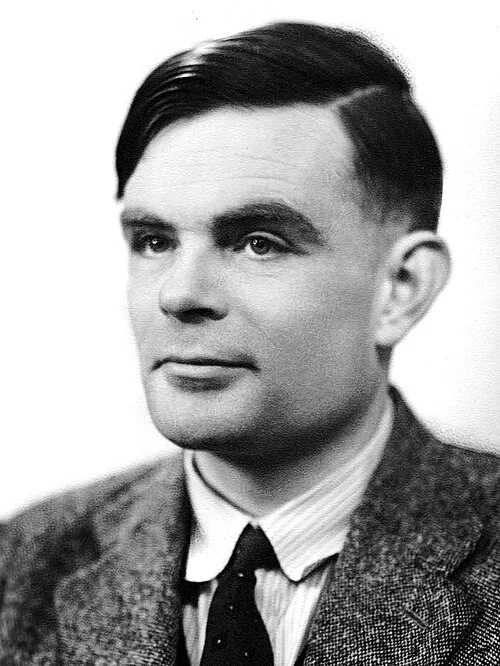
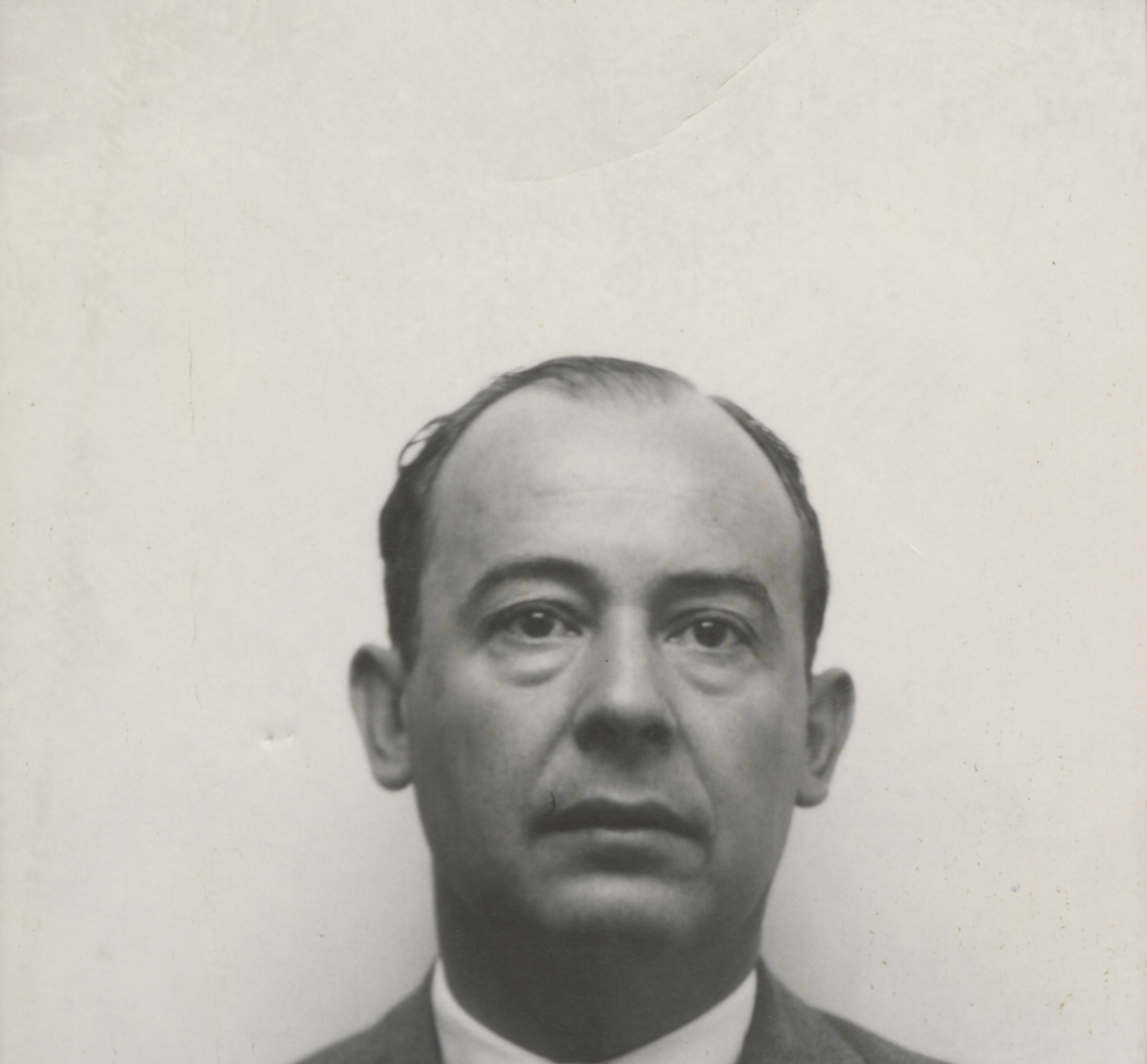
Photograph by Elliott & Fry, public domain. Background removed for the portrait above. · Los Alamos National Laboratory badge photograph, c. 1940s, public domain (PD-LosAlamos). Background removed for the portrait above. · Photograph by Ojan (Chalmers University of Technology, April 2008), public domain. Background removed for the portrait above.


An estimate is an inference.
Yours can be measured.
Thirty questions, scored against general-population benchmarks. Your score, your percentile, your ability breakdown and a printable IIF certificate.
Find your IQ score now! →