



What is Andrew Huberman’s IQ?
A UC Davis doctorate, a Stanford lab and papers in Nature: all the Andrew Huberman IQ question has to go on.
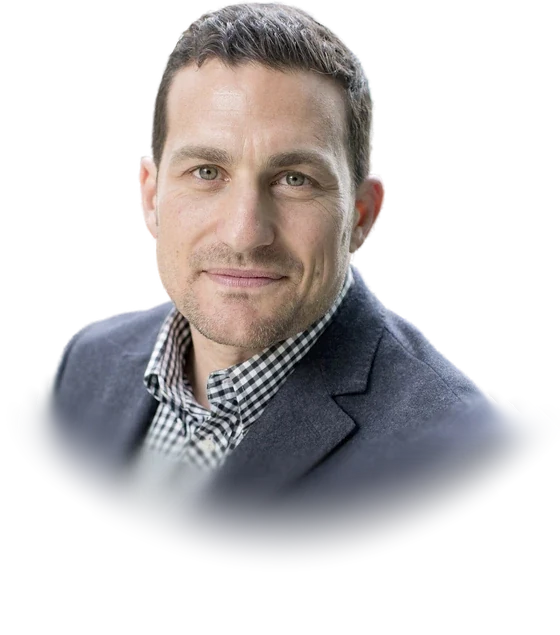
No IQ test result has been published for Andrew Huberman, and no sourced Andrew Huberman IQ score has surfaced. What is documented is a Ph.D. in neuroscience from UC Davis (2004), postdoctoral training at Stanford, an assistant professorship at UC San Diego (2011–2015) and, from 2016, a Stanford School of Medicine faculty post (a tenured associate professor as of October 2026).
Andrew Huberman’s estimated IQ
- B.A. in psychology from the University of California, Santa Barbara (1998), M.A. in psychology from UC Berkeley (2000) and a Ph.D. in neuroscience from UC Davis (2004) under Barbara Chapman; his Stanford profile also lists UC Davis’s Marr Prize for best Ph.D. dissertation (2005).
- Postdoctoral training at Stanford under Ben Barres, including a Helen Hay Whitney Postdoctoral Fellowship (2006–2009), and a first-author paper in Neuron (2008).
- Assistant professor of neurobiology and neuroscience at UC San Diego (2011–2015), then a faculty post at the Stanford University School of Medicine from 2016, where his profile lists him as a tenured associate professor.
- Peer-reviewed papers in Nature Neuroscience (2016), Nature (2018, “A midline thalamic circuit determines reactions to visual threat”), Current Biology (2021) and Cell Reports Medicine (2023), each with Huberman as final author.
- Early-career honors listed on his Stanford profile: Pew Biomedical Scholar (2013–2017), McKnight Neuroscience Scholar (2013–2016) and the Cogan Award for Contributions to Vision Science and Ophthalmology (2017).
This is an inference from documented achievement, not a test result. A completed doctorate and a tenured post at a leading medical school fix a floor far more firmly than a ceiling, and no source shows a Nobel-level or Turing-level prize like those behind the higher ranges in this section. Much of his public profile also rests on communication, which no IQ range can be read from.
- Born
- September 26, 1975, Palo Alto, California
- Status
- Living, as of October 2026
- Field
- Neuroscience: development and repair of visual circuits, responses to visual threat
- Education
- B.A. psychology, UC Santa Barbara (1998); M.A. psychology, UC Berkeley (2000); Ph.D. neuroscience, UC Davis (2004), under Barbara Chapman
- Career
- Postdoctoral training at Stanford under Ben Barres; assistant professor, UC San Diego, 2011–2015; Stanford University School of Medicine from 2016 (associate professor of neurobiology as of October 2026)
- Honors
- Pew Biomedical Scholar (2013–2017); McKnight Neuroscience Scholar (2013–2016); Cogan Award, ARVO (2017)
- Public profile
- Host of the Huberman Lab podcast, launched in 2021
- Circulating figure
- None found; no published IQ test result
What an IQ of 130–145 actually means
Set the claim aside for a moment. If someone genuinely scored in this range, here is what that would represent.
| Score range | Classification | Share of people | What it indicates |
|---|---|---|---|
| 85 – 114 | Average | ~68% | The range most people fall into. |
| 115 – 129 | Above average | ~13.6% | Roughly one person in seven. |
| 130 – 144 | Gifted | ~2% | The threshold most high-IQ societies use. |
| Above 144 | Highly gifted | ~0.1% | Figures above this range are extrapolated from the curve rather than measured. |
Percentages are approximate and describe a normal distribution. The same number means different things on tests with different standard deviations.
Thirty questions gives you a measured position on this exact scale — your score, your percentile and the ability breakdown behind it.
Find out in 30 minutes →Who Andrew Huberman is
How smart is Andrew Huberman, judged only by what can be checked? Andrew David Huberman was born on September 26, 1975, in Palo Alto, California. He earned a B.A. in psychology from the University of California, Santa Barbara, in 1998, graduating with honors and distinction in his major according to his Stanford profile; for how psychology and other majors compare, see average IQ by college major. He added an M.A. in psychology from UC Berkeley (2000) and a Ph.D. in neuroscience from UC Davis (2004), where the developmental neuroscientist Barbara Chapman was his thesis advisor. The dissertation was titled “Neural activity and axon guidance cue regulation of eye-specific retinogeniculate development,” and his Stanford profile lists the Marr Prize for best Ph.D. dissertation at UC Davis (2005). For how a doctorate sits against the wider population, see average IQ by education level.
His postdoctoral training was at Stanford University under Ben Barres, with a Helen Hay Whitney Postdoctoral Fellowship (2006–2009); Barres is the final author of Huberman’s first-author 2008 paper in Neuron. From 2011 to 2015 he was an assistant professor of neurobiology and neuroscience at the University of California, San Diego. In 2016 he joined the Stanford University School of Medicine, where he directs the Huberman Laboratory. As of October 2026 his Stanford profile lists him as an associate professor of neurobiology, with a courtesy appointment in psychiatry and behavioral sciences; its biography also names ophthalmology, describes him as tenured and notes that he teaches neuroanatomy to medical students. The lab’s own site describes work on how the brain works, how experience changes it and how damaged circuits can be repaired.
The published record runs from vision to stress. In 2008 Huberman and colleagues, with Barres as final author, published “Architecture and activity-mediated refinement of axonal projections from a mosaic of genetically identified retinal ganglion cells” in Neuron (volume 59, issue 3, pages 425–438). “Neural activity promotes long-distance, target-specific regeneration of adult retinal axons” appeared in Nature Neuroscience in 2016 (volume 19, issue 8, pages 1073–1084), with Huberman as final author. In 2018 “A midline thalamic circuit determines reactions to visual threat,” by Salay, Ishiko and Huberman, appeared in Nature (volume 557, issue 7704, pages 183–189). “Human Responses to Visually Evoked Threat” followed in Current Biology in 2021 (volume 31, issue 3, pages 601–612), and in 2023 a paper on brief structured respiration practices, by Balban and colleagues with Huberman as final author, appeared in Cell Reports Medicine (volume 4, issue 1, article 100895).
His Stanford profile also lists a Pew Biomedical Scholar Award (2013–2017), a McKnight Neuroscience Scholar Award (2013–2016), a Catalyst for a Cure investigatorship from the Glaucoma Research Foundation (from 2012) and the Cogan Award for Contributions to Vision Science and Ophthalmology from ARVO (2017). In 2021 he launched the Huberman Lab podcast; this profile treats that as a fact of his public career and nothing more, and it adds nothing to the estimate. As of October 2026 he is living and is listed on the Stanford faculty. Reputation, reach and a faculty title are not a score, and none of them lets a page read a number off the record.
 By Elora Mercer, Celebrity Research WriterFigures checked by Leon Falkner, Data & Research Analyst
Reviewed by Aarav Vardhan, Editor-in-Chief · Last reviewed October 2026

Andrew Huberman: the documented record
The estimate above rests on this record. Every entry here is a matter of public fact, which is more than can be said for the number itself.
- 1975Born September 26 in Palo Alto, California.
- 1998Graduates from the University of California, Santa Barbara with a B.A. in psychology.
- 2004Awarded a Ph.D. in neuroscience by UC Davis; thesis advisor Barbara Chapman.
- 2006Starts a Helen Hay Whitney Postdoctoral Fellowship (to 2009) for research at Stanford under Ben Barres.
- 2008Publishes a first-author paper on retinal ganglion cell projections in Neuron.
- 2011Becomes assistant professor of neurobiology and neuroscience at UC San Diego (to 2015).
- 2016Joins the Stanford University School of Medicine and directs the Huberman Laboratory.
- 2018Publishes “A midline thalamic circuit determines reactions to visual threat” in Nature.
- 2021Launches the Huberman Lab podcast.
- 2023Co-authors a Cell Reports Medicine paper on brief structured respiration practices.
Why no figure circulates
Following a claim back to its first appearance is the part almost nobody does — and it is what most people are actually asking.
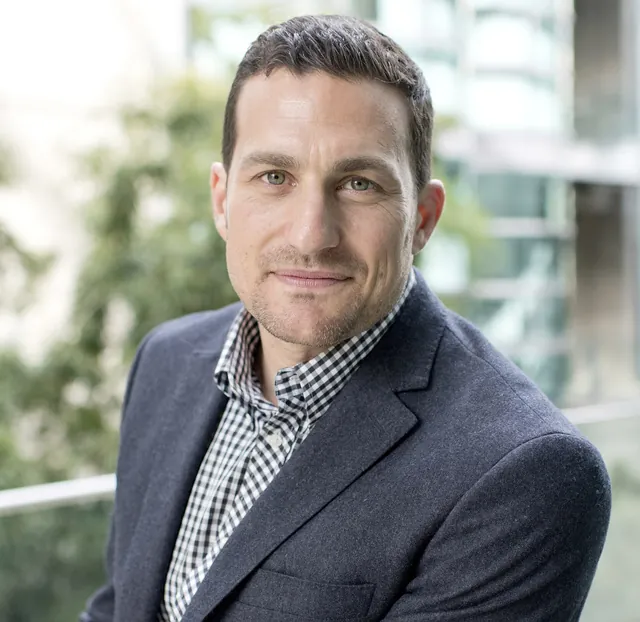
What is Andrew Huberman’s IQ? No source answers it. The Andrew Huberman IQ score people search for is not in his Stanford University profile, on the Huberman Lab websites, in his Wikipedia article or in his Wikidata record, which list degrees, posts, awards and papers and none of which gives a test result. The corebrain.app famous-IQ index has no entry under his name, and searches on the phrasings people type (“andrew huberman iq”, “andrew huberman iq score”) return biographies and encyclopedia entries rather than a figure. How such numbers usually appear, and why they rarely survive a check, is set out in where celebrity IQ numbers come from.
Is Andrew Huberman smart? Every measure on record is a peer-judged one. The Marr Prize for best Ph.D. dissertation at UC Davis (2005, as his Stanford profile lists it), a Helen Hay Whitney postdoctoral fellowship (2006–2009), faculty appointments at UC San Diego and then Stanford, and papers in Neuron (2008), Nature Neuroscience (2016) and Nature (2018) were each decided by reviewers or committees weighing the work. None is a psychometric result, which is why this page gives a range, 130–145, rather than a score. That range brackets the territory that an IQ of 135 illustrates; a single unsourced number would only replace a documented record with an invention.
Andrew Huberman’s estimated IQ, 130–145, matches the range this site gives Richard Dawkins, whose Oxford DPhil and Royal Society fellowship make him the nearest comparison by method, and sits above Brian Cox (125–140). It overlaps the bottom of Neil deGrasse Tyson’s 140–155 and falls below Geoffrey Hinton’s 150–165. Hinton is the closest comparison by path: he also started from a psychology degree, an experimental psychology B.A. at Cambridge, before moving into the study of neural networks, but his record includes the 2018 Turing Award and the 2024 Nobel Prize in Physics, which Huberman’s does not. The ranges overlap at their edges, so the ordering is a statement about records, not scores. Past a doctorate and a tenured post, a record cannot narrow the range further, a limit the page on the IQ ceiling effect explains.
The query “andrew huberman iq vs lex fridman” has no sourced answer either: no page found compares their IQs or gives either of them a test result, and this site has no Lex Fridman profile, so there is no second range to set beside this one. The same limit applies to the whole question. Huberman’s expertise is neuroscience, not psychometrics: studying how the visual system wires itself, or how the brain reacts to a visual threat, is a different discipline from building and norming an IQ test, and a neuroscience doctorate is evidence of sustained academic achievement rather than of a score. For why a genius label and a test score are separate things, see what a genius IQ level means.
How we read a number →No score report, school record or clinician’s account for Huberman turned up in his Stanford profile, the Huberman Lab sites, Wikipedia or Wikidata. The corebrain.app famous-IQ index has no entry under his name. Searches on several phrasings of the question turned up no sourced figure.
Education (B.A. UC Santa Barbara 1998, M.A. UC Berkeley 2000, Ph.D. UC Davis 2004), UC San Diego assistant professorship 2011–2015, Stanford appointments (associate professor of neurobiology; by courtesy, psychiatry and behavioral sciences), the biography naming ophthalmology and tenure, the Helen Hay Whitney fellowship (2006–2009), the Pew, McKnight, Cogan and Marr awards, and a selected publication list. No IQ mentioned.
The lab site gives the Department of Neurobiology and the lab’s research mission; hubermanlab.com states that the podcast launched in 2021 and that he completed a PhD at UC Davis, a master’s at UC Berkeley and a bachelor’s at UC Santa Barbara, with postdoctoral training at Stanford. Its own text calls him a tenured professor, while his Stanford profile gives associate professor; this page follows the Stanford profile. No IQ mentioned.
Describes Chapman as a leader in developmental neuroscience at UC Davis (Department of Neurobiology, Physiology, and Behavior, from 1995; died February 11, 2013) and lists Andrew Huberman among her doctoral thesis students.
Confirm titles, authors and citations: Neuron 59(3):425–438 (PMID 18701068, Huberman first author, Barres last); Nat Neurosci 19(8):1073–1084 (PMID 27399843); Nature 557(7704):183–189 (PMID 29720647); Curr Biol 31(3):601–612 (PMID 33242389). Huberman is the final author of the last three.
Confirms the title, journal, volume, issue, article number and the author list, with Huberman as the last author.
Orientation for the birth date and place (September 26, 1975, Palo Alto), the three degrees and years, Barbara Chapman as Ph.D. advisor, Ben Barres as postdoctoral mentor, the dissertation title, UC San Diego 2011–2015, Stanford from 2016 and the 2021 podcast launch. It states no IQ.
Label “Andrew D. Huberman”, description “American neuroscientist”, born September 26, 1975; educated at UC Davis (doctorate, 2004); employer UC San Diego, 2011–2015, and Stanford University. Confirms the Q-id is the person.
An index of estimated IQs of famous people. Checked for Huberman: it has no entry, name, number or link for him, so it supplies no figure to audit.
The sources behind our estimate
The figures that circulate for Andrew Huberman, what we were able to confirm, and where the two diverge.
People type “andrew huberman iq”, “andrew huberman iq score” and “what is andrew huberman’s iq” into search engines, but no page found attaches a sourced number to him: no test, no date, no source.
No published IQ test result exists for Andrew Huberman, and no page found attaches a sourced number to him. His Stanford profile, the Huberman Lab sites, Wikipedia and Wikidata list degrees, posts, awards and papers and give no score. The corebrain.app famous-IQ index has no entry under his name, and searches on the phrasings people type, from “andrew huberman iq score” to “andrew huberman iq vs lex fridman”, return biographies and encyclopedia entries rather than a sourced figure.
Only the two ends of this site’s own range appear here, because there is no circulating number to set beside them. Where another profile starts from an inflated figure, the sourced record usually supports a lower one; here there is nothing to correct, so 130–145 follows the record alone.
Want a number that does hold up? Every figure on this page is somebody’s claim. Take the 30-question test and get a percentile you can check rather than a figure you have to trust.
Andrew Huberman — frequently asked
What is Andrew Huberman’s IQ?
No published IQ test result exists for Andrew Huberman, so his IQ is not known, and no sourced figure has surfaced for him. This site’s estimated IQ range, 130–145, is inferred from his UC Davis doctorate, his Stanford postdoctoral training and his tenured Stanford faculty post, not from a test.
Is there an Andrew Huberman IQ score anywhere?
No Andrew Huberman IQ score from a named test was found. His Stanford profile, the Huberman Lab sites, Wikipedia and Wikidata list degrees, posts and papers, and none gives a score. Any number quoted for him without a test, a date and a source is a guess.
Is Andrew Huberman smart?
By documented measure, yes. He holds a Ph.D. in neuroscience from UC Davis (2004), was a Helen Hay Whitney postdoctoral fellow at Stanford, and has published in Neuron, Nature Neuroscience and Nature. “Smart” has no fixed IQ cutoff; his estimated range here is 130–145.
Did Andrew Huberman ever take an IQ test?
No test result is public. The sources checked for this page, including his Stanford profile, the Huberman Lab sites and Wikipedia, mention no IQ test or score, so any claim that he took one needs a named source. Any school or admissions testing is not part of the public record.
Andrew Huberman IQ vs Lex Fridman: who has the higher IQ?
No published IQ test result for either was found, and this site has no Lex Fridman profile, so it cannot rank them. Huberman’s estimated range here is 130–145, inferred from his doctorate and Stanford post; a fair comparison would need a test result, or the same kind of documented record, for both.
How does Andrew Huberman’s estimated IQ compare with Richard Dawkins’s and Geoffrey Hinton’s?
This site estimates 130–145 for Huberman, the same range as Richard Dawkins (130–145), and 150–165 for Geoffrey Hinton, whose record includes the 2018 Turing Award and the 2024 Nobel Prize in Physics. All three are inferences from records, not test results, and the ranges overlap at their edges.
Does being a neuroscientist mean Andrew Huberman has a high IQ?
Not by itself. Huberman’s field is neuroscience, such as how visual circuits develop and how the brain reacts to a visual threat, not psychometrics. A neuroscience doctorate and a Stanford post show sustained academic achievement, which supports an estimated range but does not produce a test score.
Where did Andrew Huberman study?
Huberman earned a B.A. in psychology at UC Santa Barbara (1998), an M.A. in psychology at UC Berkeley (2000) and a Ph.D. in neuroscience at UC Davis (2004), then trained as a postdoctoral researcher at Stanford. He was at UC San Diego from 2011 to 2015 and joined Stanford’s School of Medicine in 2016.
How does my IQ compare with Andrew Huberman?
You can find out in about fifteen minutes. The IQ Metrics assessment is 30 questions, scored on the same 100-mean scale used throughout this page, so your result and the estimate above are at least expressed in the same units — one measured, one inferred. Once you have a number, the leaderboard shows where it would sit, and how we score and norm it explains the benchmarking.
Where does this estimate come from?
From the documented record rather than a test — the method is named above and set out in full under how we read a number. Compare it against the other scientists profiles, starting with Albert Einstein.
- Take the 30-question IQ test — get a measured score and percentile of your own
- Average IQ by country — how the scale behaves across populations
- How IQ Metrics scores its assessment — the method behind our own number
- More on how IQ testing works — reliability, error and what a score can and cannot say
- More scientists profiles — same field, same method
More scientists
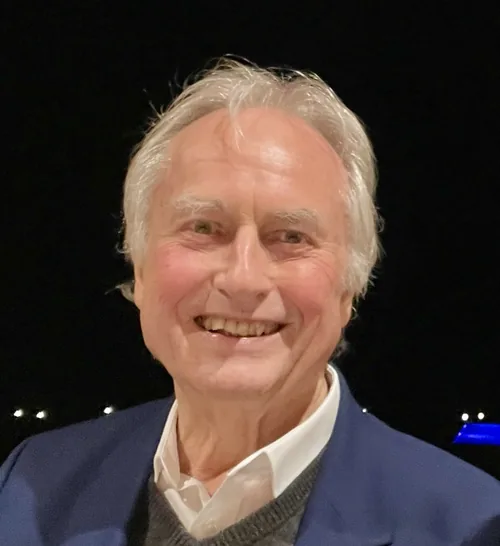
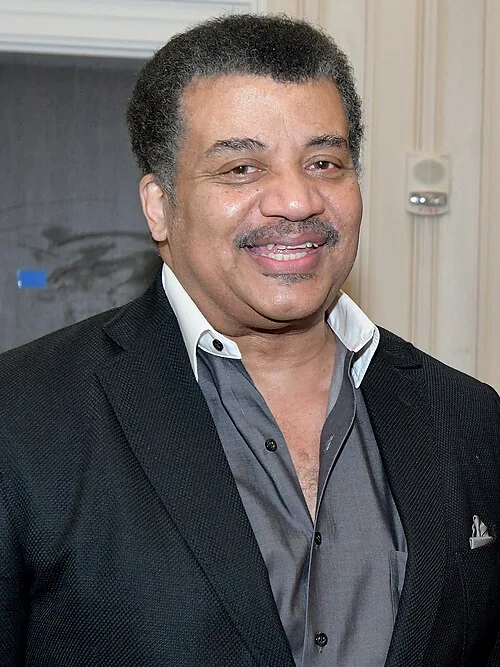
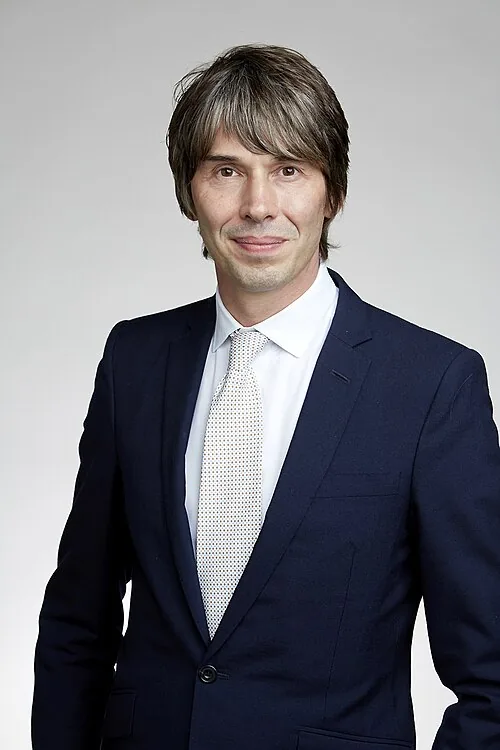
Photograph by Steve Jurvetson (Flickr; taken October 28, 2022), CC BY 2.0, cropped from a larger picture. Background removed for the portrait above. · Photograph by Maryland GovPics, CC BY 2.0. Background removed for the portrait above. · Photograph by Duncan.Hull, CC BY-SA 4.0. Background removed for the portrait above.


An estimate is an inference.
Yours can be measured.
Thirty questions, scored against general-population benchmarks. Your score, your percentile, your ability breakdown and a printable IIF certificate.
Find your IQ score now! →