



What is Richard Dawkins’ IQ?
A second-class degree, a doctorate supervised by a Nobel laureate and no published score: what the Richard Dawkins IQ question actually has to go on.
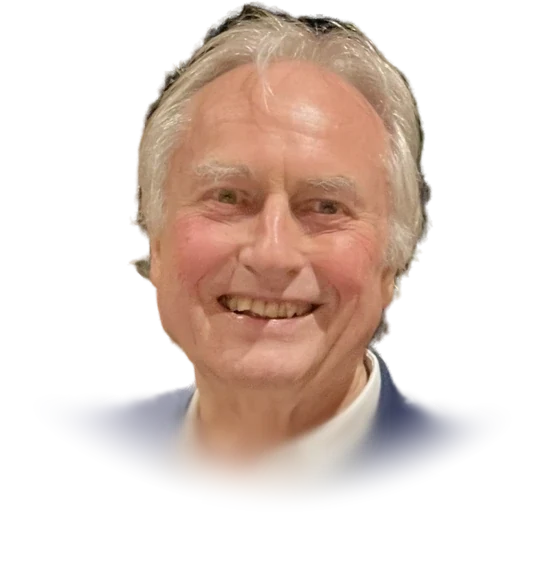
Richard Dawkins’s IQ is not on record: no test result has ever been published, and none of the celebrity-IQ lists we checked gives him a figure. What is documented is an Oxford DPhil under Niko Tinbergen (1966), election to the Royal Society (2001) and The Selfish Gene (1976), the book that coined “meme”.
Richard Dawkins’ estimated IQ
- A zoology BA from Balliol College, Oxford, in 1962 with a second-class degree: the one result in the record that is not top-tier, and the reason the range stops where it does.
- A DPhil from Oxford in 1966 under the ethologist Niko Tinbergen, followed by an assistant professorship of zoology at the University of California, Berkeley, from 1967 to 1969.
- Election as a Fellow of the Royal Society in 2001, after a career as lecturer (from 1970) and reader (from 1990) in zoology at Oxford and Fellow of New College.
- The Selfish Gene (1976), which set out the gene-centred view of evolution and introduced the word “meme”, and The Extended Phenotype (1982).
- The Royal Society’s Michael Faraday Prize (1990) and the Simonyi chair for the Public Understanding of Science (1995–2008) recognize communicating science; they show reach rather than test-type ability, so they carry little weight in the range.
Richard Dawkins’s estimated IQ of 130–145 is an inference from public record, not a measurement: a doctorate and a Royal Society fellowship fix a floor far more firmly than a ceiling, and a second-class BA shows that final-exam results do not simply track later research standing. Much of his public standing also rests on writing and teaching, which no IQ range can be read from.
- Born
- March 26, 1941, Nairobi (then the Kenya Colony)
- Status
- Living, as of October 2026
- Field
- Evolutionary biology, ethology
- Education
- BA zoology, Balliol College, Oxford (1962, second-class); DPhil, Oxford (1966), under Niko Tinbergen
- Posts
- Assistant professor, UC Berkeley, 1967–1969; Oxford lecturer from 1970 and reader from 1990; Simonyi Professor for the Public Understanding of Science, 1995–2008
- Royal Society
- Fellow (FRS), 2001; Michael Faraday Prize, 1990
- Best-known science book
- The Selfish Gene (Oxford University Press, 1976)
- On record about IQ
- No published test result
What an IQ of 130–145 actually means
Set the claim aside for a moment. If someone genuinely scored in this range, here is what that would represent.
| Score range | Classification | Share of people | What it indicates |
|---|---|---|---|
| 85 – 114 | Average | ~68% | The range most people fall into. |
| 115 – 129 | Above average | ~13.6% | Roughly one person in seven. |
| 130 – 144 | Gifted | ~2% | The threshold most high-IQ societies use. |
| Above 144 | Highly gifted | ~0.1% | Figures above this range are extrapolated from the curve rather than measured. |
Percentages are approximate and describe a normal distribution. The same number means different things on tests with different standard deviations.
Thirty questions gives you a measured position on this exact scale — your score, your percentile and the ability breakdown behind it.
Find out in 30 minutes →Who Richard Dawkins is
Richard Dawkins was born on March 26, 1941, in Nairobi, in what was then the Kenya Colony, and read zoology at Balliol College, Oxford, graduating in 1962 with a second-class degree. At Oxford he was tutored and then supervised by Niko Tinbergen, who shared the 1973 Nobel Prize in Physiology or Medicine with Karl von Frisch and Konrad Lorenz, and he took his DPhil in 1966 with a thesis on Selective Pecking in the Domestic Chick.
He was assistant professor of zoology at the University of California, Berkeley, from 1967 to 1969, then returned to Oxford in 1970 as a lecturer in zoology and Fellow of New College, becoming reader in zoology in 1990. In 1995 he became the first Charles Simonyi Professor for the Public Understanding of Science, a chair endowed by Charles Simonyi, and held it until 2008. He was elected a Fellow of the Royal Society in 2001. As of October 2026 he is living and an emeritus fellow of New College.
The Selfish Gene (Oxford University Press, 1976) set out the gene-centred view of evolution, building on George C. Williams’s Adaptation and Natural Selection (1966) and W. D. Hamilton’s work on kin selection, and coined the word “meme”. The Extended Phenotype followed in 1982 and The Blind Watchmaker in 1986. In July 2017 a Royal Society poll of 1,309 people ranked The Selfish Gene first among 11 pre-selected titles, ahead of Bill Bryson’s A Short History of Nearly Everything (2003) and Charles Darwin’s On the Origin of Species (1859). The poll measures how inspiring readers found a book; it says nothing about its author’s test scores.
His honors for science and its communication include the Royal Society’s Michael Faraday Prize in 1990 (see also Michael Faraday), awarded for communicating science to UK audiences, the International Cosmos Prize in 1997 and the Kistler Prize in 2001. The book reaches its fiftieth anniversary in 2026, and a lecture tour of Australia and New Zealand to mark it, announced in March 2026, is scheduled for November.
 By Elora Mercer, Celebrity Research WriterFigures checked by Leon Falkner, Data & Research Analyst
Reviewed by Aarav Vardhan, Editor-in-Chief · Last reviewed August 2026

Richard Dawkins: the documented record
The estimate above rests on this record. Every entry here is a matter of public fact, which is more than can be said for the number itself.
- 1941Born in Nairobi, in the Kenya Colony.
- 1962Graduates in zoology from Balliol College, Oxford, with a second-class degree.
- 1966Takes his DPhil at Oxford under Niko Tinbergen.
- 1967Becomes assistant professor of zoology at UC Berkeley (to 1969); returns to Oxford in 1970 as lecturer and Fellow of New College.
- 1976Publishes The Selfish Gene (Oxford University Press) and coins the word “meme”.
- 1990Receives the Royal Society’s Michael Faraday Prize; becomes reader in zoology at Oxford.
- 1995Appointed Simonyi Professor for the Public Understanding of Science (held to 2008).
- 2001Elected a Fellow of the Royal Society; awarded the Kistler Prize.
- 2017The Selfish Gene tops a Royal Society poll of the nation’s most inspiring science books.
- 2026The Selfish Gene reaches its fiftieth anniversary; a November lecture tour of Australia and New Zealand is scheduled.
Why no figure circulates
Following a claim back to its first appearance is the part almost nobody does — and it is what most people are actually asking.
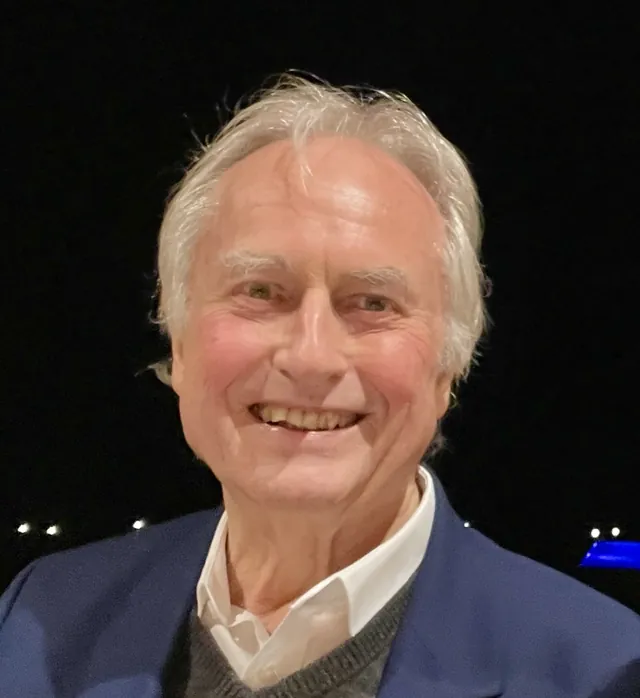
Richard Dawkins’s IQ has no source, because there is nothing for a source to cite: in the pages we could open, no school test, admissions score or interview gives a figure for him. Searches for “richard dawkins iq”, “richard dawkins iq level” and “richard dawkins estimated iq” return biographies and encyclopedia entries, and the celebrity-IQ lists we opened do not include him. How such numbers usually appear, and why they rarely survive a check, is set out in where celebrity IQ numbers come from.
Is Richard Dawkins smart? The record answers in a form a test number cannot. He was tutored and then supervised by Niko Tinbergen, who shared the 1973 Nobel Prize in Physiology or Medicine; he was an assistant professor at the University of California, Berkeley, from 1967; and the Royal Society elected him a Fellow in 2001. That is the profile of a working scientist whose ability is well attested, and this page rates it that way: an estimated IQ of 130–145, high but short of the top ranges elsewhere in this section. An unsourced figure would only replace a documented record with an invention.
The detail that most often surprises is the degree class. Dawkins graduated from Balliol with a second-class BA in 1962, not a first, then researched under Tinbergen and took his DPhil in 1966. Richard Feynman’s page makes a related point from a documented school IQ of 125: an unspectacular data point can sit beside a first-rate research career. Neither fact is a reason to doubt the research record, and neither is an IQ test result, so this page treats the second-class degree as the reason the range stops near 145 rather than as a score.
Where Richard Dawkins’s IQ level falls inside the range is bounded by what a record can show. An estimate of 130–145 brackets the territory that an IQ of 135 illustrates. It sits beside Brian Cox (125–140), another Fellow of the Royal Society whose range rests on a completed doctorate, and below Stephen Hawking (150–170), whose record includes first-class honors where Dawkins’s has a second-class degree. Past the level of a doctorate and a fellowship, a record cannot narrow the range further, a limit the page on the IQ ceiling effect explains; whether anyone counts as a “genius” also depends on definitions, covered in what a genius IQ level means.
How we read a number →Confirms birth in Nairobi in 1941, study under Niko Tinbergen, the Berkeley assistant professorship of 1967–1969, the 1990 Royal Society Michael Faraday Award, and the dates of The Selfish Gene (1976) and The Blind Watchmaker (1986).
A poll commissioned for the 30th year of the Royal Society Science Book Prize: 11 pre-selected books, 1,309 participants, The Selfish Gene first. Evidence of popular reach, not of ability.
Used only for his status as of October 2026: a live event marking the book’s fiftieth anniversary is scheduled. It contains no IQ information.
Orientation and cross-check: second-class degree, DPhil by 1966 under Tinbergen, Berkeley 1967–1969, Simonyi chair 1995–2008, Fellow of the Royal Society 2001. It states no IQ.
Lists B.A. 1962 and M.A. and D.Phil. 1966 (Balliol), Berkeley 1967–69, Oxford lecturer 1970–90 and reader 1990–95, birth on March 26, 1941, and awards including the Michael Faraday Award (1990), International Cosmos Prize (1997) and Kistler Prize (2001).
Oxford University Press, 1976; the gene-centred view building on G. C. Williams and W. D. Hamilton; the coinage of “meme”; the 2017 Royal Society poll.
The 1990 entry for Dawkins comes from the Wikipedia list. The Royal Society page describes the prize as awarded for exemplary communication of scientific ideas to lay audiences.
The holders list (Dawkins 1995–2008) and the chair’s creation by Charles Simonyi; Tinbergen’s 1973 Nobel Prize in Physiology or Medicine, shared with Karl von Frisch and Konrad Lorenz, and Dawkins’s listing as his doctoral student.
No biography, encyclopedia entry or institutional page we opened gives a tested score for Richard Dawkins, and no school or admissions result is on record.
Neither list names Richard Dawkins or attaches any figure to him, so there is no circulating number to audit.
The sources behind our estimate
The figures that circulate for Richard Dawkins, what we were able to confirm, and where the two diverge.
No specific figure circulates in the sources we checked. People do type “richard dawkins iq” into search engines, but the pages that answer are biographies and encyclopedia entries, and the celebrity-IQ lists we opened do not include him.
No published IQ test result exists for Richard Dawkins, and we found no page that attaches a number to him. We opened a Christian Post list of “IQ Scores of Famous People” (dated June 16, 2012) and a ScienceABC list of people with the highest IQs: neither names him. The biographies we read (UC Berkeley’s lecture-series speaker biography, Contemporary Authors via Encyclopedia.com, and Wikipedia) list degrees, posts, books and prizes, and no score.
Only the two ends of our own range appear here, because there is no circulating number to set beside them. Where another profile starts from an inflated figure, the sourced record usually supports a lower one; here there is nothing to correct, so the range simply follows the record.
Want a number that does hold up? Every figure on this page is somebody’s claim. Take the 30-question test and get a percentile you can check rather than a figure you have to trust.
Richard Dawkins — frequently asked
What is Richard Dawkins’s IQ?
No IQ test result has ever been published for Richard Dawkins, so his IQ is unknown. This page estimates a range of 130–145, inferred from his Oxford DPhil (1966), his Royal Society fellowship (2001) and his research record; it is an inference from achievement, not a measured score.
What is Richard Dawkins’s estimated IQ?
About 130–145, by this page’s reckoning: a second-class zoology BA from Balliol (1962), an Oxford DPhil under Niko Tinbergen (1966), election to the Royal Society (2001) and The Selfish Gene (1976). Documented achievement fixes a floor much more firmly than a ceiling, so treat the range as approximate.
Did Richard Dawkins ever take an IQ test?
No test or result appears in any biography, encyclopedia entry or celebrity-IQ list we checked, and we found no score published by him. Whatever school or admissions testing he went through is not part of the public record, so no figure can be attributed to him.
Is Richard Dawkins smart?
His documented record is that of a highly accomplished scientist: an Oxford DPhil under Niko Tinbergen, an assistant professorship at Berkeley, a Royal Society fellowship in 2001, and a book, The Selfish Gene, that introduced the word “meme”. That supports a high estimated IQ range, not a single score.
How does Richard Dawkins’s IQ level compare with Brian Cox’s and Stephen Hawking’s?
On this site Dawkins’s estimated range of 130–145 overlaps Brian Cox’s 125–140, which also rests on a doctorate and a Royal Society fellowship, and sits below Stephen Hawking’s 150–170, whose record includes first-class honors. All three figures are inferences from records, not test results.
Did Richard Dawkins get a first at Oxford?
No. He graduated in zoology from Balliol College, Oxford, in 1962 with a second-class degree, then took a DPhil under Niko Tinbergen in 1966. The result shows that final-exam class and later research standing do not always line up, and it is why the estimate here stops near 145.
What are Richard Dawkins’s main scientific achievements?
The Selfish Gene (1976) set out the gene-centred view of evolution and coined “meme”; The Extended Phenotype followed in 1982. He became a Fellow of the Royal Society in 2001, was Simonyi Professor for the Public Understanding of Science at Oxford from 1995 to 2008, and won the Royal Society’s Michael Faraday Prize in 1990.
How does my IQ compare with Richard Dawkins?
You can find out in about fifteen minutes. The IQ Metrics assessment is 30 questions, scored on the same 100-mean scale used throughout this page, so your result and the estimate above are at least expressed in the same units — one measured, one inferred. Once you have a number, the leaderboard shows where it would sit, and how we score and norm it explains the benchmarking.
Where does this estimate come from?
From the documented record rather than a test — the method is named above and set out in full under how we read a number. Compare it against the other scientists profiles, starting with Albert Einstein.
- Take the 30-question IQ test — get a measured score and percentile of your own
- Average IQ by country — how the scale behaves across populations
- How IQ Metrics scores its assessment — the method behind our own number
- More on how IQ testing works — reliability, error and what a score can and cannot say
- More scientists profiles — same field, same method
More scientists
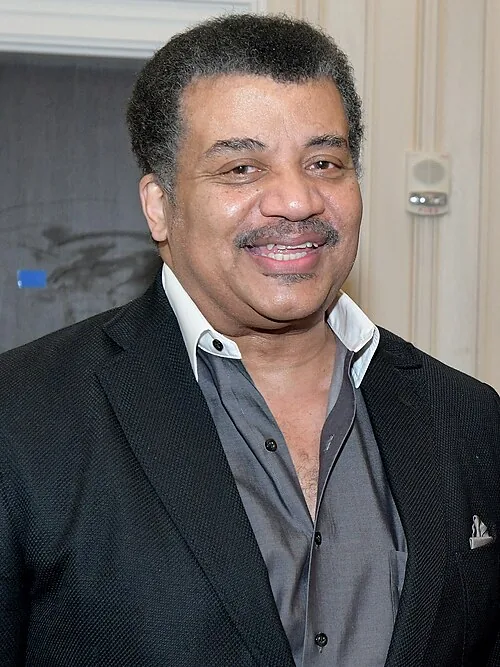
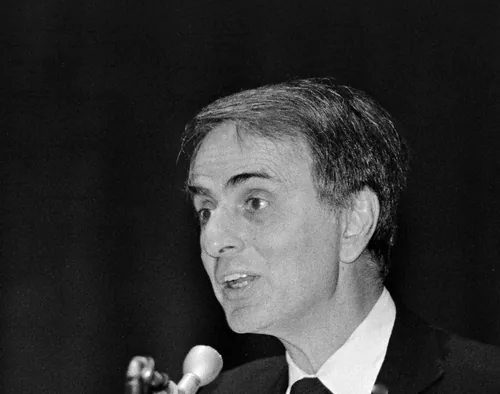
Photograph by Maryland GovPics, CC BY 2.0. Background removed for the portrait above. · Photograph by Kenneth C. Zirkel (Cornell University, c. 1987), CC BY-SA 4.0. Background removed for the portrait above. · Photograph by Duncan.Hull, CC BY-SA 4.0. Background removed for the portrait above.


An estimate is an inference.
Yours can be measured.
Thirty questions, scored against general-population benchmarks. Your score, your percentile, your ability breakdown and a printable IIF certificate.
Find your IQ score now! →