



What was Neil Armstrong’s IQ?
NASA published IQ figures for astronaut groups, never for him. His record is an engineering degree, seven X-15 flights and the first Moon landing.
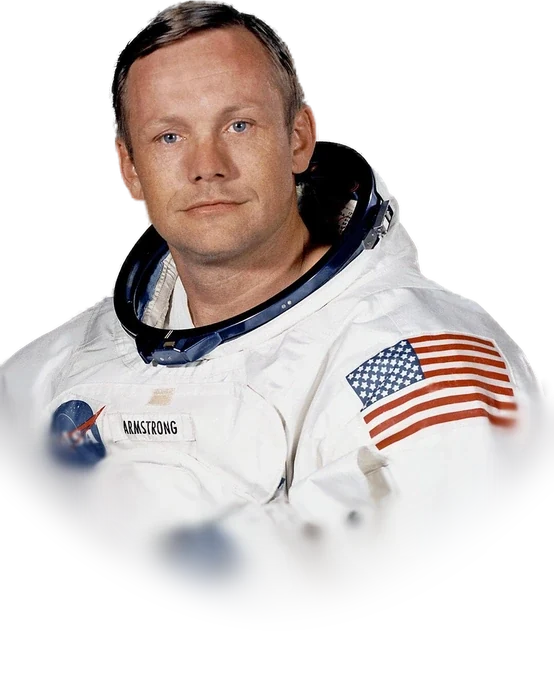
Neil Armstrong has no published IQ score. NASA’s own Apollo history prints IQ figures only for groups of astronauts, such as 130 to 145 for the first seven, and never for one man. Our Neil Armstrong IQ estimate is 130–145, drawn from his record: a Purdue engineering degree, X-15 flights, Gemini 8 and Apollo 11.
Neil Armstrong’s estimated IQ
- A Bachelor of Science in aeronautical engineering from Purdue in 1955, after the Korean War interrupted his studies, and a Master of Science in aerospace engineering from the University of Southern California (NASA; Apollo Lunar Surface Journal gives 1970).
- As a Navy pilot he flew 78 combat missions in F9F-2 jet fighters in Korea, and he was awarded the Air Medal and two Gold Stars (NASA).
- Seven flights in the X-15 rocket plane between December 1960 and July 1962, reaching 207,500 feet in the X-15-3 and 3,989 mph (Mach 5.74) in the X-15-1, plus more than 2,450 flying hours (NASA).
- Command pilot of Gemini 8 in March 1966, which made the first successful docking of two vehicles in orbit, and commander of Apollo 11, the July 20, 1969 landing (NASA).
Flying skill and engineering judgment are not an IQ score. The 130–145 band is the figure NASA printed for the first seven astronauts; Armstrong was not in that group, so we mention it for context and do not use it as his number. He joined NASA’s second group of nine in 1962.
- Born
- August 5, 1930, Wapakoneta, Ohio
- Education
- B.S. aeronautical engineering, Purdue, 1955; M.S. aerospace engineering, University of Southern California (1970 per the Apollo Lunar Surface Journal)
- Military
- Navy aviator from 1950; 78 combat missions in Korea
- Research flying
- NACA and NASA test pilot from 1955; seven X-15 flights, 1960–1962
- Astronaut
- Selected in 1962 (the second group of nine)
- Missions
- Gemini 8 (March 1966); Apollo 11 (July 20, 1969)
- Died
- August 25, 2012, aged 82
- Documented IQ test
- None published; NASA prints group figures only
What an IQ of 130–145 actually means
Set the claim aside for a moment. If someone genuinely scored in this range, here is what that would represent.
| Score range | Classification | Share of people | What it indicates |
|---|---|---|---|
| 85 – 114 | Average | ~68% | The range most people fall into. |
| 115 – 129 | Above average | ~13.6% | Roughly one person in seven. |
| 130 – 144 | Gifted | ~2% | The threshold most high-IQ societies use. |
| Above 144 | Highly gifted | ~0.1% | Figures above this range are extrapolated from the curve rather than measured. |
Percentages are approximate and describe a normal distribution. The same number means different things on tests with different standard deviations.
Thirty questions gives you a measured position on this exact scale — your score, your percentile and the ability breakdown behind it.
Find out in 30 minutes →Who Neil Armstrong was
Who was Neil Armstrong? He was born on August 5, 1930, in Wapakoneta, Ohio. He earned a student pilot certificate on his 16th birthday and soloed that August, before he had a driver’s license. He entered Purdue University to study aeronautical engineering, with the Navy paying his tuition, and became a naval aviator in 1950.
What was his career before space? He flew 78 combat missions in Korea, finished his Purdue degree in 1955 and joined the National Advisory Committee for Aeronautics. At its High-Speed Flight Station in Edwards, California, he worked first as a research scientist and then as a test pilot until 1962. He flew the F-100, F-104, X-1B and X-5 as well as the X-15, and was a member of the Dyna-Soar pilot consultant group.
What did he do at NASA? He was chosen as an astronaut in 1962, commanded Gemini 8 in March 1966 and commanded Apollo 11. On July 20, 1969, he became the first person to set foot on the Moon. In all he spent eight days and 14 hours in space, including two hours and 14 minutes on the lunar surface. He died on August 25, 2012, at 82. Compare other scientists in our scientists category.
 By Elora Mercer, Celebrity Research WriterFigures checked by Leon Falkner, Data & Research Analyst
Reviewed by Aarav Vardhan, Editor-in-Chief · Last reviewed November 2026

Neil Armstrong: the documented record
The estimate above rests on this record. Every entry here is a matter of public fact, which is more than can be said for the number itself.
- 1930Born on August 5 in Wapakoneta, Ohio.
- 1946Earns a student pilot certificate on his 16th birthday (Wikipedia).
- 1950Becomes a naval aviator; later flies 78 combat missions in Korea.
- 1955Earns his Purdue degree and joins NACA.
- 1960Begins flying the X-15 in the program’s first years (to July 1962).
- 1962Selected as an astronaut in NASA’s second group of nine.
- 1966Commands Gemini 8, the first docking of two vehicles in orbit.
- 1969Commands Apollo 11; on July 20 he is the first person to walk on the Moon.
- 2012Dies on August 25.
Why no figure circulates
Following a claim back to its first appearance is the part almost nobody does — and it is what most people are actually asking.
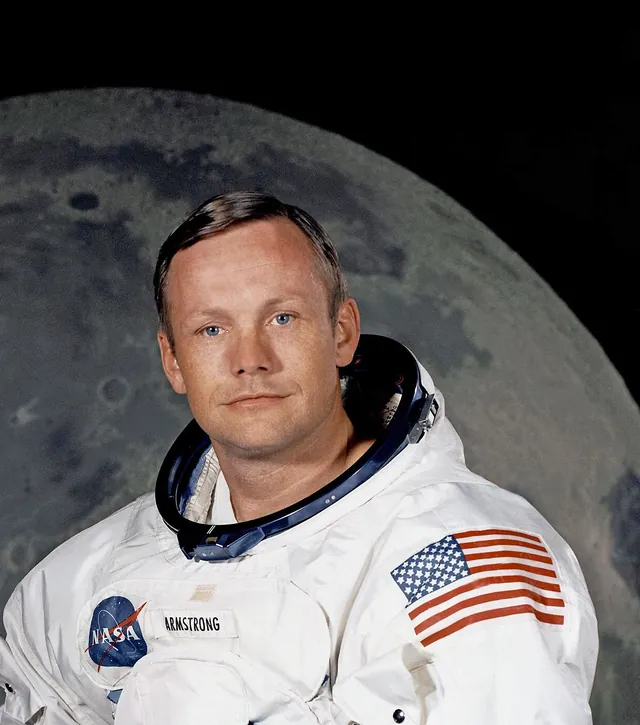
What is Neil Armstrong’s IQ? No one has published it. NASA’s own history is the closest source, and it prints group figures: 130 to 145 for the first seven astronauts, with a mean of 136, and a mean of 141 for the sixth group. It says nothing about individuals. We found no page that sources a number for Armstrong, so treat any single figure you see for him with care. For why celebrity numbers drift, see where celebrity IQ numbers come from.
Was Armstrong in that group? No. He was one of nine astronauts selected in 1962, the second group. NASA’s history says the second group were test pilots too, and two were civilians; Armstrong was one, and he had flown the X-15 for NASA. The same chapter says the third group’s IQ average fell a couple of points below the first two groups, so NASA had numbers for groups, but it printed none for him.
What does his record support? Two engineering degrees, more than 2,450 flying hours and a command role on two missions. We place that just below Neil deGrasse Tyson (140–155) and Katherine Johnson (135–155), whose NASA trajectory work also rests on a documented record. Richard Feynman is 125–150 and Carl Sagan 145–165 on this site. For data on pilots as a group, see what data exist on the IQ of pilots.
How we read a number →Born August 5, 1930 in Wapakoneta, Ohio; Purdue B.S. in 1955; 78 combat missions in F9F-2 jet fighters; M.S. from the University of Southern California; seven X-15 flights from December 1960 to July 1962 with the altitude and speed records quoted; Gemini 8 and Apollo 11; death on August 25, 2012.
Prints IQ figures for astronaut groups only: 130 to 145 with a mean of 136 for the first seven, a mean of 141 for the sixth group, and a lower average for the third group. It says Armstrong “had flown the X-15 for NASA”. No individual score appears.
Gives the education line as “B.S. in aeronautical engineering, Purdue University, 1955. M.S. in aerospace engineering, University of Southern California, 1970.”
The Holloway Plan tuition arrangement, midshipman in 1949 and naval aviator in 1950, and the student pilot certificate on his 16th birthday. It contains no IQ.
Confirms Q1615 is the American astronaut and lunar explorer (1930–2012), not a namesake.
None from Armstrong, NASA, Purdue or the Apollo Lunar Surface Journal. NASA’s Apollo history prints group figures only. A general web search for “Neil Armstrong IQ” returned no sourced individual figure.
On this site Johnson is 135–155, Tyson 140–155, Feynman 125–150 and Sagan 145–165.
The sources behind our estimate
The figures that circulate for Neil Armstrong, what we were able to confirm, and where the two diverge.
People type “neil armstrong iq”, “was neil armstrong a genius” and “was neil armstrong intelligent”. No page we could open gives a sourced IQ for him.
NASA’s Apollo history, Apollo Expeditions to the Moon (SP-350, chapter 8), says the first seven astronauts’ IQs “ranged from 130 to 145, with a mean of 136”, and that the sixth group scored a mean of 141. It names Armstrong only to say that he “had flown the X-15 for NASA”. We found no individual score for him in NASA’s biography or in the Apollo Lunar Surface Journal.
The 130, 136 and 145 are NASA’s printed range and mean for the first seven astronauts, who were selected in 1959. They show what the astronaut pool looked like, not what one man scored.
Want a number that does hold up? Every figure on this page is somebody’s claim. Take the 30-question test and get a percentile you can check rather than a figure you have to trust.
Neil Armstrong — frequently asked
What was Neil Armstrong’s IQ?
No IQ score for Neil Armstrong has been published. NASA’s own Apollo history prints IQ figures only for groups of astronauts, and none for him. Our Neil Armstrong IQ estimate, built from his record, is 130–145.
Was Neil Armstrong a genius?
The record shows exceptional skill and technical training, not a score. He held a Purdue engineering degree and a USC master’s degree, flew seven X-15 flights and commanded Gemini 8 and Apollo 11. “Genius” is not an IQ category, and our range is 130–145.
Did Neil Armstrong take an IQ test?
Astronaut candidates were tested. NASA’s history says the first group went through 25 psychological tests, and it prints group IQ figures. We found no record of an individual result for Armstrong, who joined in the second group in 1962.
What did Neil Armstrong study?
He studied aeronautical engineering at Purdue University and earned a Bachelor of Science in 1955. He later earned a Master of Science in aerospace engineering from the University of Southern California, which the Apollo Lunar Surface Journal dates to 1970.
How rare is a test-pilot record like Armstrong’s?
We cannot count how many pilots match it. He flew many aircraft types as a research pilot, logged more than 2,450 flying hours, made seven X-15 flights to 207,500 feet and Mach 5.74, then commanded two spaceflights. That cannot be turned into a score, but it supports the upper part of our range.
How does Armstrong’s estimated IQ compare with Katherine Johnson’s and Richard Feynman’s?
On this site Armstrong is 130–145, Johnson 135–155 and Feynman 125–150. All three ranges are estimates from records, not test scores, and they overlap heavily.
How does my IQ compare with Neil Armstrong?
You can find out in about fifteen minutes. The IQ Metrics assessment is 30 questions, scored on the same 100-mean scale used throughout this page, so your result and the estimate above are at least expressed in the same units — one measured, one inferred. Once you have a number, the leaderboard shows where it would sit, and how we score and norm it explains the benchmarking.
Where does this estimate come from?
From the documented record rather than a test — the method is named above and set out in full under how we read a number. Compare it against the other scientists profiles, starting with Albert Einstein.
- Take the 30-question IQ test — get a measured score and percentile of your own
- Average IQ by country — how the scale behaves across populations
- How IQ Metrics scores its assessment — the method behind our own number
- More on how IQ testing works — reliability, error and what a score can and cannot say
- More scientists profiles — same field, same method
More scientists


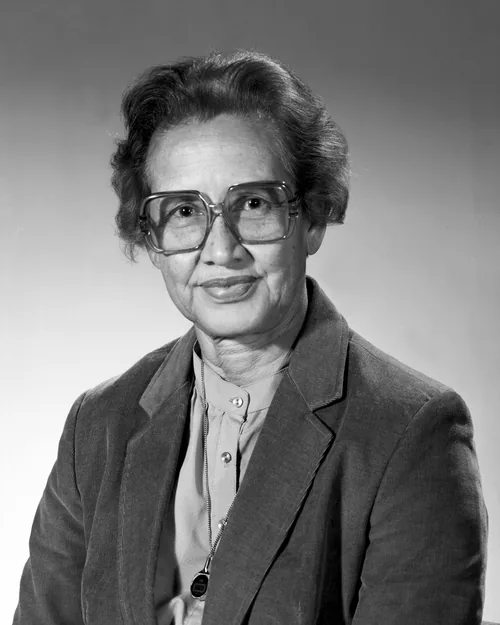
Los Alamos National Laboratory badge photograph, via Wikimedia Commons, CC0. Background removed for the portrait above. · Photograph by Kenneth C. Zirkel (Cornell University, c. 1987), CC BY-SA 4.0. Background removed for the portrait above. · Portrait by NASA (NASA Langley Research Center, 1983, image 1983-L-04373), public domain (U.S. federal government work). Background removed for the portrait above.


An estimate is an inference.
Yours can be measured.
Thirty questions, scored against general-population benchmarks. Your score, your percentile, your ability breakdown and a printable IIF certificate.
Find your IQ score now! →