



What is Stephen King’s IQ?
Ten pages a day, three national honors and a 1970 English degree are on the record; the IQ figure attached to his name has no test date, no examiner and no source we could find.

No IQ test result for Stephen King has been published. The Stephen King IQ score that circulates, 136, is a blogger’s conversion of an SAT result he reportedly put “in the 1300s,” a remark no page we read traces to an interview. What is documented — a 1970 English B.A. from the University of Maine, more than 60 books and three national honors — supports an estimated IQ of 125–145, an inference, not a measurement.
Stephen King’s estimated IQ
- A B.A. in English from the University of Maine at Orono in 1970, which qualified him to teach high school, according to his official biography; the Maine State Library gives the same degree and year.
- A first professional short-story sale, “The Glass Floor,” to Startling Mystery Stories in 1967, while an undergraduate, and a weekly column in the student paper The Maine Campus (official biography).
- Carrie, written while he taught English at Hampden Academy, accepted by Doubleday in the spring of 1973 and published on April 5, 1974, followed by The Shining in 1977.
- More than 60 books (PBS NewsHour, August 26, 2024) and about 200 short stories (Wikipedia), produced on a stated routine of ten pages, about 2,000 words, a day (On Writing, 2000).
- Three national honors: the National Book Foundation’s Medal for Distinguished Contribution to American Letters (2003), the Mystery Writers of America’s Grand Master Award (2007) and the National Medal of Arts (2014).
This is an inference from achievement, not a measurement: sales, output and honors reflect readers, persistence and taste (the National Endowment for the Arts’ own citation stresses that he is popular and prolific), and a bachelor’s degree is a weaker filter than the doctorates behind several other writers’ ranges here, hence the wide range and lower floor. An SAT “in the 1300s” would fit inside 125–145, but it cannot anchor the range because no page traces the remark to King.
- Born
- September 21, 1947, Portland, Maine
- Education
- Lisbon Falls High School, 1966; University of Maine at Orono, B.A. in English, 1970
- First published novel
- Carrie (Doubleday), accepted in spring 1973, published April 5, 1974
- Output
- More than 60 books (PBS NewsHour, 2024) and about 200 short stories (Wikipedia)
- Honors
- National Book Foundation Medal (2003); Edgar Grand Master (2007); National Medal of Arts (2014)
- Writing routine
- About ten pages, or 2,000 words, a day, per On Writing (2000)
- Circulating IQ figure
- 136, a blogger’s conversion of an untraced SAT “1300s”; no IQ test cited
- Published IQ test result
- None found
What an IQ of 125–145 actually means
Set the claim aside for a moment. If someone genuinely scored in this range, here is what that would represent.
Average is 100 by construction, and about two-thirds of people fall between 85 and 115. Take the test to place your own score on this scale.
| Score range | Classification | Share of people | What it indicates |
|---|---|---|---|
| 85 – 114 | Average | ~68% | The range most people fall into. |
| 115 – 129 | Above average | ~13.6% | Roughly one person in seven. |
| 130 – 144 | Gifted | ~2% | The threshold most high-IQ societies use. |
| Above 144 | Highly gifted | ~0.1% | Figures above this range are extrapolated from the curve rather than measured. |
Percentages are approximate and describe a normal distribution. The same number means different things on tests with different standard deviations.
Thirty questions gives you a measured position on this exact scale — your score, your percentile and the ability breakdown behind it.
Find out in 30 minutes →Who Stephen King is
Stephen King, the American author of horror and suspense fiction, was born on September 21, 1947, in Portland, Maine. According to his official biography he graduated from Lisbon Falls High School in 1966, wrote a weekly column for the University of Maine’s student newspaper, The Maine Campus, made his first professional short-story sale, “The Glass Floor,” to Startling Mystery Stories in 1967, and graduated from the University of Maine at Orono in 1970 with a B.A. in English, qualified to teach at the high school level. The Maine State Library gives the same degree and year, and The Maine Campus’s 2016 report on Hearts in Suspension, a University of Maine Press book, says he attended from 1966 to 1970.
He began teaching English at Hampden Academy, the public high school in Hampden, Maine, in the fall of 1971; Doubleday accepted his first published novel, Carrie, in the spring of 1973 and published it on April 5, 1974. PBS NewsHour’s 2024 profile describes the “26-year-old rural Maine schoolteacher” who wrote it. The Shining followed in 1977, and he later taught creative writing at the University of Maine at Orono, which has since named a literature chair in his honor. PBS reported in August 2024 that he had written more than 60 books since Carrie, and Wikipedia counts about 200 short stories. CBS News said in 2013 that he had sold more than 350 million books; PBS said in 2024 that his books have sold between 400 million and 500 million copies worldwide. That spread shows how soft the number is, and it measures readers, not reasoning.
Three institutions have honored the body of work. The National Book Foundation gave him its Medal for Distinguished Contribution to American Letters in 2003; the Mystery Writers of America named him a Grand Master in 2007; and the National Endowment for the Arts lists him among the 2014 National Medal of Arts recipients, with a citation that calls him “one of the most popular and prolific writers of our time.” The Grand Master prize is one of the Edgars, which Wikipedia says are named for Edgar Allan Poe, and the National Book Foundation’s biography adds that Mr. Mercedes won the Edgar for Best Novel (Wikipedia and Wikidata date it to 2015). That is the documented tie to Poe, whose profile here (150–170) rests on a historiometric method, so the two ranges are not a ranking. The honors describe a body of work and a readership; none is a measure of reasoning.
His craft book, On Writing: A Memoir of the Craft (Scribner, 2000), sets out the routine behind the output: “I like to get ten pages a day, which amounts to 2,000 words.” In a 2013 CBS News interview he said, “I still write every day.” His advice to would-be writers is to “read a lot and write a lot”; for what a reading habit can and cannot say about IQ, see reading and IQ. Read together, the record anchors a range rather than a number: an estimated IQ of 125–145, level at the top with Ernest Hemingway (128–145), another American novelist placed by achievement, and well below Isaac Asimov (155–170), a fellow prolific author whose range rests on a completed doctorate, a stronger filter than King’s bachelor’s degree. Group averages, such as average IQ by occupation, describe groups, not any one writer, and whether King reaches what people call a genius IQ level is a question only a test could answer.
 By Elora Mercer, Celebrity Research WriterFigures checked by Leon Falkner, Data & Research Analyst
Reviewed by Aarav Vardhan, Editor-in-Chief · Last reviewed August 2026
.jpg)
Stephen King: the documented record
The estimate above rests on this record. Every entry here is a matter of public fact, which is more than can be said for the number itself.
- 1947Born on September 21 in Portland, Maine.
- 1967Makes his first professional short-story sale, “The Glass Floor,” to Startling Mystery Stories.
- 1970Graduates from the University of Maine at Orono with a B.A. in English, qualified to teach high school.
- 1971Begins teaching English at Hampden Academy in Hampden, Maine, in the fall.
- 1974Carrie, accepted by Doubleday in spring 1973, is published on April 5.
- 2000Publishes On Writing: A Memoir of the Craft, which sets out his ten-pages-a-day routine.
- 2003Receives the National Book Foundation’s Medal for Distinguished Contribution to American Letters.
- 2007Named a Grand Master by the Mystery Writers of America.
- 2014Receives the National Medal of Arts (the 2014 medal).
- 2023On October 31, the blog Pumpkin Person converts a reported SAT score “in the 1300s” into an IQ of 136.
Where the 136 figure came from
Following a claim back to its first appearance is the part almost nobody does — and it is what most people are actually asking.

Search for “Stephen King IQ score” and the results are questions and estimates, not records: Quora threads with titles such as “What is Stephen King’s IQ?” and “Does Stephen King have an IQ of 149?” (Quora blocks automated access, so only the titles could be read); a StephenKingly.com page that says there is no official record of his IQ and offers a “genius level” in the “top 2%” as one theory; and a pumpkinperson.com post from October 31, 2023, the only page we found that turns evidence into a specific number, 136. For how numbers like these usually get attached to famous names, see where celebrity IQ numbers come from; here, a reported SAT remark has become an IQ that no examiner produced.
The 136 rests on a link nobody can inspect. Pumpkin Person’s post says that when King was asked what his SAT scores were, he answered “in the 1300s,” converts that band to an IQ of 133–139 with the blogger’s own pre-1995 SAT norms, and splits the difference. It names no interview, venue or date for the remark. Ivy Coach and two PrepScholar lists print the same “1300s” beside King’s name; Ivy Coach says its scores are “gleaned from interviews, gossip columns, and plain old hearsay,” and PrepScholar says it found them in past interviews or through investigative research, but neither says which interview. We could not find it either, so the “1300s” is best read as a reported remark, not a documented score. Even at face value, an SAT band is a college-admission result from his high-school years, and the blogger’s own conversion notes say the method assumes a normal distribution and is not an endorsement of the old SAT as an IQ test; for how such conversions work, see SAT score to IQ conversion.
Set against the documented record, the 136 is neither absurd nor established. The record laid out below supports an estimated IQ of 125–145, so the blogger’s figure falls inside it, while the 149 in a Quora title falls above it with nothing we could read behind it. That mutes the usual pattern on this site, where the circulating number runs above what the sources support: for King, what fails is the sourcing, not the size. Sales, output and honors are strong evidence of persistence and verbal skill, but how far creative output tracks IQ is a question the site takes up in IQ and creativity, and for a sense of what a score in the upper part of the range means, see what an IQ of 140 means.
What would settle the question is a named test, an examiner and a date, or the original interview in which King gave his SAT range. We found neither. His official biography, the National Book Foundation and National Endowment for the Arts pages, the Maine State Library entry, the PBS and CBS profiles and Wikipedia describe schooling, books and honors, and none mentions an IQ score. A search for “Stephen King brother IQ” leads to the same Quora threads and to biography pages that mention his older brother without any IQ figure for him; the record shows the two in print together through Dave’s Rag, the newspaper his brother printed and Stephen contributed to. Anyone curious about their own verbal reasoning can try a timed verbal IQ test, but a number for someone else has to come from a record, and the records for King contain none.
How we read a number →The biography gives his birth in Portland, Maine, in 1947; Lisbon Falls High School, 1966; a weekly column in The Maine Campus; his first professional short-story sale, “The Glass Floor,” to Startling Mystery Stories in 1967; a University of Maine at Orono B.A. in English in 1970, qualifying him to teach high school; Hampden Academy from the fall of 1971; and Doubleday’s acceptance of Carrie in the spring of 1973. The news page carries items dated August 14, September 10 and September 24, 2026, so he is alive and active. Neither page mentions IQ.
Confirms the 2003 National Book Foundation Medal for Distinguished Contribution to American Letters and the 2014 National Medal of Arts, calls him the author of “more than fifty books, all of them worldwide bestsellers,” and describes Mr. Mercedes as “an Edgar Award winner for Best Novel.” No mention of IQ.
Lists him as a 2014 National Medal of Arts recipient “for his contributions as an author” and calls him “one of the most popular and prolific writers of our time.” The page gives no ceremony date and does not mention IQ.
Both list Stephen King as the 2007 Grand Master. The database also lists Mr. Mercedes among the 2015 Best Novel entries, but the page could not show which entry won, so the Best Novel win rests on the National Book Foundation biography, Wikipedia’s awards list and Wikidata. Neither page explains the award or mentions IQ.
The State Library says he “graduated from the University of Maine in Orono with a degree in English in 1970” and received the 2003 Medal. UMaine’s King Chair pages call him a UMaine alumnus and say the chair honors his body of work; they give no degree year. The Maine Campus report on Hearts in Suspension (University of Maine Press, 2016) says he attended from 1966 to 1970. None mentions IQ.
PBS says his books “have sold between 400 million to 500 million copies worldwide,” that he has written “more than 60 books” since Carrie, and describes a “26-year-old rural Maine schoolteacher” writing it. CBS said in 2013 that he had sold “more than 350 million books” and quotes him: “I still write every day.” Neither mentions IQ or a test.
Wikidata confirms the Q-id is the American novelist (born September 21, 1947, Portland) and lists University of Maine education from 1966 with a B.A. in English; its end year is 1971, against the 1970 given by King’s own biography, the State Library and Wikipedia. Wikipedia supplies Carrie’s April 5, 1974 publication by Doubleday, The Shining (1977), “approximately 200 short stories,” the 2015 Best Novel Edgar for Mr. Mercedes, the Edgars’ naming for Edgar Allan Poe, On Writing’s 2000 publication, King’s advice to “read a lot and write a lot,” and his brother’s newspaper Dave’s Rag. None mentions IQ.
Both reproduce King’s line “I like to get ten pages a day, which amounts to 2,000 words”; Goodreads gives the fuller passage, “180,000 words over a three-month span.” We could not read the book itself: the Internet Archive scan (onwritingmemoiro0000king) is borrow-only and its text was not available to us, so the quotation rests on these two pages.
Pumpkin Person: King answered “in the 1300s” when asked his SAT scores, converted to 133–139 and rounded to 136, with no interview or date for the remark; its method post says the conversion assumes a normal distribution and is not an endorsement of the old SAT as an IQ test. PrepScholar and Ivy Coach list King at “1300s” (University of Maine) with no source. StephenKingly.com gives no number and no test, offering “top 2%” as one theory.
No IQ test, score or self-reported IQ appears in King’s official biography, the awarding-body pages, the Maine State Library entry, the PBS and CBS profiles, Wikipedia or Wikidata. The only test-related claim is an SAT range that several pages repeat and none sources. Not checked: the text of On Writing (borrow-only scan) and the Quora and IMDb pages, which could not be opened.
The sources behind our estimate
The figures that circulate for Stephen King, what we were able to confirm, and where the two diverge.
The only page we could open that gives Stephen King’s IQ as a number is pumpkinperson.com (October 31, 2023), which puts it at 136, converted from an SAT score he reportedly gave as “in the 1300s.” Two SAT roundups, PrepScholar and Ivy Coach, print “1300s” next to his name without an IQ, and a Quora question asks whether he has “an IQ of 149.”
No IQ test result and no self-reported IQ appears on any page we read — King’s official biography and 2026 news page, the National Book Foundation and National Endowment for the Arts pages, the Maine State Library entry, the PBS NewsHour and CBS News profiles, or Wikipedia and Wikidata. The SAT remark is the only test-related claim, and none of the pages that repeat it names the interview, date or place where King is supposed to have said it. pumpkinperson.com gives 136 with no source for the remark, and StephenKingly.com says there is no official record of his IQ. Quora blocks automated access, so only the titles of its threads could be read.
The 136 sits inside the 125–145 range, so this is a number that is plausible but unsourced, not inflated: a 100-point SAT band becomes a 133–139 IQ span only through assumed norms, and the remark behind it has not been traced. The 149 in a Quora title sits above the top of the range, and we could see nothing behind it.
Want a number that does hold up? Every figure on this page is somebody’s claim. Take the 30-question test and get a percentile you can check rather than a figure you have to trust.
Stephen King — frequently asked
What is Stephen King’s IQ?
No IQ test result for Stephen King has been published, so his IQ has no measured value. The 136 that circulates is a blogger’s conversion of an SAT remark, “in the 1300s,” that no page we read traces to a source. IQ Metrics estimates 125–145 from his English B.A., more than 60 books and three national honors: an inference, not a score.
Did Stephen King ever take an IQ test?
There is no public record of one. His official biography, the National Book Foundation and National Endowment for the Arts pages, the Maine State Library entry and the PBS and CBS profiles describe schooling, books and honors, and none mentions an IQ test. The only test-related claim is an SAT range, repeated by several pages without a source.
Where does Stephen King’s 136 IQ score come from?
It comes from a pumpkinperson.com post dated October 31, 2023. The post says King answered “in the 1300s” when asked his SAT scores, converts that band to an IQ of 133–139 with a table of old SAT norms, and splits the difference at 136. It names no interview or date for the remark, and the SAT lists that repeat it do not either.
What is Stephen King’s brother’s IQ?
No IQ figure or test result for Stephen King’s older brother appears in any source we could open, so there is nothing to report. King’s official biography mentions his brother, and Wikipedia says he printed the newspaper Dave’s Rag, to which Stephen contributed. The Quora threads on the topic could not be opened, and we could not search the full text of On Writing.
Is Stephen King a genius?
No IQ test has labeled him one, and “genius” is not a documented status. What is documented is a 1970 English B.A. from the University of Maine, more than 60 books, three national honors and a routine of about 2,000 words a day. Those support an estimated IQ level of 125–145, high but not certified.
How does Stephen King’s estimated IQ compare with Ernest Hemingway’s or Isaac Asimov’s?
King’s estimated range, 125–145, overlaps Ernest Hemingway’s 128–145 and sits below Isaac Asimov’s 155–170, which rests on a completed doctorate, a stronger filter than King’s bachelor’s degree. All three are inferences from achievement, not test results: the near-identical range with Hemingway is not a difference the method can resolve, and the gap to Asimov mostly reflects the doctorate behind his range.
How many words a day does Stephen King write?
In On Writing (2000), King says he likes to get ten pages a day, which amounts to 2,000 words, or 180,000 words over a three-month span. In a 2013 CBS News interview he said, “I still write every day.” The routine shows sustained output, not IQ.
Where did Stephen King go to college?
Stephen King graduated from Lisbon Falls High School in 1966 and from the University of Maine at Orono in 1970 with a B.A. in English, qualified to teach high school, according to his official biography. He taught English at Hampden Academy from the fall of 1971, and Doubleday accepted his first published novel, Carrie, in the spring of 1973.
How does my IQ compare with Stephen King?
You can find out in about fifteen minutes. The IQ Metrics assessment is 30 questions, scored on the same 100-mean scale used throughout this page, so your result and the estimate above are at least expressed in the same units — one measured, one inferred. Once you have a number, the leaderboard shows where it would sit, and how we score and norm it explains the benchmarking.
Where does this estimate come from?
From the documented record rather than a test — the method is named above and set out in full under how we read a number. Compare it against the other writers profiles, starting with Voltaire.
- Take the 30-question IQ test — get a measured score and percentile of your own
- Average IQ by country — how the scale behaves across populations
- How IQ Metrics scores its assessment — the method behind our own number
- More on how IQ testing works — reliability, error and what a score can and cannot say
- More writers profiles — same field, same method
More writers

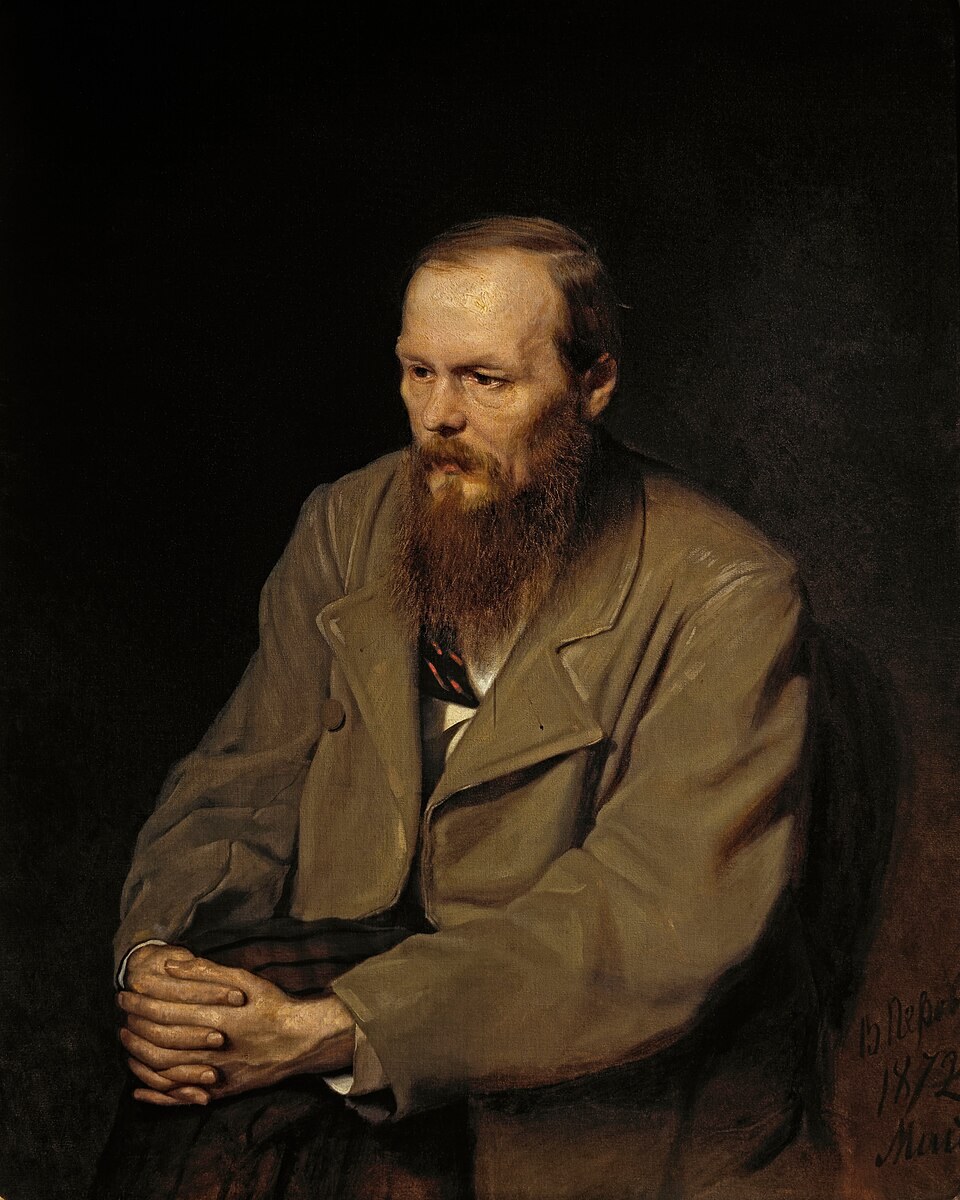

Photograph by Martin Kraft (Frankfurt Book Fair, October 2024), CC BY-SA 4.0. Background removed for the portrait above. · Portrait by Vasily Perov (1872), Tretyakov Gallery, via Wikimedia Commons, public domain. · Photograph by Joe Loong (Tech@State: Moneyball Diplomacy, June 2013), CC BY-SA 2.0. Background removed for the portrait above.
.jpg)


An estimate is an inference.
Yours can be measured.
Thirty questions, scored against general-population benchmarks. Your score, your percentile, your ability breakdown and a printable IIF certificate.
Find your IQ score now! →