



What is Stevie Wonder’s IQ?
No IQ score has been published; the record is a Motown contract at 11, a run of Grammy-winning albums and a Rock Hall induction in 1989.

Stevie Wonder’s IQ has never been published: no test score exists, and our Stevie Wonder IQ estimate is 125–140. It rests on the documented record: a Tamla (Motown) contract in 1961, a run of acclaimed 1970s albums, and a Rock and Roll Hall of Fame induction in 1989. It is a judgment from a record, not a test result.
Stevie Wonder’s estimated IQ
- In 1961, at age 11, he sang his own song “Lonely Boy” to Ronnie White of the Miracles and was signed to Motown’s Tamla label. His royalties were held in trust until he turned 21 (Wikipedia).
- His single “Fingertips” topped the Billboard Hot 100 when he was 13, making him the youngest solo artist to do so (Wikipedia).
- He won the Grammy Award for Album of the Year with Innervisions, Fulfillingness’ First Finale and Songs in the Key of Life, the only artist to win it with three albums in a row (Wikipedia).
- He plays piano, harmonica, drums and synthesizer, among other instruments, and writes and produces as well as sings (Wikipedia).
- The Rock and Roll Hall of Fame inducted him in 1989 (Rock Hall).
Musical gift, craft and a long run of hits are real achievements, and none is an IQ test. Music is one skill among many, and studies find only a weak link between music and IQ. We found no school transcript or test score, so the range rests on his career and carries wide error.
- Born
- May 13, 1950, Saginaw, Michigan
- Born as
- Stevland Hardaway Judkins
- Instruments
- Piano, harmonica, drums and synthesizer, among others
- Signed to Motown
- 1961, to the Tamla label, at age 11 per Wikipedia
- Honors
- Rock and Roll Hall of Fame, 1989; Presidential Medal of Freedom, 2014
- Status
- Living; facts are as of November 2026
- Documented IQ test
- None published
What an IQ of 125–140 actually means
Set the claim aside for a moment. If someone genuinely scored in this range, here is what that would represent.
| Score range | Classification | Share of people | What it indicates |
|---|---|---|---|
| 85 – 114 | Average | ~68% | The range most people fall into. |
| 115 – 129 | Above average | ~13.6% | Roughly one person in seven. |
| 130 – 144 | Gifted | ~2% | The threshold most high-IQ societies use. |
| Above 144 | Highly gifted | ~0.1% | Figures above this range are extrapolated from the curve rather than measured. |
Percentages are approximate and describe a normal distribution. The same number means different things on tests with different standard deviations.
Thirty questions gives you a measured position on this exact scale — your score, your percentile and the ability breakdown behind it.
Find out in 30 minutes →Who Stevie Wonder is
Who is Stevie Wonder? He was born Stevland Hardaway Judkins on May 13, 1950, in Saginaw, Michigan, and attended Fitzgerald Elementary School in Detroit. He sings and writes songs and plays piano, harmonica, drums and synthesizer (Wikipedia). He is a living person, so this page keeps to his record as a musician.
How did he get to Motown? In 1961, at age 11, he sang “Lonely Boy” to Ronnie White of the Miracles, who took him to Motown. Berry Gordy signed him to Tamla, and the producer Clarence Paul gave him the name Little Stevie Wonder (Wikipedia). The Rock and Roll Hall of Fame page says he was discovered at age 12, so sources differ by a year.
What did he do next? His first album, The Jazz Soul of Little Stevie, came out in 1962, and he then enrolled at the Michigan School for the Blind in Lansing. “Fingertips” was released in May 1963 and topped the Billboard Hot 100 when he was 13. Between 1972 and 1976 he made Music of My Mind, Talking Book, Innervisions, Fulfillingness’ First Finale and Songs in the Key of Life (Wikipedia).
What honors does he hold? The Rock and Roll Hall of Fame inducted him in 1989, with Paul Simon presenting. Wikipedia lists his naming as a United Nations Messenger of Peace in 2009 and a Presidential Medal of Freedom, presented on November 24, 2014. It also says Ghana conferred citizenship on him in 2024.
 By Elora Mercer, Celebrity Research WriterFigures checked by Leon Falkner, Data & Research Analyst
Reviewed by Aarav Vardhan, Editor-in-Chief · Last reviewed November 2026

Stevie Wonder: the documented record
The estimate above rests on this record. Every entry here is a matter of public fact, which is more than can be said for the number itself.
- 1950Born in Saginaw, Michigan, on May 13.
- 1961Sings “Lonely Boy” to Ronnie White of the Miracles and is signed to Motown’s Tamla label.
- 1962The Jazz Soul of Little Stevie, his first album, is released.
- 1963“Fingertips” is released in May and goes on to top the Billboard Hot 100 when he is 13.
- 1972–1976Releases Music of My Mind, Talking Book, Innervisions, Fulfillingness’ First Finale and Songs in the Key of Life.
- 1989Inducted into the Rock and Roll Hall of Fame.
- 2009Named a United Nations Messenger of Peace.
- 2014Receives the Presidential Medal of Freedom at the White House on November 24.
Why no figure circulates
Following a claim back to its first appearance is the part almost nobody does — and it is what most people are actually asking.

Has Stevie Wonder’s IQ ever been published? No. No test score exists in any source we opened, and no estimate names a test. Our own range is 125–140, built from his career. For why such ranges stay wide, see the IQ ceiling effect.
Does being a prodigy mean a high IQ? Not automatically. A prodigy is a child far ahead in one skill, while an IQ score summarizes many tasks. Terman’s study followed 1,528 children who scored in the top 1% on IQ tests, not children chosen for talent. Our analysis of the Terman study shows how rare that is: in its 1921–22 search, 1 in 258 pupils reached IQ 140.
Does musical talent show in IQ scores? Only weakly. Our guide to music lessons and IQ reports that 54 pooled studies found no overall effect once study quality was controlled. In a twin study the music–IQ link (r = .10 to .11) vanished within pairs. A musician’s IQ cannot be read from the music.
How does he compare with other musicians here? Michael Jackson, a child star with the Jackson 5, is 110–130. Wolfgang Amadeus Mozart, the classic prodigy, is 150–165, and Elvis Presley is 105–125. See all musicians on this site.
How we read a number →Lists him as inducted in 1989, with Paul Simon, and says he was discovered at age 12. It calls him “Stevie Prodigy, Stevie Miracle, Stevie Wonder”. It says nothing about IQ.
Born May 13, 1950 in Saginaw; the 1961 audition and Tamla contract at age 11, with royalties in trust until 21; first album in 1962; “Fingertips” on the Hot 100 at 13; three consecutive Album of the Year Grammys; instruments; 2009 and 2014 honors. It contains no IQ.
Confirms Q714 is the American singer-songwriter, composer and record producer born in 1950.
A search for “stevie wonder iq” found biographies and fact lists, and no score.
The Terman study followed 1,528 children selected for high IQ scores; 1 in 258 pupils in the 1921–22 search reached IQ 140. The music guide cites a 2020 meta-analysis of 54 studies and a twin study in which the music–IQ link vanished within pairs.
On this site Jackson is 110–130, Mozart 150–165, Presley 105–125 and Mars 120–135.
The sources behind our estimate
The figures that circulate for Stevie Wonder, what we were able to confirm, and where the two diverge.
People type “stevie wonder iq”, “stevie wonder iq score” and “how smart is stevie wonder”. A search for his IQ found biographies and fact lists, and none gave a score with a test, a date or an examiner.
We found no IQ score for Stevie Wonder and no estimate that names a test. Wikipedia and the Rock and Roll Hall of Fame page list his records, awards and instruments, and neither mentions an IQ test. Even the age at which he was discovered differs by a year between them.
No circulating number sits beside the range. It sits just above Bruno Mars (120–135) on this site and below Wolfgang Amadeus Mozart (150–165), whose estimate rests on the historiometric method in Cox’s 1926 study.
Want a number that does hold up? Every figure on this page is somebody’s claim. Take the 30-question test and get a percentile you can check rather than a figure you have to trust.
Stevie Wonder — frequently asked
What is Stevie Wonder’s IQ?
No IQ score for Stevie Wonder has been published. Our Stevie Wonder IQ estimate is 125–140, based on his documented career as a songwriter, performer and producer. It is a judgment from a public record, not a test result.
Has Stevie Wonder’s IQ ever been published?
No. We found no test, date or examiner for any number attached to him, so any figure you see is a guess. Our 125–140 is a range and we label it as an estimate. To place a score on the scale, use our IQ percentile calculator.
What does the record show about Stevie Wonder?
He signed to Motown’s Tamla label in 1961 at age 11, per Wikipedia, with his royalties held in trust until 21. “Fingertips” topped the Hot 100 when he was 13, and he won Album of the Year three albums in a row in the 1970s. The Rock and Roll Hall of Fame inducted him in 1989.
How smart is Stevie Wonder?
The record shows a musician who wrote, played and produced at a very high level for decades. It does not show an IQ, because no test is on record. Musical skill and IQ overlap only weakly, so we rate him from achievement and keep the range wide.
Does being a prodigy mean a high IQ?
Not automatically. A prodigy is far ahead in one skill, and an IQ score summarizes many tasks. Terman’s study of gifted children chose them by high IQ scores, so it cannot show how many prodigies score high. Our page on the Terman study gives the numbers.
Does musical talent show in IQ scores?
Only weakly. A 2020 meta-analysis of 54 studies found no overall effect of music lessons on cognition once study quality was controlled, and a twin study found the music–IQ link vanished within pairs. See our guide to music lessons and IQ.
How does Stevie Wonder’s estimated IQ compare with Michael Jackson’s and Mozart’s?
On this site Stevie Wonder is 125–140, Michael Jackson 110–130 and Mozart 150–165. Mozart’s range uses the historiometric method for people born between 1450 and 1850, so the three are not equal tests. Treat the gaps as differences in the evidence, not measured differences.
How does my IQ compare with Stevie Wonder?
You can find out in about fifteen minutes. The IQ Metrics assessment is 30 questions, scored on the same 100-mean scale used throughout this page, so your result and the estimate above are at least expressed in the same units — one measured, one inferred. Once you have a number, the leaderboard shows where it would sit, and how we score and norm it explains the benchmarking.
Where does this estimate come from?
From the documented record rather than a test — the method is named above and set out in full under how we read a number. Compare it against the other musicians profiles, starting with Brian May.
- Take the 30-question IQ test — get a measured score and percentile of your own
- Average IQ by country — how the scale behaves across populations
- How IQ Metrics scores its assessment — the method behind our own number
- More on how IQ testing works — reliability, error and what a score can and cannot say
- More musicians profiles — same field, same method
More musicians
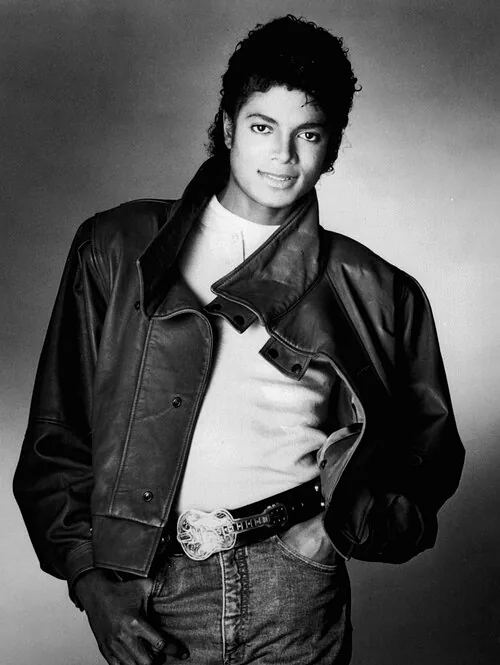
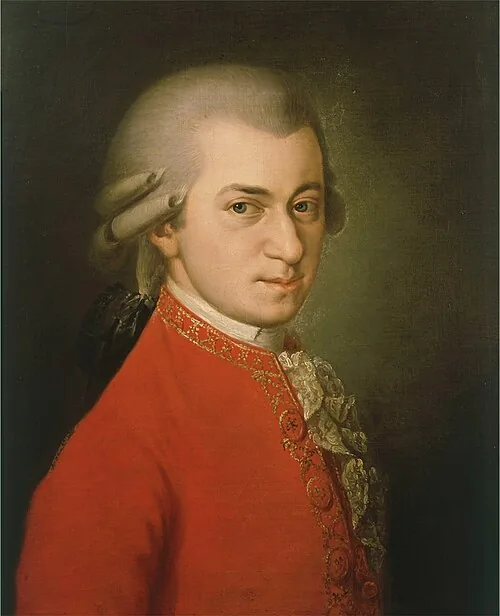
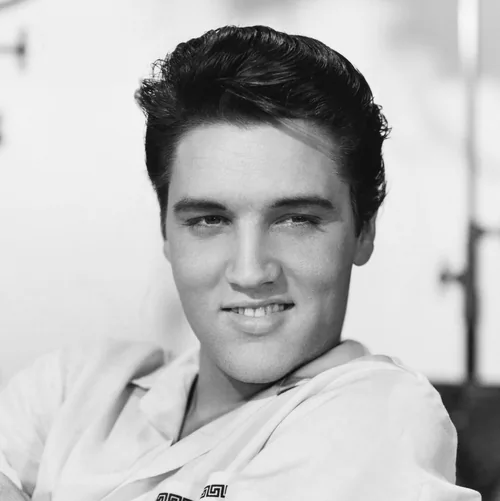
Photograph by Matthew Rolston (1983), distributed by Epic Records, public domain. Background removed for the portrait above. · Portrait by Barbara Krafft (1819), public domain. Background removed for the portrait above. · Magazine photograph of Elvis Presley (Modern Screen, June 1958; Commons file), photographer not recorded, cropped; public domain in the United States (copyright not renewed). Background removed for the portrait above.


An estimate is an inference.
Yours can be measured.
Thirty questions, scored against general-population benchmarks. Your score, your percentile, your ability breakdown and a printable IIF certificate.
Find your IQ score now! →