



What is Hikaru Nakamura’s IQ?
An online quiz on stream gave him 102. His real number is a chess rating.
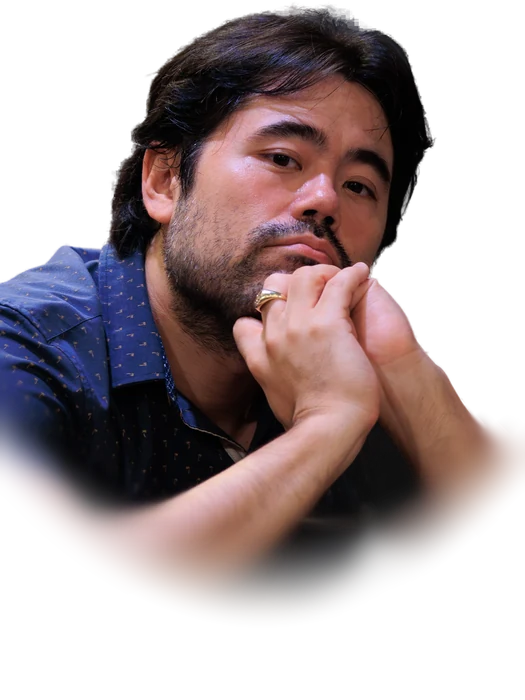
Hikaru Nakamura has no professionally administered IQ score: the 102 attached to his name comes from an online matrix-style quiz he took live on stream, reportedly around 2020–2021, and it is not a measurement of his intelligence. What is documented is his chess rating — 2792 on FIDE’s October 2026 list, second in the world behind Magnus Carlsen.
Hikaru Nakamura’s estimated IQ
- Earned his final grandmaster norm in February 2003 at fifteen, breaking Bobby Fischer’s 1958 record as the youngest American grandmaster; the record has since been broken, including by Samuel Sevian in 2014, at 13 years, 10 months and 27 days.
- Reached a peak FIDE classical rating of 2816 in October 2015, when he was ranked world No. 2. On FIDE’s October 2026 list he is rated 2792 and ranked No. 2 again, behind Magnus Carlsen (2823) and ahead of Fabiano Caruana (2784).
- Was ranked No. 1 in the world on both FIDE’s rapid and blitz lists at the same time in May 2014.
- Won the US Chess Championship five times (2005, 2009, 2012, 2015, 2019) and the Chess.com Speed Chess Championship five years in a row (2018–2022). Played the Candidates Tournament in 2024 (8½/14, tied for second) and 2026 (fifth, 6½/14).
- Set Chess.com’s blitz rating record repeatedly: the first player above 3400 (3405 on February 9, 2024), 3454 on January 29, 2026, 3455 on May 19, 2026, and on October 5, 2026 the first player to reach 3500, with 3503 the next day — a separate, non-comparable rating system to FIDE’s.
Chess rating and IQ measure different things, and Nakamura himself says that “High IQ, I would say, is not relevant to becoming a Grandmaster in chess.” This range uses the site’s existing chess-rating method, consistent with its Carlsen, Fischer, Kasparov and Polgár profiles — it is not based on a clinically administered cognitive test, because none has been published.
- Born
- December 9, 1987, Hirakata, Japan
- Youngest American grandmaster (at the time)
- Age 15 (Feb. 2003) — broke Fischer’s 1958 record
- US Chess Championships won
- 5 (2005, 2009, 2012, 2015, 2019)
- Speed Chess Championships won
- 5 in a row (2018–2022)
- FIDE rating, October 2026
- 2792 (world No. 2)
- Peak FIDE classical rating
- 2816 (October 2015)
- Chess.com blitz record
- 3503 (October 6, 2026); first player to reach 3500
- Circulating IQ figure
- 102, from an online quiz taken on stream
What an IQ of 140–155 actually means
Set the claim aside for a moment. If someone genuinely scored in this range, here is what that would represent.
Average is 100 by construction, and about two-thirds of people fall between 85 and 115. Take the test to place your own score on this scale.
| Score range | Classification | Share of people | What it indicates |
|---|---|---|---|
| 85 – 114 | Average | ~68% | The range most people fall into. |
| 115 – 129 | Above average | ~13.6% | Roughly one person in seven. |
| 130 – 144 | Gifted | ~2% | The threshold most high-IQ societies use. |
| Above 144 | Highly gifted | ~0.1% | Figures above this range are extrapolated from the curve rather than measured. |
Percentages are approximate and describe a normal distribution. The same number means different things on tests with different standard deviations.
Thirty questions gives you a measured position on this exact scale — your score, your percentile and the ability breakdown behind it.
Find out in 30 minutes →Who Hikaru Nakamura is
Christopher Hikaru Nakamura was born on December 9, 1987, in Hirakata, Osaka Prefecture, Japan; his family moved to the United States when he was two, and he grew up in White Plains, New York. He earned his final grandmaster norm in February 2003, at fifteen, breaking Bobby Fischer’s 1958 record for the youngest American grandmaster — a mark that had stood some 44 years — and has since won the US Chess Championship five times (2005, 2009, 2012, 2015 and 2019).
At the top of the game he won the Chess.com Speed Chess Championship five years in a row (2018–2022), the last with a 14½–13½ final win over Magnus Carlsen, and in April 2026 he finished fifth at the Candidates Tournament in Pegeia, Cyprus, on 6½/14. His online ratings on Chess.com, which run on a separate, higher-numbered scale from FIDE’s, have repeatedly set platform records: he was the first player to break 3400 in blitz (February 2024) and the first to reach 3500 (October 5, 2026).
He streams as GMHikaru on Twitch, YouTube and Kick. Stream Hatchet counted 7.9 million hours watched across his Twitch and Kick channels in the year to April 2024, about 6 million more than the next chess streamer, Anna Cramling; his YouTube channel had passed 3 million subscribers by September 2025.
 By Elora Mercer, Celebrity Research WriterFigures checked by Leon Falkner, Data & Research Analyst
Reviewed by Aarav Vardhan, Editor-in-Chief · Last reviewed October 2026
.jpg)
Hikaru Nakamura: the documented record
The estimate above rests on this record. Every entry here is a matter of public fact, which is more than can be said for the number itself.
- 1987Born December 9 in Hirakata, Osaka Prefecture, Japan; his family moves to the United States when he is two, and he grows up in White Plains, New York.
- 2003Earns his final grandmaster norm at the Bermuda International in February, becoming the youngest American grandmaster ever at the time, at age 15, and breaking Bobby Fischer’s 1958 record.
- 2005Wins the US Chess Championship for the first time; he wins it four more times (2009, 2012, 2015, 2019).
- 2014In May, is ranked No. 1 in the world on FIDE’s rapid and blitz lists at the same time.
- 2015Reaches his peak classical FIDE rating, 2816, in October, ranked world No. 2.
- 2018–22Wins the Chess.com Speed Chess Championship five years running; the 2022 final is a 14½–13½ win over Magnus Carlsen.
- 2020–21Takes an online matrix-style IQ test live on stream and scores 102 (the year is reported, not documented in a primary source).
- 2024On February 9, becomes the first player to break 3400 in Chess.com blitz (3405). Scores 8½/14 at the Candidates Tournament, tied for second.
- 2026Finishes fifth at the Candidates Tournament in Pegeia, Cyprus (March 29–April 16), on 6½/14. On May 19 sets a Chess.com blitz record of 3455.
- Oct. 2026On October 5, becomes the first player to reach 3500 in Chess.com blitz, and reaches 3503 the next day. FIDE’s October list has him at 2792, world No. 2.
Where the 102 figure came from
Following a claim back to its first appearance is the part almost nobody does — and it is what most people are actually asking.
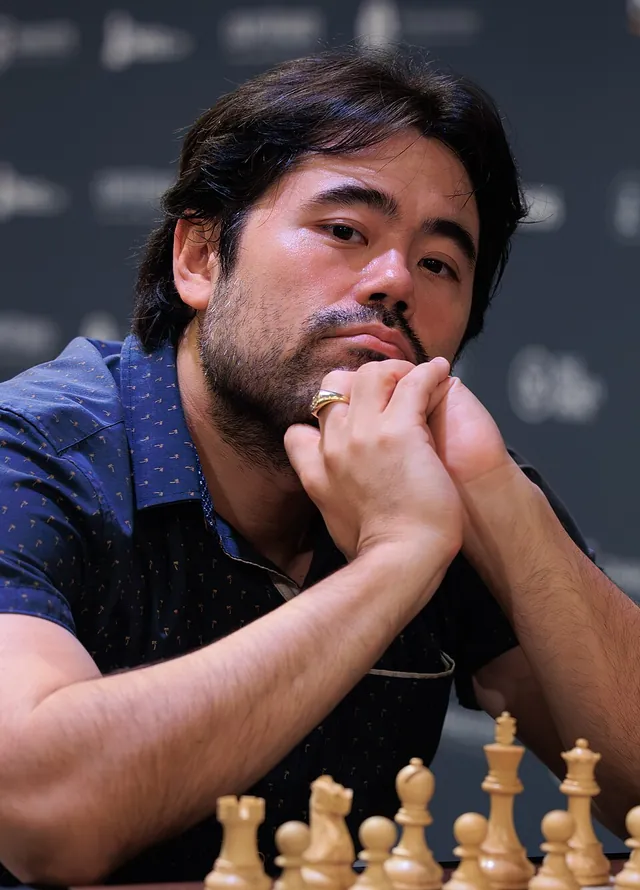
Chess ratings work as an IQ substitute on this site precisely because they are the opposite of the celebrity-IQ genre: continuously published, internationally governed, and hard to inflate quietly. Nakamura’s FIDE standard rating — 2792, world No. 2 on the October 2026 list, behind only Magnus Carlsen — is exactly that kind of number.
Set against it is 102, a real result from a real quiz — just not a real measurement. It was an online matrix-style test taken on stream with viewers chatting, and none of the conditions a clinical IQ test requires. The gap here isn’t between a true number and a fabricated one, the way it is on many profiles here; it’s between two real numbers measuring two different things, one of which Nakamura says is “not relevant to becoming a Grandmaster in chess.”
Compare Magnus Carlsen, Bobby Fischer, Garry Kasparov and Judit Polgár, the site’s other chess profiles built on the same published-rating method — Nakamura’s youngest-American-grandmaster record broke Fischer’s — as well as Viswanathan Anand and Gukesh Dommaraju.
Why a chess rating can stand in for an IQ estimate, and where it falls short, is covered in our explainers on chess ratings and IQ and chess and IQ.
How we read a number →Nakamura 2792, world No. 2, behind Carlsen (2823) and ahead of Caruana (2784); birth year 1987.
Final grandmaster norm at the Bermuda International; Fischer’s 1958 record for the youngest American grandmaster had stood some 44 years.
Blitz rating of 3405 on February 9, 2024, 28 points ahead of Carlsen, the previous record holder.
Record blitz rating of 3454 during the 3-0 Thursday tournament on January 29, 2026.
Blitz rating of 3455, described as the highest mark in site history.
First 3500-rated Chess.com Blitz player in site history (October 5); record raised to 3503 on October 6.
Pegeia, Cyprus, March 29–April 16, 2026: Sindarov 10/14; Nakamura fifth with 6½.
Nakamura won in 2005 (played in 2004), 2009, 2012, 2015 and 2019.
Nakamura won the final in 2018, 2019, 2020, 2021 and 2022; the 2022 final was 14½–13½ against Carlsen.
Birth details; peak rating 2816 and peak ranking No. 2 (October 2015); No. 1 on FIDE’s rapid and blitz lists in May 2014; Candidates 2024 and 2026.
Grandmaster title at 13 years, 10 months and 27 days (2014), the youngest American grandmaster at the time.
7.9 million hours watched across Nakamura’s Twitch and Kick channels in the prior year, about 6 million more than the second-ranked chess streamer.
Nakamura, in an interview with Tejas Khoday, on IQ and grandmaster strength. The piece does not mention the 102 test.
Nakamura’s own channel refers to the 102 figure; the title is the only detail confirmed.
Describes the 102 as an online matrix test taken live on stream around 2020–2021 and says no retake is documented. Cites no primary recording.
User blog dating the test to 2020 with a score of 102; cites no source and says its figures may be incorrect.
26 samples, 1,779 players; average correlation .24 between chess skill and cognitive ability; fluid-reasoning link .32 in youth and .11 in adult samples.
Chess players outperformed non-players on intelligence-related skills, d = 0.49.
24 studies, overall effect g = 0.338; no study used both a do-nothing and an active control group.
Effects of chess instruction on cognitive and academic skills were inversely related to the quality of the experimental design.
Experiments with 233 and 52 children found no statistically significant difference in math problem-solving between chess and control groups.
The sources behind our estimate
The figures that circulate for Hikaru Nakamura, what we were able to confirm, and where the two diverge.
“102” circulates widely — on Chess.com blogs and forum threads and on trivia sites — as Hikaru Nakamura’s IQ.
The 102 traces to an online matrix-style test of nonverbal pattern puzzles that Nakamura took live on stream, reportedly around 2020–2021, while chatting with viewers. No primary source names the test or gives the date of the stream, and no professionally administered score for him has ever been published. He refers to the number himself — his channel GMHikaru carries a short titled “Hikaru’s 102 IQ Checking In” — and in an interview reported on August 4, 2026, he said that high IQ “is not relevant to becoming a Grandmaster in chess.”
Three numbers, three different scales: a casual stream-quiz result, this site’s rating-based estimate, and his actual, governed FIDE rating — none of them interchangeable, which is exactly the point.
Want a number that does hold up? Every figure on this page is somebody’s claim. Take the 30-question test and get a percentile you can check rather than a figure you have to trust.
Hikaru Nakamura — frequently asked
What is Hikaru Nakamura’s IQ?
Hikaru Nakamura has no professionally administered IQ score on record. The 102 attributed to him comes from an online quiz he took on stream, not a clinical assessment, and he has said that high IQ “is not relevant to becoming a Grandmaster in chess” (RookReview, August 4, 2026).
Is Hikaru Nakamura’s IQ 102?
102 is a quiz score, not a measured IQ. He took an online matrix-style test live on stream, reportedly around 2020–2021, while chatting with viewers, and no primary source names the test or the date. A web quiz taken that way does not meet the conditions of a clinical test (see our guide to online IQ test quality), and no retake is on record.
How smart is Hikaru Nakamura?
No cognitive test settles it. The documented evidence is performance at the top of the game, including a tie for second place at the 2024 Candidates Tournament (8½/14) and fifth place in 2026 (6½/14). In the interview where he dismissed IQ, he said some understanding of patterns and spatial awareness is needed for chess, but doubted that IQ can be correlated with pattern recognition.
Do chess grandmasters have high IQs?
Chess players do tend to score above non-players on intelligence-related tests, but within chess the link is modest and weaker among rated adults. A 2017 meta-analysis led by Giovanni Sala found chess players about half a standard deviation ahead of non-players (d = 0.49). A 2016 meta-analysis in Intelligence (Burgoyne and colleagues; 26 samples, 1,779 participants) found an average correlation of about .24 between chess skill and cognitive ability, roughly 6 percent of the differences in skill, and a fluid-reasoning correlation of .32 in youth samples against .11 in adult samples. See how this site rates Magnus Carlsen, Bobby Fischer and Garry Kasparov, and our explainer chess and IQ.
Does playing chess raise IQ?
The evidence is weak: when studies are well designed, the effects of chess lessons for children, if any, are modest. A 2016 meta-analysis by Giovanni Sala and Fernand Gobet pooled 24 studies of school chess lessons (2,788 children taught chess, 2,433 controls) and found a moderate average gain on math, reading and cognitive tests (g = 0.34), but no study had both a do-nothing and an active control group. Their 2017 meta-analyses found the effects shrank as designs improved, and two of their own experiments (233 and 52 children) found no statistically significant difference in math problem-solving. More in chess ratings and IQ; for another test of whether training raises IQ, see dual n-back training.
What is Hikaru Nakamura’s chess rating?
FIDE’s October 2026 list puts his standard rating at 2792, second in the world behind Magnus Carlsen (2823) and ahead of Fabiano Caruana (2784). His career-peak classical rating was 2816, reached in October 2015.
How old was Hikaru Nakamura when he became a grandmaster?
Fifteen, in February 2003 — breaking Bobby Fischer’s 1958 record as the youngest American to reach the title. The record has since been broken, including by Samuel Sevian, who became a grandmaster at 13 years, 10 months and 27 days in 2014.
Has Hikaru Nakamura ever been the world’s No. 1 chess player?
In rapid and blitz, yes — he was ranked No. 1 on FIDE’s rapid and blitz lists at the same time in May 2014. In classical chess, his best ranking is world No. 2, reached in October 2015, behind Magnus Carlsen.
Is Hikaru Nakamura’s Chess.com rating the same as his FIDE rating?
No. They are separate, non-comparable systems. FIDE governs the internationally recognized rating, while Chess.com’s platform rating runs on a different, higher-numbered scale: he was the first player to break 3400 in blitz (3405 on February 9, 2024) and the first to reach 3500, on October 5, 2026, before setting a record of 3503 the next day.
How many times has Hikaru Nakamura won the US Chess Championship?
Five times: 2005, 2009, 2012, 2015 and 2019. He also won the Chess.com Speed Chess Championship five years running, 2018 through 2022.
How does my IQ compare with Hikaru Nakamura?
You can find out in about fifteen minutes. The IQ Metrics assessment is 30 questions, scored on the same 100-mean scale used throughout this page, so your result and the estimate above are at least expressed in the same units — one measured, one inferred. Once you have a number, the leaderboard shows where it would sit, and how we score and norm it explains the benchmarking.
Where does this estimate come from?
From the documented record rather than a test — the method is named above and set out in full under how we read a number. Compare it against the other athletes profiles, starting with Magnus Carlsen.
- Take the 30-question IQ test — get a measured score and percentile of your own
- Average IQ by country — how the scale behaves across populations
- How IQ Metrics scores its assessment — the method behind our own number
- More on how IQ testing works — reliability, error and what a score can and cannot say
- More athletes profiles — same field, same method
More athletes
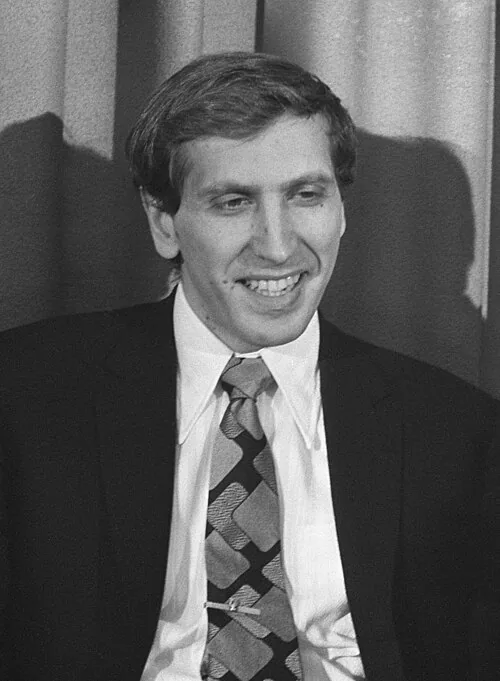
Photograph by All-Pro Reels (Lambeau Field, Green Bay, Wisconsin, October 24, 2021), CC BY-SA 2.0. Background removed for the portrait above. · Portrait © Frans Peeters, CC BY-SA 2.0. The background-removed portrait above is a derivative work and is likewise offered under the same licence. · Photograph by Bert Verhoeff for Anefo (1972), CC0. Background removed for the portrait above.
.jpg)


An estimate is an inference.
Yours can be measured.
Thirty questions, scored against general-population benchmarks. Your score, your percentile, your ability breakdown and a printable IIF certificate.
Find your IQ score now! →