



What was William James Sidis’ IQ?
A number from a 1946 book, sourced to a sister’s secondhand account — not a test.

The “250 to 300” IQ attached to William James Sidis comes from a single 1946 book, reporting what his sister said a psychologist once told her, years after Sidis had died. No test record, and no named psychologist, has ever surfaced.
William James Sidis’ estimated IQ
- Passed Harvard’s entrance examinations at 9, in 1907; Harvard deferred admission on grounds of maturity rather than ability.
- Formally enrolled at Harvard in 1909, aged 11, its youngest student on record, and lectured the Harvard Mathematical Club on four-dimensional bodies in January 1910, before roughly 100 professors and advanced students.
- Graduated Harvard cum laude in 1914, aged 16, with a transcript of mixed A, B and C grades.
- On a 1933 New York Civil Service examination he placed 254th on the resulting hiring list — a rank, not a score, but plausibly the real seed of the “254” figure that later hardened into “250 to 300.”
No childhood IQ test with a surviving numeric score exists for Sidis. This range reflects a genuinely exceptional, well-documented pattern of early academic acceleration — Harvard admission and a public mathematics lecture at 11 — while stopping well short of the unsupported 250–300 figure.
- Born
- 1 April 1898, New York City
- Died
- 17 July 1944, Boston
- Field
- Mathematics, linguistics
- Education
- Harvard University (B.A., cum laude, 1914, aged 16)
- Known for
- Youngest student admitted to Harvard; retreat from public life
What an IQ of 170–200 actually means
Set the claim aside for a moment. If someone genuinely scored in this range, here is what that would represent.
Average is 100 by construction, and about two-thirds of people fall between 85 and 115. Take the test to place your own score on this scale.
| Score range | Classification | Share of people | What it indicates |
|---|---|---|---|
| 85 – 114 | Average | ~68% | The range most people fall into. |
| 115 – 129 | Above average | ~13.6% | Roughly one person in seven. |
| 130 – 144 | Gifted | ~2% | The threshold most high-IQ societies use. |
| Above 144 | Highly gifted | ~0.1% | Figures above this range are extrapolated from the curve rather than measured. |
Percentages are approximate and describe a normal distribution. The same number means different things on tests with different standard deviations.
Thirty questions gives you a measured position on this exact scale — your score, your percentile and the ability breakdown behind it.
Find out in 30 minutes →Who William James Sidis was
William James Sidis was born in New York City in 1898, the son of psychologist Boris Sidis, who raised him under an intensive early-education regimen. Reports that he was reading The New York Times at eighteen months come from his father’s own accounts and were never independently verified.
He entered Harvard as a special student in 1909 at 11, the youngest in its history, and graduated cum laude in 1914 at 16. He lectured Harvard’s Mathematical Club on four-dimensional bodies in 1910, an event covered in the press at the time.
After Harvard, he taught briefly, attended Harvard Law School without finishing, was arrested at a 1919 socialist rally, and spent the rest of his life avoiding publicity in a series of ordinary clerical jobs. He died in Boston in 1944, aged 46.
 By Elora Mercer, Celebrity Research WriterFigures checked by Leon Falkner, Data & Research Analyst
Reviewed by Aarav Vardhan, Editor-in-Chief · Last reviewed August 2026

William James Sidis: the documented record
The estimate above rests on this record. Every entry here is a matter of public fact, which is more than can be said for the number itself.
- 1898Born in New York City.
- 1907Passes Harvard’s entrance exams at 9; admission deferred.
- 1909Formally enrols at Harvard at 11.
- 1910Lectures the Harvard Mathematical Club on four-dimensional bodies.
- 1914Graduates Harvard cum laude at 16.
- 1933Places 254th on a New York Civil Service hiring-list examination.
- 1944Dies in Boston, aged 46.
- 1946Sperling’s Psychology for the Millions publishes the “250 to 300” claim, sourced to Sidis’s sister.
Where the 250–300 figure came from
Following a claim back to its first appearance is the part almost nobody does — and it is what most people are actually asking.
Sidis is a genuinely difficult case for this site’s method, because the real achievement record — Harvard admission at 9, formal enrolment at 11, a mathematics lecture praised by MIT professor Daniel Comstock the same year — is itself extraordinary, extraordinary enough that a number in the 250–300 range does not sound obviously absurd next to it, the way it would for most other profiles here. That is exactly why the sourcing matters more, not less.
Researchers note that Sidis’s mother and sister had a reputation for exaggerated statements about him, and the 250–300 figure is precisely the kind of claim that reputation should make readers cautious about. Amy Wallace’s 1986 biography The Prodigy repeats Sperling’s figure but is not its source — it is forty years too late for that.
The more grounded number in the record is the 254th-place ranking on a 1933 civil-service hiring list, which Sidis himself described as “not so encouraging.” It is easy to see how a rank of 254 on a list, mentioned in the same family conversations that produced the IQ claim, could calcify into “IQ 254” and then round outward to “250 to 300” — a plausible, human path from a real fact to an invented one.
How we read a number →The origin of the “250 to 300” figure, sourced to Sidis’s sister Helena’s secondhand account, two years after his death.
Corroborated by later biographical accounts, including MIT professor Daniel Comstock’s praise.
Repeats Sperling’s 1946 figure; not its original source.
No named psychologist, test date or score sheet has ever been located for the claimed test.
The sources behind our estimate
The figures that circulate for William James Sidis, what we were able to confirm, and where the two diverge.
An IQ of 250 to 300 — sometimes reported as the highest ever recorded — is the figure most associated with William James Sidis.
The figure comes from Abraham Sperling’s 1946 book Psychology for the Millions, which reports that Sidis’s sister, Helena, told the author that a psychologist had once tested her brother and put his IQ “between 250 and 300.” No psychologist is named, no test date is given, and no record of any such test has ever been located. Sidis had died two years before the book’s publication and never spoke of it himself.
A documented pattern of early achievement supports the lower end of this range. Nothing supports the upper end except one family member’s account, printed after Sidis was no longer alive to confirm or deny it.
Want a number that does hold up? Every figure on this page is somebody’s claim. Take the 30-question test and get a percentile you can check rather than a figure you have to trust.
William James Sidis — frequently asked
What was William James Sidis’s IQ?
No verified test score exists. The commonly cited “250 to 300” comes from a 1946 book reporting his sister’s secondhand account of an unnamed psychologist’s assessment, given after Sidis had died.
Did Sidis actually take an IQ test?
No record confirms one. The closest documented figure is his 254th-place ranking on a 1933 civil-service exam list — a rank, not a score.
How old was Sidis when he entered Harvard?
He passed the entrance exams at 9 in 1907, though Harvard deferred his admission; he formally enrolled in 1909 at 11, its youngest student on record.
Is 250–300 the highest IQ ever recorded?
It is often described that way, but since no verified test produced it, it cannot be compared meaningfully to any scored result.
What happened to Sidis after Harvard?
He avoided public life, working ordinary clerical jobs and publishing occasional academic work under pseudonyms, until his death in 1944 at 46.
Why does this page still give a high range, if the top figure isn’t real?
Because his documented early-academic acceleration — Harvard admission and a math lecture to professors at 11 — is genuinely exceptional, even without the unsupported 250–300 claim.
How does my IQ compare with William James Sidis?
You can find out in about fifteen minutes. The IQ Metrics assessment is 30 questions, scored on the same 100-mean scale used throughout this page, so your result and the estimate above are at least expressed in the same units — one measured, one inferred. Once you have a number, the leaderboard shows where it would sit, and how we score and norm it explains the benchmarking.
Where does this estimate come from?
From the documented record rather than a test — the method is named above and set out in full under how we read a number. Compare it against the other writers profiles, starting with Voltaire.
- Take the 30-question IQ test — get a measured score and percentile of your own
- Average IQ by country — how the scale behaves across populations
- How IQ Metrics scores its assessment — the method behind our own number
- More on how IQ testing works — reliability, error and what a score can and cannot say
- More writers profiles — same field, same method
More writers


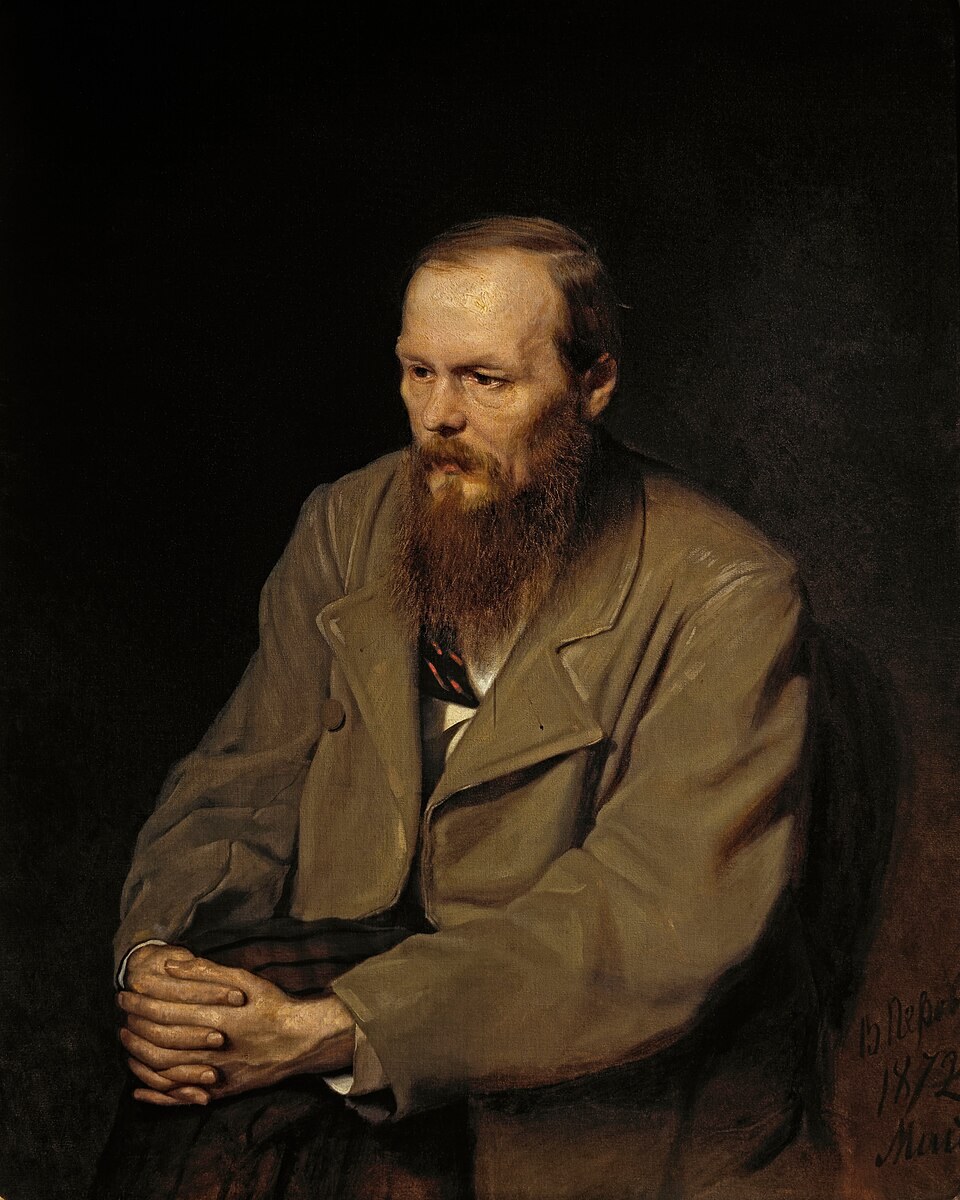
Photograph by Friedrich Hermann Hartmann (c. 1875), public domain. Background removed for the portrait above. · Photograph by Martin Kraft (Frankfurt Book Fair, October 2024), CC BY-SA 4.0. Background removed for the portrait above. · Portrait by Vasily Perov (1872), Tretyakov Gallery, via Wikimedia Commons, public domain.

.jpg)

An estimate is an inference.
Yours can be measured.
Thirty questions, scored against general-population benchmarks. Your score, your percentile, your ability breakdown and a printable IIF certificate.
Find your IQ score now! →