



What was Truman Capote’s IQ?
Capote said a university clinic called him a genius and named no number; the 215 online turns up later.

No IQ test result for Truman Capote has been published: he said in 1957 that a university clinic tested him around age twelve and called him a genius, but he never gave a number, and the 215 attached to his name online cites no report. What is documented is a self-taught reader, two O. Henry Awards by 1948 and no college, which supports an estimated IQ of 135–150.
Truman Capote’s estimated IQ
- Wikipedia and New World Encyclopedia both say he taught himself to read and write before his first year of school; he told the Paris Review in 1957 that he began writing at about ten or eleven, and Wikipedia records recognition from the Scholastic Art & Writing Awards in 1936.
- A copy boy in the art department of The New Yorker from 1942, while finishing at the Franklin School in New York; his formal education ended with that graduation in 1942 and he never attended college.
- “Miriam” (Mademoiselle, June 1945) won an O. Henry Award for Best First-Published Story in 1946 and led Random House to contract him for a novel, Other Voices, Other Rooms (1948).
- A second O. Henry Award, a first prize in 1948, for “Shut a Final Door” (The Atlantic Monthly).
- By his own 1957 account, a psychiatric study clinic at a university in the East tested his IQ when he was about twelve and he came home “a genius”; no score, clinic name or examiner is given.
No test score anchors this range. The clinic result is Capote’s own recollection, told about two decades later without a figure, and a childhood result says little about adult ability. His record also lacks ranked results: he left school in 1942 with no college, so there are no degrees or examinations to rank him against, and a literary reputation is not a measure of reasoning. Truman Capote’s estimated IQ of 135–150 is an inference from a career, not a score.
- Born
- September 30, 1924, Touro Infirmary, New Orleans, Louisiana (as Truman Streckfus Persons)
- Died
- August 25, 1984, Los Angeles, California
- Schooling
- Trinity School and St. Joseph Military Academy; Greenwich High School, Connecticut; Franklin School, New York (graduated 1942)
- College
- None — formal education ended in 1942
- First job
- Copy boy, art department, The New Yorker, from 1942 for about two years
- Prizes
- O. Henry Award, Best First-Published Story (1946, “Miriam”); O. Henry first prize (1948, “Shut a Final Door”)
- Best-known works
- Other Voices, Other Rooms (1948); Breakfast at Tiffany’s (1958); In Cold Blood (1966)
- Childhood IQ test
- By his own 1957 account, at a university clinic in the East around age twelve; no score appears in any source opened
What an IQ of 135–150 actually means
Set the claim aside for a moment. If someone genuinely scored in this range, here is what that would represent.
Average is 100 by construction, and about two-thirds of people fall between 85 and 115. Take the test to place your own score on this scale.
| Score range | Classification | Share of people | What it indicates |
|---|---|---|---|
| 85 – 114 | Average | ~68% | The range most people fall into. |
| 115 – 129 | Above average | ~13.6% | Roughly one person in seven. |
| 130 – 144 | Gifted | ~2% | The threshold most high-IQ societies use. |
| Above 144 | Highly gifted | ~0.1% | Figures above this range are extrapolated from the curve rather than measured. |
Percentages are approximate and describe a normal distribution. The same number means different things on tests with different standard deviations.
Thirty questions gives you a measured position on this exact scale — your score, your percentile and the ability breakdown behind it.
Find out in 30 minutes →Who Truman Capote was
Truman Capote was born Truman Streckfus Persons on September 30, 1924, at Touro Infirmary in New Orleans, and spent part of his childhood in Monroeville, Alabama. Wikipedia and New World Encyclopedia both say he taught himself to read and write before his first year of school, and the Encyclopedia of Alabama says he was allowed to use the household typewriter there. He told the Paris Review in 1957 that he began writing at about ten or eleven, living near Mobile, and Wikipedia records recognition from the Scholastic Art & Writing Awards in 1936. His schooling moved around: Trinity School and St. Joseph Military Academy, then Greenwich High School in Connecticut, where he wrote for the literary journal and the school newspaper, and finally the Franklin School in New York, from which he graduated in 1942. In the same interview he said he despised school, or rather schools, because he was always changing from one to another.
The Franklin School was the end of his formal education. Wikipedia quotes Capote as saying he was determined never to set a studious foot inside a college classroom, and from 1942 he worked as a copy boy in the art department of The New Yorker, a job he held for about two years. “Miriam” appeared in Mademoiselle in June 1945 and won an O. Henry Award for Best First-Published Story in 1946; it also drew the attention of the publisher Bennett Cerf and led to a Random House contract for a novel, Other Voices, Other Rooms (1948). In 1948 his story “Shut a Final Door” (The Atlantic Monthly) took an O. Henry first prize.
The books that followed, as the Encyclopedia of Alabama lists them, include A Tree of Night (1949), The Grass Harp (1951), The Muses Are Heard (1956), Breakfast at Tiffany’s (1958), In Cold Blood (1966), A Christmas Memory (1966), House of Flowers (1968), The Dogs Bark (1973) and Music for Chameleons (1980); Answered Prayers: The Unfinished Novel appeared in 1987 and Summer Crossing in 2005, both after his death. He died on August 25, 1984, in Los Angeles. For the IQ question the point is the shape of the career rather than its size: a talent for prose that was visible in childhood, was recognized in print by his early twenties, and was built without a university.
 By Elora Mercer, Celebrity Research WriterFigures checked by Leon Falkner, Data & Research Analyst
Reviewed by Aarav Vardhan, Editor-in-Chief · Last reviewed August 2026
.jpg)
Truman Capote: the documented record
The estimate above rests on this record. Every entry here is a matter of public fact, which is more than can be said for the number itself.
- 1924Born September 30 in New Orleans as Truman Streckfus Persons.
- 1936Receives recognition for early work from the Scholastic Art & Writing Awards (Wikipedia).
- c. 1936–37At about twelve, by his own 1957 account, sent to a psychiatric study clinic at a university in the East, where his IQ is tested; no score is given.
- 1942Graduates from the Franklin School in New York and starts as a copy boy at The New Yorker.
- 1945“Miriam” is published in Mademoiselle in June.
- 1946“Miriam” wins an O. Henry Award for Best First-Published Story.
- 1948Publishes Other Voices, Other Rooms; “Shut a Final Door” wins an O. Henry first prize.
- 1957Tells the Paris Review (issue 16, Spring–Summer) about the clinic test, without a number.
- 1958Breakfast at Tiffany’s is published.
- 1966In Cold Blood is published.
- 1984Dies August 25 in Los Angeles.
Where the 215 figure came from
Following a claim back to its first appearance is the part almost nobody does — and it is what most people are actually asking.
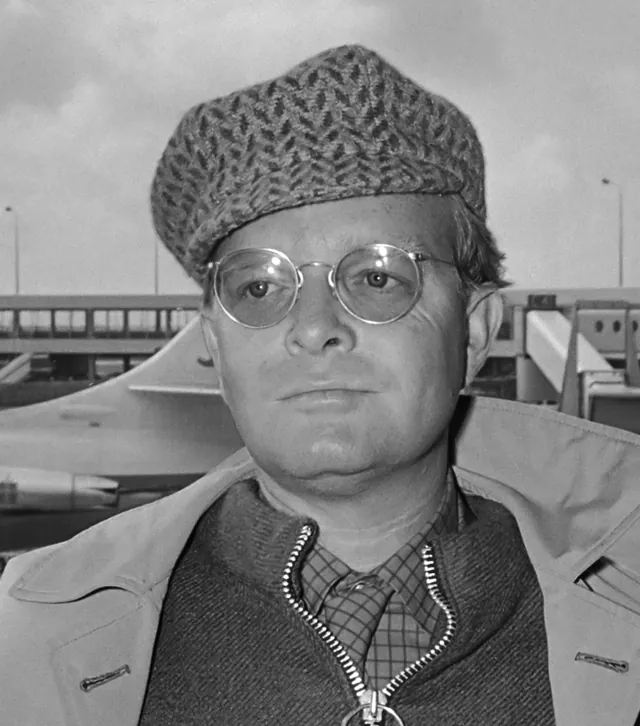
Truman Capote’s IQ is quoted at one height, 215, and no page that states it shows a test report. PopMatters, in an article by Dimitris Passas dated March 20, 2024, says he “famously scored 215 on IQ tests” and gives no source for the claim. SwissEduc’s reading-list page on Capote repeats the number in a paragraph it credits to The Writer’s Almanac: he applied to Trinity School in New York, took an IQ test as the entrance exam, and scored 215, “the highest in the school’s history”. Neither page names the test, the date, the examiner or any document. It is the pattern this site traces across celebrity IQ numbers: a vivid number, a plausible school, and a citation that ends at the next website.
The only first-hand account of a Truman Capote IQ test contains no number. In the Paris Review’s interview with him by Pati Hill (issue 16, Spring–Summer 1957), asked about early encouragement, Capote said that when he was around twelve the principal of his school told his family that, in his opinion and the faculty’s, Capote was “subnormal” and should go to a special school. His family, to prove otherwise, sent him to a psychiatric study clinic at a university in the East, where he “had my I.Q. inspected” and came home a genius, “so proclaimed by science”. He names no clinic, no examiner, no school and no score, and he does not mention Trinity School or an entrance exam. Wikipedia places his time at Trinity in 1932 and New World Encyclopedia in 1935, and neither mentions a test, so the entrance-exam story and the clinic story may be one event retold or two; the pages opened do not settle it.
What was Truman Capote’s IQ on the scales of his day, and could it have been 215? Only as a child’s number on a retired formula. IQ began as a quotient, an estimated mental age divided by chronological age and multiplied by 100 (why that ratio was replaced), so a young child whose mental age ran twice his calendar age scored 200. Modern tests place scores on a normal curve with a mean of 100 and a standard deviation of 15, where 215 sits about 7.7 standard deviations up, well past the range in which a test can report a score with any confidence. A childhood ratio score is not an adult IQ, and in Capote’s telling there is no score to convert.
The documented record supports a range far below 215. Truman Capote’s estimated IQ of 135–150 sits slightly above Ernest Hemingway (128–145), who also moved from high school into a newspaper job, and below Mark Twain (145–165), who left school after the fifth grade to become a printer’s apprentice; all three estimates rest on achievement, not a test. For Capote the evidence is early and consistent: a child who taught himself to read and write before school, a story that won an O. Henry Award when he was in his early twenties, and a novel in 1948. That fits a score around 140, well into the gifted range. Whether he was a genius is a verdict on his work; for where the usual cut-offs sit, see what genius-level IQ means.
How we read a number →Capote’s own account: around twelve, the principal and faculty called him “subnormal”, his family sent him to a psychiatric study clinic at a university in the East where he “had my I.Q. inspected”, and he came home a genius “so proclaimed by science”. No number, clinic, examiner or school is named. Also: he began writing at about ten or eleven near Mobile, and despised school, or schools, because he kept changing.
Birth name and place, death date and place, the schools in order, the 1942 Franklin School graduation, the New Yorker copy-boy job, the quote about never entering a college classroom, “Miriam” in Mademoiselle (June 1945) and its 1946 O. Henry Award for Best First-Published Story, the 1948 first prize for “Shut a Final Door”, the Random House contract, and the 1936 Scholastic recognition. No intelligence test is mentioned.
Self-taught reading and writing before first grade; Trinity School dated to 1935 (Wikipedia says 1932); Greenwich High School; the two O. Henry Awards (1946 and 1948); death on August 25, 1984 in Los Angeles. No intelligence test is mentioned.
Birth in New Orleans on September 30, 1924; the household typewriter in Monroeville; Greenwich High School and the Franklin School; the New Yorker copy-boy job; the dated list of works used above. No intelligence test is mentioned.
Confirms the identifier is the American writer Truman Capote (1924–1984), a human, born 1924-09-30, died 1984-08-25 in Los Angeles (Q65) — not the 2005 film.
Source of one version of the 215: Capote “famously scored 215 on IQ tests”. It cites no source for the claim; its works-cited list is not tied to that sentence.
Source of the second version: a Trinity School entrance IQ test with a score of 215, “the highest in the school’s history”, in a paragraph credited “from The Writer’s Almanac”. The page gives no link, date or document.
Cross-checks: original IQ as mental age divided by chronological age times 100 (William Stern’s coinage, 1912; Terman’s 1916 Stanford revision), and the modern normal curve with mean 100 and standard deviation 15; Hemingway went to work for The Kansas City Star after high school; Twain left school after the fifth grade to become a printer’s apprentice.
No score appears in the 1957 interview, Wikipedia, New World Encyclopedia or the Encyclopedia of Alabama. The 215 appears only on pages that cite no test report.
The sources behind our estimate
The figures that circulate for Truman Capote, what we were able to confirm, and where the two diverge.
One figure, 215, circulates for the IQ of Truman Capote. PopMatters (an article by Dimitris Passas dated March 20, 2024) says he “famously scored 215 on IQ tests”, and SwissEduc’s reading-list page, in a paragraph it credits to The Writer’s Almanac, says he scored 215 on a Trinity School entrance exam, the highest in the school’s history.
No document gives a score for Truman Capote, and Capote never stated one. In the Paris Review interview of Spring–Summer 1957 (interviewer Pati Hill) he said that at about twelve his family sent him to a psychiatric study clinic at a university in the East, where he “had my I.Q. inspected” and came home a genius, “so proclaimed by science”. He names no clinic, no examiner and no number. PopMatters cites no source for 215; SwissEduc credits The Writer’s Almanac, with no link, and moves the test to a Trinity School entrance exam. Wikipedia, New World Encyclopedia and the Encyclopedia of Alabama do not mention a test.
A 65-point gap separates the top of this site’s range from the 215. On the modern scale (mean 100, standard deviation 15) a 215 is about 7.7 standard deviations above average; it is the kind of number an old childhood ratio score could produce, and Capote’s own account contains no figure at all.
Want a number that does hold up? Every figure on this page is somebody’s claim. Take the 30-question test and get a percentile you can check rather than a figure you have to trust.
Truman Capote — frequently asked
What is Truman Capote’s IQ?
No published test score exists for Truman Capote’s IQ, so any exact number is unsupported. He said in 1957 that a university clinic found him a genius around age twelve but gave no figure, and the 215 online cites no report. This site’s estimated IQ for him is 135–150, an inference from his career, not a result.
Did Truman Capote take an IQ test?
By his own account, yes. In a 1957 Paris Review interview he said that around age twelve his family sent him to a psychiatric study clinic at a university in the East, where his IQ was tested and he was pronounced a genius. He named no clinic and no examiner, and no record or score has been found.
How high was Truman Capote’s IQ, and where does 215 come from?
No source shows how high Truman Capote’s IQ was. The 215 appears on PopMatters, which gives no source, and on a school reading-list page that credits The Writer’s Almanac and ties it to a Trinity School entrance exam. Capote’s own 1957 account describes a clinic test and gives no number, so 215 is unverified.
Was Truman Capote a genius?
Capote said in 1957 that a university clinic had proclaimed him a genius, and his record shows early, documented talent: two O. Henry Awards by 1948 and a novel that year. “Genius” is a verdict on his work, though, not a test result; this site’s IQ estimate for him is 135–150, inferred from that record.
Did Truman Capote go to college?
No. After graduating from the Franklin School in New York in 1942, Capote started as a copy boy in the art department of The New Yorker and never attended college; he later said he was determined never to enter a college classroom. His estimated IQ therefore rests on his work, not on a degree.
How old was Truman Capote when he started writing?
Capote told the Paris Review in 1957 that he began writing at about ten or eleven, near Mobile, Alabama. Wikipedia and New World Encyclopedia say he taught himself to read and write before starting school, and Wikipedia records Scholastic Art & Writing Awards recognition in 1936, when he was eleven or twelve.
How does Truman Capote’s estimated IQ compare with Hemingway’s or Twain’s?
This site’s estimate for Capote, 135–150, sits slightly above Ernest Hemingway’s 128–145 and below Mark Twain’s 145–165, and the ranges overlap. Like Hemingway, Capote moved from school into a newspaper or magazine job, and none of the three has a test score; each estimate rests on achievement.
How does my IQ compare with Truman Capote?
You can find out in about fifteen minutes. The IQ Metrics assessment is 30 questions, scored on the same 100-mean scale used throughout this page, so your result and the estimate above are at least expressed in the same units — one measured, one inferred. Once you have a number, the leaderboard shows where it would sit, and how we score and norm it explains the benchmarking.
Where does this estimate come from?
From the documented record rather than a test — the method is named above and set out in full under how we read a number. Compare it against the other writers profiles, starting with Voltaire.
- Take the 30-question IQ test — get a measured score and percentile of your own
- Average IQ by country — how the scale behaves across populations
- How IQ Metrics scores its assessment — the method behind our own number
- More on how IQ testing works — reliability, error and what a score can and cannot say
- More writers profiles — same field, same method
More writers
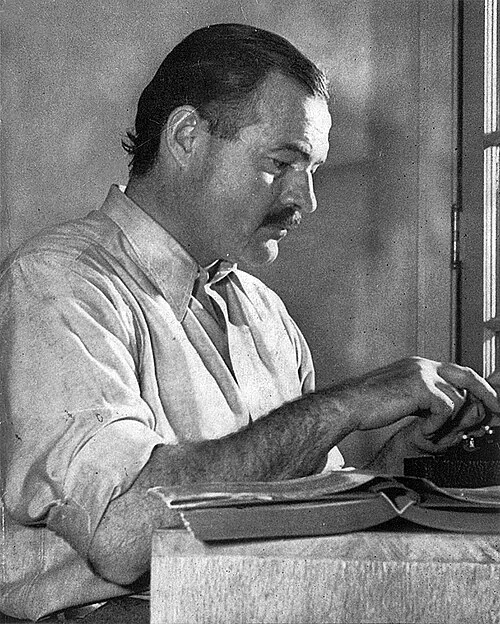
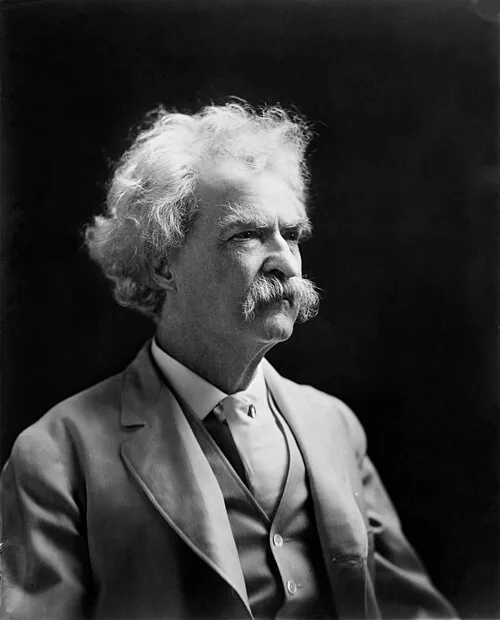
Photograph by Lloyd Arnold, public domain. Background removed for the portrait above. · Photograph, 1907, via the Library of Congress (digital ID cph.3a08820), public domain. Background removed for the portrait above. · Photograph by Napoleon Sarony (1882), Library of Congress, public domain.
An estimate is an inference.
Yours can be measured.
Thirty questions, scored against general-population benchmarks. Your score, your percentile, your ability breakdown and a printable IIF certificate.
Find your IQ score now! →