
IIF Certified Assessment
Start IQ Test
IIF Certified Assessment
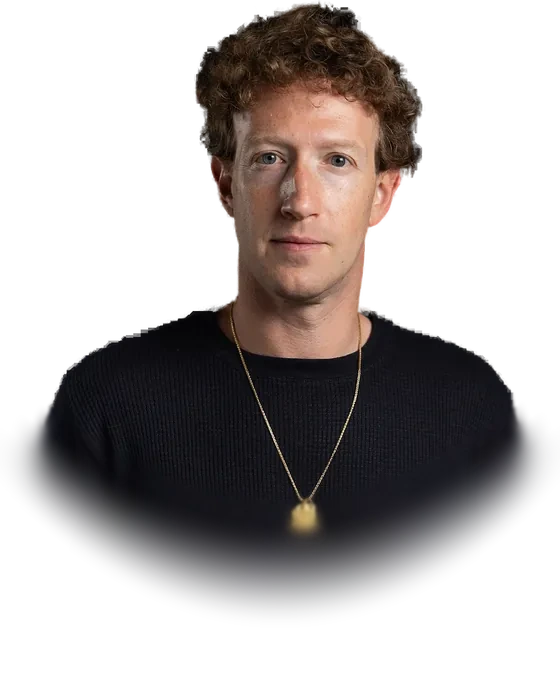
The figure of 152 is quoted on hundreds of pages and attributed on none of them. What is on record is a classics-heavy schooling and two years of a Harvard degree he did not finish.
Every input here is a selection decision made by an admissions office, or a product built by a teenager. Both say something. Neither is a test.
Set the claim aside for a moment. If someone genuinely scored in this range, here is what that would represent.
Average is 100 by construction, and about two-thirds of people fall between 85 and 115. Take the test to place your own score on this scale.
| Score range | Classification | Share of people | What it indicates |
|---|---|---|---|
| 85 – 114 | Average | ~68% | The range most people fall into. |
| 115 – 129 | Above average | ~13.6% | Roughly one person in seven. |
| 130 – 144 | Gifted | ~2% | The threshold most high-IQ societies use. |
| Above 144 | Highly gifted | ~0.1% | Figures above this range are extrapolated from the curve rather than measured. |
Percentages are approximate and describe a normal distribution. The same number means different things on tests with different standard deviations.
Thirty questions gives you a measured position on this exact scale — your score, your percentile and the ability breakdown behind it.
Find out in 30 minutes →Mark Zuckerberg was born in White Plains, New York in 1984 and learned to program on an Atari BASIC set-up at home. Before leaving school he had built a messaging system for his father’s dental practice and, with a classmate, the Synapse music player.
At Harvard he studied psychology alongside computer science — a detail usually left out of the founder story, and the more interesting half of it. He launched TheFacebook from his dormitory in February 2004 and left the university later that year without completing his degree.
What follows is the most-documented business career of his generation, and none of it involves a cognitive test. That is the whole point of this page: the record is enormous, and it contains no number.
The estimate above rests on this record. Every entry here is a matter of public fact, which is more than can be said for the number itself.
Following a claim back to its first appearance is the part almost nobody does — and it is what most people are actually asking.

Zuckerberg is a useful case because the gap between what is known and what is asserted is so wide. His education is a matter of public record. His IQ is not a matter of any record at all.
The 152 has the shape of a number invented to fit a reputation. It is high enough to sound exceptional, low enough to sound plausible, and it arrived after Facebook was already worth billions — not before. Numbers that appear only after somebody becomes famous are describing the fame, not the person.
There is a second problem specific to founders. Company value is not a cognitive measurement: it reflects timing, capital, network effects and a great deal of luck. Reading an IQ back out of a valuation is circular, and it is what almost every figure in this category actually does.
How we read a number →Studied psychology and computer science; left without completing the degree. Received an honorary degree in 2017, which is not an academic qualification.
Classical languages formed a substantial part of his coursework. The strongest documented input to the estimate above.
A machine-learning music player written with a classmate and released free. Reported acquisition interest was never completed.
Searched biographies, interviews, court filings from the 2010s litigation, and school records reporting. Nothing.
Source URLs and first-appearance date pending audit.
No original could be located. The number circulates without attribution.
The figures that circulate for Mark Zuckerberg, what we were able to confirm, and where the two diverge.
152 is the number that circulates. It appears on celebrity-IQ lists, in quiz apps and in news aggregators, always stated flatly and never sourced.
We found no evidence that Mark Zuckerberg has ever taken or published an IQ test. He has not claimed a score, no biographer reports one, and no school record has been published. The 152 has no origin document that we could locate.
Two clusters, 137 and 152, with no reasoning attached to either. A spread that narrow across so many pages is a sign of copying, not of measurement.
Want a number that does hold up? Every figure on this page is somebody’s claim. Take the 30-question test and get a percentile you can check rather than a figure you have to trust.
No verified score exists. The 152 that circulates has no traceable source. Our 135–145 range is an estimate inferred from his documented academic record, not a measurement.
There is no public record of one. He has never claimed a score, and no biography or interview we could find reports a result.
No original source could be located. It appears on aggregator pages that cite each other, which is the usual pattern for celebrity IQ numbers.
No. He enrolled in 2002 to study psychology and computer science and left in 2004 to work on Facebook full time. His 2017 Harvard degree was honorary.
Getting admitted does; leaving does not. Admission is a selection signal. Departure is a decision about opportunity cost, and in 2004 his was unusually large.
No. Valuations reflect timing, capital and network effects as much as ability. Inferring a score from a share price is circular reasoning, and it is what most figures in this category rest on.
You can find out in about fifteen minutes. The IQ Metrics assessment is 30 questions, scored on the same 100-mean scale used throughout this page, so your result and the estimate above are at least expressed in the same units — one measured, one inferred. Once you have a number, the leaderboard shows where it would sit, and how we score and norm it explains the benchmarking.
From the documented record rather than a test — the method is named above and set out in full under how we read a number. Compare it against the other business & tech profiles, starting with Steve Jobs.


Portrait © Matthew Yohe, CC BY-SA 3.0. The background-removed portrait above is a derivative work and is likewise offered under the same licence. · Portrait © Debbie Rowe / The Royal Society, CC BY-SA 3.0. The background-removed portrait above is a derivative work and is likewise offered under the same licence. · Portrait by Christopher Smith, U.S. Department of Health and Human Services — a work of the U.S. federal government, public domain. Background removed for the portrait above.
Thirty questions, scored against general-population benchmarks. Your score, your percentile, your ability breakdown and a printable IIF certificate.
Find your IQ score now! →The assessment costs nothing and you always get a real result. Upgrades add precision, analysis and a certificate — never access to the test itself.
Whatever you paid comes off the next tier for 30 days. Start small without losing the money.
Not what you expected? Full refund, no questions, no form to hunt for.
Prices adjust to your country automatically, so the certificate is reachable outside high-income markets.
Coming later: an annual membership (~$89/year) for unlimited retests, practice sets and progress tracking. Monthly billing is deliberately not offered — a once-a-year assessment does not justify a monthly charge, and it would churn.


.jpg)

.jpg)
