
IIF Certified Assessment
Start IQ Test
IIF Certified Assessment
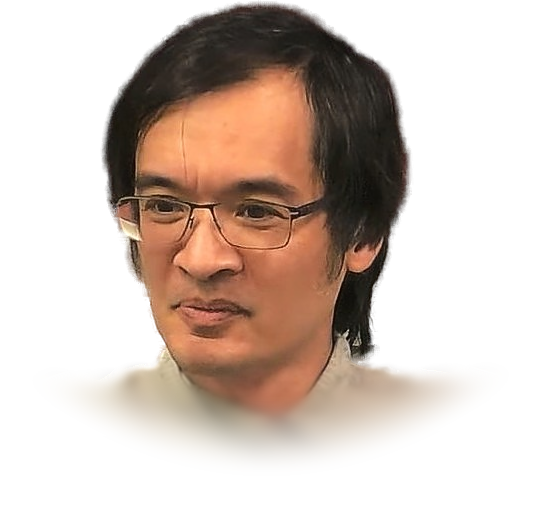
Almost every enormous IQ number in circulation is invented. Tao’s is not — which makes it the most interesting one here, because it is still wrong.
A childhood SAT result anchors this better than almost any other page in this section, but converting an eight-year-old’s score into an adult deviation IQ requires assumptions no one can check. The range is wide on purpose.
Set the claim aside for a moment. If someone genuinely scored in this range, here is what that would represent.
Average is 100 by construction, and about two-thirds of people fall between 85 and 115. Take the test to place your own score on this scale.
| Score range | Classification | Share of people | What it indicates |
|---|---|---|---|
| 85 – 114 | Average | ~68% | The range most people fall into. |
| 115 – 129 | Above average | ~13.6% | Roughly one person in seven. |
| 130 – 144 | Gifted | ~2% | The threshold most high-IQ societies use. |
| Above 144 | Highly gifted | ~0.1% | Figures above this range are extrapolated from the curve rather than measured. |
Percentages are approximate and describe a normal distribution. The same number means different things on tests with different standard deviations.
Thirty questions gives you a measured position on this exact scale — your score, your percentile and the ability breakdown behind it.
Find out in 30 minutes →Terence Tao was born in Adelaide in 1975 to Hong Kong immigrant parents. He was taking university mathematics courses at nine and competing at the International Mathematical Olympiad at ten, winning bronze, silver and gold in successive years.
He completed his master’s degree at Flinders University at sixteen and his doctorate at Princeton under Elias Stein at twenty-one. UCLA made him a full professor at twenty-four. His work is unusually broad for a modern mathematician, spanning harmonic analysis, partial differential equations, combinatorics and number theory.
He is best known outside the field for the Green–Tao theorem, proved with Ben Green in 2004, which established that the prime numbers contain arithmetic progressions of any finite length. He received the Fields Medal in 2006.
The estimate above rests on this record. Every entry here is a matter of public fact, which is more than can be said for the number itself.
Following a claim back to its first appearance is the part almost nobody does — and it is what most people are actually asking.

This page exists because Tao is the exception that proves the rule. The 230 is not an invention — it traces to a named researcher, a published longitudinal study and a documented test result at age eight. In a section largely occupied by numbers with no origin at all, that is remarkable.
What went wrong is a scale conversion, not a fabrication. A deviation IQ is defined by where you sit among people your own age: 145 is about one in a thousand, 160 about one in thirty thousand, and the numbers get thin very fast above that. A deviation IQ of 230 would describe roughly one person in every few trillion, which is more people than have ever lived. No test has items that discriminate at that level, so no test can return that score.
A ratio IQ has no such ceiling. An eight-year-old answering questions calibrated for sixteen-year-olds scores 200 by construction, and Tao at eight was scoring 760 on the SAT mathematics paper — a result that would place an average university applicant near the top of their cohort. The childhood estimate was a fair description of that. It is simply not the same quantity as an adult IQ.
The same confusion inflates Steve Wozniak’s self-reported childhood figure. Compare also Richard Feynman, who was tested as an adolescent on a deviation-style scale and returned 125 — the number this section is most often asked to explain away. Feynman’s 125 and Tao’s 230 are not measurements of the same thing.
How we read a number →The longitudinal study that is the origin of the 220–230 figure. It reports a childhood assessment, not an adult deviation IQ.
The result his public reputation rests on.
An externally judged record of contribution, and the strongest single piece of achievement evidence here.
Bronze at ten, silver at eleven, gold at thirteen. Publicly verifiable competition records.
Tao has never published a score and has spoken sceptically about the emphasis placed on precocity. Every adult figure in circulation is extrapolated from the childhood estimate.
The figures that circulate for Terence Tao, what we were able to confirm, and where the two diverge.
That his IQ is 220, 225 or 230, usually presented as the highest verified IQ of any living person.
Unlike almost every other enormous number in circulation, this one is not fabricated. It descends from genuine psychometric work: Miraca Gross tracked exceptionally gifted Australian children and estimated Tao’s childhood IQ in the 220–230 region. That was a ratio-style estimate for a child performing many years beyond his age. Carried forward and reported as an adult deviation IQ, it stops meaning what it meant.
A tight spread, because for once everyone is copying a real source. What they are not copying is the qualification attached to it.
Want a number that does hold up? Every figure on this page is somebody’s claim. Take the 30-question test and get a percentile you can check rather than a figure you have to trust.
No adult test result exists. The widely quoted 220–230 comes from Miraca Gross’s longitudinal study of exceptionally gifted children and describes a childhood assessment, not an adult deviation IQ.
Not on the scale people assume. A deviation IQ of 230 would describe roughly one person in several trillion, and no test has items that discriminate that far out. The figure is a childhood ratio-style estimate.
He is routinely listed that way, but the claim compares a childhood estimate against other people’s adult scores. There is no verified adult figure to rank.
760 on the mathematics section of the SAT at the age of eight, recorded in Gross’s study. That is the anchoring result on this page and it is genuinely extraordinary.
A Princeton doctorate at twenty-one, a full professorship at UCLA at twenty-four, the Green–Tao theorem in 2004, the Fields Medal in 2006 and a Breakthrough Prize in 2015.
Albert Einstein, Nikola Tesla, Stephen Hawking — who said he had no idea what his IQ was — and Richard Feynman, whose documented 125 makes the useful contrast with this page.
You can find out in about fifteen minutes. The IQ Metrics assessment is 30 questions, scored on the same 100-mean scale used throughout this page, so your result and the estimate above are at least expressed in the same units — one measured, one inferred. Once you have a number, the leaderboard shows where it would sit, and how we score and norm it explains the benchmarking.
From the documented record rather than a test — the method is named above and set out in full under how we read a number. Compare it against the other scientists profiles, starting with Albert Einstein.


Portrait © Matthew Yohe, CC BY-SA 3.0. The background-removed portrait above is a derivative work and is likewise offered under the same licence. · Portrait © Debbie Rowe / The Royal Society, CC BY-SA 3.0. The background-removed portrait above is a derivative work and is likewise offered under the same licence. · Portrait by Christopher Smith, U.S. Department of Health and Human Services — a work of the U.S. federal government, public domain. Background removed for the portrait above.
Thirty questions, scored against general-population benchmarks. Your score, your percentile, your ability breakdown and a printable IIF certificate.
Find your IQ score now! →The assessment costs nothing and you always get a real result. Upgrades add precision, analysis and a certificate — never access to the test itself.
Whatever you paid comes off the next tier for 30 days. Start small without losing the money.
Not what you expected? Full refund, no questions, no form to hunt for.
Prices adjust to your country automatically, so the certificate is reachable outside high-income markets.
Coming later: an annual membership (~$89/year) for unlimited retests, practice sets and progress tracking. Monthly billing is deliberately not offered — a once-a-year assessment does not justify a monthly charge, and it would churn.



_(cropped).jpg)

.jpg)
