



What was Napoleon’s IQ?
Cox rated him 135 as a child and 140 as a young adult. Some sites give 145.
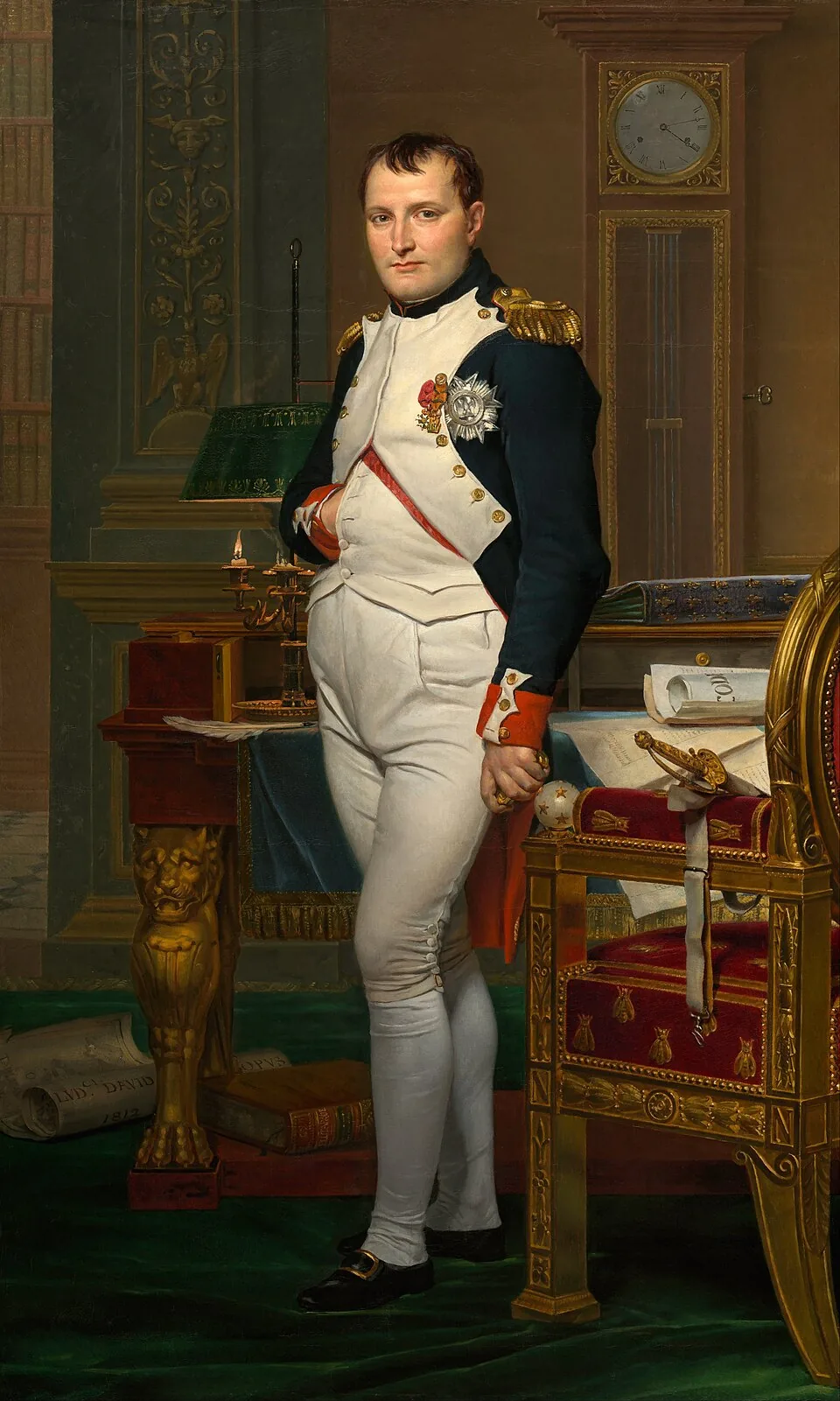
Napoleon’s IQ, by the only study that rated him, was 135 in childhood and 140 in early adulthood. No test exists: Catharine Cox estimated both in 1926 from his documented record. Some online lists give 145, and we found no source for that figure.
Napoleon’s estimated IQ
- Cox’s 1926 study, The Early Mental Traits of Three Hundred Geniuses, gives “AI IQ 135” for childhood and “AII IQ 140” for early adulthood. We re-read it in the archive.org scan on November 21, 2026. Its reliability coefficients for the data are .60 and .75.
- Cox’s text says that at Brienne “in mathematics he held the first place”, and that his Latin and German were poor. Wikipedia adds that he excelled at mathematics at the École militaire and was poor at French and German.
- Warfare History Network reports that he graduated from the École Militaire in September 1785, ranking 42nd in a class of 58. Wikipedia says he finished its two-year course in one year after his father died.
- After the capture of Toulon in December 1793 he was promoted to brigadier general, at age 24 (Wikipedia).
Cox’s method rests on documented childhood and early-career achievement read more than a century later. She rated the reliability of the data at .60 for his childhood estimate and .75 for early adulthood. Treat 130–140 as Cox’s own considered estimate, not a modern test score.
- Born
- August 15, 1769, Ajaccio, Corsica
- Died
- May 5, 1821, Saint Helena
- Height
- About 168 cm (5 ft 6 in), average for his time (Wikipedia)
- Education
- Brienne; École militaire, Paris (graduated September 1785)
- Known for
- Emperor of the French; the Napoleonic Code
- Cox 1926 estimate
- AI IQ 135 (childhood); AII IQ 140 (early adulthood)
- Documented IQ test
- None
What an IQ of 130–140 actually means
Set the claim aside for a moment. If someone genuinely scored in this range, here is what that would represent.
Average is 100 by construction, and about two-thirds of people fall between 85 and 115. Take the test to place your own score on this scale.
| Score range | Classification | Share of people | What it indicates |
|---|---|---|---|
| 85 – 114 | Average | ~68% | The range most people fall into. |
| 115 – 129 | Above average | ~13.6% | Roughly one person in seven. |
| 130 – 144 | Gifted | ~2% | The threshold most high-IQ societies use. |
| Above 144 | Highly gifted | ~0.1% | Figures above this range are extrapolated from the curve rather than measured. |
Percentages are approximate and describe a normal distribution. The same number means different things on tests with different standard deviations.
Thirty questions gives you a measured position on this exact scale — your score, your percentile and the ability breakdown behind it.
Find out in 30 minutes →Who Napoleon was
Who was Napoleon? Napoleon Bonaparte was born Napoleone di Buonaparte on August 15, 1769, in Ajaccio, Corsica, and died on Saint Helena on May 5, 1821. He was Emperor of the French from May 18, 1804, until his first abdication in 1814, with a brief return in 1815 (Wikipedia). See all historical figures on this site.
How did he rise? He moved to mainland France at nine and was commissioned in the artillery in 1785. He came to notice at the siege of Toulon in 1793, took part in the coup of November 1799 and became First Consul. He crowned himself Emperor at Notre-Dame on December 2, 1804.
What is the Napoleonic Code? It is a civil code implemented in March 1804 and called the Napoleonic Code from 1807. Wikipedia says it entrenched equality before the law, religious toleration and secure property rights, and that it influenced law in many parts of the world.
How did it end? He was defeated at Waterloo on June 18, 1815, held in British custody and moved to Saint Helena, where he died in 1821. To try memory and logic puzzles of the kind school tests sample, see the Brain Games.
 By Elora Mercer, Celebrity Research WriterFigures checked by Leon Falkner, Data & Research Analyst
Reviewed by Aarav Vardhan, Editor-in-Chief · Last reviewed November 2026

Napoleon: the documented record
The estimate above rests on this record. Every entry here is a matter of public fact, which is more than can be said for the number itself.
- August 15, 1769Born in Ajaccio, Corsica.
- 1779Moves to mainland France, aged 9.
- September 1785Graduates from the École militaire, 42nd of 58 (Warfare History Network), and is commissioned in the artillery.
- December 1793The siege of Toulon ends in a French victory; he is promoted to brigadier general (Wikipedia).
- November 1799Takes part in the coup that makes him First Consul.
- December 2, 1804Crowns himself Emperor at Notre-Dame.
- June 18, 1815Defeated at Waterloo; later exiled to Saint Helena.
- May 5, 1821Dies on Saint Helena.
- 1926Cox publishes her AI and AII estimates for Napoleon.
Where the 140 figure came from
Following a claim back to its first appearance is the part almost nobody does — and it is what most people are actually asking.
What was Napoleon’s IQ? There is no test. Cox estimated 135 in childhood and 140 in early adulthood in 1926, from his documented record. Our range of 130–140 is built from her estimate. For how such numbers spread, see where celebrity IQ numbers come from.
How smart was Napoleon? Wikipedia says historians agree he was highly intelligent, with an excellent memory, and that he could dictate complex commands in battle while tracking where major units were due to be. His school record was uneven: first in mathematics at Brienne, poor in languages (Cox), and 42nd of 58 at graduation (Warfare History Network).
Was Napoleon a genius? Cox rated about 300 historical figures, and her study is the source of the 135 and 140. On the usual scale (mean 100, SD 15), 135 is about 1 person in 102 and 140 about 1 in 261. See our research on the IQ of historical geniuses, what an IQ of 135 means and what an IQ of 140 means.
Does Cox’s number match what circulates? No. A list page we opened gives 145 and cites neither a test nor Cox, and we found no source for a 142, so we dropped it. Compare Galileo and Newton, also Cox subjects on this site, whose ranges are far higher.
How tall was Napoleon? About 168 cm (5 ft 6 in), which Wikipedia says was average height for his time. The British press mocked him as small, and Alfred Adler’s idea that short people overcompensate gave the “Napoleon complex” its name. Height has nothing to do with the estimate, but people ask about it.
How we read a number →Re-read on November 21, 2026 in the archive.org scan of the text: “AI IQ 135” and “AII IQ 140”, data reliability .60 and .75, and, at Brienne, “in mathematics he held the first place”.
Birth and death, schooling, Toulon and the rise to power, the 1804 coronation, the Napoleonic Code, his height of about 168 cm, the “Napoleon complex” and historians’ view of his intelligence. It gives no IQ.
Reports that he graduated from the École Militaire in September 1785, ranking 42nd in a class of 58.
No Napoleon test exists. One IQ-list page gives 145 and cites no test and no Cox. We found no source for 142.
Confirms the identity (French military leader and Emperor of the French, 1769–1821) used for this page’s structured data.
How this section separates a published test result, a circulating figure and its own estimate.
The sources behind our estimate
The figures that circulate for Napoleon, what we were able to confirm, and where the two diverge.
People search “napoleon iq”, “napoleon bonaparte iq”, “what was napoleon’s iq”, “napoleon iq estimate”, “how smart was napoleon” and “how tall was napoleon”. A figure of 145 appears on at least one IQ-list page we opened, with no test and no mention of Cox.
The 1926 text is publicly archived and readable. We re-read it on November 21, 2026. Catharine Cox’s The Early Mental Traits of Three Hundred Geniuses gives Napoleon an “AI IQ” of 135 and an “AII IQ” of 140. The list page that gives 145 cites neither Cox nor a test.
Cox’s two figures sit five points apart, and the list-page figure sits five points above the second. A few points of drift is what happens when a number is copied without its source.
Want a number that does hold up? Every figure on this page is somebody’s claim. Take the 30-question test and get a percentile you can check rather than a figure you have to trust.
Napoleon — frequently asked
What was Napoleon’s IQ?
There is no test. Catharine Cox’s 1926 study, which we re-read at the source, estimates 135 in childhood and 140 in early adulthood from his record. A list page that gives 145 cites neither Cox nor a test. To see where your own score falls, take the IQ test.
What is the Napoleon IQ estimate?
Cox’s two estimates, 135 and 140, are the only ones we can trace to a study. Ours is a range of 130–140, taken from hers. Both are estimates from a record, not scores from a test.
How smart was Napoleon?
Wikipedia says historians agree he was highly intelligent, with an excellent memory and a talent for organization. His school record was uneven: first in mathematics at Brienne, poor in languages, and 42nd of 58 at graduation. To place 135 to 140 on the scale, use the IQ percentile calculator.
Was Napoleon a genius?
Cox rated him among about 300 historical figures, and 135 to 140 is high: about the 99th to the 99.6th percentile. Genius is a judgment about achievement as much as a number. See the IQ bell curve for where that sits.
How tall was Napoleon?
About 168 cm, or 5 ft 6 in, which Wikipedia says was average for his time. British cartoonists made him look small, and Alfred Adler’s idea that short people overcompensate gave the “Napoleon complex” its name.
Why do online sources give a different number?
Most list pages repeat each other rather than the 1926 text. One we opened gives 145 with no test and no Cox. We found no source for 142.
How reliable is Cox’s estimate for Napoleon?
Cox rated the reliability of the data at .60 for his childhood estimate and .75 for early adulthood. That is moderate, and a reminder that these are estimates, not measurements.
Was Napoleon a good student?
Mixed. Cox’s text says he held first place in mathematics at Brienne, but his Latin and German were poor. He ranked 42nd of 58 at graduation (Warfare History Network).
How does Napoleon compare with other Cox subjects here?
On this site Galileo is 150–185 and Newton is 170–190, both from the same study. Napoleon’s 130–140 is the lowest of the three, and the narrowest.
How does my IQ compare with Napoleon?
You can find out in about fifteen minutes. The IQ Metrics assessment is 30 questions, scored on the same 100-mean scale used throughout this page, so your result and the estimate above are at least expressed in the same units — one measured, one inferred. Once you have a number, the leaderboard shows where it would sit, and how we score and norm it explains the benchmarking.
Where does this estimate come from?
From the documented record rather than a test — the method is named above and set out in full under how we read a number. Compare it against the other historical profiles, starting with Isaac Newton.
- Take the 30-question IQ test — get a measured score and percentile of your own
- Average IQ by country — how the scale behaves across populations
- How IQ Metrics scores its assessment — the method behind our own number
- More on how IQ testing works — reliability, error and what a score can and cannot say
- More historical profiles — same field, same method
More historical
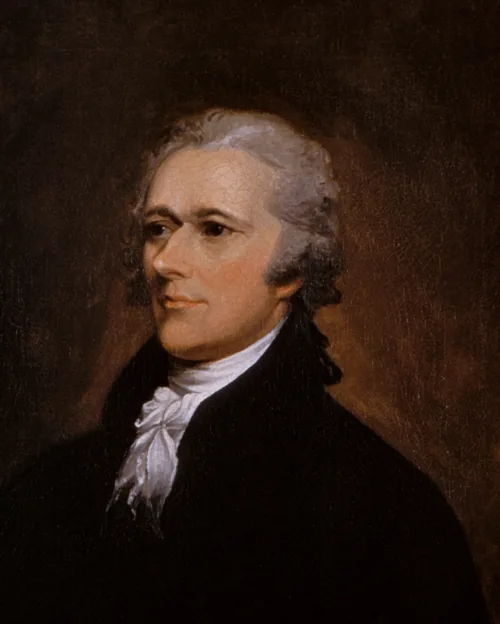
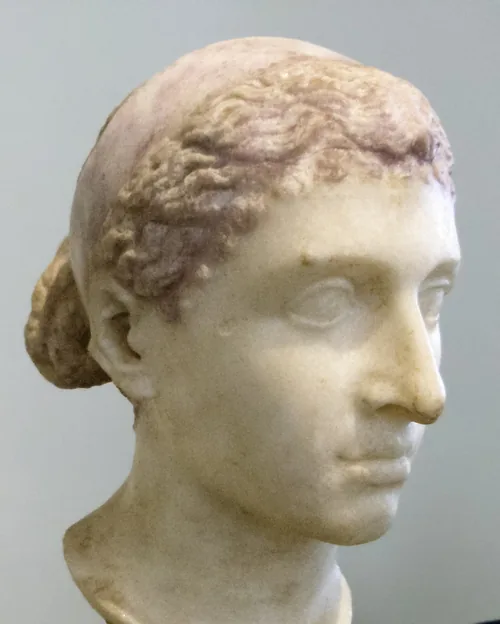
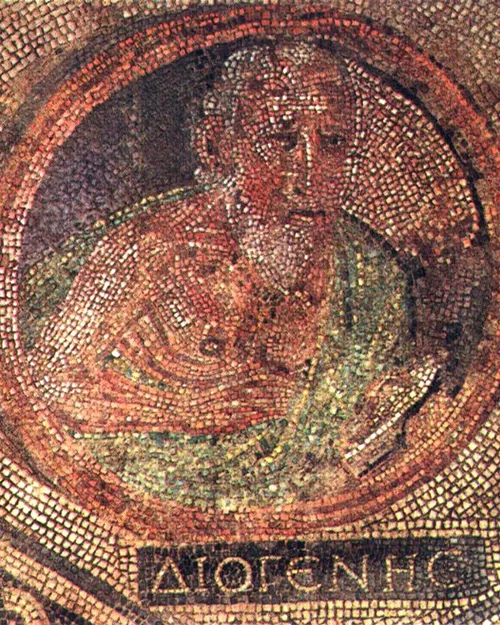
Portrait by John Trumbull (1805; White House Collection; Commons file), public domain, cropped. · Photograph by Louis le Grand (Commons file) of an ancient Roman marble bust identified as Cleopatra VII (about 40–30 BCE; Altes Museum, Berlin), released into the public domain by the photographer, cropped. · Roman floor mosaic of Diogenes of Sinope (2nd or 3rd century CE; from a villa in Cologne; Römisch-Germanisches Museum; Commons file), public domain, cropped.


An estimate is an inference.
Yours can be measured.
Thirty questions, scored against general-population benchmarks. Your score, your percentile, your ability breakdown and a printable IIF certificate.
Find your IQ score now! →