



What is Neymar’s IQ?
A world-record €222 million transfer and Brazil’s all-time scoring record — with no published IQ test behind either one. “Football IQ” describes how he reads a game, not a score from any test.
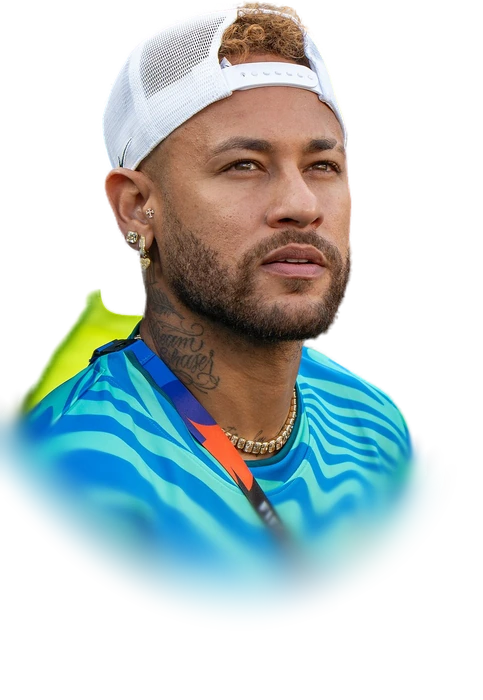
No published IQ test result exists for Neymar (Neymar da Silva Santos Júnior), and no credible number circulates for him either. What’s documented is a €222 million move to Paris Saint-Germain in 2017, still football’s record transfer fee, and Brazil’s all-time scoring record — a career that supports an estimated IQ of about 100–115, the same range this site gives Cristiano Ronaldo and Lionel Messi.
Neymar’s estimated IQ
- A €222 million transfer from Barcelona to Paris Saint-Germain on August 3, 2017 — still football’s largest transfer fee as of 2026, nearly a decade later — following a reported €86 million move from Santos to Barcelona in 2013.
- Trophies across four countries: the Copa Libertadores and back-to-back South American Footballer of the Year awards with Santos (2011, 2012); the Champions League, La Liga and Copa del Rey treble with Barcelona in 2014–15, plus a second league-and-cup double in 2015–16; and four Ligue 1 titles with Paris Saint-Germain (2017–18, 2018–19, 2019–20, 2022–23).
- Brazil’s all-time leading goalscorer, with 80 goals in 130 caps (second only to Cafu’s 142 appearances); his extra-time goal against Croatia at the 2022 World Cup tied Pelé’s 77-goal record, and his penalty against Norway in 2026 made him only the second Brazilian man to score in four different World Cups.
- An Olympic football gold medal at Rio 2016 — he scored Brazil’s goal in the final and the winning penalty in a 5–4 shootout over Germany, four years after a runner-up finish at London 2012 — plus the Golden Ball as the best player of the 2013 FIFA Confederations Cup.
- Finished third in the Ballon d’Or voting in 2015 and 2017, his best results, both years behind Messi and Cristiano Ronaldo, and never won it; published research on elite soccer players (Vestberg et al., 2012) finds that the executive-function tests which do predict on-field success “correlate … less with general IQ,” which is why this page does not read his football record as a general-intelligence score.
No test has measured Neymar’s general reasoning, and no credible figure circulates to react against either. The closest published research — executive-function testing of elite soccer players — measures a narrow, time-pressured skill (working memory and cognitive flexibility under a design-fluency task) that its own authors say correlates with on-field success but less with general IQ. “Football IQ,” the phrase attached to his best passes and his most criticized moments alike, describes how commentators read his decision-making, not a score from any instrument; this estimate follows his trophy and transfer record instead, at the same level the site gives its other elite footballers.
- Born
- February 5, 1992, Mogi das Cruzes, São Paulo, Brazil
- Full name
- Neymar da Silva Santos Júnior; known as Neymar or Neymar Jr
- Field
- Association football (forward); Santos academy from age 11, professional debut March 7, 2009
- Record transfer
- Barcelona to Paris Saint-Germain, €222 million, August 3, 2017 — still football’s all-time record fee as of 2026
- Brazil national team
- 80 goals (all-time record) and 130 caps; retired from international football July 5, 2026 after a Round-of-16 World Cup exit to Norway
- Major team honors
- UEFA Champions League, 2014–15; four Ligue 1 titles (2017–2023); Olympic football gold, 2016 (silver, 2012); FIFA Confederations Cup, 2013
- Best individual honors
- Ballon d’Or third place (2015, 2017); FIFA Puskás Award, 2011; Confederations Cup Golden Ball, 2013
- Circulating IQ figure
- No published test result and no credible figure circulates; online content mostly uses “football IQ” to mean game-reading, not a score
What an IQ of 100–115 actually means
Set the claim aside for a moment. If someone genuinely scored in this range, here is what that would represent.
| Score range | Classification | Share of people | What it indicates |
|---|---|---|---|
| 85 – 114 | Average | ~68% | The range most people fall into. |
| 115 – 129 | Above average | ~13.6% | Roughly one person in seven. |
| 130 – 144 | Gifted | ~2% | The threshold most high-IQ societies use. |
| Above 144 | Highly gifted | ~0.1% | Figures above this range are extrapolated from the curve rather than measured. |
Percentages are approximate and describe a normal distribution. The same number means different things on tests with different standard deviations.
Thirty questions gives you a measured position on this exact scale — your score, your percentile and the ability breakdown behind it.
Find out in 30 minutes →Who Neymar is
Neymar da Silva Santos Júnior was born on February 5, 1992, in Mogi das Cruzes, São Paulo, to Neymar Santos Sr., a former footballer who became his son’s career advisor, and Nadine da Silva. He joined the Santos youth academy at 11, in 2003, and made his professional debut on March 7, 2009, aged 17, against Oeste in the Campeonato Paulista. Santos won the Copa do Brasil in 2010 and the Copa Libertadores in 2011, and Neymar was named South American Footballer of the Year in both 2011 and 2012. In June 2013 he won the Golden Ball as the best player of that year’s FIFA Confederations Cup, which Brazil won on home soil; Barcelona had already announced his signing that May, and he joined the club once the tournament ended.
At Barcelona, Neymar played alongside Lionel Messi and Luis Suárez in an attacking line that won the treble in 2014–15 — La Liga, the Copa del Rey and the Champions League — and he added the FIFA Club World Cup that December; Barcelona retained the league-and-cup double in 2015–16, and he finished third in the Ballon d’Or in 2015, his best result in the award’s history to that point, behind Messi and Cristiano Ronaldo. In August 2016 he scored Brazil’s goal in the Olympic final in Rio de Janeiro and then the decisive penalty in a 5–4 shootout win over Germany, sealing the country’s first Olympic men’s football title, four years after Brazil lost the 2012 London final and settled for silver. On August 3, 2017, Paris Saint-Germain paid Barcelona €222 million for him, still football’s largest transfer fee nearly a decade later; he finished third in the Ballon d’Or again that year.
Neymar spent six seasons at PSG, winning four Ligue 1 titles (2017–18, 2018–19, 2019–20 and 2022–23) alongside domestic cups, though the period was repeatedly interrupted by injury. At the 2022 World Cup in Qatar, his extra-time goal against Croatia in the quarter-final tied Pelé’s record of 77 goals for Brazil, but Croatia won the shootout 4–2 and Brazil went out. In August 2023 he moved to Saudi Arabia’s Al-Hilal for a reported €90 million; injury limited him to seven appearances there, and the club and player agreed to terminate the contract in January 2025.
Neymar rejoined Santos, the club where he trained as a boy, in January 2025, helping it avoid relegation from Brazil’s Serie A in a season disrupted by injury; he signed a contract extension through December 2026 in January 2026. Brazil’s Carlo Ancelotti named him to the 26-man 2026 World Cup squad on May 18, 2026, despite fitness doubts dating back to an ACL tear in October 2023; a calf injury limited him to two substitute appearances, the second of them Brazil’s July 5 Round of 16 match against Norway, in which he scored a stoppage-time penalty before Norway won 2–1 on two Erling Haaland goals. He retired from international football on the spot, closing his Brazil career with 80 goals in 130 caps — the national record, three more than Pelé — and, with that penalty, only the second Brazilian man to score in four different World Cups. A score in the 100–115 range this page estimates for him is close to average, not a verdict on a two-decade career football still argues about.
 By Elora Mercer, Celebrity Research WriterFigures checked by Leon Falkner, Data & Research Analyst
Reviewed by Aarav Vardhan, Editor-in-Chief · Last reviewed August 2026

Neymar: the documented record
The estimate above rests on this record. Every entry here is a matter of public fact, which is more than can be said for the number itself.
- 1992Born February 5 in Mogi das Cruzes, São Paulo, Brazil.
- 2003Joins the Santos youth academy at age 11.
- 2009Makes his professional debut for Santos on March 7, aged 17, against Oeste.
- 2011–12Wins the Copa Libertadores and Copa do Brasil with Santos; named South American Footballer of the Year in both years.
- 2013Wins the Confederations Cup Golden Ball with Brazil, then joins Barcelona in a transfer reported near €86 million.
- 2015Wins the Champions League, La Liga and Copa del Rey treble with Barcelona; finishes third in the Ballon d’Or.
- 2016Scores Brazil’s goal in the Olympic final and converts the winning penalty in a 5–4 shootout over Germany, the country’s first men’s football gold.
- 2017Transfers from Barcelona to Paris Saint-Germain for a world-record €222 million on August 3; finishes third in the Ballon d’Or for a second time.
- 2022–23Ties Pelé’s Brazil goalscoring record against Croatia at the World Cup; moves to Saudi Arabia’s Al-Hilal for a reported €90 million that August.
- 2025–26Rejoins Santos in January 2025; plays his fourth World Cup for Brazil in 2026, then retires from international football on July 5 after a Round-of-16 exit to Norway.
Why no figure circulates
Following a claim back to its first appearance is the part almost nobody does — and it is what most people are actually asking.
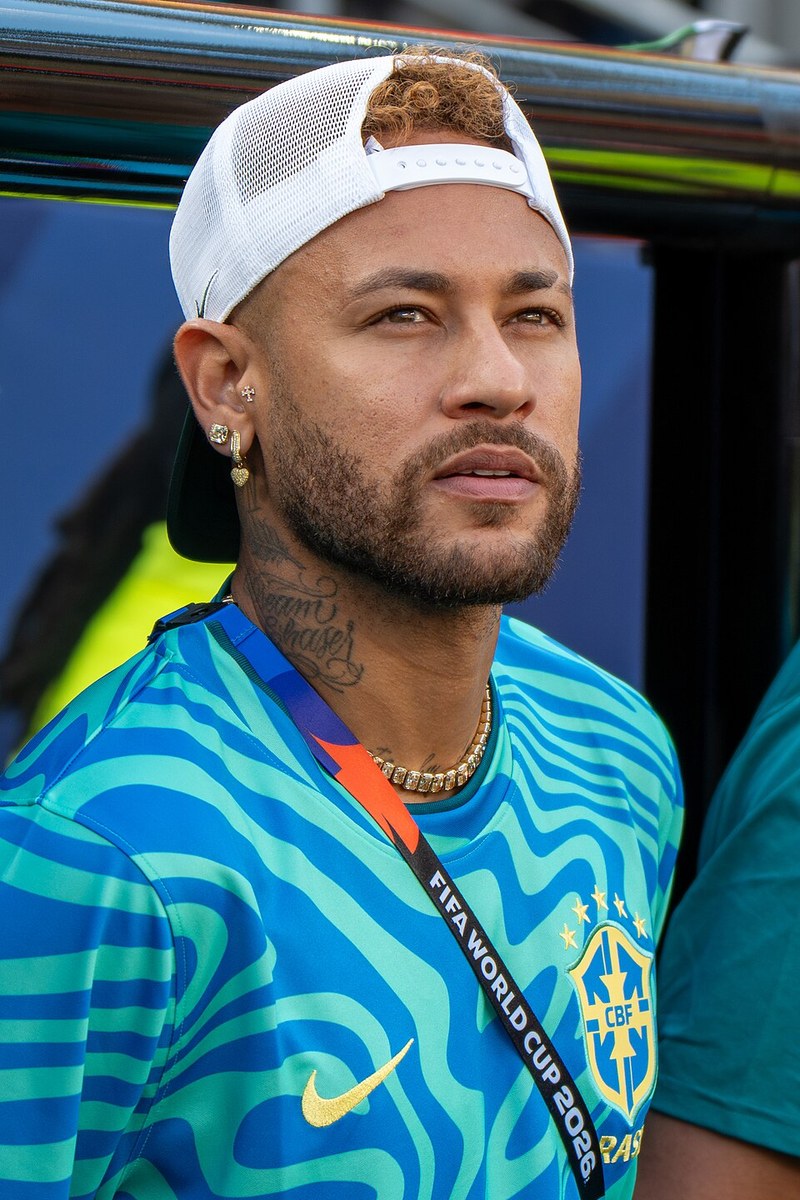
Searches for “neymar iq level,” “neymar j.r iq” and, in Indonesian, “berapa iq neymar jr” converge on the same thin result set, because none of them find a sourced number. What they do find is “football IQ” content: rankings of the sport’s most intelligent players, and short clips that caption a skilful pass “300 IQ” or “999 IQ.” One such ranking, built by GiveMeSport with X’s Grok AI tool, places Johan Cruyff first and Lionel Messi second for “football intelligence” — and does not list Neymar in its top 15 at all. A reader commented that he might rank 16th; that guess is closer to the honest answer than any number a quiz page could offer, because the ranking measures game-reading by committee judgment, not by any instrument (where celebrity IQ numbers come from).
The gap between that kind of “IQ” and a tested one has a real study behind it. Vestberg and colleagues (PLOS ONE, 2012) gave 57 Swedish elite and sub-elite soccer players a battery of executive-function tests, including a design-fluency task measuring working memory and cognitive flexibility under time pressure; in a 25-player follow-up, scores from 2007 predicted which players would rack up more goals and assists two seasons later (r = .54, p = .006). That is a genuine, measured link between a cognitive skill and football success — but the authors are explicit that these “dynamic cognitive top-down processes correlate with each other but less with general IQ.” Reading a game well is not the skill an IQ test scores, and no version of this research has been run on Neymar specifically.
No number for him survives contact with an actual source, either. The “highest IQ footballers” genre of listicle assigns confident-looking figures to other players — Gerard Piqué at 170, Frank Lampard at 150, Mario Balotelli at 147 in one such list — with no study, expert or date behind any of them, and Neymar does not appear on it, or on a 23-name list of “highest IQ celebrities,” or in either GiveMeSport ranking. A fan-run IQ-quiz site turned up in search with two profile pages putting a figure on him, but the site would not load for us on repeated attempts, so we cannot confirm the date, the method, or who entered it; nothing here relies on it.
So the estimate below follows the achievement record, not a corrected circulating number — there is not one to correct. It places Neymar at 100–115, the same range this site gives Cristiano Ronaldo and Lionel Messi, the two players against whom his career is most often measured, and the kind of career the site treats as an achievement-based case generally. Theirs rests on published research that tested their on-field cognitive performance directly; Neymar has no equivalent study, so his estimate leans on career achievement alone. It matches their band rather than exceeding it: both peers won the Ballon d’Or that Neymar reached third in twice (2015, 2017) and never won, so an achievement-based estimate has no basis for ranking him above two players with a stronger individual record.
How we read a number →Birth date and place (February 5, 1992, Mogi das Cruzes, São Paulo); father Neymar Santos Sr. as career advisor; Santos academy from 2003, professional debut March 7, 2009 against Oeste; the full club and international honors list (Copa Libertadores 2011, back-to-back South American Footballer of the Year 2011–12, Barcelona’s 2014–15 treble and 2015–16 double, four PSG Ligue 1 titles, Confederations Cup 2013, Olympic silver 2012 and gold 2016) and individual awards (Ballon d’Or third in 2015 and 2017, 12th in 2018, outside the 2019 shortlist; Puskás Award 2011). Wikidata Q142794 confirms the item is the Brazilian footballer born February 5, 1992, not a namesake; no IQ figure appears on either page.
ESPN: Al-Hilal transfer completed August 15, 2023, reported fee €90 million ($98.6 million); he returned to Santos, his boyhood club, in January 2025 and signed a renewal through December 2026 on January 6, 2026, after a left-knee operation on December 22, 2025; no Brazil caps since the October 2023 ACL tear at the time of writing; 2025 season 11 goals in 34 appearances helping Santos avoid relegation. Al Jazeera: Al-Hilal contract terminated by mutual consent on January 28, 2025, after Neymar “battled constant injury” and played only seven games for the club.
Confirms Carlo Ancelotti named Neymar, then 34, to Brazil’s 26-man 2026 World Cup squad despite fitness doubts stemming from the 2023 ACL tear; Ancelotti’s quote that he was picked because he could help “whether it’s for one minute, five minutes, 90 minutes or even taking a penalty.”
Brazil lost 1–2 to Norway in the Round of 16 at MetLife Stadium on July 5, 2026 (Erling Haaland scored twice; Neymar converted a stoppage-time penalty after coming on as a substitute). Neymar told Globo, “I tried, I tried. Now, it’s over. I started here; I finished here,” and retired from international football on the spot. Career totals: 80 goals (Brazil’s record, three more than Pelé) and 130 caps (second all-time behind Cafu’s 142); the penalty made him only the second Brazilian man after Pelé to score in four different World Cups.
Croatia won 4–2 on penalties after Neymar’s extra-time goal (105+1′) was cancelled out by Bruno Petkovic (117′); Rodrygo and Marquinhos missed for Brazil in the shootout. Sports Illustrated, on the same goal: it “tied Pelé’s men’s goalscoring record of 77 official goals for Brazil.”
Neymar scored Brazil’s opening goal in the 27th minute of the Olympic final and the decisive penalty in a 5–4 shootout win over Germany, Brazil’s first Olympic men’s football title. Quotes Neymar (“We made history”) and coach Rogério Micale. Does not state whether Neymar held the captaincy, so this page does not claim that he did.
57 Swedish elite and sub-elite players (29 higher-division, 28 lower-division) took a Design Fluency test (D-KEFS battery, measuring creativity, response inhibition and cognitive flexibility under time pressure); higher-division players scored significantly better (F = 13.86, p < 0.0005), and in a 25-player prospective sample, 2007 scores predicted goals and assists two seasons later (r = 0.54, p = 0.006). The authors state these executive functions “correlate with each other but less with general IQ,” and that inhibition and switching speed show little or no relation to IQ. Not run on Neymar specifically.
None of the four pages mentions Neymar or gives him a figure. The GiveMeSport Grok-AI ranking places Johan Cruyff first and Lionel Messi second for “football intelligence” by AI/pundit judgment, not a test, and does not list Neymar in its top 15; a reader comment jokes he might rank 16th. LeverageEdu assigns unsourced IQ figures to five other players (Piqué 170, Lampard 150, Balotelli 147, Mata 142, Cech 140) with no study, expert or date cited for any, and separately references a claimed Ronaldo IQ of 99 attributed to a “Molloy” with no further citation we could verify.
None appears on Wikipedia, in Neymar’s own statements found around his Santos return or the 2026 World Cup, or in the football-intelligence rankings and listicles above, and we found no interview in which he discusses taking an IQ test. Two profile pages on the fan-run quiz site brght.org surfaced in search assigning him figures of 105 and 106, but the site would not load for us across repeated attempts, including its homepage, so we could not confirm the date, method or submitter, and nothing on this page relies on those numbers.
Bands and methods used for comparison: Ronaldo 100–115 (domain performance, laboratory perceptual testing) and Messi 100–115 (domain performance, published research on executive function); both have won the Ballon d’Or, which Neymar has not.
The sources behind our estimate
The figures that circulate for Neymar, what we were able to confirm, and where the two diverge.
No specific IQ figure reliably circulates for Neymar (Neymar da Silva Santos Júnior, commonly “Neymar Jr”). Searches for “neymar iq level” and “neymar j.r iq” mostly return “football IQ” content — rankings and clips that grade his game-reading, not his general intelligence — plus two profile pages on a fan-run IQ-quiz site that assign him a score; that site would not load for us to confirm how the number was produced, so we do not treat it as a real circulating figure.
No published IQ test result exists for Neymar. We checked his Wikipedia biography and honors record, his own statements around the Santos return and the 2026 World Cup, and the “most intelligent footballers” genre of ranking article — GiveMeSport’s two lists (one built with X’s Grok AI tool, ranking Johan Cruyff first and Lionel Messi second for “football intelligence”), LeverageEdu’s list of “football players with the highest IQ,” and a 23-name “highest IQ celebrities” list — and none names Neymar or gives him a figure. Two pages on the quiz site brght.org turned up in search with the figures 105 and 106, but the site would not load for us across repeated attempts, including its homepage, so we could not confirm the date, method or who submitted them. We found no interview in which Neymar discusses taking an IQ test.
There is no circulating figure to reconcile against, which is itself the finding: search for Neymar’s IQ and what returns is either “football IQ” — commentary shorthand for game sense — or a number from a site we could not verify. Our 100–115 is not a correction to a published figure; it is what the achievement record alone supports.
Want a number that does hold up? Every figure on this page is somebody’s claim. Take the 30-question test and get a percentile you can check rather than a figure you have to trust.
Neymar — frequently asked
What is Neymar’s IQ?
No IQ test result has been published for Neymar (Neymar da Silva Santos Júnior, “Neymar Jr”), and no credible figure circulates for him either — the “football IQ” content that dominates search results grades his game-reading, not a psychometric score. Based on his documented career, including a world-record transfer and Brazil’s all-time scoring record, our estimate is 100–115.
What is Neymar Jr’s IQ level, and is it 105?
No, 105 is not a verified figure. It appears to trace to a fan-run IQ-quiz website, which would not load for us to confirm on repeated attempts, so we cannot say how, when or by whom that number was produced. No test result has been published for Neymar; his documented football record supports an estimated IQ level of 100–115.
Did Neymar ever take an IQ test?
No result from any IQ test has been published, by Neymar or anyone else, and we found no interview in which he discusses taking one. The closest published research tested elite soccer players’ executive function, not general IQ, and its authors found that skill predicted future goals and assists more than it predicted intelligence-test scores.
What does “Neymar football IQ” mean?
“Football IQ,” also written footballing intelligence, is commentary shorthand for reading the game: anticipation, decision-making, spatial awareness. It is not a psychometric score. Online clips use the phrase both ways for Neymar — “300 IQ” captions for a skilful pass, “questionable football IQ” for a criticized one — which shows it is a judgment call, not a measurement, unlike a scored IQ test.
How does Neymar’s estimated IQ compare with Cristiano Ronaldo’s and Lionel Messi’s?
Our estimate for Neymar is 100–115, the same band this site gives Cristiano Ronaldo and Lionel Messi. Theirs rests on published research measuring their on-field cognitive performance directly; Neymar has no equivalent study, so his estimate is inferred from his career record alone — a world-record transfer and Brazil’s all-time scoring mark, but no Ballon d’Or, unlike either of them.
Is Neymar a genius?
“Genius” is not a label any test result supports, since none has been published for him. What the record shows is exceptional football achievement reached young and sustained for two decades: a professional debut at 17, a world-record transfer at 25, Brazil’s all-time scoring record. That measures one narrow skill, so we do not extend it into a genius-level IQ; our estimate is 100–115.
Is Neymar still playing football, and for which club?
As of September 2026, Neymar plays for Santos, the Brazilian club where he trained as a boy; he rejoined in January 2025 and extended his contract through December 2026. He retired from Brazil’s national team on July 5, 2026, after a Round-of-16 World Cup exit to Norway, in which he scored a late penalty.
How does my IQ compare with Neymar?
You can find out in about fifteen minutes. The IQ Metrics assessment is 30 questions, scored on the same 100-mean scale used throughout this page, so your result and the estimate above are at least expressed in the same units — one measured, one inferred. Once you have a number, the leaderboard shows where it would sit, and how we score and norm it explains the benchmarking.
Where does this estimate come from?
From the documented record rather than a test — the method is named above and set out in full under how we read a number. Compare it against the other athletes profiles, starting with Magnus Carlsen.
- Take the 30-question IQ test — get a measured score and percentile of your own
- Average IQ by country — how the scale behaves across populations
- How IQ Metrics scores its assessment — the method behind our own number
- More on how IQ testing works — reliability, error and what a score can and cannot say
- More athletes profiles — same field, same method
More athletes


Portrait © Frans Peeters, CC BY-SA 2.0. The background-removed portrait above is a derivative work and is likewise offered under the same licence. · Photograph by Bert Verhoeff for Anefo (1972), CC0. Background removed for the portrait above. · Photograph by Fryta 73 (2015), CC BY-SA 2.0. Background removed for the portrait above.


_(cropped)_2.jpg)
An estimate is an inference.
Yours can be measured.
Thirty questions, scored against general-population benchmarks. Your score, your percentile, your ability breakdown and a printable IIF certificate.
Find your IQ score now! →