



What is R Praggnanandhaa’s IQ?
World Cup finalist at 18, Norway Chess winner at 20, and no IQ test on file.

No published IQ test result exists for R Praggnanandhaa, and no source gives a number for Pragg’s IQ. His documented record (a peak FIDE rating of 2785, the 2023 World Cup final, the Tata Steel Masters 2025 title and Norway Chess 2026) supports an estimated IQ of about 135–150, the same band as Gukesh Dommaraju.
R Praggnanandhaa’s estimated IQ
- Peak FIDE standard rating of 2785 on the September 2025 list; world No. 4 at 2779 on the July 2025 list; 2763 and No. 7 among active players on the October 2026 list, the top-rated Indian. Every list from August 2023 (2707) to October 2026 shows 2707 or higher: 39 in a row.
- Runner-up at the 2023 FIDE World Cup in Baku at 18: he beat Fabiano Caruana in the semifinal, then lost the final to Magnus Carlsen 2½–1½ after a rapid tiebreak, which earned him a place in the 2024 Candidates Tournament (5th of 8, 7/14).
- Won the Tata Steel Masters 2025 (8½/13, then the playoff against Gukesh Dommaraju), Norway Chess 2026 (18 points, beating Carlsen in both classical games) and the 2026 Grand Chess Tour Finals (15–13 over Caruana).
- Grandmaster at 12 years, 10 months and 13 days in 2018, then the second-youngest in history behind Sergey Karjakin; as of October 2026 Wikipedia ranks him seventh on its list of the youngest.
- Published research finds a positive but modest link between cognitive ability and chess skill (r = .24 across 19 studies in a 2016 meta-analysis, revised to .22 in a 2018 corrigendum), and the ratings in the studies that reported Elo ran only from 1,311 to 2,607, which is why this is a band and not a point estimate.
Elo measures chess strength, not general reasoning: among rated players the link between fluid reasoning and chess skill was only r = .14 in the original 2016 paper, and its ratings stopped at 2607, below his 2785 peak. Praggnanandhaa’s estimated IQ here is a band inferred from a record, not a measurement.
- Born
- August 10, 2005, Chennai, Tamil Nadu, India
- Field
- Chess; FIDE grandmaster (title 2018, earned at 12 years, 10 months and 13 days)
- FIDE rating, Oct. 2026
- 2763 standard, 2730 rapid, 2712 blitz; No. 7 among active players; top-rated Indian
- Peak FIDE rating
- 2785 (September 2025 list); best world rank No. 4 (July 2025 list)
- Major results
- 2023 World Cup runner-up (lost the final to Carlsen); Tata Steel Masters 2025 winner; Norway Chess 2026 winner; Grand Chess Tour 2026 champion
- Candidates Tournaments
- 2024: fifth of eight (7/14); 2026: seventh of eight (6/14)
- Honors
- Arjuna Award (2022)
- Circulating IQ figure
- None; the nearest number is a “game intelligence” score of 177 for one game, which is not an IQ
What an IQ of 135–150 actually means
Set the claim aside for a moment. If someone genuinely scored in this range, here is what that would represent.
| Score range | Classification | Share of people | What it indicates |
|---|---|---|---|
| 85 – 114 | Average | ~68% | The range most people fall into. |
| 115 – 129 | Above average | ~13.6% | Roughly one person in seven. |
| 130 – 144 | Gifted | ~2% | The threshold most high-IQ societies use. |
| Above 144 | Highly gifted | ~0.1% | Figures above this range are extrapolated from the curve rather than measured. |
Percentages are approximate and describe a normal distribution. The same number means different things on tests with different standard deviations.
Thirty questions gives you a measured position on this exact scale — your score, your percentile and the ability breakdown behind it.
Find out in 30 minutes →Who R Praggnanandhaa is
R Praggnanandhaa (Rameshbabu Praggnanandhaa, called Pragg) was born on August 10, 2005 in Chennai, Tamil Nadu. His older sister, R Vaishali, is also a grandmaster. FIDE lists his titles as FIDE Master in 2013, International Master in 2016 (approved at the 87th FIDE Congress in Baku, September 1–14) and Grandmaster in 2018 (approved at the Presidential Board in Bucharest, July 8–11). He made his final norm at the Gredine Open in Urtijëi, Italy, on June 23, 2018, at 12 years, 10 months and 13 days. ESPN reported that he was then the second-youngest grandmaster in history, behind only Sergey Karjakin, who earned the title at 12 years and 7 months. As of October 2026 Wikipedia ranks him seventh on its list of the youngest grandmasters. India gave him the Arjuna Award for 2022, as ChessBase India reported on December 1, 2022.
His rise into the world elite came in 2023. At the FIDE World Cup in Baku (July 30 to August 24) he was the 31st seed, rated 2690, and he reached the final at 18 by beating Fabiano Caruana in the semifinal. Magnus Carlsen won the final 2½–1½: both classical games were drawn, and Carlsen won the rapid tiebreak. Finishing in the top three earned Praggnanandhaa a place in the 2024 Candidates Tournament in Toronto, where he finished fifth of eight with 7/14 while Gukesh won. His rating went from 2690 on the July 2023 list to 2707 on the August list and has not been lower since. In May 2024 at Norway Chess he beat Carlsen with the white pieces, his first classical win over him, and that September he played board two for India’s gold-medal team at the Chess Olympiad in Budapest.
The next two years brought wins. He took the Tata Steel Masters in Wijk aan Zee (January 17 to February 2, 2025) on 8½/13, level with Gukesh, and won the playoff: a two-game blitz match that ended 1–1, then a sudden-death game. In May 2025 he won the Grand Chess Tour’s Superbet Chess Classic Romania in Bucharest after a playoff, and in June he won the UzChess Cup in Tashkent. On the July 2025 list he was rated 2779 and ranked fourth, which ESPN reported as making him India’s top player in classical chess; his peak of 2785 followed on the September list. He also won the 2025 FIDE Circuit, which earned him a place in the 2026 Candidates.
In 2026 he played the Candidates Tournament in Pegeia, Cyprus (March 28 to April 16) and finished seventh of eight on 6/14; Javokhir Sindarov won it with 10/14. Two months later he won Norway Chess in Oslo (May 25 to June 5). After six rounds he trailed Wesley So by 5½ points, then won his last four classical games and finished on 18 points to So’s 17 and Alireza Firouzja’s 15½. He beat Carlsen in both of their classical games and, as ETV Bharat reported, became the first Indian to win the event. In August he won the Grand Chess Tour Finals in St. Louis (August 22–27), overcoming a six-point deficit on the final day to beat Caruana 15–13, which also made him overall tour champion. The October 2026 FIDE list has him at 2763 in standard chess, No. 7 among active players and the top-rated Indian, ahead of Gukesh (2710, No. 28).
 By Elora Mercer, Celebrity Research WriterFigures checked by Leon Falkner, Data & Research Analyst
Reviewed by Aarav Vardhan, Editor-in-Chief · Last reviewed October 2026

R Praggnanandhaa: the documented record
The estimate above rests on this record. Every entry here is a matter of public fact, which is more than can be said for the number itself.
- 2005Born on August 10 in Chennai, Tamil Nadu, India.
- 2013–16FIDE Master (2013), then International Master (2016, approved at the 87th FIDE Congress in Baku, September 1–14).
- 2018Earns his final grandmaster norm on June 23 at the Gredine Open, aged 12 years, 10 months and 13 days, then the second-youngest ever; FIDE approves the title at Bucharest, July 8–11.
- 2022Named a recipient of the 2022 Arjuna Award (reported by ChessBase India on December 1).
- August 2023Reaches the World Cup final in Baku at 18 and loses to Magnus Carlsen 2½–1½ after a rapid tiebreak; his rating rises from 2690 to 2707.
- April 2024Finishes fifth of eight at the Candidates Tournament in Toronto with 7/14.
- Jan.–Feb. 2025Wins the Tata Steel Masters on 8½/13 and beats Gukesh Dommaraju in the playoff.
- July–Sept. 2025Ranked fourth in the world at 2779 on the July list; peak rating of 2785 on the September list.
- Spring 2026Finishes seventh at the Candidates in Cyprus (6/14), then wins Norway Chess in Oslo with 18 points, beating Carlsen in both classical games.
- Aug.–Oct. 2026Wins the Grand Chess Tour Finals in St. Louis, 15–13 over Fabiano Caruana (August 22–27); on the October FIDE list he is 2763 and No. 7.
Why no figure circulates
Following a claim back to its first appearance is the part almost nobody does — and it is what most people are actually asking.
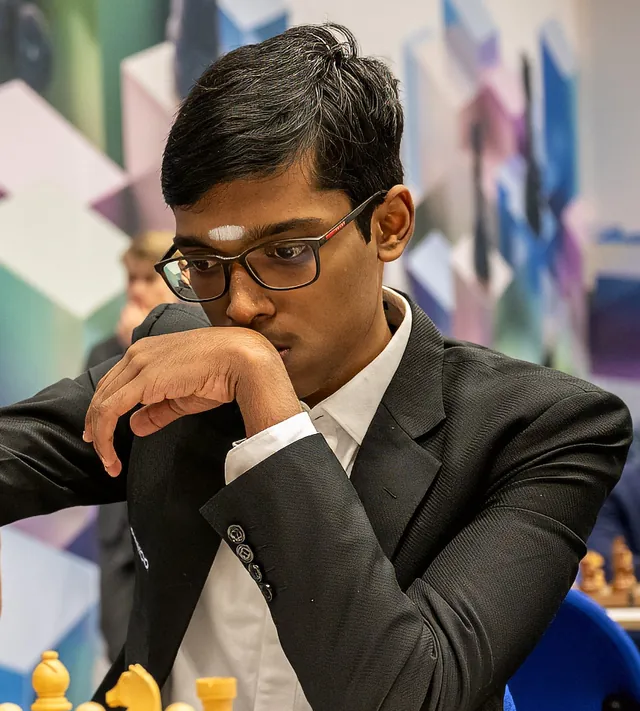
Praggnanandhaa’s IQ has no number behind it. FIDE’s profile, his Tata Steel Masters profile and Wikipedia give his titles, ratings and results, and none gives an IQ score; no test result has been published. The nearest number tied to his name and the word “intelligence” is a game intelligence (GI) score of 177, which Onmanorama reported on January 3, 2025 for his round-three win over Magnus Carlsen at Norway Chess 2024. A King’s College London economist built GI to grade how well a player weighs risk against reward, using chess-engine analysis of the moves. King’s College London describes the average human GI score as 100, with a standard deviation of 15, the same scale IQ uses, and that is why a 177 reads like an IQ. It is not one: it grades how one game was played, not how a person reasons (where celebrity IQ numbers come from).
“Pragg IQ” questions usually get answered with his Elo rating, which says a lot about his chess and very little about his IQ. The 2016 meta-analysis by Burgoyne and colleagues in Intelligence pooled 19 studies (26 samples, 1,779 players) and found an average correlation of r = .24 between cognitive ability and chess skill as first reported, about 6 percent of the variance, which the authors revised to .22 in a 2018 corrigendum. For fluid reasoning among rated players it was r = .14. The seven studies that reported Elo ratings ran from 1,311 to 2,607, so his 2785 peak is 178 points above the highest rating they measured. See what a chess rating can and cannot say about IQ and the wider research on chess and intelligence.
His rating also moves from list to list. Praggnanandhaa’s standard rating was 2785 on the September 2025 list and 2733 on the May 2026 list, and any formula that turned Elo into IQ would return a different IQ for each, which a trait cannot do. So the band follows the whole record, not one list: 39 lists in a row at 2707 or higher, a World Cup final, and tournament wins in 2025 and 2026. He also reached the top young, and the meta-analysis found its strongest fluid-reasoning link in youth samples (r = .32, against .11 in adult samples). But every adult player in those studies was ranked, while most young players were unranked and were measured with chess tests, not ratings, so age and skill level cannot be cleanly separated.
So the range follows the record, as on the site’s other chess profiles. In the Praggnanandhaa vs Gukesh comparison the ratings are close: his peak of 2785 is nine points under the 2794 of Gukesh Dommaraju, whose band is 135–150, so the band is the same. Both sit a step under the 140–155 bands of Viswanathan Anand (peak 2817), Hikaru Nakamura (2816) and Fabiano Caruana, and under the 145–160 of Magnus Carlsen (2882), a gap smaller than the uncertainty in any of them. No inflated number circulates for him, so there is nothing to mark down; the band is set by the record alone. For what a score in the middle of it means in practice, see what an IQ of 140 means, and for the label itself, what a genius IQ level is.
How we read a number →October 2026 list: standard 2763, rapid 2730, blitz 2712; world rank 7 among active players (8 among all players), India rank 1. Titles: FIDE Master 2013, International Master 2016 (87th FIDE Congress, Baku, September 1–14), Grandmaster 2018 (Presidential Board, Bucharest, July 8–11). Rating history from February 2023: 2690 on the July 2023 list, 2707 in August 2023, a peak of 2785 in September 2025, 2733 in May 2026; all 39 lists from August 2023 to October 2026 are 2707 or higher. The Top 100 list shows Carlsen 2823 (1st), Nakamura 2792 (2nd), Caruana 2784 (3rd), Praggnanandhaa 2763 (7th), Anand 2739 (14th) and Gukesh D 2710 (28th). No IQ figure.
World Cup: Carlsen beat the 18-year-old Praggnanandhaa in the final (second classical game drawn; Carlsen won the first rapid tiebreak with Black), and the top three qualified for the 2024 Candidates. Grand Chess Tour 2026: Finals at the Saint Louis Chess Club, August 22–27, 2026; Praggnanandhaa overcame a six-point deficit on the final day to beat Fabiano Caruana 15–13.
Tata Steel: born August 10, 2005 in Chennai; grandmaster in 2018 at “12 yrs, 10mo, 13dys”; won the 2025 Masters (score 8.5); a tie for first is settled by a two-game blitz match, then sudden death. Norway Chess: Praggnanandhaa finishes on 18 points, Wesley So second on 17, Alireza Firouzja third on 15.5, after a final-round win over Vincent Keymer.
ESPN 2018: at 12 years, 10 months and 13 days he is the world’s second-youngest grandmaster; Karjakin remains the youngest. ESPN 2025: 2779, fourth on the July list, India’s top classical player. Chess.com: champion after beating Keymer, and he beat Carlsen in both classical games. ChessBase India: “Arjuna Award 2022 recipients in Chess.” ETV Bharat: first Indian to win the Norway Chess title, 18 points. Onmanorama: a game intelligence score of 177 for his round-three game against Carlsen at Norway Chess 2024; average player 100, super-tournament winners 160 or higher; no mention of IQ.
Used for orientation and cross-checked against FIDE, Tata Steel, Norway Chess and the press where they overlap. Sole source for: the June 23, 2018 final norm; the 31st seed and the semifinal win over Caruana at the 2023 World Cup (final 2½–1½); 7/14 and fifth place in 2024 and 6/14 and seventh in 2026; the Tata Steel playoff sequence; the 2025 FIDE Circuit win and the Romania and Tashkent wins; the 2024 Olympiad result (board two, gold); seventh on the youngest-grandmasters list; the sister clause. Wikidata confirms the item is the chess player born August 10, 2005, FIDE ID 25059530. No IQ figure appears.
19 studies, 26 independent samples, 1,779 participants; meta-analytic average r = .24; fluid reasoning .32 in youth samples against .11 in adult, and .32 in unranked against .14 in ranked samples; across the 7 studies that collected Elo ratings the weighted average was 2,018 (SD = 177) and the range 1,311 to 2,607; the authors caution about restricted rating range (SD 148 against 200 for the Elo system) and about age and skill level being confounded. Figures are as first reported in the 2016 paper.
The arXiv abstract introduces a mechanism that assigns each player in a game a real number “interpreted as an intelligence score,” quantifying ex-post strategic ability; it does not mention IQ. The King’s College London item describes GI as a measure of how well a player weighs risk against reward and gives the average human GI score as 100 (standard deviation 15). It does not mention Praggnanandhaa.
Bands used for comparison: Gukesh 135–150 (peak 2794), Anand 140–155 (peak 2817), Nakamura 140–155 (peak 2816), Caruana 140–155 and Carlsen 145–160 (peak 2882).
None appears in FIDE’s profile, the Tata Steel Masters profile, Wikipedia, the FIDE and Norway Chess reports of his wins, or the Onmanorama article on game intelligence. No source gives an IQ number for him, and the one “intelligence” figure attached to his name, the game intelligence score of 177, is a chess measure and not an IQ.
The sources behind our estimate
The figures that circulate for R Praggnanandhaa, what we were able to confirm, and where the two diverge.
No IQ figure circulates for R Praggnanandhaa. The nearest number tied to his name and the word “intelligence” is a game intelligence (GI) score of 177 for his round-three win over Magnus Carlsen at Norway Chess 2024, which Onmanorama reported on January 3, 2025. It comes from a King’s College London economist’s chess-engine analysis, on a scale where the average player scores 100 and super-tournament winners score 160 or higher. It grades one game, not a person.
No published IQ test result exists for R Praggnanandhaa. His FIDE profile, his Tata Steel Masters profile and Wikipedia list titles, ratings and results and no IQ score. Onmanorama’s article on game intelligence does not mention IQ. The research paper that defines the measure (“Game Intelligence: Theory and Computation,” on arXiv, last revised October 26, 2025) calls its output an “intelligence score” for strategic ability in a game, and King’s College London says the average human GI score is 100 with a standard deviation of 15, the same scale IQ uses. That is why a 177 can look like an IQ, but it is not one.
Our band is 135–150, and there is no circulating IQ to set against it. The only number near it in spirit is the 177 game score, which rates how one game was played and shares only its scale with IQ. With no test and no claimed figure, the band rests on the chess record alone.
Want a number that does hold up? Every figure on this page is somebody’s claim. Take the 30-question test and get a percentile you can check rather than a figure you have to trust.
R Praggnanandhaa — frequently asked
What is R Praggnanandhaa’s IQ?
No IQ test result has been published for R Praggnanandhaa, known as Pragg, and no source gives a number for his IQ. The only “intelligence” figure tied to his name is a game intelligence score of 177, a chess measure and not an IQ. Our estimate, inferred from his chess record, is 135–150.
Is 177 Praggnanandhaa’s IQ score?
No. The 177 is a game intelligence (GI) score for one game, his round-three win over Magnus Carlsen at Norway Chess 2024, as Onmanorama reported on January 3, 2025. GI is scaled with an average of 100, like IQ, but it grades the moves in a game against a chess engine. It is not an IQ test result.
Did Praggnanandhaa ever take an IQ test?
No result from any IQ test has been published for him, by him or by anyone else. The published measures of his ability are chess measures: a FIDE rating that peaked at 2785 in September 2025 and stood at 2763 in October 2026. A chess rating shows chess strength, not general reasoning.
What is Praggnanandhaa’s rating?
On the October 2026 FIDE list Praggnanandhaa is rated 2763 in standard chess, 2730 in rapid and 2712 in blitz. That makes him No. 7 among active players and the top-rated Indian. His peak was 2785 in September 2025. A chess rating is not an IQ score.
Is Praggnanandhaa a genius?
“Genius” is a label, not a measurement, and no test result exists to apply it to. The record shows elite chess reached young: grandmaster at 12, World Cup finalist at 18, winner of Tata Steel 2025 and Norway Chess 2026. That measures one skill, so we do not turn it into a genius-level IQ; our band is 135–150.
Praggnanandhaa vs Gukesh: who has the higher IQ?
Neither has a published IQ, so neither can be called higher. Our estimated bands are the same, 135–150, and both are inferred from chess records. In chess terms, Gukesh won the World Championship in December 2024; Praggnanandhaa won their Tata Steel 2025 playoff and in October 2026 is rated 2763 to Gukesh’s 2710.
How does Praggnanandhaa’s estimated IQ compare with Magnus Carlsen’s?
Our band for Praggnanandhaa is 135–150, against 145–160 for Magnus Carlsen, 140–155 for Viswanathan Anand and 135–150 for Gukesh Dommaraju. All are inferred from published FIDE ratings and results, none is a test score, and the gaps are smaller than the uncertainty in any of them.
How old was Praggnanandhaa when he became a grandmaster?
Praggnanandhaa earned his final grandmaster norm on June 23, 2018, at 12 years, 10 months and 13 days, and FIDE approved the title that July. He was then the second-youngest grandmaster in history, behind Sergey Karjakin. As of October 2026 Wikipedia ranks him seventh on its list of the youngest.
How does my IQ compare with R Praggnanandhaa?
You can find out in about fifteen minutes. The IQ Metrics assessment is 30 questions, scored on the same 100-mean scale used throughout this page, so your result and the estimate above are at least expressed in the same units — one measured, one inferred. Once you have a number, the leaderboard shows where it would sit, and how we score and norm it explains the benchmarking.
Where does this estimate come from?
From the documented record rather than a test — the method is named above and set out in full under how we read a number. Compare it against the other athletes profiles, starting with Magnus Carlsen.
- Take the 30-question IQ test — get a measured score and percentile of your own
- Average IQ by country — how the scale behaves across populations
- How IQ Metrics scores its assessment — the method behind our own number
- More on how IQ testing works — reliability, error and what a score can and cannot say
- More athletes profiles — same field, same method
More athletes
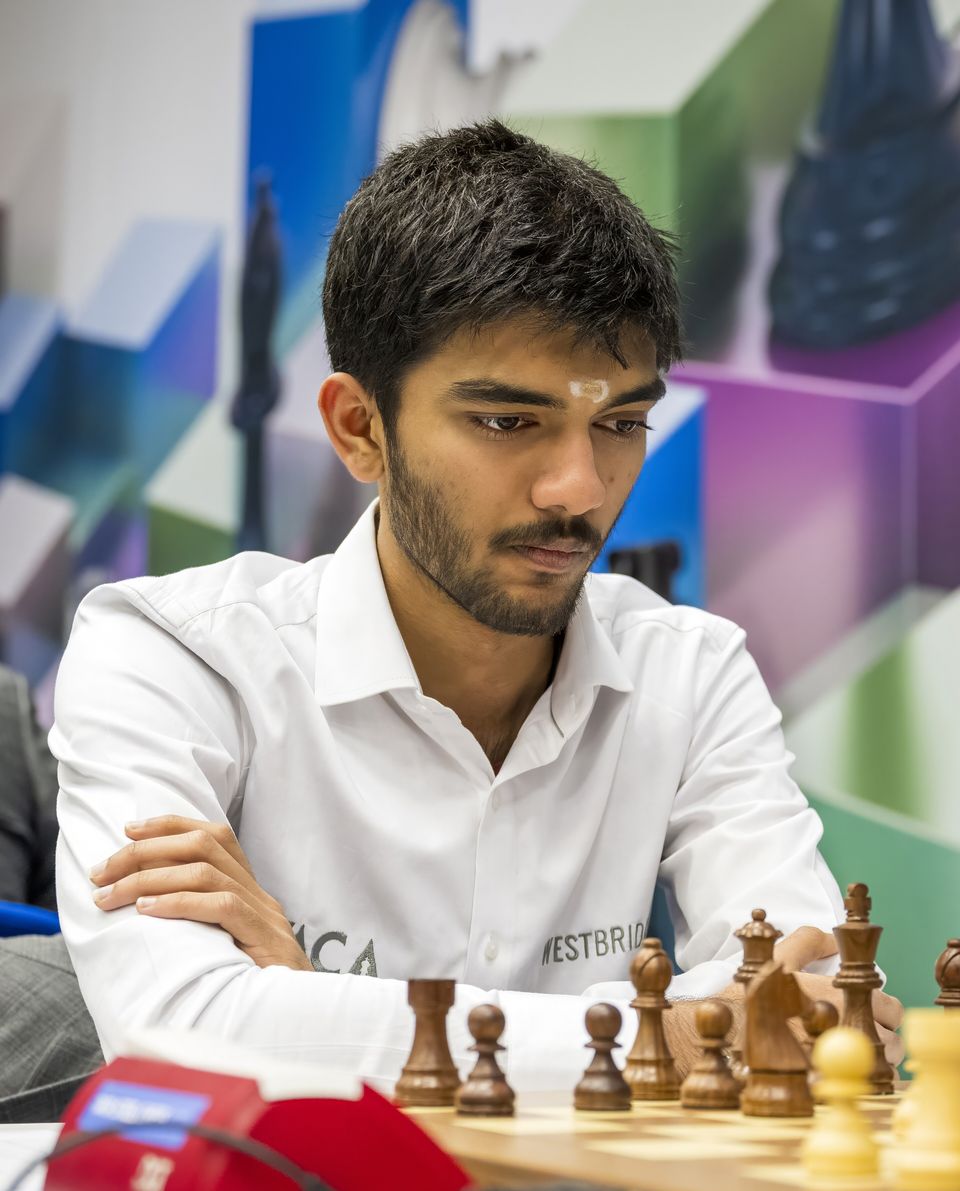
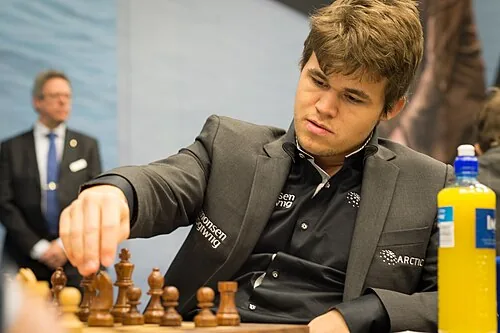
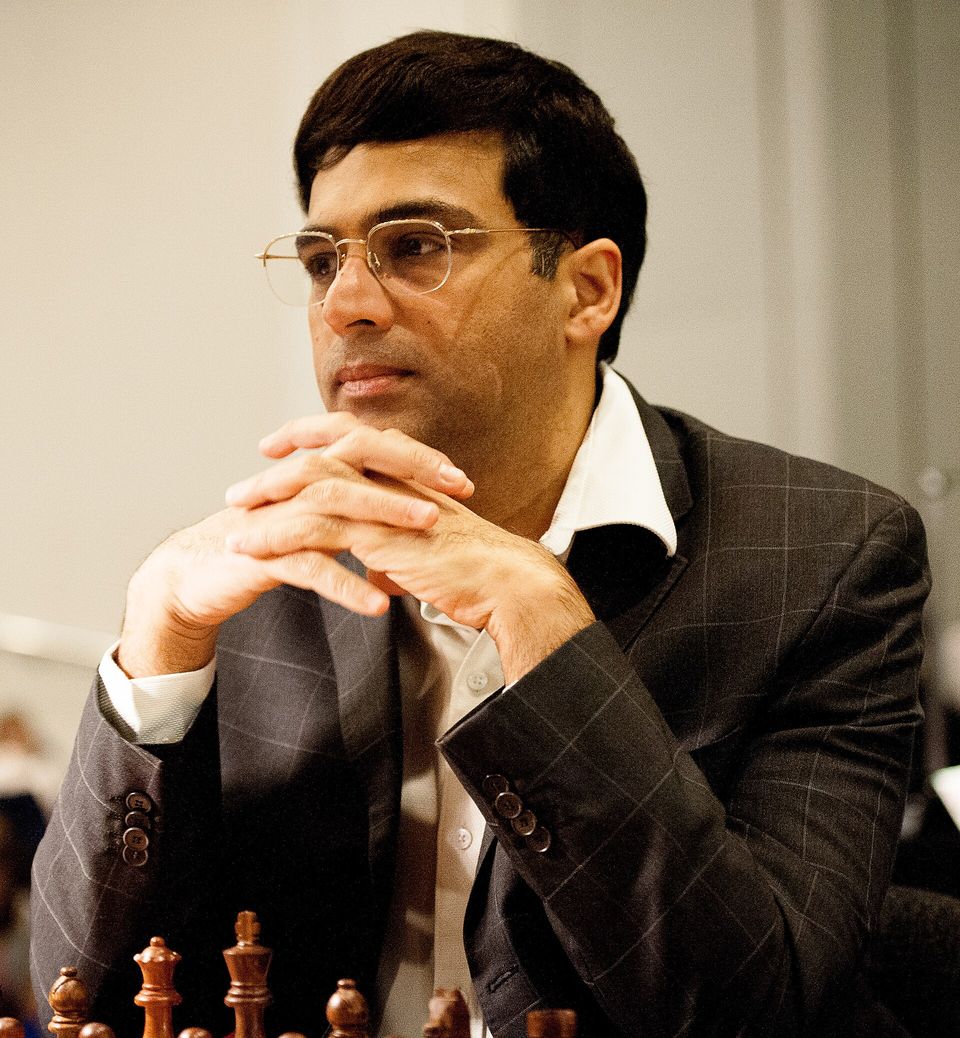
Photograph by Frans Peeters (Tata Steel Chess Tournament, January 2024), CC BY-SA 2.0. Background removed for the portrait above. · Portrait © Frans Peeters, CC BY-SA 2.0. The background-removed portrait above is a derivative work and is likewise offered under the same licence. · Photograph by Wolfgang Jekel (London Chess Classic, 2016), CC BY 2.0. Background removed for the portrait above.


An estimate is an inference.
Yours can be measured.
Thirty questions, scored against general-population benchmarks. Your score, your percentile, your ability breakdown and a printable IIF certificate.
Find your IQ score now! →