



What was Dorothy Vaughan’s IQ?
No IQ score is on record. The record is a mathematics degree, a supervisor’s desk and FORTRAN.
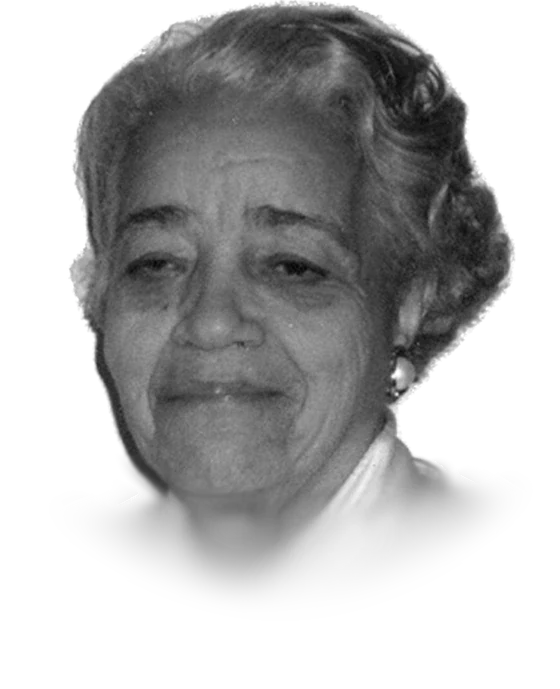
Dorothy Vaughan’s IQ is unknown: no IQ test result exists for her. What is documented is a mathematics degree from Wilberforce University (1929), 28 years at NACA and NASA as a mathematician and supervisor, and a Congressional Gold Medal authorized by Congress in 2019.
Dorothy Vaughan’s estimated IQ
- A B.A. in mathematics from Wilberforce University (1929), as listed in NASA’s biography of her.
- Mathematics teaching at Robert Russa Moton High School in Farmville, Virginia, before she moved to the Langley laboratory in 1943.
- A promotion in 1949 to lead NACA’s West Area Computing unit, which made her the NACA’s first Black supervisor and one of its few women supervisors. NASA says engineers often asked her to handle challenging assignments herself.
- Expert FORTRAN programming in NASA’s Analysis and Computation Division after 1958, and a contribution to the Scout Launch Vehicle Program, according to NASA and to the text of Public Law 116-68.
This is an inference from a record, not a test result. No source gives a school or adult IQ result for her. The record also understates what she could have shown: NASA says she sought another management position at Langley and never received one, so her path reflects the limits of her era as well as her ability. Read the range as a floor, with an uncertain top.
- Born
- September 20, 1910, Kansas City, Missouri
- Died
- November 10, 2008
- Education
- B.A., mathematics, Wilberforce University (1929)
- Career
- NACA and NASA Langley mathematician, supervisor and FORTRAN programmer (1943–1971)
- Role
- Head of West Area Computing, 1949–1958; the NACA’s first Black supervisor
- Honor
- Congressional Gold Medal authorized by Public Law 116-68 (2019)
- Circulating figure
- None found; no published IQ test result
What an IQ of 130–150 actually means
Set the claim aside for a moment. If someone genuinely scored in this range, here is what that would represent.
| Score range | Classification | Share of people | What it indicates |
|---|---|---|---|
| 85 – 114 | Average | ~68% | The range most people fall into. |
| 115 – 129 | Above average | ~13.6% | Roughly one person in seven. |
| 130 – 144 | Gifted | ~2% | The threshold most high-IQ societies use. |
| Above 144 | Highly gifted | ~0.1% | Figures above this range are extrapolated from the curve rather than measured. |
Percentages are approximate and describe a normal distribution. The same number means different things on tests with different standard deviations.
Thirty questions gives you a measured position on this exact scale — your score, your percentile and the ability breakdown behind it.
Find out in 30 minutes →Who Dorothy Vaughan was
Dorothy Vaughan was born in Kansas City, Missouri, on September 20, 1910, and died on November 10, 2008, according to NASA. She earned a B.A. in mathematics from Wilberforce University in 1929. Before the war she taught mathematics at Robert Russa Moton High School in Farmville, Virginia.
In 1943 she left teaching for what she believed would be a temporary war job at the Langley Memorial Aeronautical Laboratory. NASA says the laboratory had begun hiring Black women to meet the demand for processing aeronautical research data. Jim Crow rules kept them separate. Vaughan was assigned to the all-Black West Area Computing unit, whose members were at first required to use separate dining and bathroom facilities.
In 1949 she was promoted to lead the group. NASA says she was the NACA’s first Black supervisor and one of its few women supervisors. She advocated for the women of West Computing, and she led the unit for nearly a decade. In 1958 the NACA became NASA, segregated facilities were abolished, and she joined the integrated Analysis and Computation Division. She became an expert FORTRAN programmer and contributed to the Scout Launch Vehicle Program. She retired in 1971.
Congress honored her in the Hidden Figures Congressional Gold Medal Act (Public Law 116-68, approved November 8, 2019). It provides for a gold medal commemorating her life, to go to the Smithsonian Institution after it is awarded. NASA’s biography notes that Octavia Spencer played Vaughan in the film Hidden Figures.
 By Elora Mercer, Celebrity Research WriterFigures checked by Leon Falkner, Data & Research Analyst
Reviewed by Aarav Vardhan, Editor-in-Chief · Last reviewed November 2026

Dorothy Vaughan: the documented record
The estimate above rests on this record. Every entry here is a matter of public fact, which is more than can be said for the number itself.
- 1910Born September 20 in Kansas City, Missouri.
- 1929Earns a B.A. in mathematics from Wilberforce University.
- 1943Leaves teaching for the NACA’s Langley laboratory and joins the segregated West Area Computing unit.
- 1949Promoted to head of West Area Computing, the NACA’s first Black supervisor.
- 1958The NACA becomes NASA; segregated facilities end and she joins the Analysis and Computation Division.
- 1971Retires from NASA.
- 2008Dies on November 10.
- 2019On November 8, Public Law 116-68 provides for a Congressional Gold Medal commemorating her life.
Why no figure circulates
Following a claim back to its first appearance is the part almost nobody does — and it is what most people are actually asking.
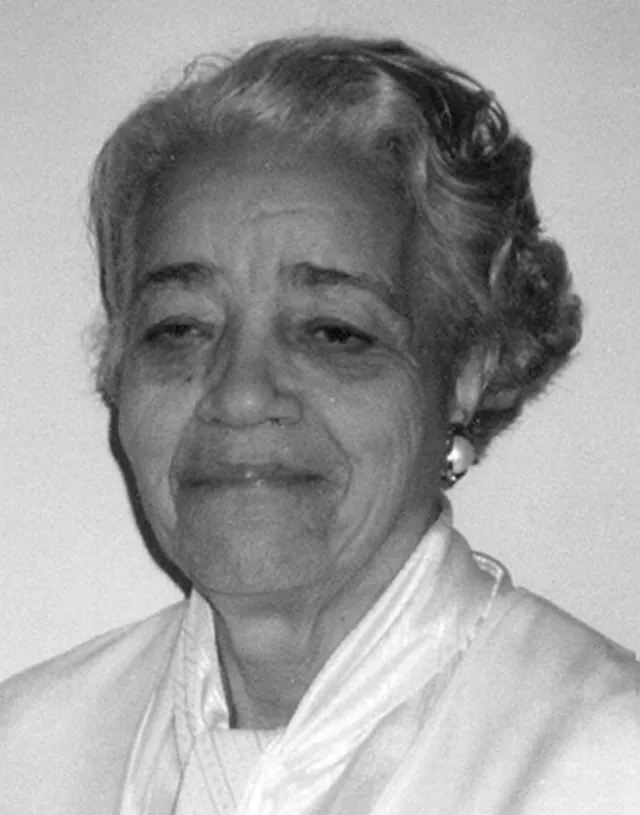
No IQ test result has been published for Dorothy Vaughan, so Dorothy Vaughan’s IQ score is unknown. A number attached to her name without a named test, a date and an examiner is a guess. For how such figures spread, and what to check first, see where celebrity IQ numbers come from.
Is Dorothy Vaughan a genius? Her documented record shows a first-rate mathematician and programmer. NASA’s biography says she led the West Area Computing unit for nearly a decade and became an expert FORTRAN programmer. “Genius” has no fixed IQ cut-off, and a job record is not a test. See what genius-level IQ means for where the usual lines are drawn.
Dorothy Vaughan’s estimated IQ, 130–150, sits just below Katherine Johnson (135–155), another West Computing alumna named in NASA’s biography. It is far below Emmy Noether (165–185), whose published mathematics is the basis for that range, and Ada Lovelace (155–175). The gaps come from the evidence available, not from a measured difference. At 130, about 2 in 100 people score higher on the usual scale; the percentile calculator works out any score.
Her record also shows how a career can understate ability. NASA says she sought another management position at Langley after 1958 and never received one. Education and IQ do rise together on average, but the arrow points both ways, and access to schooling and promotion shapes who has a record at all. This is why the page treats 130–150 as a floor.
How we read a number →No school record, employer test or clinician’s statement for Vaughan is public. The NASA biography and Public Law 116-68 describe degrees, jobs and skills, and neither gives an IQ.
Gives birth and death dates, the B.A. in mathematics from Wilberforce University (1929), her teaching job in Farmville, her hiring at Langley in 1943, her promotion in 1949, her FORTRAN work and Scout program role, her retirement in 1971, and the actress who played her in Hidden Figures.
Finds that Vaughan was born September 20, 1910, began working for NACA in 1943, became head of West Area Computing and its first African-American supervisor for 9 years, became an expert FORTRAN programmer, retired in 1971 and died November 10, 2008; provides a gold medal commemorating her life.
Source of the portrait, released as a work of NASA under the public-domain template for NASA media. No film stills are used on this page.
Explains why education and IQ rise together on average and why the relationship runs in both directions.
Used only to confirm identity and dates. Wikidata describes her as an African-American mathematician.
The sources behind our estimate
The figures that circulate for Dorothy Vaughan, what we were able to confirm, and where the two diverge.
No IQ figure circulates for Dorothy Vaughan in any source we found. NASA’s biography and the 2019 law that honors her describe her degree, her jobs and her programming skill, not a score.
No published IQ test result exists for Dorothy Vaughan. NASA’s biography, written by Margot Lee Shetterly in 2016, and Public Law 116-68 describe a mathematician, a supervisor and a programmer. A job title and a medal are evidence of work, not a score.
With nothing circulating, there is no spread to audit. 130–150 is this site’s estimated range for Dorothy Vaughan and the only figure on the page. It rests on a record, not a test, so its floor, its top and its twenty-point width are judgments.
Want a number that does hold up? Every figure on this page is somebody’s claim. Take the 30-question test and get a percentile you can check rather than a figure you have to trust.
Dorothy Vaughan — frequently asked
What is Dorothy Vaughan’s IQ?
No IQ test result has been published for Dorothy Vaughan, so her IQ is unknown. This site’s estimated range is 130–150. It is inferred from her mathematics degree, her 28 years at NACA and NASA and her expertise in FORTRAN, not from a test.
Was Dorothy Vaughan a real person?
Yes. Dorothy Vaughan (1910–2008) was a mathematician and programmer at NACA and NASA. NASA’s biography notes that Octavia Spencer played her in the film Hidden Figures. This page uses a NASA photograph of Vaughan herself, not a film still.
What did Dorothy Vaughan study?
Dorothy Vaughan earned a B.A. in mathematics from Wilberforce University in 1929, according to NASA. She taught mathematics at Robert Russa Moton High School in Farmville, Virginia before joining the NACA’s Langley laboratory in 1943.
What did Dorothy Vaughan do at NASA?
Dorothy Vaughan led the West Area Computing unit from 1949 to 1958 as the NACA’s first Black supervisor. After 1958 she joined the Analysis and Computation Division, became an expert FORTRAN programmer and contributed to the Scout Launch Vehicle Program. She retired in 1971.
Was Dorothy Vaughan a genius?
The documented record is that of a skilled mathematician and a respected supervisor. NASA says engineers often asked her to handle challenging work personally. “Genius” has no fixed IQ cut-off, and no test score backs the word.
How does Dorothy Vaughan’s estimated IQ compare with Katherine Johnson’s?
This site estimates 130–150 for Dorothy Vaughan and 135–155 for Katherine Johnson. NASA names both as West Computing alumnae. Both ranges rest on records, not tests, and they overlap almost completely, so neither can be called higher.
Did Dorothy Vaughan receive a Congressional Gold Medal?
Congress provided for one. Public Law 116-68, the Hidden Figures Congressional Gold Medal Act, was approved on November 8, 2019 and provides for a gold medal commemorating her life, to be given to the Smithsonian Institution after it is awarded.
How does my IQ compare with Dorothy Vaughan?
You can find out in about fifteen minutes. The IQ Metrics assessment is 30 questions, scored on the same 100-mean scale used throughout this page, so your result and the estimate above are at least expressed in the same units — one measured, one inferred. Once you have a number, the leaderboard shows where it would sit, and how we score and norm it explains the benchmarking.
Where does this estimate come from?
From the documented record rather than a test — the method is named above and set out in full under how we read a number. Compare it against the other historical profiles, starting with Isaac Newton.
- Take the 30-question IQ test — get a measured score and percentile of your own
- Average IQ by country — how the scale behaves across populations
- How IQ Metrics scores its assessment — the method behind our own number
- More on how IQ testing works — reliability, error and what a score can and cannot say
- More historical profiles — same field, same method
More historical
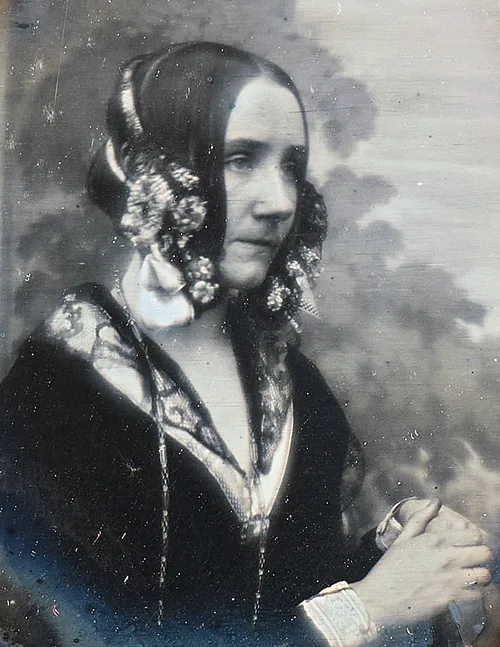
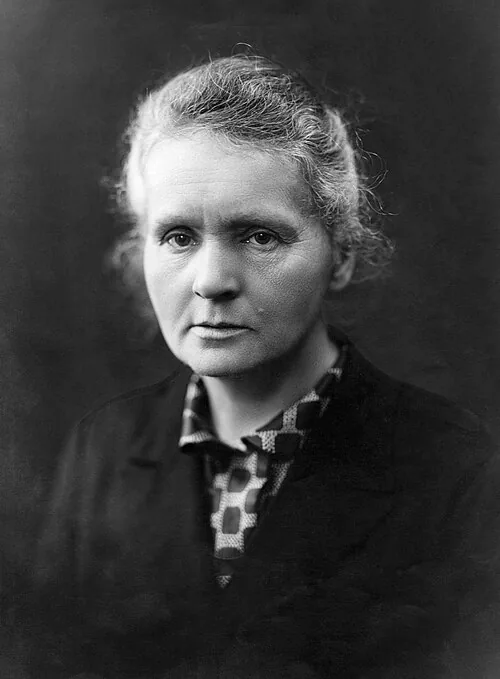
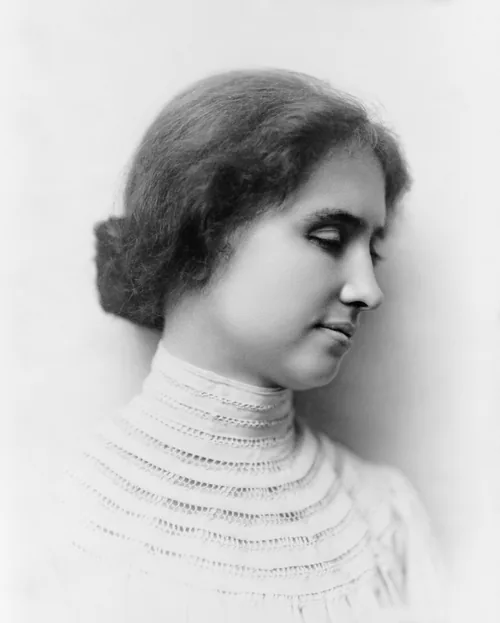
Daguerreotype by Antoine Claudet (c. 1843), public domain. · Photograph by Henri Manuel (c. 1920), public domain. Background removed for the portrait above. · Photograph, 1904, photographer not recorded, from the Library of Congress Prints and Photographs Division (cph.3c12513; Commons file), public domain in the United States (copyright expired). Background removed for the portrait above.


An estimate is an inference.
Yours can be measured.
Thirty questions, scored against general-population benchmarks. Your score, your percentile, your ability breakdown and a printable IIF certificate.
Find your IQ score now! →