



What was Helen Keller’s IQ?
At six she learned that things have names; by 19 she had passed Radcliffe’s entrance examinations. No IQ score has been published for her.
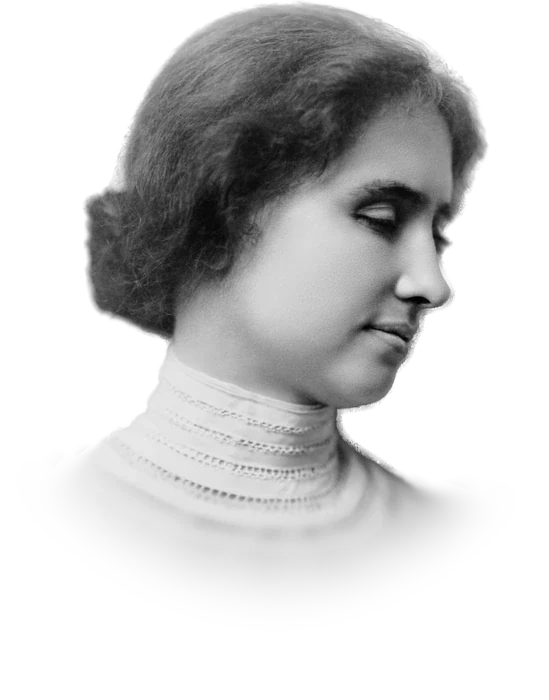
No published IQ test result exists for Helen Keller, and the 160 that circulates for her IQ level is a single unsourced aside in a 2019 travel article. The documented record is a cum laude B.A. from Radcliffe College (June 28, 1904), Radcliffe entrance examinations passed in 1897 and 1899, and a 1903 memoir; her estimated IQ, inferred from that record, is 125–145.
Helen Keller’s estimated IQ
- Radcliffe’s entrance examinations: preliminaries in June–July 1897 (German, French, Latin, English, Greek and Roman history), all passed, with honors in German and English by her own account, and finals in June 1899 (Greek, Latin, geometry, algebra), for which a Perkins instructor copied the papers into braille because the college did not allow Anne Sullivan to read them to her.
- B.A. cum laude from Radcliffe College on June 28, 1904, after entering in September 1900; the American Foundation for the Blind calls her the first deaf-blind person to earn a bachelor’s degree, and Radcliffe’s Schlesinger Library and Harvard Magazine both give the honors as cum laude.
- The Story of My Life, serialized in the Ladies’ Home Journal in 1902 and published as a book in 1903 while she was still a student; Charles T. Copeland, who taught English at Harvard and Radcliffe, told her editor that in some of her work she wrote better than any pupil he had ever had.
- Joseph Jastrow, a University of Wisconsin psychologist, wrote in Popular Science Monthly in May 1903 that her achievements would have been impossible without “an unusual endowment,” naming alertness of mind, a remarkable memory and keen observation.
- Anne Sullivan’s first report to the Perkins Institution: 625 words known by the end of August 1887, about five months after the water-pump scene of April 5.
This is a judgment, not a score: cum laude is the lowest of the three standard Latin honors, her class rank could not be found, the strongest praise concerns her writing rather than general reasoning, and by her own account mathematics was her weakest subject. There is no test result to check the range against.
- Born
- June 27, 1880, Tuscumbia, Alabama; deaf and blind from February 1882, at 19 months
- Died
- June 1, 1968, Arcan Ridge, Connecticut, aged 87
- Teacher
- Anne Sullivan, from March 3, 1887
- Schooling
- Wright-Humason School for the Deaf, New York City (1894–96); Cambridge School for Young Ladies (1896–97); private tutors (1898–99)
- Degree
- B.A. cum laude, Radcliffe College, June 28, 1904; the first deaf-blind person to earn a bachelor’s degree, per the American Foundation for the Blind
- Best-known book
- The Story of My Life (1903)
- Honors
- Honorary degree from Harvard (1955); Presidential Medal of Freedom (September 1964)
- IQ test result
- None published
What an IQ of 125–145 actually means
Set the claim aside for a moment. If someone genuinely scored in this range, here is what that would represent.
Average is 100 by construction, and about two-thirds of people fall between 85 and 115. Take the test to place your own score on this scale.
| Score range | Classification | Share of people | What it indicates |
|---|---|---|---|
| 85 – 114 | Average | ~68% | The range most people fall into. |
| 115 – 129 | Above average | ~13.6% | Roughly one person in seven. |
| 130 – 144 | Gifted | ~2% | The threshold most high-IQ societies use. |
| Above 144 | Highly gifted | ~0.1% | Figures above this range are extrapolated from the curve rather than measured. |
Percentages are approximate and describe a normal distribution. The same number means different things on tests with different standard deviations.
Thirty questions gives you a measured position on this exact scale — your score, your percentile and the ability breakdown behind it.
Find out in 30 minutes →Who Helen Keller was
Helen Adams Keller was born on June 27, 1880, at Ivy Green in Tuscumbia, Alabama. In February 1882, at 19 months, an illness left her deaf and blind; the American Foundation for the Blind says no definitive diagnosis was ever determined, and her own account gives the doctors’ name for it as acute congestion of the stomach and brain. Anne Sullivan, a 20-year-old graduate of the Perkins School for the Blind, arrived on March 3, 1887. On April 5, 1887, at the water pump, Keller connected the word Sullivan was spelling into her hand with the water running over it. In her first report to the Perkins Institution Sullivan counted 625 words known by the end of August.
She was a guest at the Perkins Institution in Boston rather than a regular pupil, took eleven speech lessons from Sarah Fuller at the Horace Mann School for the Deaf in 1890, and from October 1894 spent two years at the Wright-Humason School for the Deaf in New York City, studying arithmetic, physical geography, French and German. In October 1896 she entered the Cambridge School for Young Ladies to prepare for Radcliffe; she left it in late 1897, was tutored by Merton S. Keith through 1898 and 1899, sat the entrance finals in June 1899 and received her certificate of admission in July.
In a letter dated March 31, 1895 she describes meeting Mark Twain, whom she calls Mr. Clemens, at Laurence Hutton’s home in New York. The American Foundation for the Blind quotes Twain as saying that the two most interesting characters of the nineteenth century were Napoleon and Helen Keller. On November 26, 1896 he wrote to Emilie Rogers, wife of the Standard Oil executive Henry H. Rogers, that Keller would make “a fame that will endure in history for centuries” if she could go on with her studies, and the Millicent Library credits Twain with interesting Rogers in her Radcliffe education.
She entered Radcliffe in September 1900 as a member of the class of 1904, taking French and German literature, history, English composition, the Odes of Horace, Shakespeare with George L. Kittredge and the history of philosophy with Josiah Royce. Sullivan spelled lectures and books into her hand, and she wrote her exercises and examinations on a Hammond typewriter. The Story of My Life ran in the Ladies’ Home Journal in 1902 and appeared as a book from Doubleday, Page and Co. in 1903; she received her B.A. cum laude on June 28, 1904. From October 1924 she worked with the American Foundation for the Blind, and between 1946 and 1957 she visited 35 countries on five continents. Harvard gave her an honorary degree in June 1955, which Harvard Magazine calls its first ever granted to a woman; she was awarded the Presidential Medal of Freedom in September 1964 and died at Arcan Ridge, her home in Connecticut, on June 1, 1968.
 By Elora Mercer, Celebrity Research WriterFigures checked by Leon Falkner, Data & Research Analyst
Reviewed by Aarav Vardhan, Editor-in-Chief · Last reviewed August 2026
.jpg)
Helen Keller: the documented record
The estimate above rests on this record. Every entry here is a matter of public fact, which is more than can be said for the number itself.
- 1880Born June 27 in Tuscumbia, Alabama.
- 1882In February, at 19 months, an illness leaves her deaf and blind.
- 1887Anne Sullivan arrives March 3; on April 5 the word “water” spelled into her hand connects with the pump; by the end of August she knows 625 words.
- 1894–96Wright-Humason School for the Deaf, New York City (from October 1894); Cambridge School for Young Ladies (from October 1896).
- 1897–1900Passes Radcliffe’s preliminary examinations (June 29–July 3, 1897) and finals (June 29–30, 1899); certificate of admission in July 1899; enters Radcliffe in September 1900.
- 1903The Story of My Life is published as a book, after serialization in the Ladies’ Home Journal in 1902.
- 1904Graduates cum laude from Radcliffe College on June 28.
- 1924Begins work with the American Foundation for the Blind in October; elected to its board of trustees in December 1932.
- 1955Receives an honorary degree from Harvard in June.
- 1964–68Awarded the Presidential Medal of Freedom (September 1964); dies June 1, 1968, at Arcan Ridge, Connecticut.
Where the 160 figure came from
Following a claim back to its first appearance is the part almost nobody does — and it is what most people are actually asking.
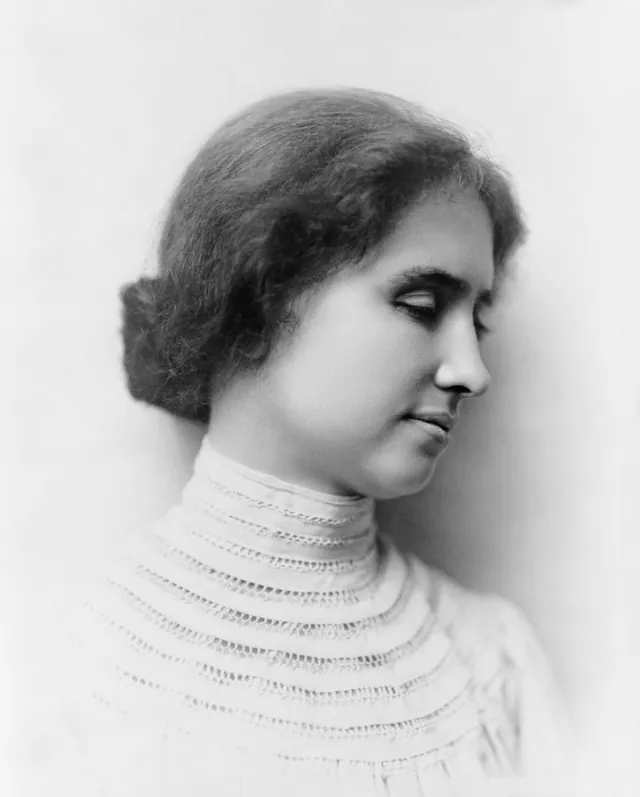
Helen Keller’s IQ turns up online as one unsourced number. A September 1, 2019 travel article on Nelson Voice, “Helen Keller’s birthplace stirs the senses,” says that at the Tuscumbia water pump she grasped the signs and “with her 160 IQ” learned 30 more words within a week. It names no test, date or source, and no other page found states a figure for her. An IQ of 160 sits four standard deviations above the mean of 100, roughly one person in 30,000, and the 30-word anecdote is documented in Anne Sullivan’s letter of April 5, 1887, which reports thirty new words within a few hours and no score. It is the pattern this site traces across celebrity IQ numbers: a round figure fixed to a famous story, with no test behind it.
No Helen Keller IQ test result has been published, and the sources checked describe judgments, not tests. In the supplement to her 1903 The Story of My Life, her editor John Albert Macy wrote that Anne Sullivan did not see why Keller “should be subjected to the investigation of the scientist,” and that when a psychologist asked whether Keller spelled on her fingers in her sleep, Sullivan thought it not worth sitting up to watch. The University of Wisconsin psychologist Joseph Jastrow reviewed the book in Popular Science Monthly in May 1903 and reasoned from her record, not from a score. Dates alone do not explain the gap: Keller was in her mid-twenties when Binet and Simon published the first intelligence scale in 1905 and in her mid-thirties when Terman’s Stanford revision appeared in 1916 (the history of intelligence testing).
That first scale included many tasks that need sight, hearing or speech. Among the 30 tests in Binet and Simon’s 1905 scale are following a lighted match with the eyes, repeating three figures, repeating a sentence of fifteen words and drawing a design from memory. Perkins School for the Blind credits its psychologist Samuel P. Hayes with the first psychological testing tool for measuring the mental ability of children with visual impairment, the Hayes-Binet of 1942, an adaptation of the Stanford-Binet; no source checked describes a test adapted for a deaf-blind adult. A 2020 review of cognitive assessment of children who are deaf-blind says that most cognitive measures rely on vision and hearing and that no valid, reliable normed measure exists for that group (see also hearing loss and cognitive test scores). Keller took in language through the manual alphabet and braille, a route the scales of her lifetime were not built around, so any figure for her IQ has to come from her record.
What the record supports is well below 160. The Radcliffe entrance examinations were achievement tests, not IQ tests, but they set a documented bar: a nine-hour preliminary round in 1897, passed with honors in German and English, and finals in June 1899 for which the papers were copied into braille by an instructor who was a stranger to her. Add the cum laude degree of June 28, 1904, the remark of her composition instructor Charles T. Copeland that some of her work was better than any pupil’s he had taught, Jastrow’s assessment and the 625 words Sullivan counted by August 1887, and Helen Keller’s estimated IQ comes to 125–145, from about the top 5 percent to about the top 0.1 percent of a bell curve. That is a judgment about a record, not a score. It matches Mahatma Gandhi and Martin Luther King Jr. (125–145 each, both from documented records with no test), touches Mark Twain’s 145–165 only at 145, and sits below Marie Curie’s 160–180, which rests on two Nobel Prizes. As on most pages here, the documents point lower than the number that circulates. Whether she was a genius depends on the definition (is 130 IQ genius?); the strongest praise for her is about her writing, which one IQ figure would not capture.
How we read a number →Her own account and the editor’s supplement: Sullivan’s arrival on March 3, 1887, her letter of April 5, 1887 and her report of 625 words by August; the 1897 and 1899 examinations (honors in German and English; the 1899 papers copied into braille by Eugene C. Vining, since Sullivan was not allowed to read them); the Radcliffe courses; her March 31, 1895 letter on meeting Mr. Clemens; Copeland’s remark on her writing; Macy on the investigation of the scientist.
Born June 27, 1880; illness in February 1882, no definitive diagnosis; March 3 and April 5, 1887; certificate of admission July 4, 1899; class of 1904 from September 1900; B.A. cum laude on June 28, 1904, the first deaf-blind person to earn one; AFB from October 1924; 35 countries in 1946–57; Harvard honorary degree in June 1955; Medal of Freedom in September 1964; death on June 1, 1968. The biography quotes Twain on Napoleon and Keller and calls Twain and Alexander Graham Bell her friends and supporters.
Graduation cum laude from Radcliffe in 1904 (Schlesinger Library and Harvard Magazine); an A.B. with honors in June 1904 (Gazette); the 1955 honorary degree as Harvard’s first ever granted to a woman (Harvard Magazine).
A University of Wisconsin psychologist’s review of the book. It reasons from her record: “an unusual endowment,” with alertness of mind, a remarkable memory and keen observation; unequal gifts across subjects; creditable work in mathematics. It reports no test.
Credits the Perkins psychologist Samuel P. Hayes with the first psychological testing tool for measuring the mental ability of children with visual impairment, the Hayes-Binet Tests of Intelligence for the Blind (1942), adapted from the Stanford-Binet.
States that most cognitive measures rely on vision and hearing, and that no valid and reliable standardized normative cognitive measures exist for children who are deaf-blind.
The first intelligence scale, with 30 tests, including following a lighted match with the eyes, repeating three figures, repeating sentences of fifteen words and drawing a design from memory.
The library page prints Twain’s letter of November 26, 1896 to Emilie Rogers and says Twain interested Rogers in Keller’s Radcliffe education. Wikipedia (orientation): Rogers remarried in 1896 and, urged on by Twain, he and his second wife financed her college education; Jastrow was an American psychologist and Wisconsin professor; cum laude is the lowest of the three standard Latin honors; the Binet-Simon scale dates from 1905 and Terman’s Stanford revision from 1916. Wikidata Q38203 is Helen Keller (1880-06-27 to 1968-06-01).
The only page found that states an IQ figure for her: “with her 160 IQ,” in a sentence about the word-learning after the water-pump scene. It cites no test, date or source.
None found. Checked: The Story of My Life with Macy’s supplement, Jastrow’s 1903 review, the American Foundation for the Blind’s chronology and biography, the Harvard and Radcliffe pages, Perkins’s Hayes-Binet finding aid, and three IQ-estimate sites (geniuses.club, lifescoretest.com, ScienceABC’s Famous People IQ Lookup). The AFB’s Helen Keller Archive was not searched.
The site’s own estimated ranges used for the comparisons: Twain 145–165, Curie 160–180, Gandhi 125–145, King 125–145.
The sources behind our estimate
The figures that circulate for Helen Keller, what we were able to confirm, and where the two diverge.
One page found gives a number: a September 1, 2019 travel article on Nelson Voice (nelsonvoice.ca), “Helen Keller’s birthplace stirs the senses,” says that “with her 160 IQ” she learned 30 more words within a week of the water-pump scene. No IQ figure was found for her on geniuses.club, lifescoretest.com or ScienceABC’s Famous People IQ Lookup.
No published IQ test result exists for Helen Keller. The Nelson Voice article cites no test, date or source for its 160. geniuses.club’s Helen Keller profile (updated September 9, 2026) gives no IQ figure; lifescoretest.com has no page for her and ScienceABC’s lookup does not list her.
The circulating 160 sits 15 points above the top of this page’s range and about four standard deviations above the average of 100, with no method, date or source behind it. Only one page found states it, and that page is a travel article, not a study.
Want a number that does hold up? Every figure on this page is somebody’s claim. Take the 30-question test and get a percentile you can check rather than a figure you have to trust.
Helen Keller — frequently asked
What is Helen Keller’s IQ?
No measured IQ exists for Helen Keller, because no test result for her has been published. IQ Metrics’ estimated range, inferred from her documented record, is 125–145; the 160 that circulates online cites no test, study or date. The estimate rests on Radcliffe entrance examinations, a cum laude B.A. in 1904 and her writing.
Did Helen Keller take an IQ test?
No published IQ test result exists for her, and no record of her sitting one turned up. In 1903 her editor wrote that Anne Sullivan did not see why Keller should be subjected to the investigation of the scientist. Perkins’s first intelligence test adapted for children with visual impairment, the Hayes-Binet, came in 1942.
How was Helen Keller’s IQ measured?
It was not measured. Binet and Simon’s 1905 scale, the first of its kind, included tasks such as following a lighted match with the eyes and repeating figures, and a 2020 review says most cognitive tests still rely on vision and hearing. Any figure for her IQ is an estimate from her record, not a result.
How high was Helen Keller’s IQ?
Nobody can say from a test, because none has been published. This site’s estimated IQ for her, inferred from her Radcliffe record and writing, is 125–145, from about the top 5 percent to about the top 0.1 percent. That is a judgment about a record, not a score, and it sits below the 160 found online.
Where does Helen Keller’s IQ of 160 come from?
The one page found stating it is a September 1, 2019 travel article on Nelson Voice, which says she learned 30 more words within a week “with her 160 IQ.” It cites no test, date or source. geniuses.club, lifescoretest.com and ScienceABC’s IQ lookup give no IQ figure for her.
How does Helen Keller’s estimated IQ compare with Mark Twain’s?
IQ Metrics estimates Keller at 125–145 and Mark Twain at 145–165, so the ranges only touch at 145. Both are inferences from records, not scores. Twain met her in 1895, called her and Napoleon the nineteenth century’s two most interesting characters, and interested Henry H. Rogers in her Radcliffe education.
Was Helen Keller a genius?
No IQ score settles it. The psychologist Joseph Jastrow wrote in 1903 that her achievements implied an unusual endowment, and her Radcliffe composition instructor, Charles Copeland, rated some of her writing above any pupil’s he had taught. Whether that is genius depends on the definition; this site’s estimate is 125–145.
Did Helen Keller graduate from college?
Yes. She earned a B.A. cum laude from Radcliffe College on June 28, 1904, and the American Foundation for the Blind calls her the first deaf-blind person to earn a bachelor’s degree. Anne Sullivan spelled lectures and books into her hand.
How does my IQ compare with Helen Keller?
You can find out in about fifteen minutes. The IQ Metrics assessment is 30 questions, scored on the same 100-mean scale used throughout this page, so your result and the estimate above are at least expressed in the same units — one measured, one inferred. Once you have a number, the leaderboard shows where it would sit, and how we score and norm it explains the benchmarking.
Where does this estimate come from?
From the documented record rather than a test — the method is named above and set out in full under how we read a number. Compare it against the other historical profiles, starting with Isaac Newton.
- Take the 30-question IQ test — get a measured score and percentile of your own
- Average IQ by country — how the scale behaves across populations
- How IQ Metrics scores its assessment — the method behind our own number
- More on how IQ testing works — reliability, error and what a score can and cannot say
- More historical profiles — same field, same method
More historical
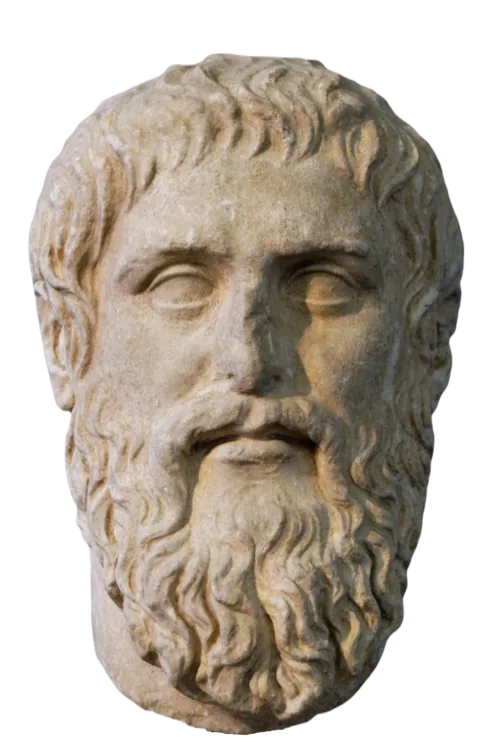

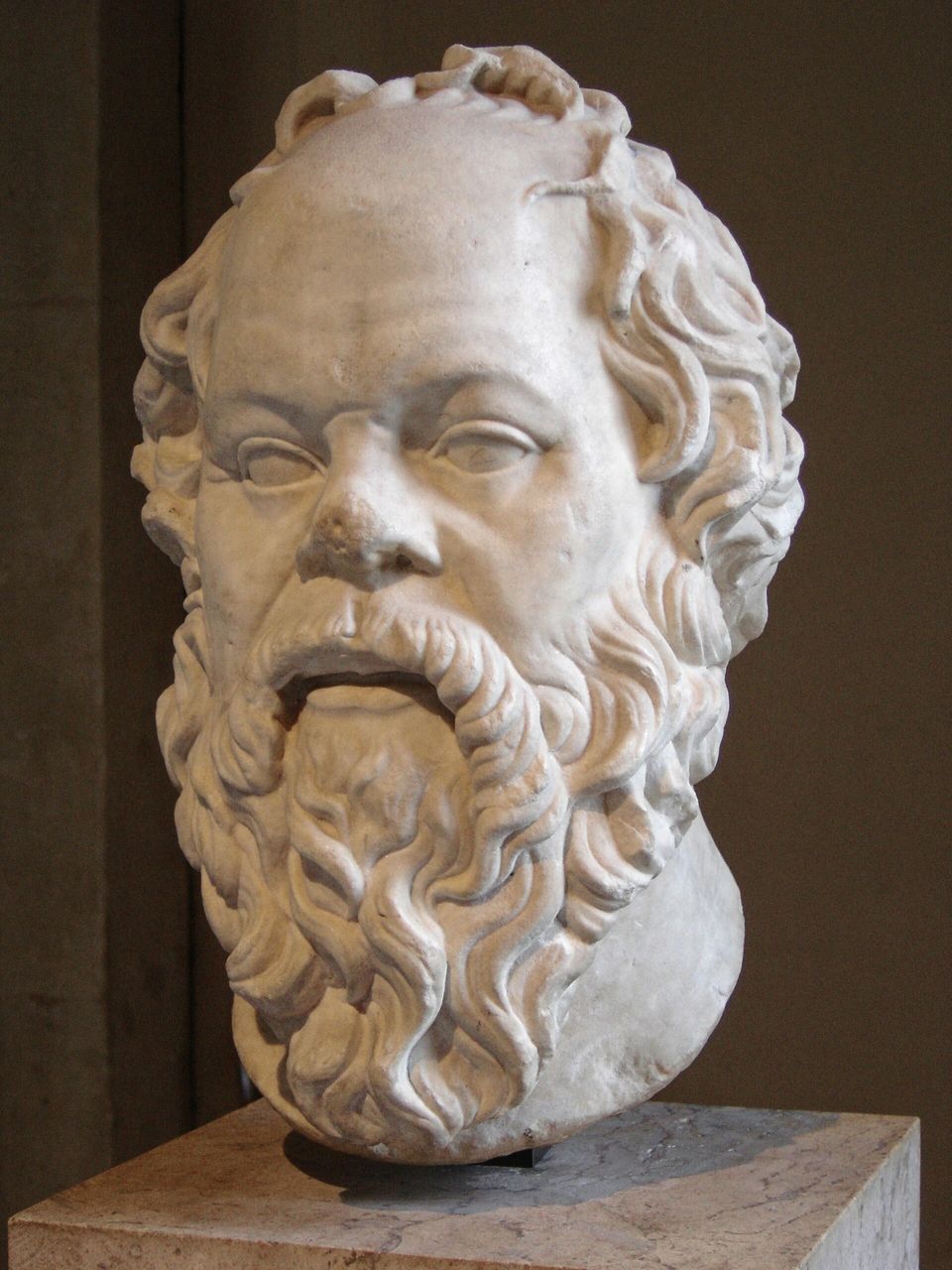
Photograph by Marie-Lan Nguyen, public domain. Background removed for the portrait above. · Photograph by John Jabez Edwin Mayall (1875), public domain. Background removed for the portrait above. · Photograph by Eric Gaba (Wikimedia Commons user: Sting) (July 2005), CC BY-SA 2.5. Roman marble portrait of Socrates, 1st century AD, Louvre Museum. Background removed for the portrait above.


An estimate is an inference.
Yours can be measured.
Thirty questions, scored against general-population benchmarks. Your score, your percentile, your ability breakdown and a printable IIF certificate.
Find your IQ score now! →